Overview
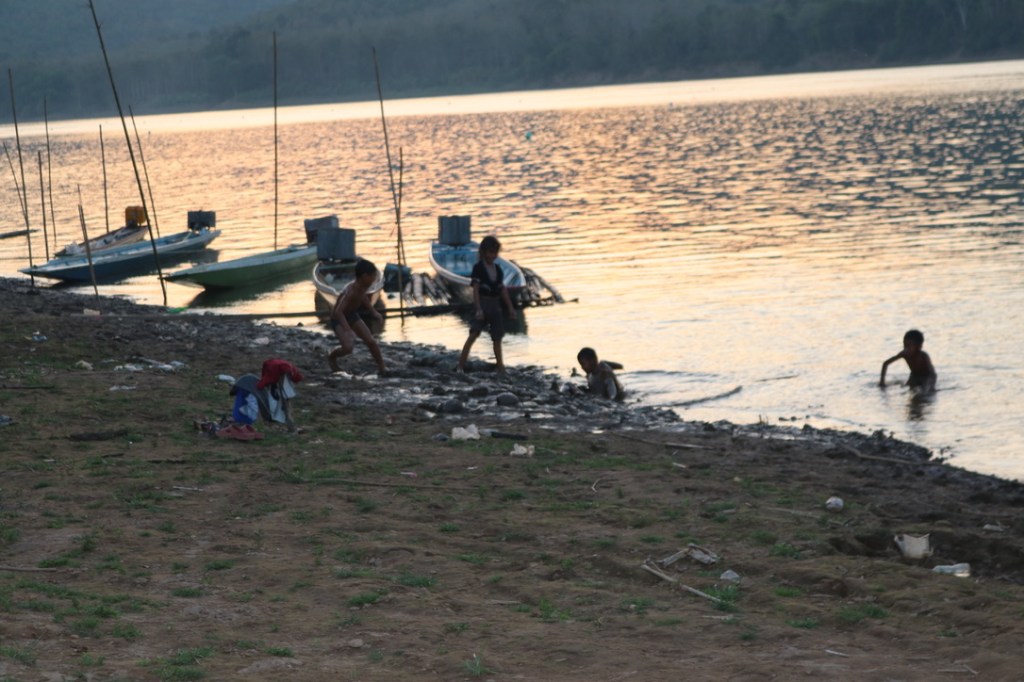
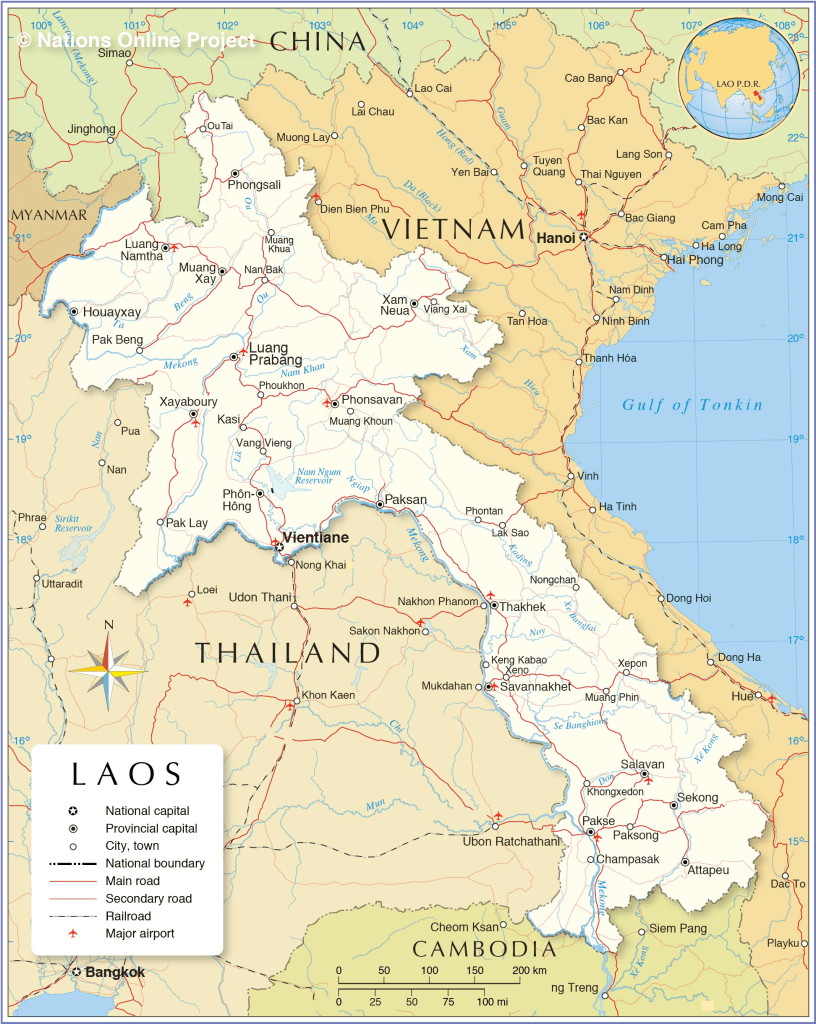
This was a river trip approximately 700kms long down the River Mekong in Laos from Chiang Khong in the North to Vientianne in the South. We flew out of UK to Bangkok on 4th January and spent 3 days in Chiang Mai before travelling by minibus to join the boat on the Thailand side of the river. During the trip we visited a number of villages and the two main towns in Laos – Luang Prabang and Vientianne (the capital). During the course of the two weeks we learnt a lot about the tribes of people and the history of this magnificant country which is in the throes of change wrought by the Chinese and Thailand.
4th January – Wednesday
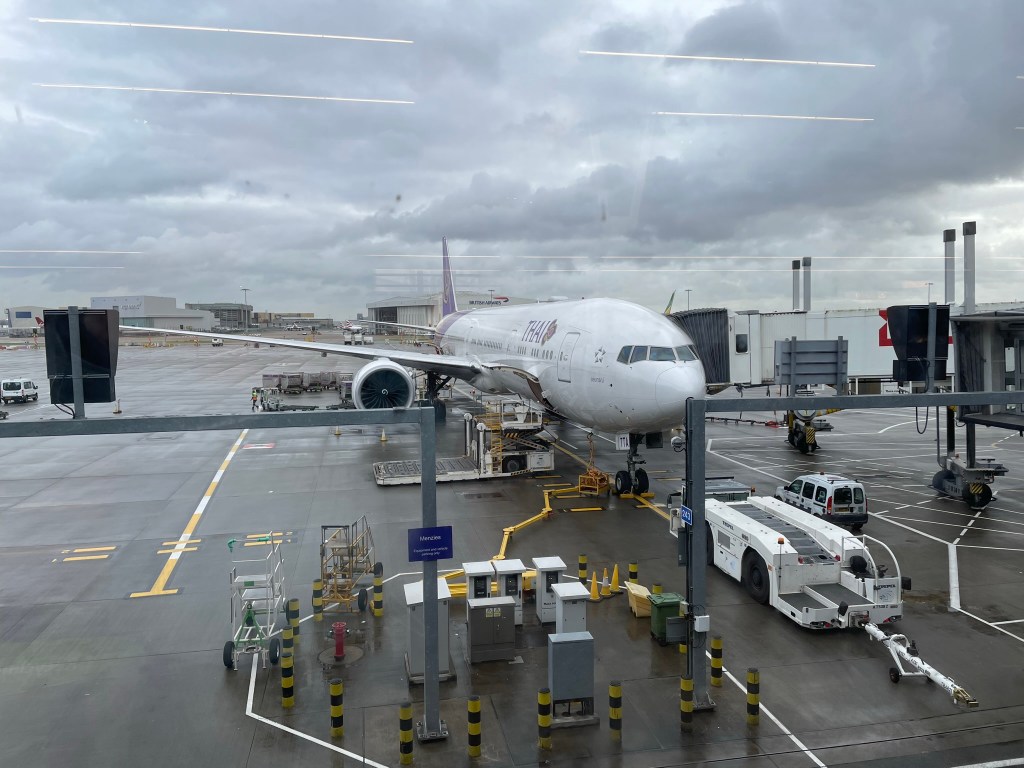
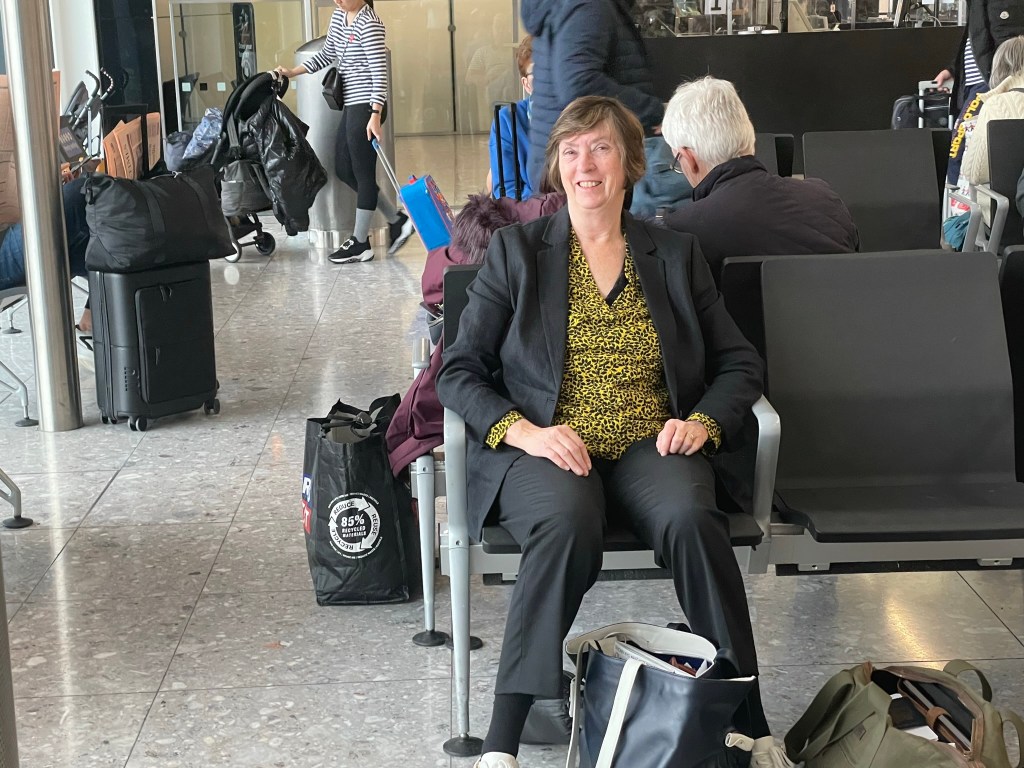
Early start leaving the house at 0630 and after an uneventful drive arrived at Heathrow. Check in queue well organised and relieved to see our bags were under 20kg. We had chosen our seats well near the back of Thai plane in middle aisle. Flight was around 11 hours and passed quickly. 3 meals and one film and we had arrived.
5th January – Thursday
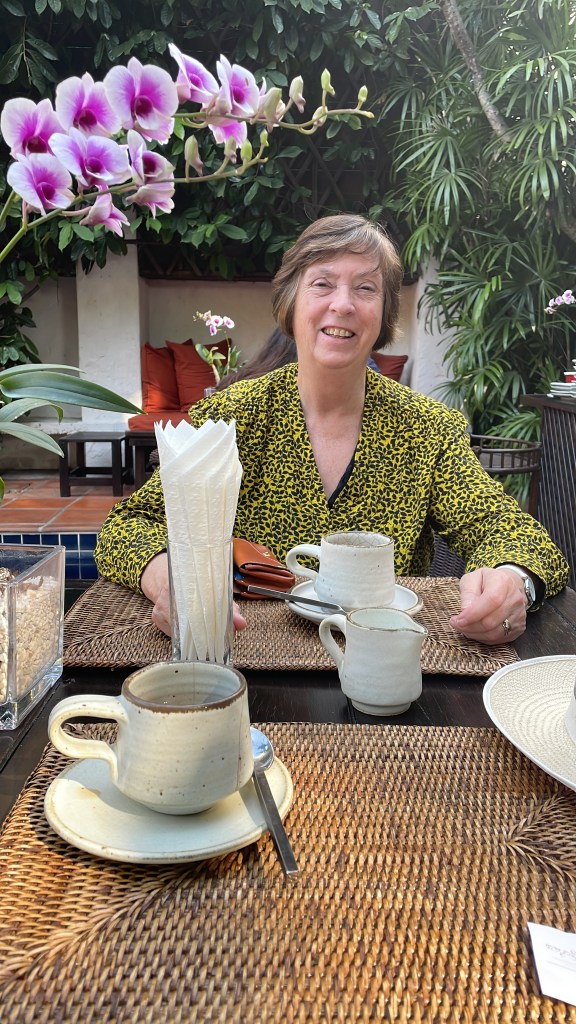
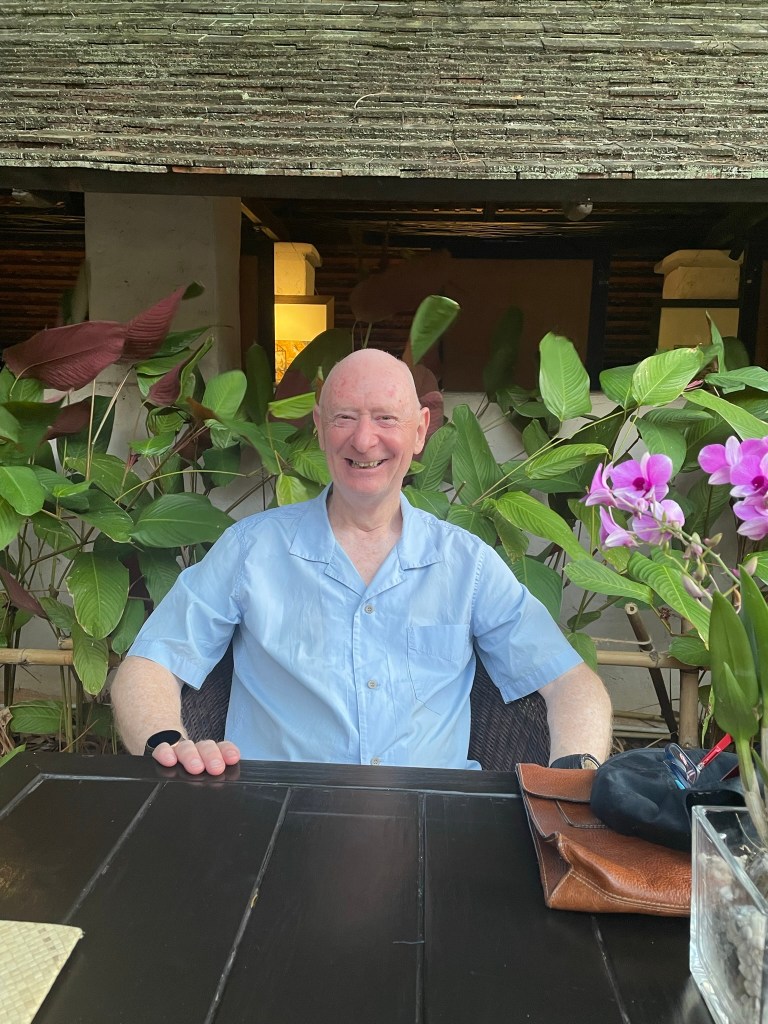
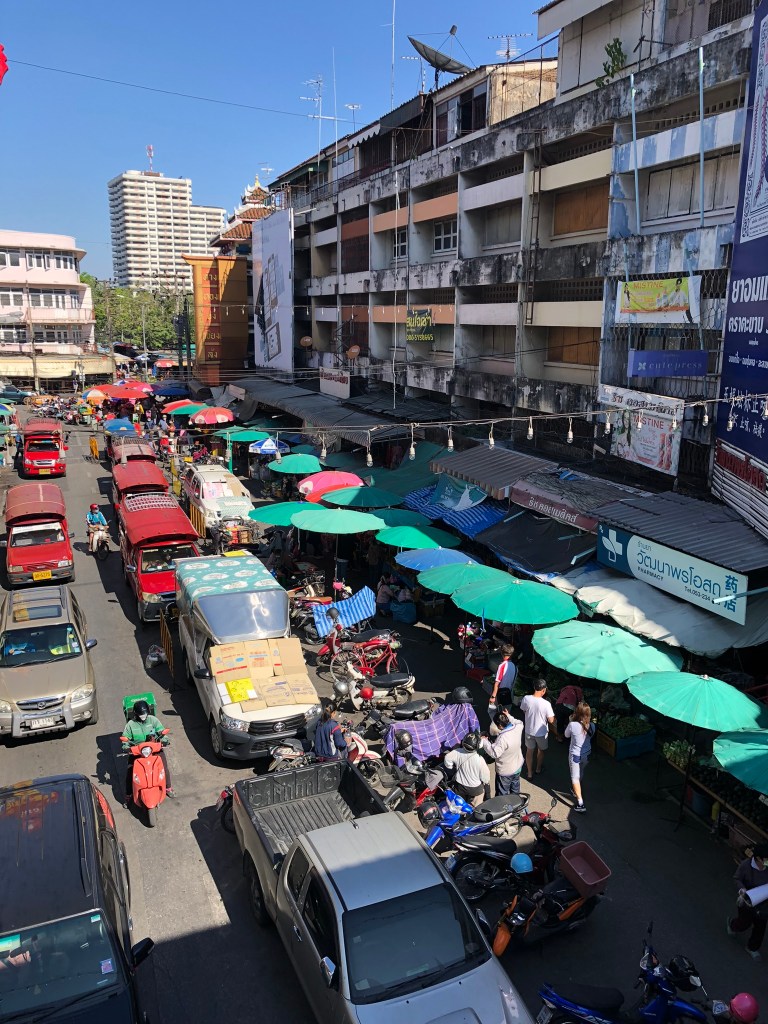
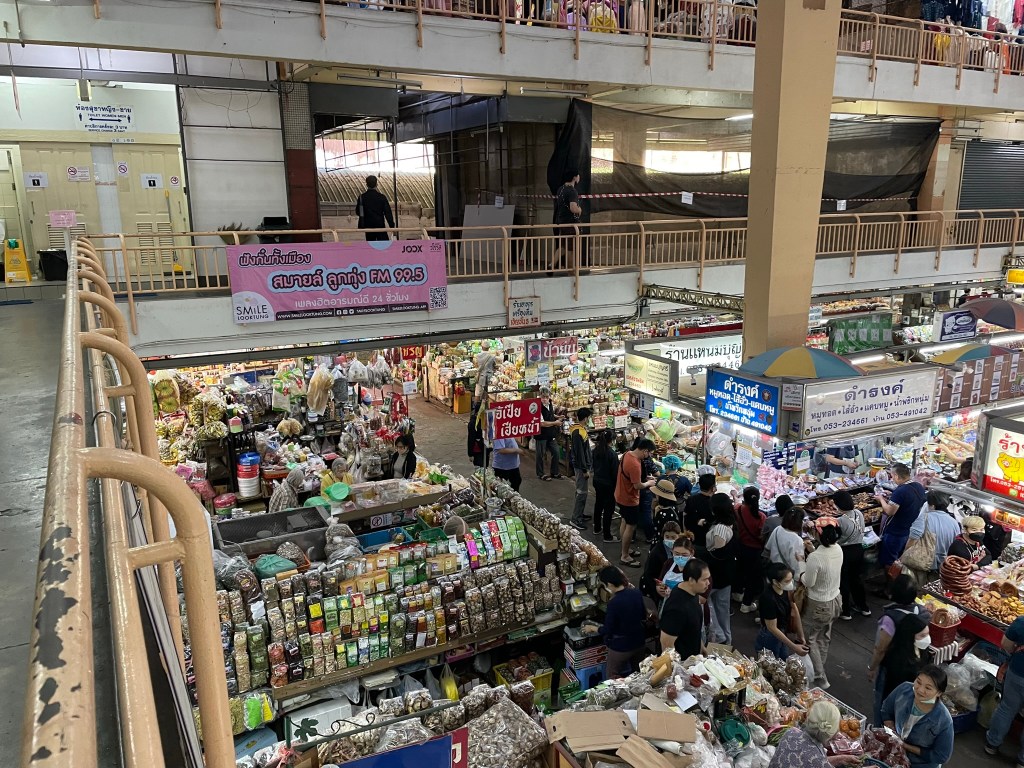
Got to Tamarind Hotel at 0930ish. We were picked up by Amy – definitely not how you spell her name but we found many of the Thai adopted a ‘western’ name to make it easier for people to say and remember. The room was not ready so we went on a bit of a route march around Chiang Mai. Through the Eastern city gate (Thapei Gate) and down to the markets. Amazing place – huge markets where you could buy just about anything from flowers to clothes to live frogs.
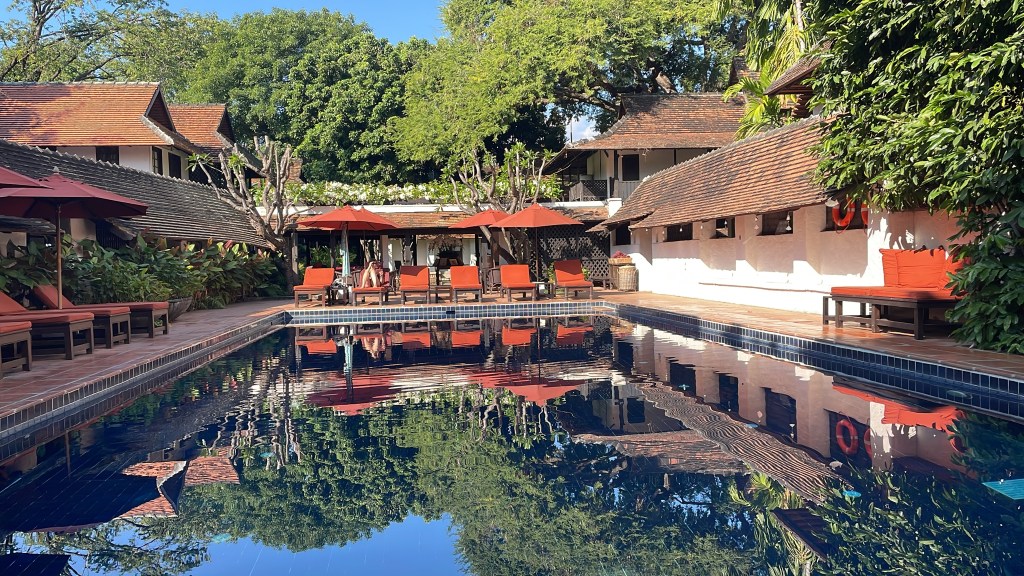
Walking back we became a little disoriented but eventually found a coffee shop we had passed on the way to the market. The strawberry chilled latte was wonderful. By the time we got back our room was ready. Huge king size bed, with fresh fruit available on the table. We resisted the temptation to sleep and went to the pool for a swim and read. We had evening meal in the hotel. After a couple of cocktails we feasted on Khao Soy Gai which was egg noodles in a curry broth with chicken and Gaeng Pad Yang Linchee, slow roasted duck breast in red curry sauce. Into bed at 2000 and slept deeply till around 2330 then off and on till 0430. This was followed by a very, very deep sleep.
So Day 1was not entirely wasted but tiring.
Coffee 200Baht
Meal and Cocktails 1900 Baht. Ate in hotel
6th January – Friday
A slow start. Gillian fast asleep when I eventually woke up. Breakfast by the pool was lovely. Yoghurt and muesli which does not sound great but tasted wonderful followed by fried rice and chilli. After changing some money – around 40 baht to £ we booked a visit to the Elephant Sanctuary. Picked up by Land Rover with 6 others for an hour drive out of Chiang Mai.
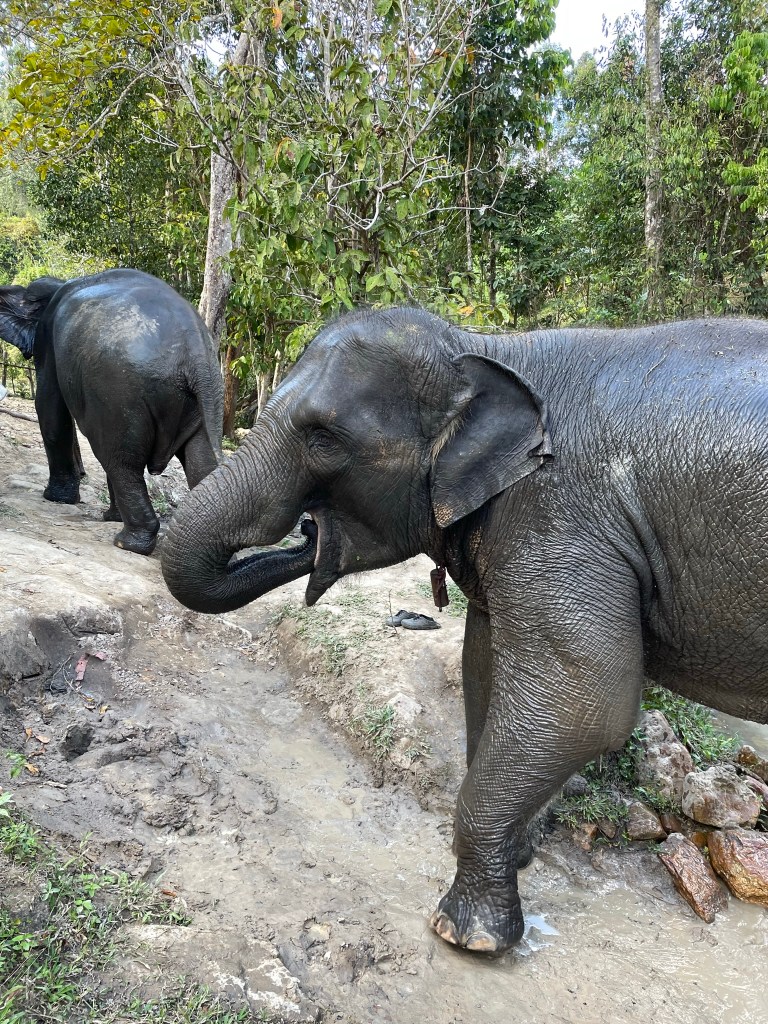
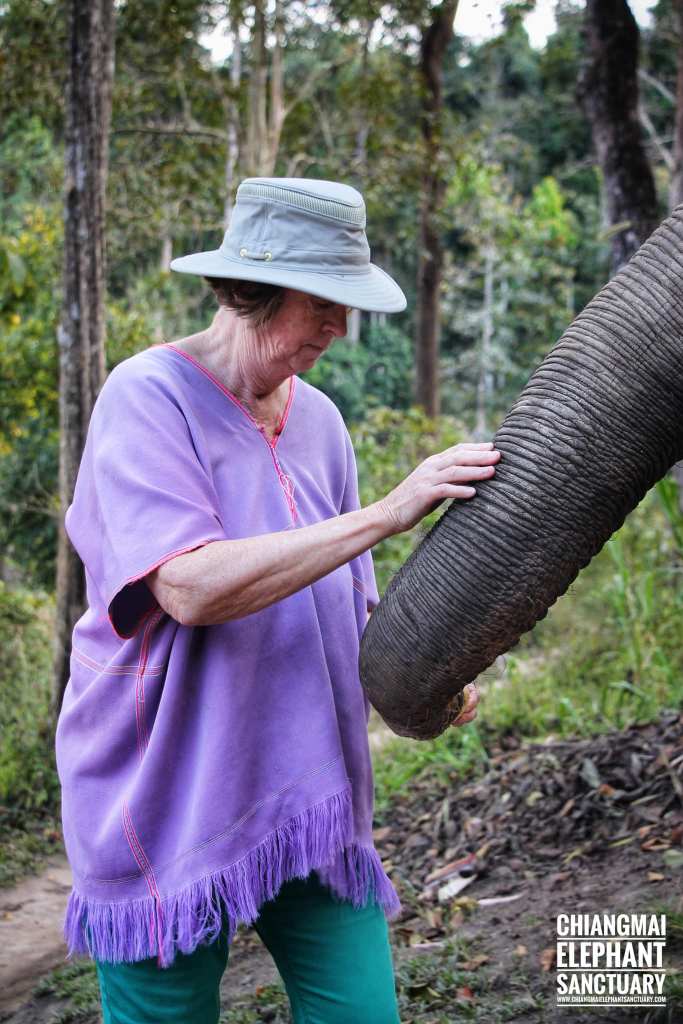
Two of the couples were in their 20s and were on a 6-8 month break and there was also a Portuguese couple. The sanctuary was aound 60kms away and high up in the hills. We were met by ‘Robert’, a very enthusiastic guide. The Sanctuary was next to a Karen Hill Tribe village. THis tribe is the largest ethnic minority group in Thailand. Historically they orignated from Tibet, migrating through Myanmar into Northern Thialnd. The houses were simply built on stilts and open sided. Many did have satellite dishes! Two choices Chinese channels – cheap but controlled or Thailand – more expenseve but more western. Within the Sanctuary there were 5 elephants – all female. After lunch in a ‘long house’ we collected bananas to feed each of the elephants. Robert showed us how to stand right next to the elephant hiding a banana behind our back. The elephant would then put their trunk around the front of the body and ‘sniff’ out the banana from behind. A little disconcerting at first time but they were so gentle that we soon become very relaxed stroking the trunk as they felt around for the banana. We then followed the elephants down to the mud bath and got into the water with them, covering them in mud stripped down to the waist. It would have been a little helpful if we had been warned about this before going – neither Gillian nor myself had any swimming costumes – Gillian stayed on the side and I decided I could manage to travel back slightly ‘damp’! Once covered in mud – as well as ourselves – it was then a short walk to the river where again we got into the water with the elephants who laid down so we could wash off the mud. They were clearly used to having people around them and even played with us by squirting water at us!
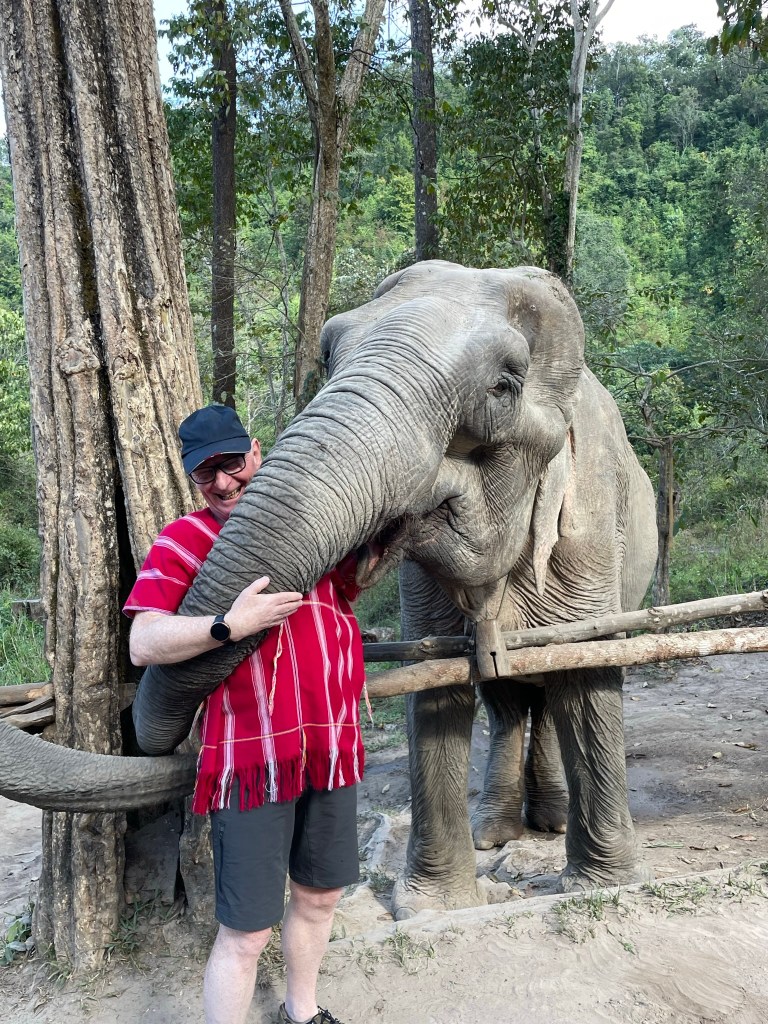
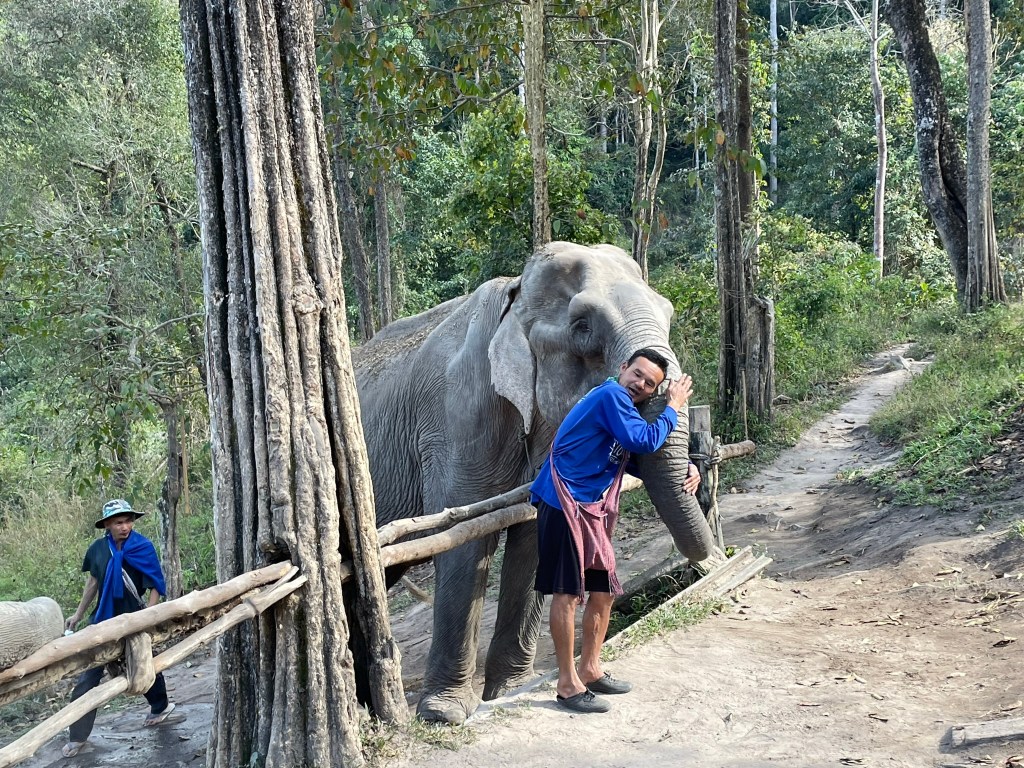
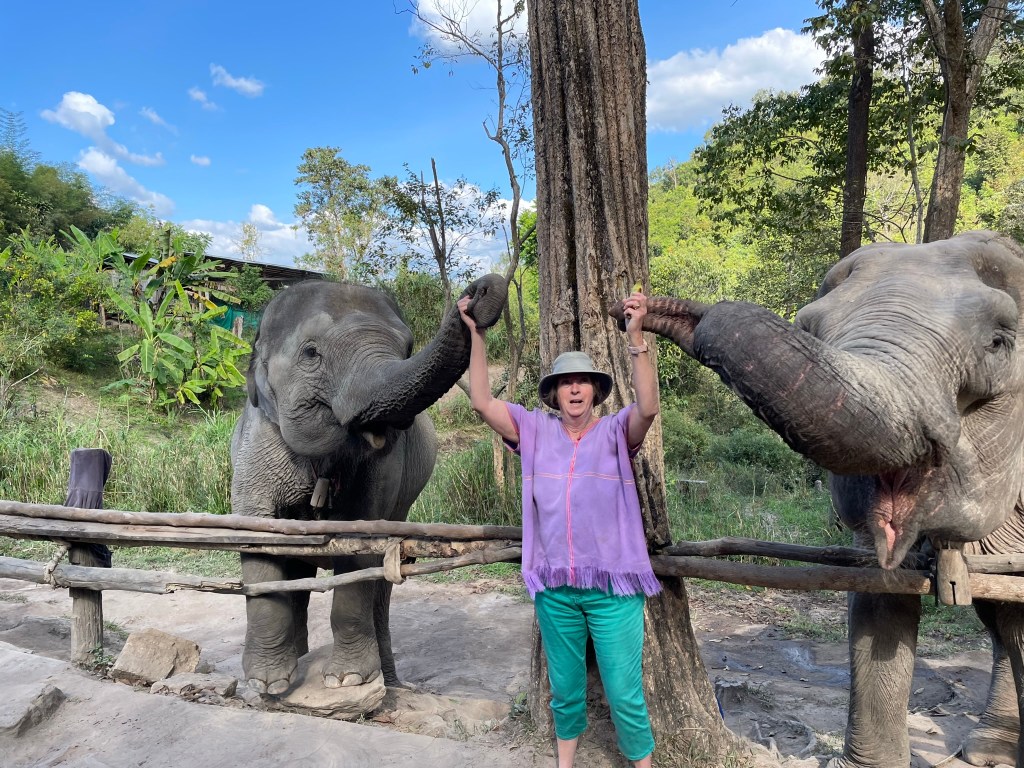
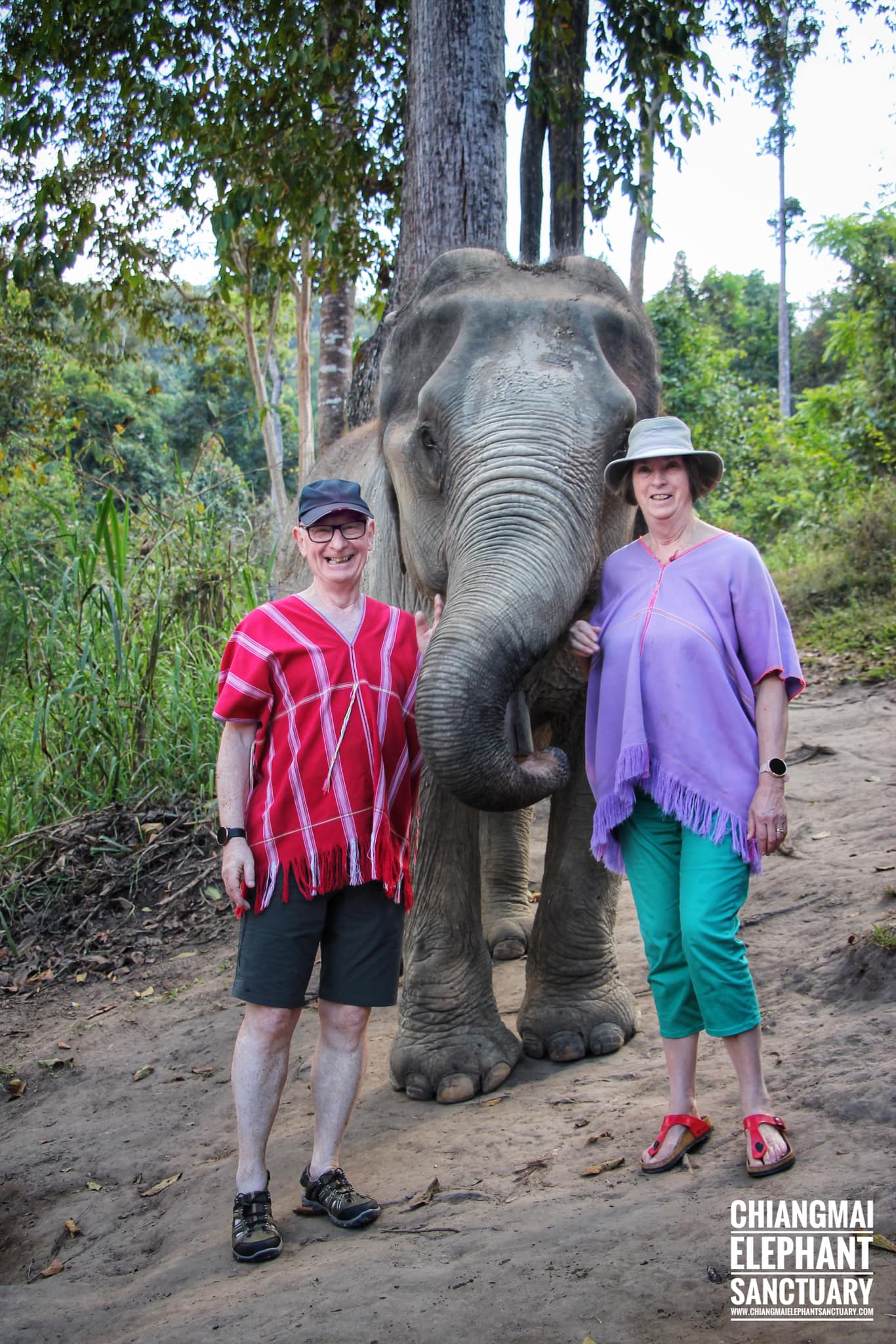
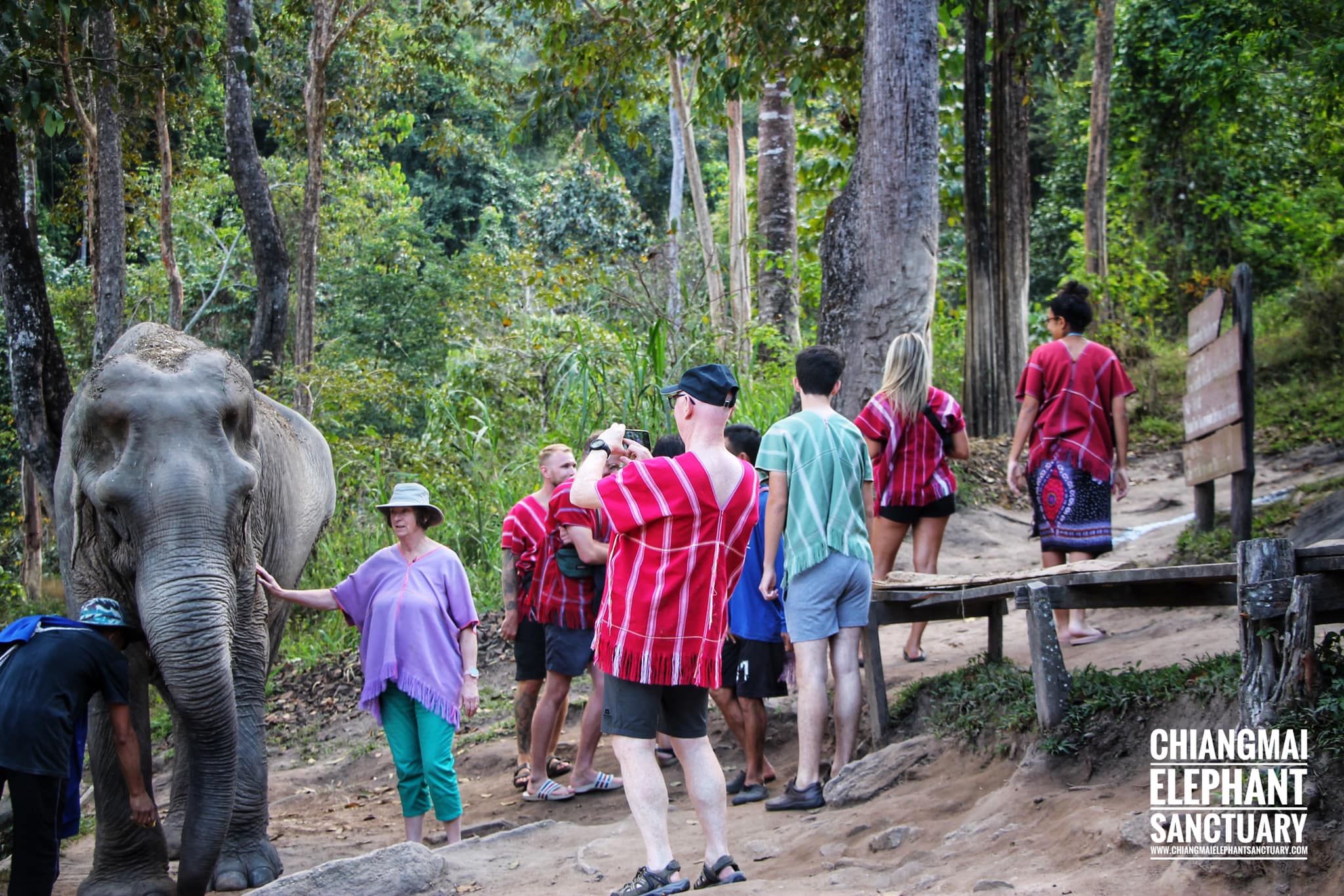
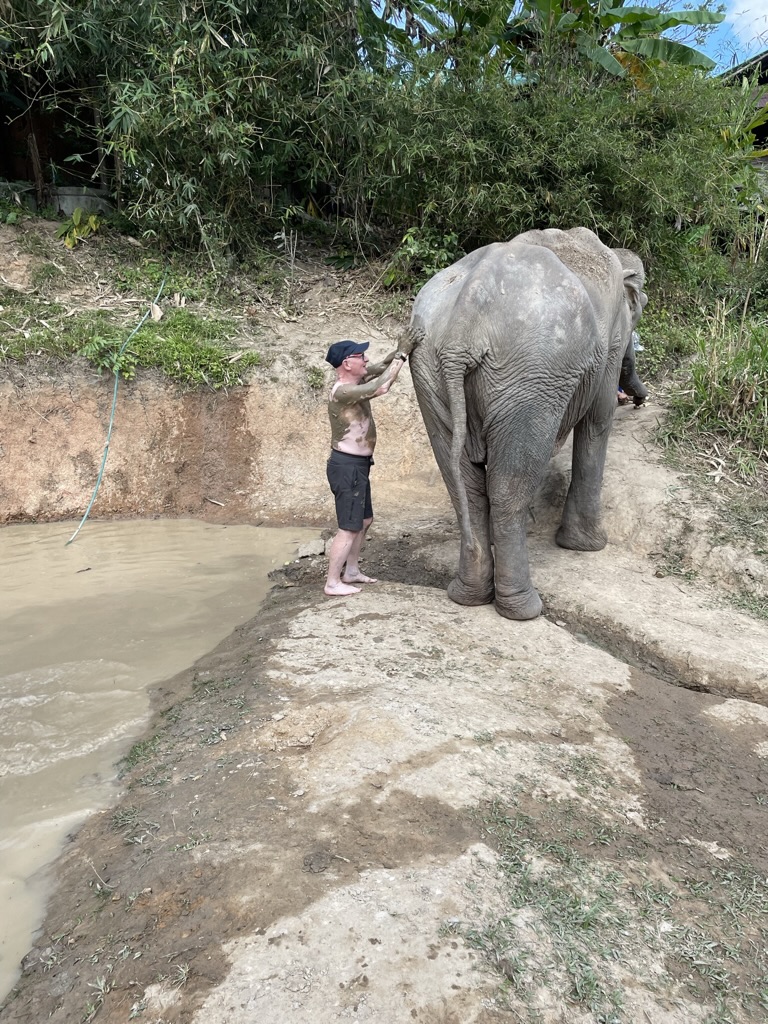
The final part of the day was a short walk to a stunning waterfall which you could get behind. Some refreshments were available from an old lady who clearly made a little money from the tourists. It was clear that these were not wealthy people and none of us resented paying the money – more as a donation than for the beer. On the walk back up the hill, we quizzed Robert on what happened over the 2+ year Covid period. It was disastrous for them. No work and no income. He had a small holding where he could grow rice to feed the family but otherwise there was no income. He was not even able to give his children money for meals at school. It was clear that the country had been hit very hard. Before we left we gave him 100 Baht and bought a souvenir from the local people who were selling some goods.
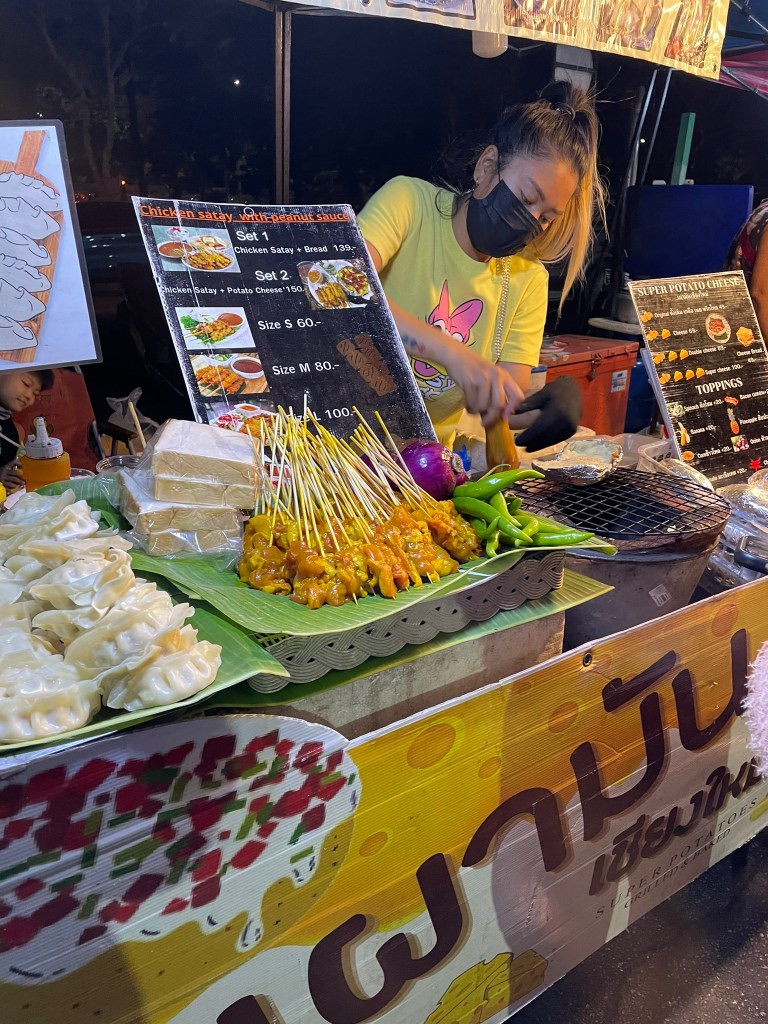
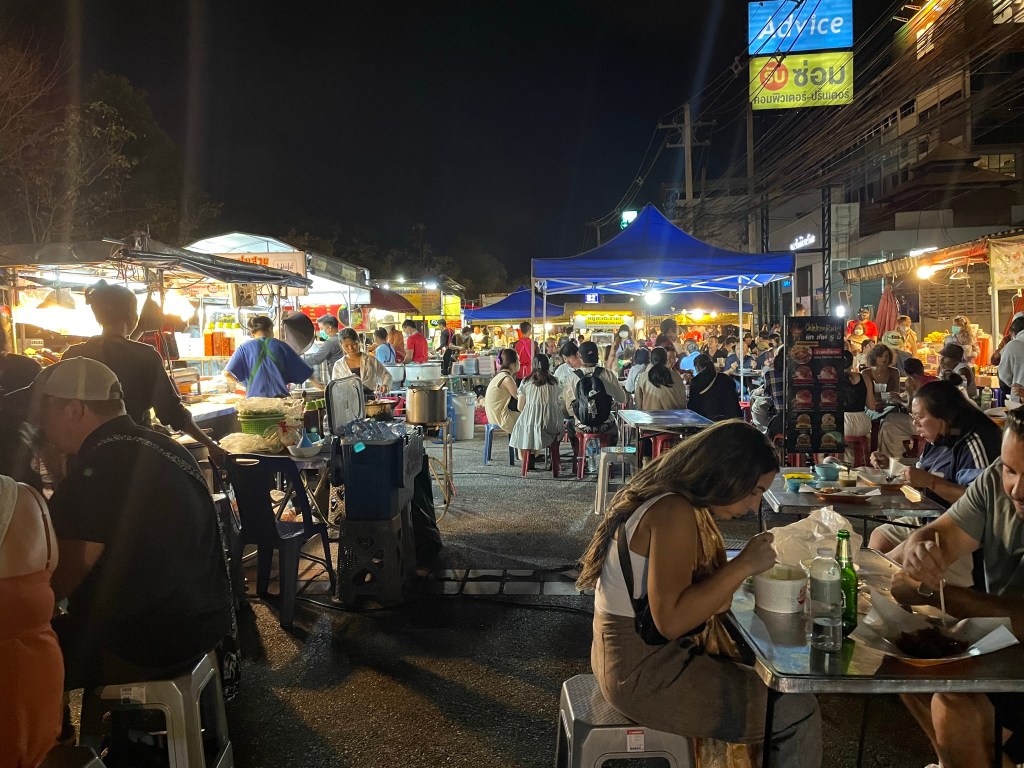
We got back to the hotel around 6pm. We decided to chance the night market at the North Gate (Changpuak Gate). We had not eaten at one of these night markets before and were a little nervous. But everyone assured us that the food is fresh and cooked over a wok at high temperatures. It was a great experience. We had Pad Thai omelette, deep fried banana and fried chicken on skewers. Rather than walk back we caught a Tut Tut. Not quite ready for bed we ended up in the bar for a cocktail and beer.
Elephant Sanctuary – 3,100Baht
Tip, Drinks, Trinket- 300Baht
Night Market – 500Baht including Tut Tut
Drinks – 600Baht
7th January – Saturday
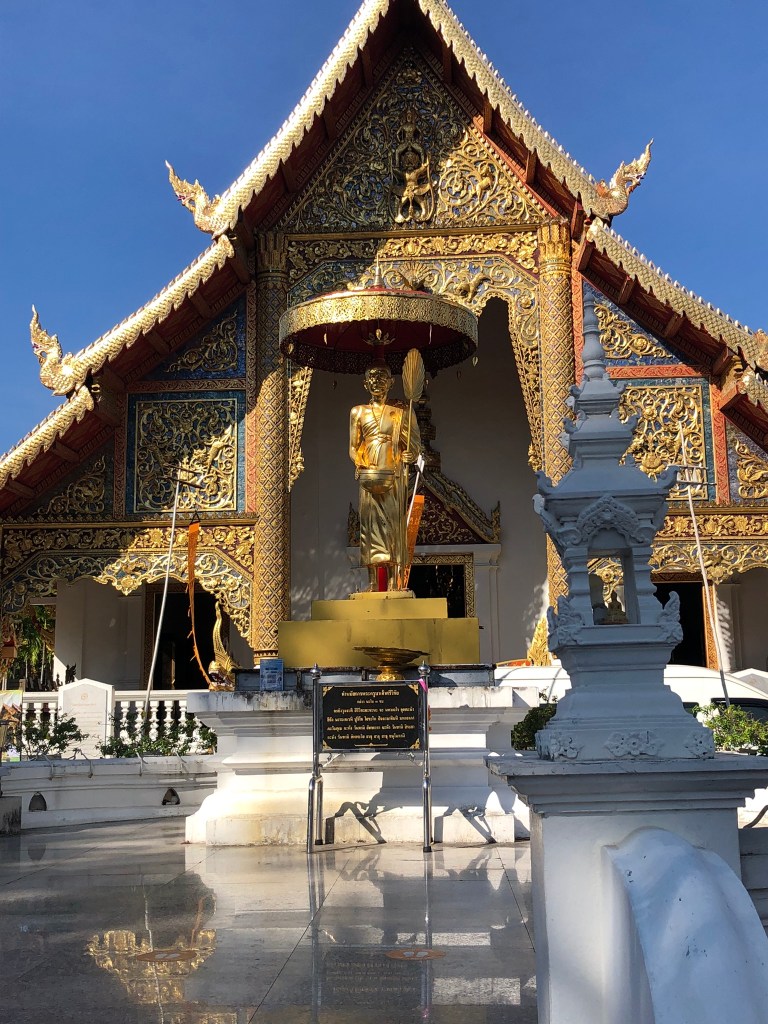
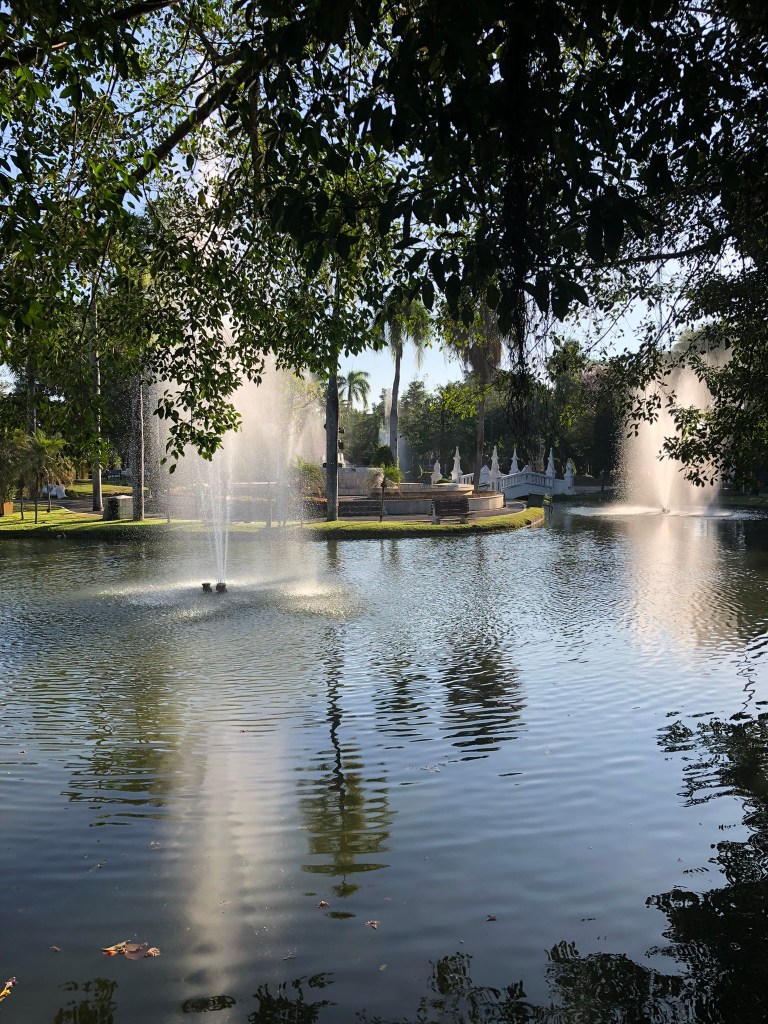
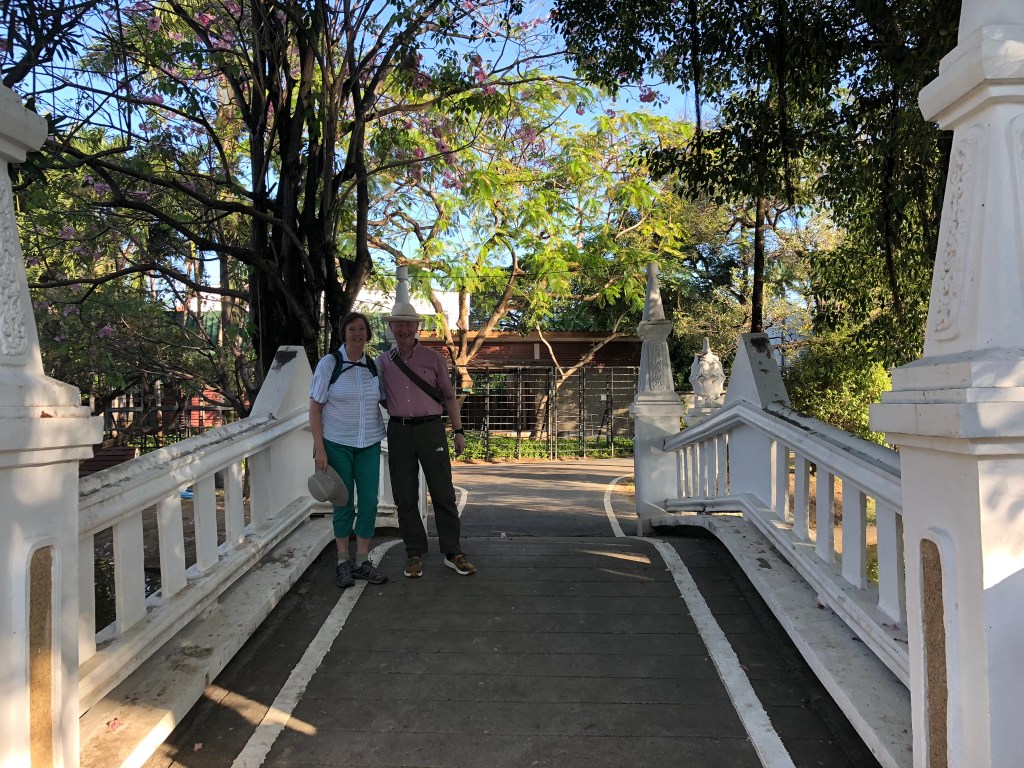
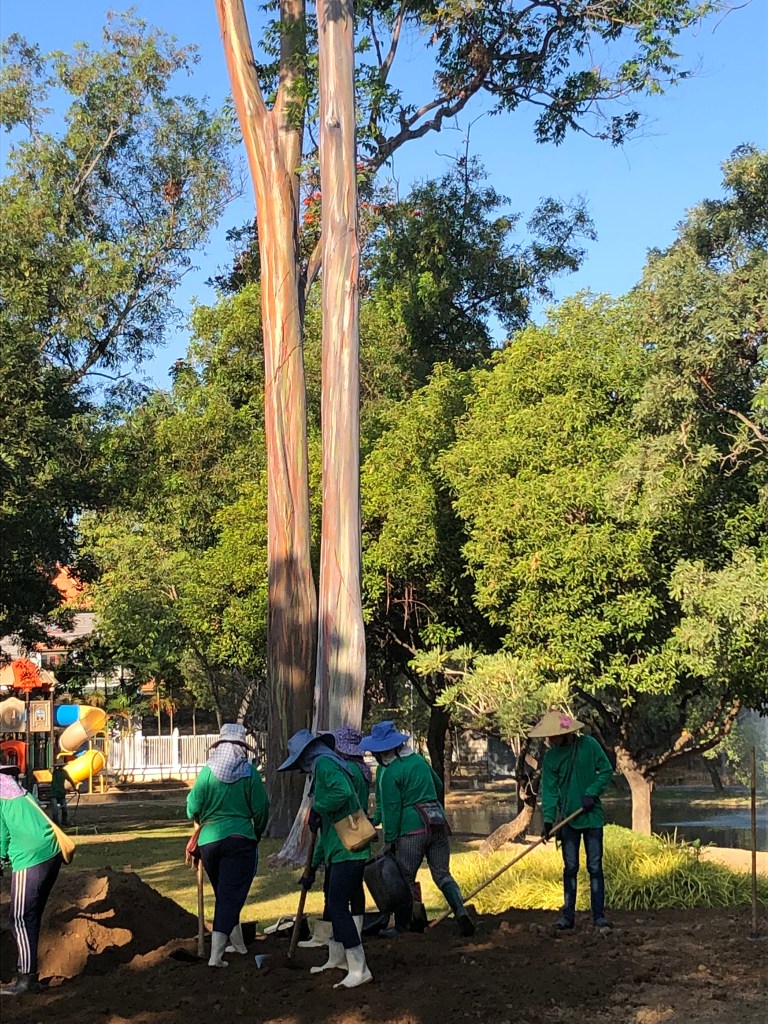
This was gong to be a busy day. We were picked up by Amy at 0800 and were joined by Joerg and Gaby – both German. The tour in the morning was via rickshaw – one of us to each tricycle, the oldest rider was 80! We were taken down to the public park where they were playing a Thai version of volleyball – Sepak Takraw – they could only use head, feet and elbows – extremely athletic. A lot of people walking, running and exercising in a very civilised way. From there it was to the first temple – Wat Phrasingh. The beauty and spiritual feel to the temples is hard to ignore whatever your religious beliefs. Although the one aspect that felt out of kilter with Bhuddism was the ability to pay your way to ‘heaven’ – fast track as our guide called it. This effectively disadvantaged the poor – not really in keeping with the principles of Bhuddism. Following this temple which was rich in symbolism we were then taken to War Pan Tao – this is a teak temple built in the 14th century. Amy asked each of us our birthdays and identified which form of Buddha to which our character was similar. Mine was Tuesday – and Gillian Wednesday.
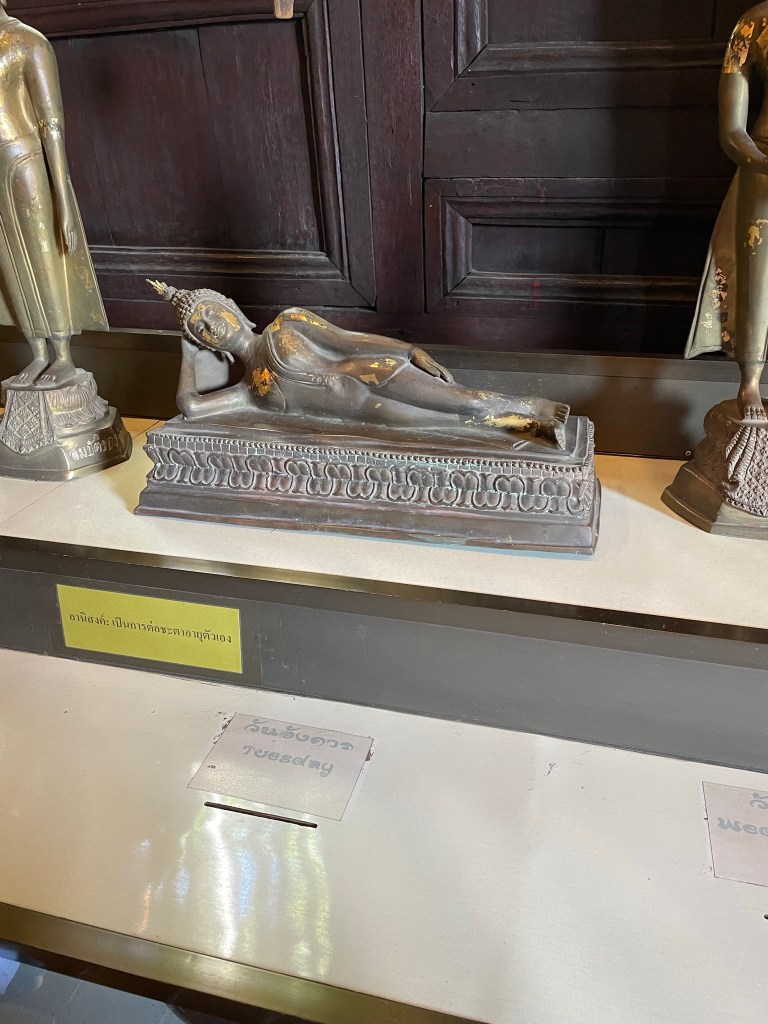
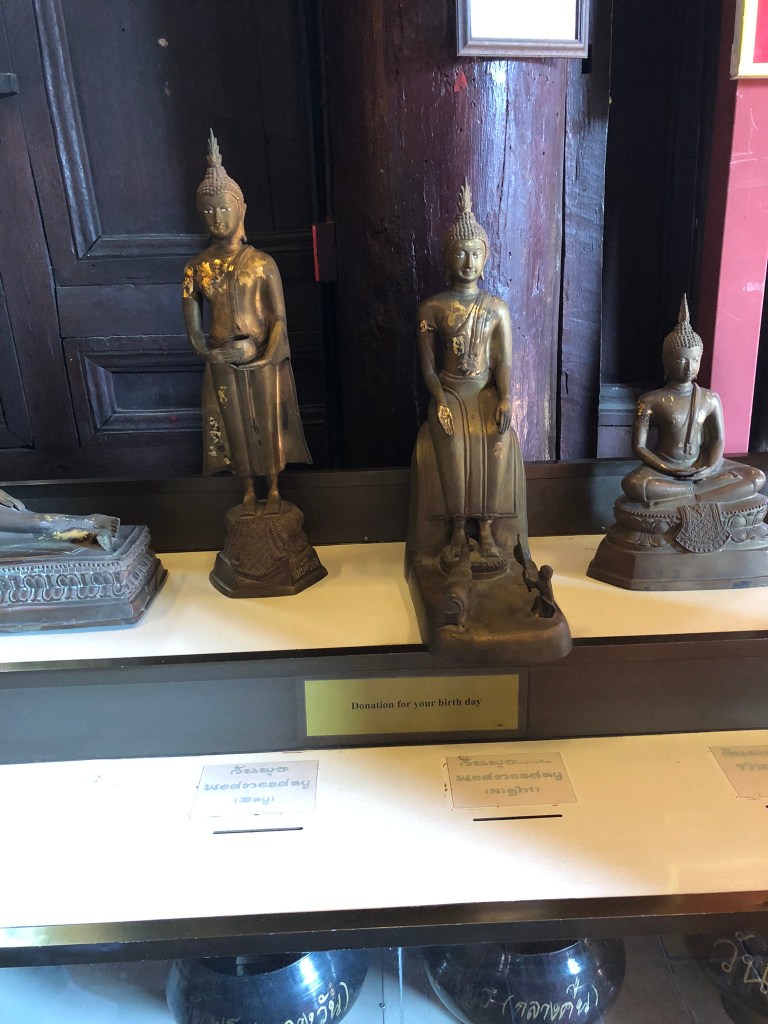
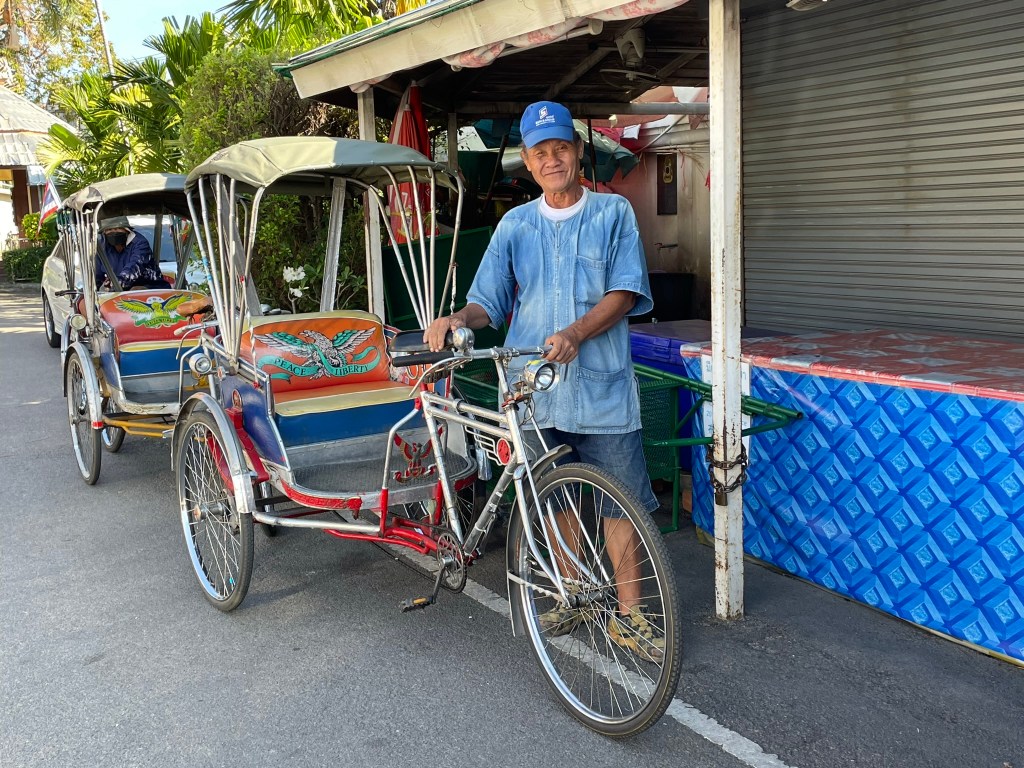
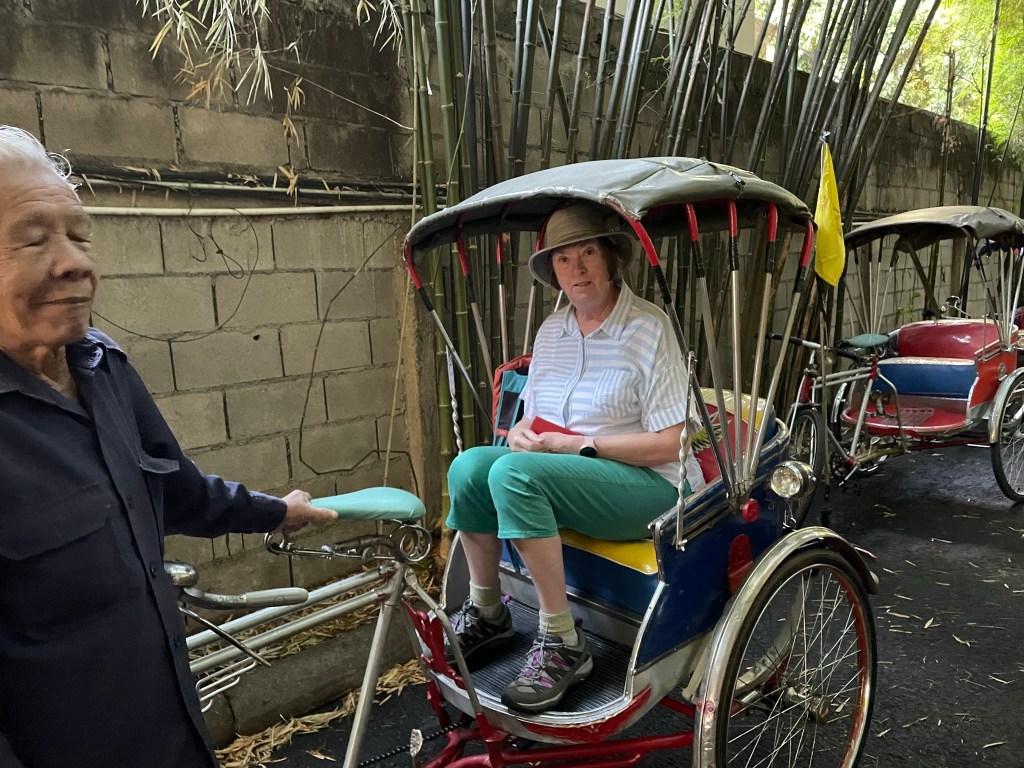
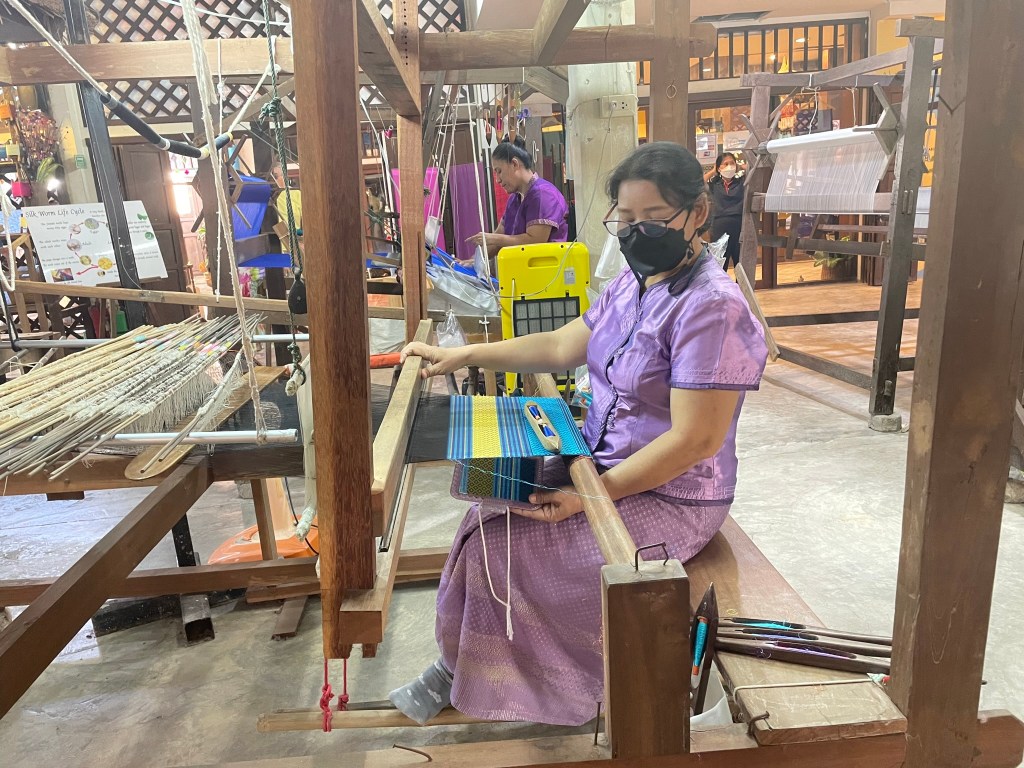
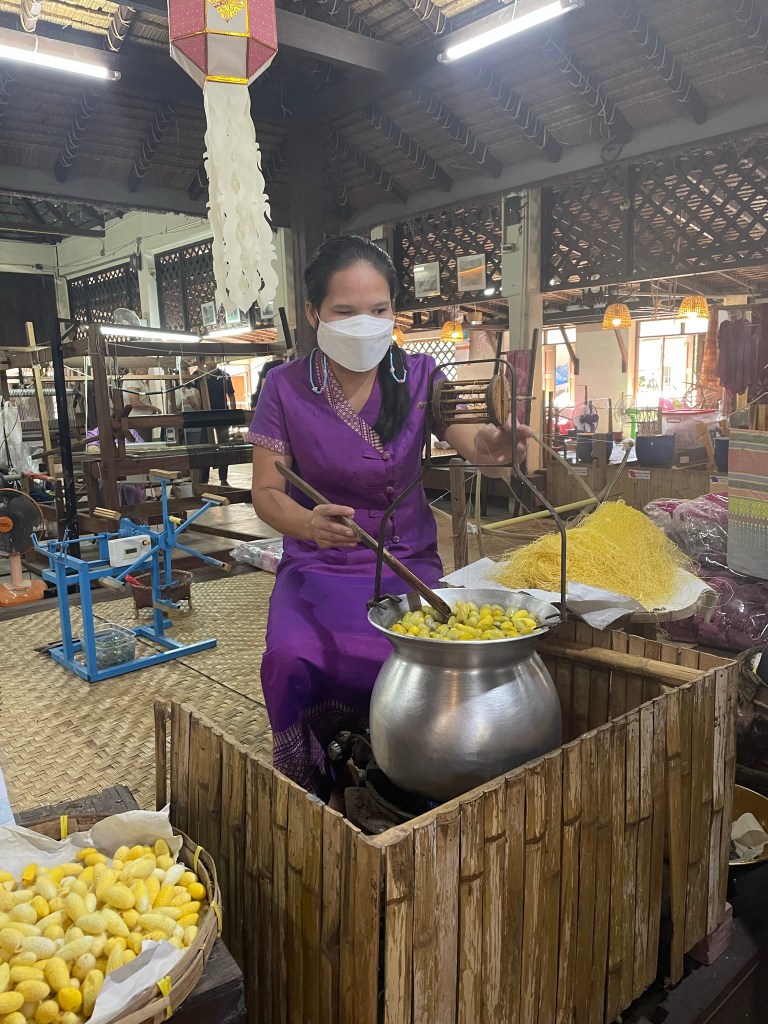
We then had a break from temple watching and were dropped off at the market we had visited the previous day. The more interesting tour was around the local craft factories/shops just before lunch. The first was silk weaving. A short talk covering the silk worm and the differences between China (White) and Thailand (Yellow) cocoon threads. The weaving was very manual in nature – no automation. Having completed the tour we then walked around the shop, followed by a very determined sales lady. The silken dresses, shirts, coats were intricate and beautifully made. Despite trying to persuade Gillian to buy a totally inappropriate short red silk dress we finally opted for a green table covering – Gillian’s colour according to her Buddha characteristic. The Silver Craft shop which followed was not quite as interesting and clearly targeted at tourists that might have more disposable income than us!
Lunch was taken at a local restaurant followed by the final craft factory which was wood teak carving. The intricacy of the work was wondrous. 3-D like carvings on large pieces of teak that you could hang on a wall. Forests, vines, elephants, annuals all hand carved. If I had still been working I might have been tempted to buy one – £3,500. It would have taken 3 months to be shipped to UK to a customs house from which I would need to have collected and paid import tax. I was tempted as the work was unique. Each piece would take 3-6 months to make depending on the intricacy of the carving. We finally settled on a £30 pound small carving that we could put in the suitcase – very pretty but not of the quality of a huge wall hanging!
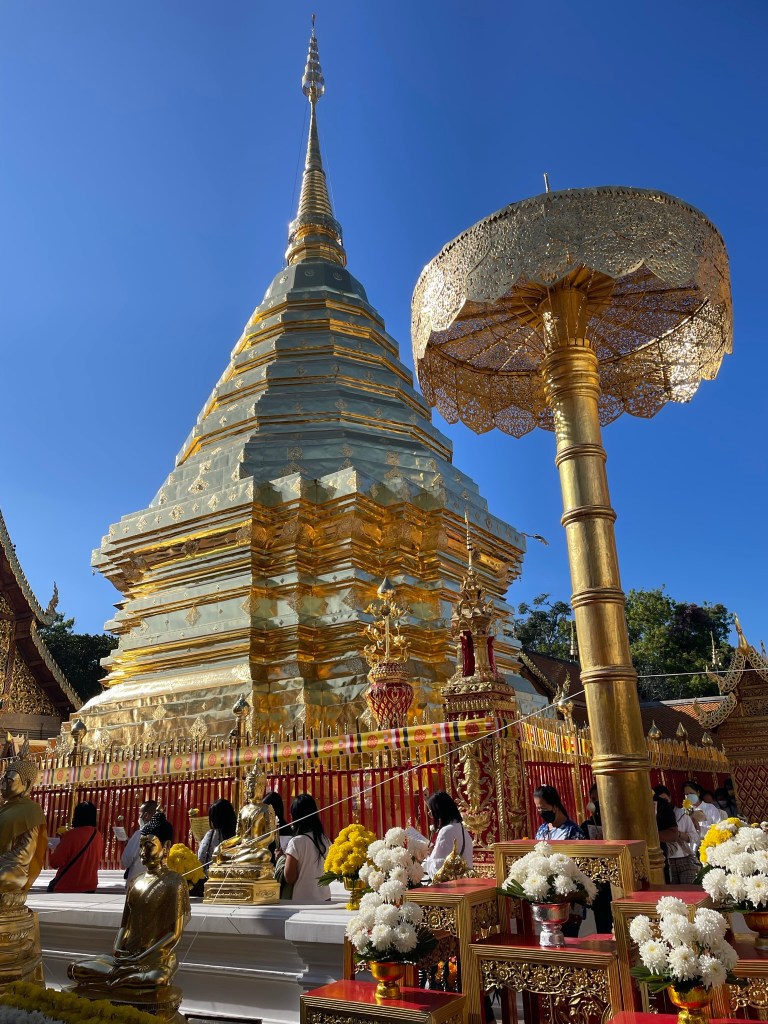
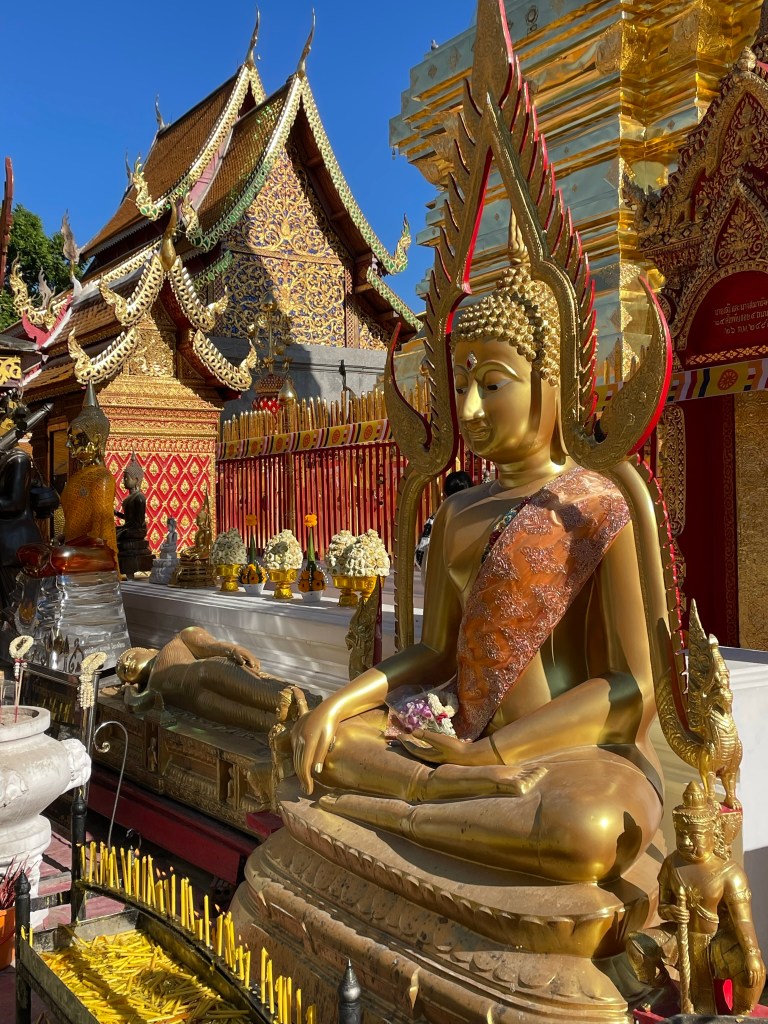
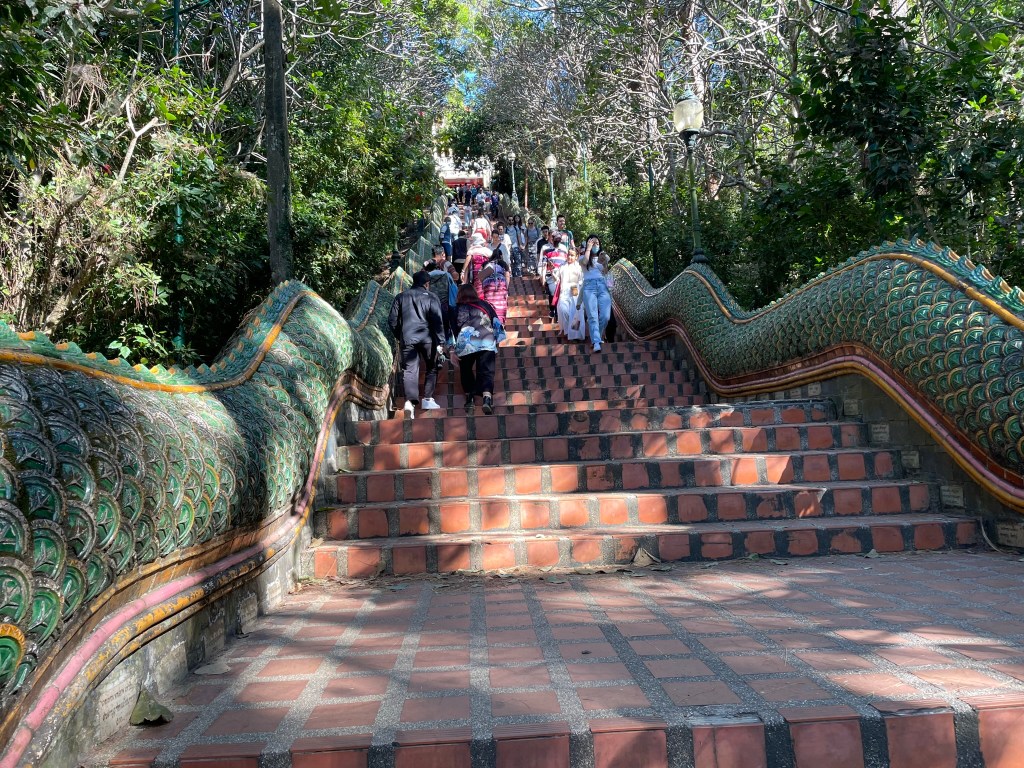
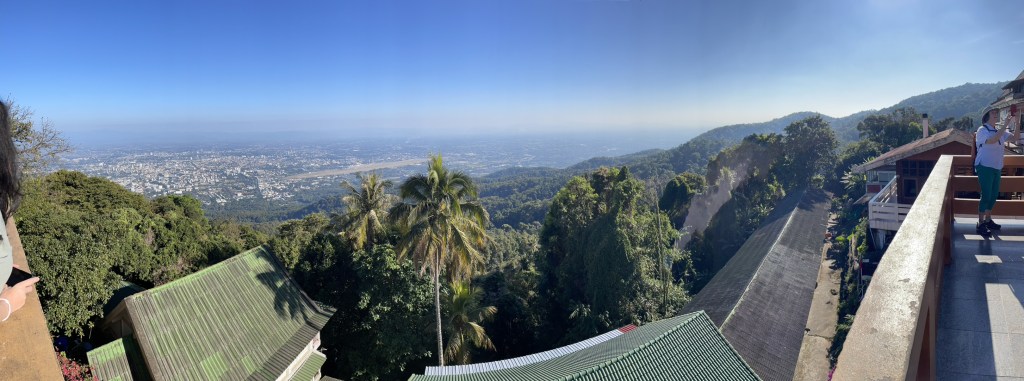
The final temple we visited was Was Phra That Doi. This was outside of Chiang Mei – higher in the mountains. The location was apparently chosen by an elephant who was given half the shoulder blade of the Buddha and left to walk until it lay down and died and this was the spot where it was believed that the temple should be built. To get to the temple we had the option of a cable car or the steps. I volunteered for the steps – quite steep but not too long. Down each side of the steps was the very long body of a dragon – Naga. I cannot quite remember the story associated with the dragon but I think it was associated with its desire to become a human form which was not granted but in compensation it would forever be remembered as it would welcome all worshippers to the temples. The grounds of the temple were very busy. Amy was a little bit more open about the resentment felt and their wariness of China who was putting a lot of money into Thailand including paying for refurbishment of the temples. But everyone knew there would be a price to pay for this in years to come. This became a bit of a theme as we travelled into Laos.
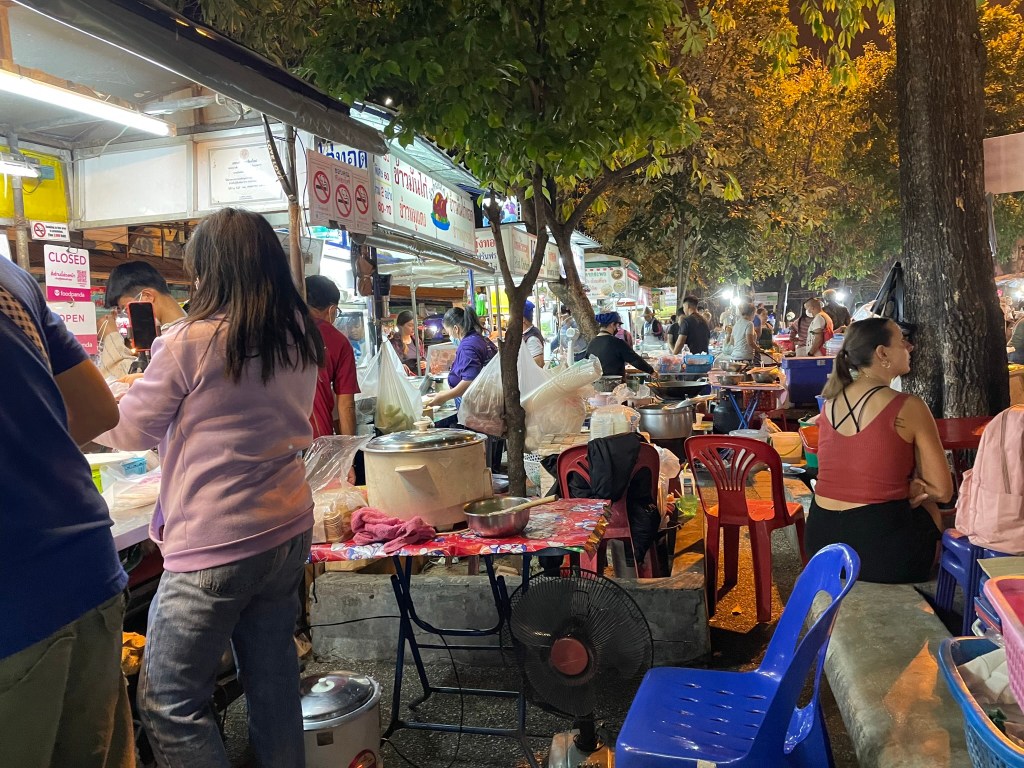
The evening we went again to a night market – this one only being open on a Saturday at the South Gate (Chiang Mei Gate). A short walk from the hotel. Larger than the previous night and busier. But the food was just as nice. We had what are called momo in Nepal – a form of dumpling which had a vegetarian filing. At another stall we had a plate of rice and kale followed by rice with chilli sauce plus chicken. Each plate around 50 baht – £1. There was a bit of hanging around whilst you waited for your meal to be cooked. It was fascinating to see how the stall operated, with the children clearing up, the elder daughter washing plates in three different large bowls of water as well as taking orders and the mother cooking over a wok – none stop. They worked extremely hard for their money.
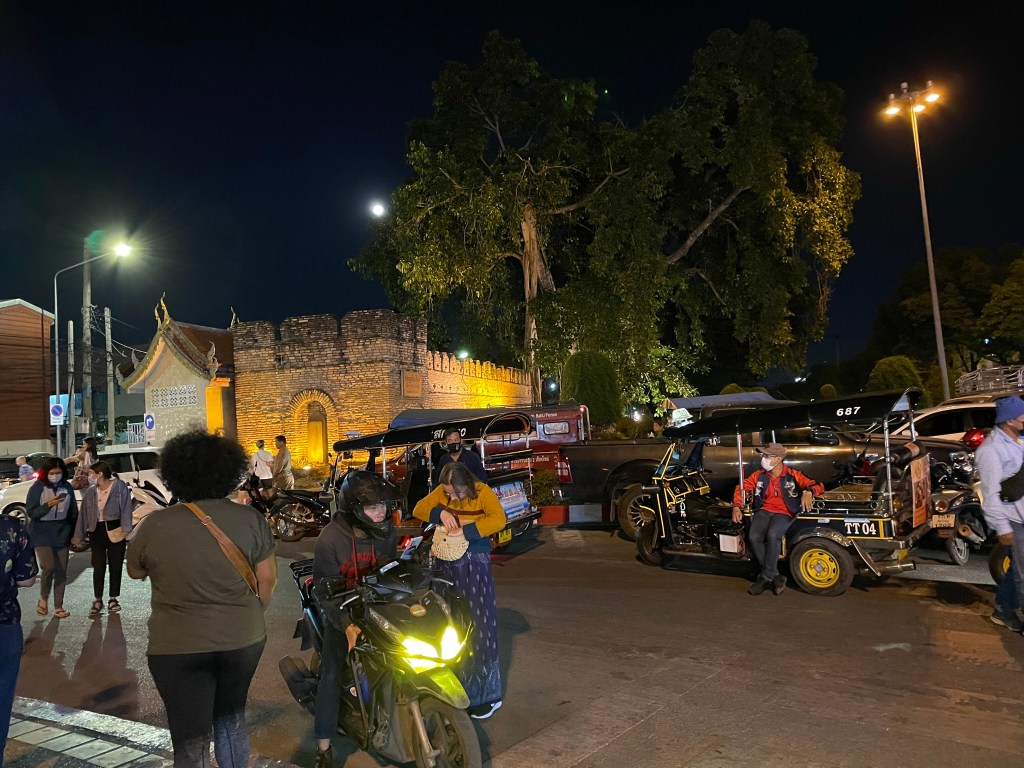
On the way home we stopped off for a drink at small bar which was very busy. Gillian’s cocktail took a long time to arrive but the people were so nice and pleasant that we did not mind.
Tip for Rickshaw – 100 Baht
Silk Table Covering – 2,000 Baht
Carving – 1,000 Baht
Drinks in evening – 700 Baht
Food at market – 150 Baht
8th January – Sunday
This was the day we joined the boat. We had not appreciated that it was quite a long drive from Chiang Mei to Chiang Rai and then onto Chiang Khong.
An early departure at 0700 which meant reveille at around 0600 to ensure we had time for a final breakfast in the hotel. There were two minibuses today as we left Chiang Mei towards Chiang Rai. A long trip of 4 hours. The road infrastructure was impressive – little traffic on the road. But the first 2 hours seemed to be all down-hill – I think we dropped some 900m. Surprisingly there were cycling groups out on the road – whilst there was a lot of downhill the uphills were steep. After two hours we stopped for a nature break and a coffee before continuing the journey to the Opium Museum outside Chiang Rai. We passed the giant white Buddha on the hill – it was truly giant – towering over the country side and then the White Temple which we did not have time to stop. The Museum was a large and very modern building built on 3 levels – history of opium, use of opium and the consequences of opium. I had never fully understood the opium wars, which was the right to sell opium and goods direct in China with no tax, nor the extent of the addiction – a large percentage of the population in many countries.
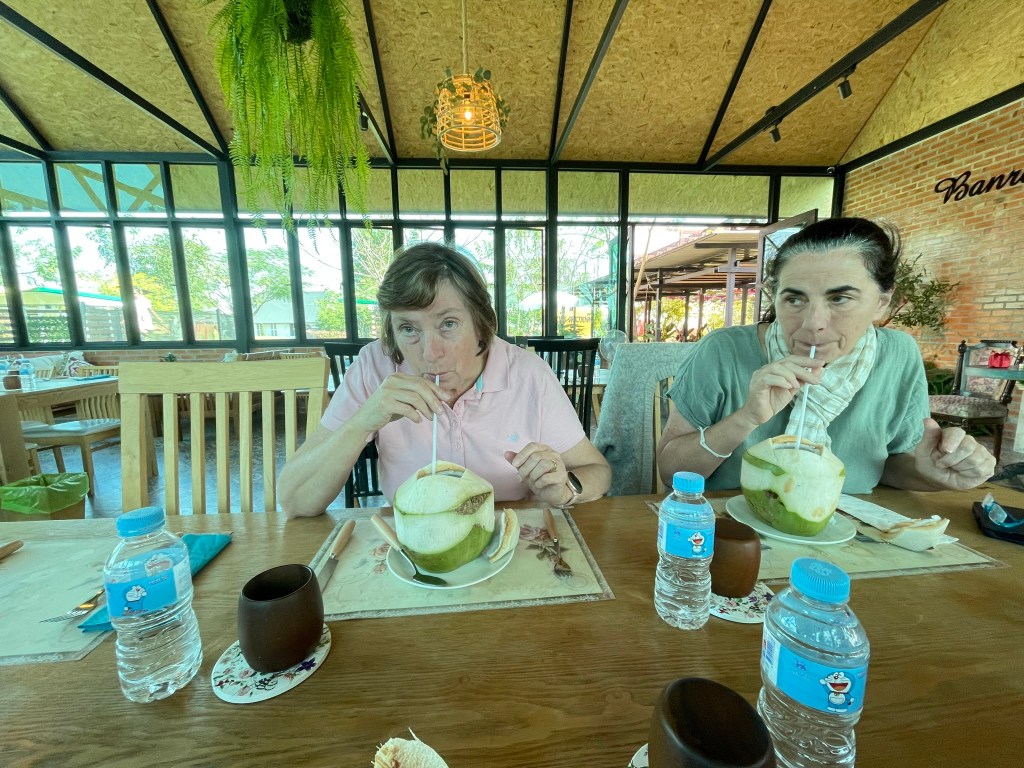
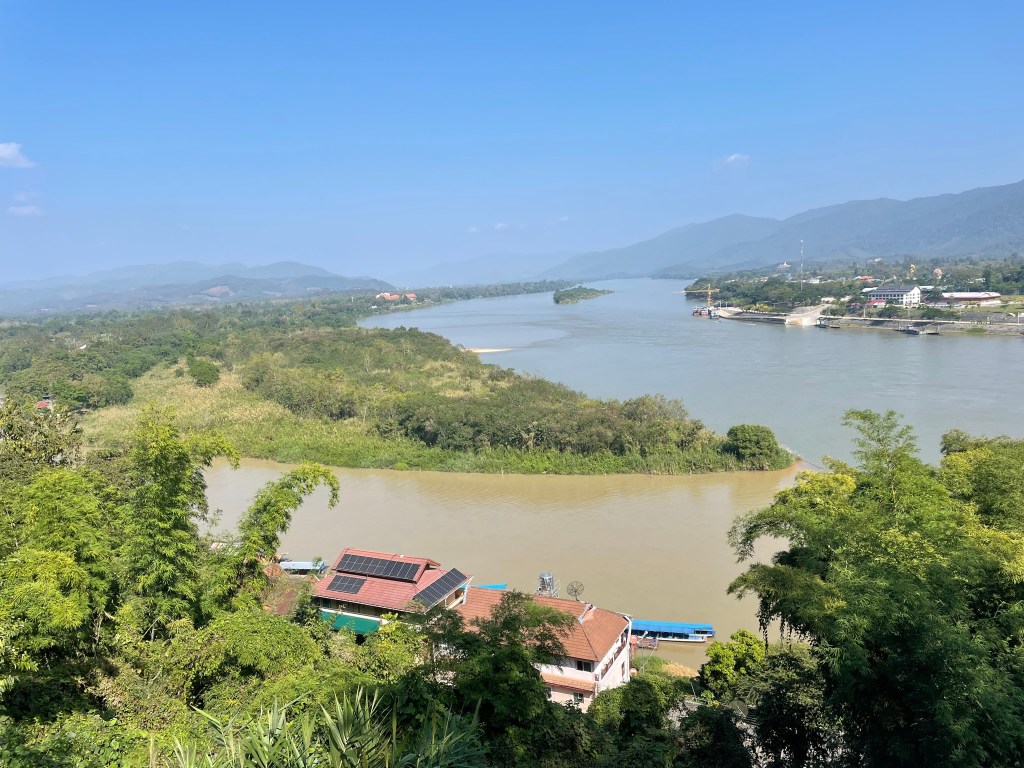
Post visit we went up to the viewpoint where we looked over Laos, Myanmar and Thailand at the confluence of two rivers. The crossing between Thailand and Myanmar was very narrow yet the difference in lifestyle was enormous. Lunch was at what looked to be a garden nursery that served their own organic food. By this time we had been joined by the majority of the group with whim we would be travelling – 23 of us in total, including ourselves.
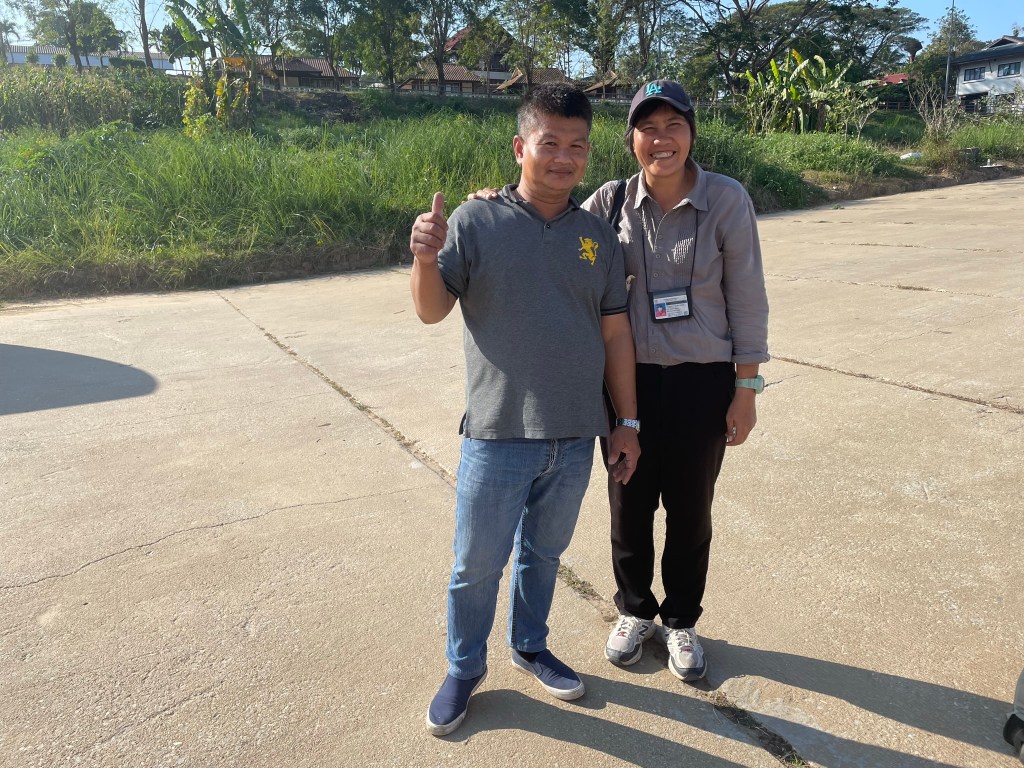
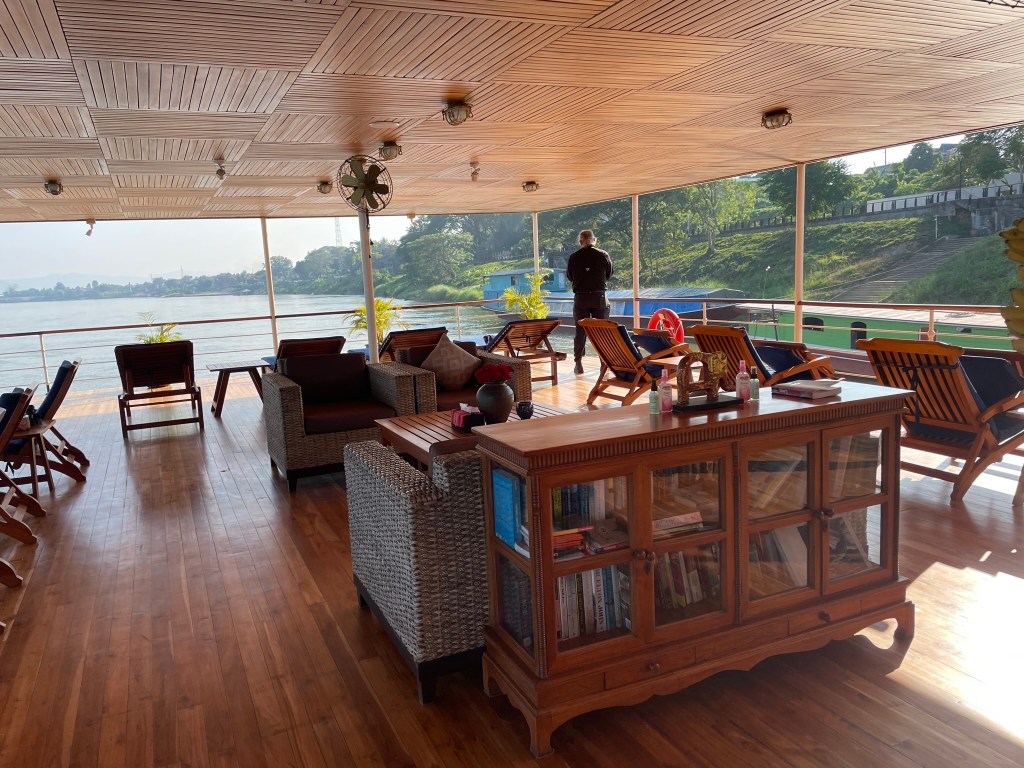
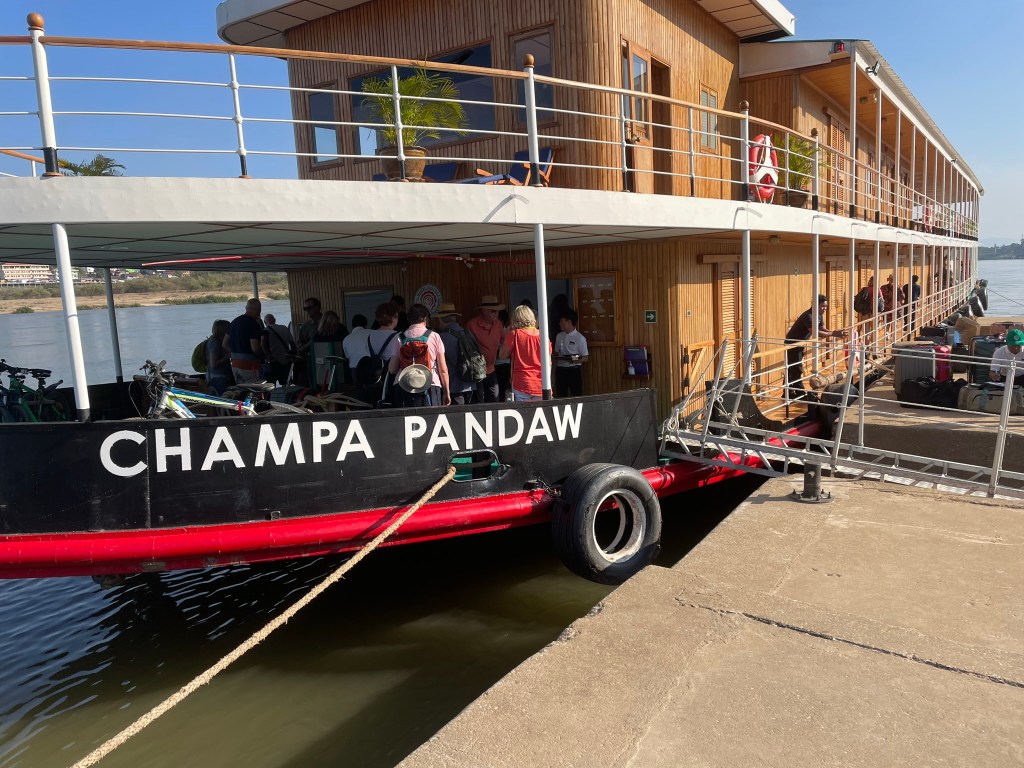
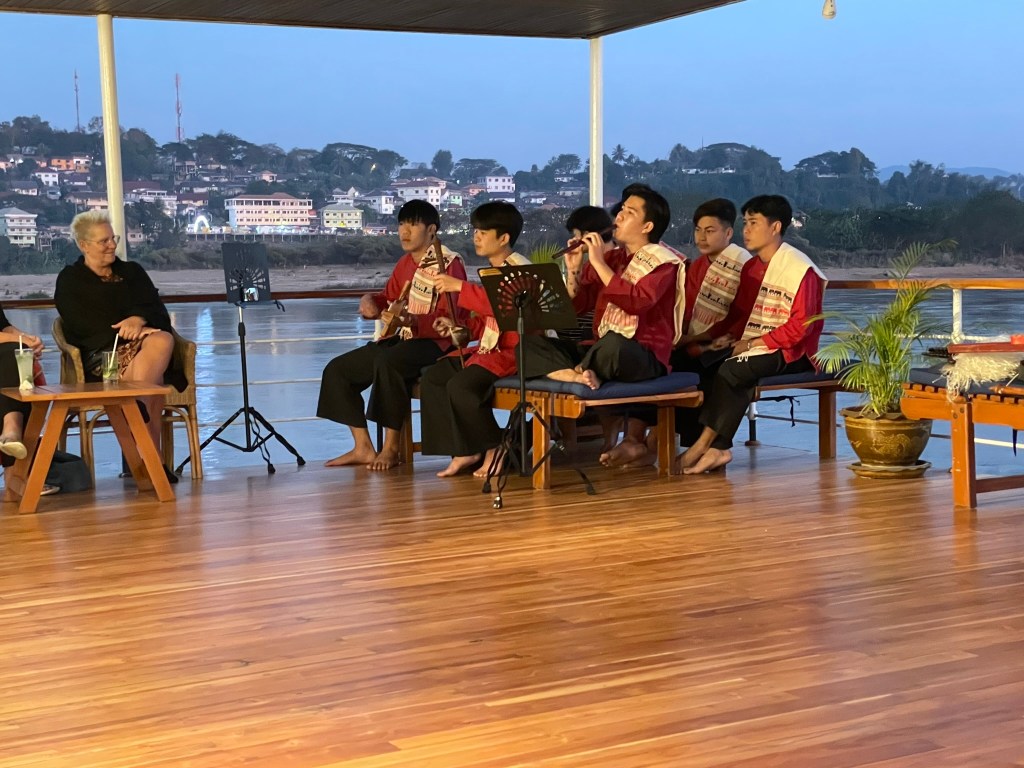
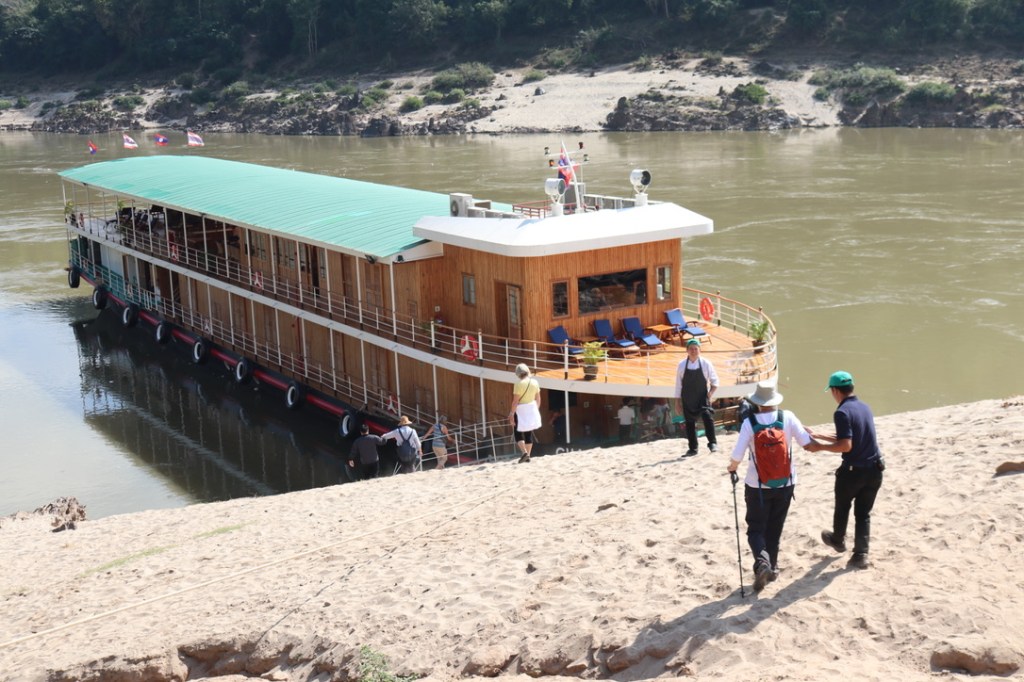
After lunch we finally drove to the boat Champa Pandaw. We were greeted on board by the crew and served with drinks before being finding our cabin 108 – halfway down the starboard side. It was as described and seen in the brochures. Very colonial style – beautifully varnished wooden panels. A large room with twin beds, bedside tables, dressing table, wardrobe and a large bathroom and shower. Upstairs was a covered area with seating down both sides and the dining room. We stayed at Chiang Khong overnight. After cocktails a group of traditional Thai dancers from the Hmong tribe performed for us – a group of female dancers and a male orchestra. Inevitably we are all persuaded to dance but in a sympathetic way. Our first dinner on board provided an opportunity to meet our fellow guests – Australia, Germany, California as well as UK. A few single people some of whom had paired up – all of a similar age group.

$35 laundry on boat
100 Baht tip to driver
400 Baht tip to Amy (looked after us for the first few days in Chiang Mei)
9th January – Monday
Early morning tea and was served at 0600 – a little early for us with breakfast from 0700-0900 – more our time. The first morning was essentially admin – going through the formalities of crossing from Thailand into Laos – this proved a little stressful!
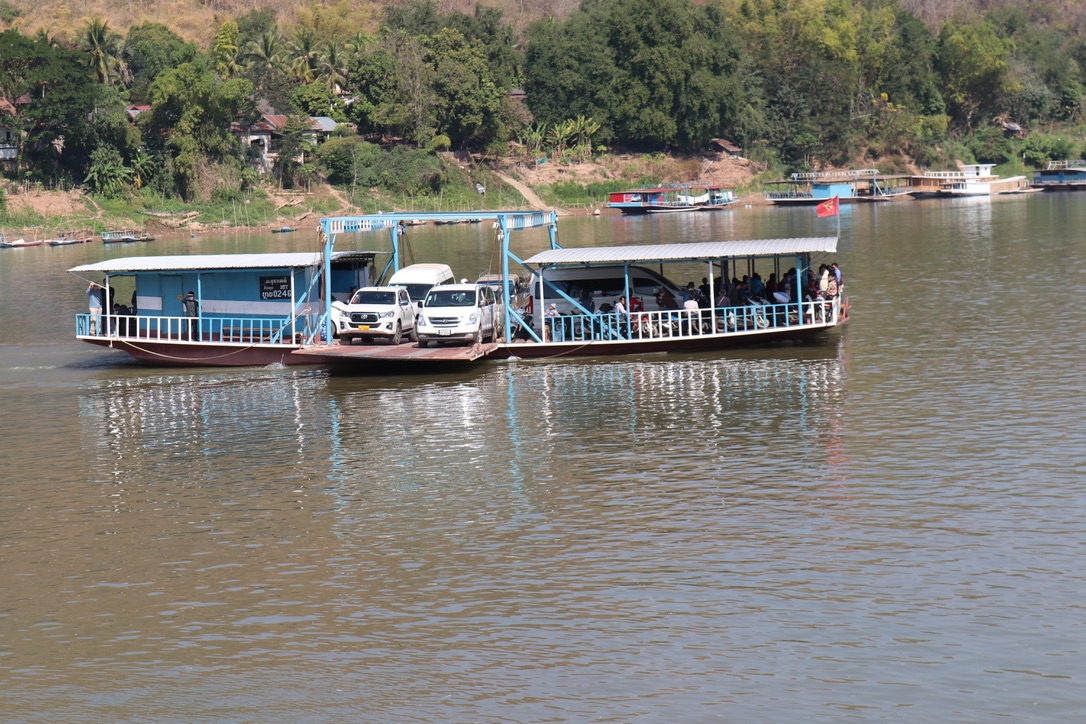
We were ferried to the border at Friendship Bridge No 4 where we were stamped out of Thailand. Forms and passports were handed in at one window with 20 Baht and a photograph and you went to another window to collect the stamped passports to recognise you had now left Thailand. Through a customs post to the Laos checkpoint. Fortunately I had changed money from $ to Laos currency and had got a feel for the main issue which was only pristine $ notes would be accepted – any mark, crease, ink stain and they were rejected. I managed to find 2 x $20 bill for Gillian but all other $ bills were rejected. Fortunately Gillian had spotted a sign that stated you could pay in Baht or local currency – so all the money I had changed went on pay my visa 69,000 Kip. But at last we were through and onto the bus. I did manage to change some more Baht into Kip so was not entirely penniless. Once across the bridge we met the boat that had travelled across to meet us. The whole process took about 1.5hrs. We then got underway down the Mekong.
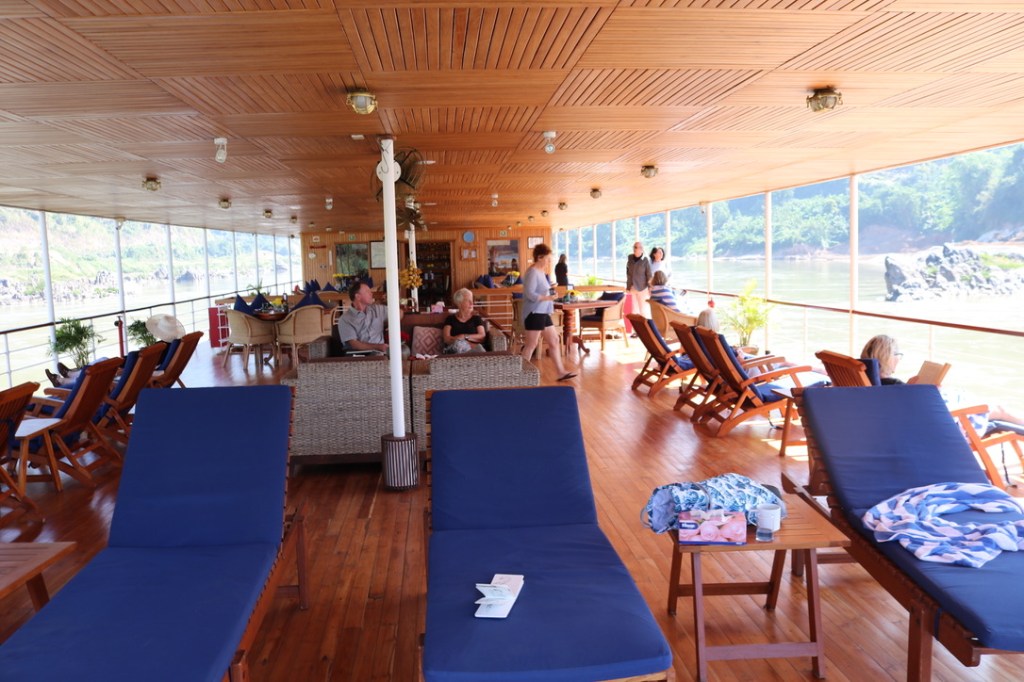
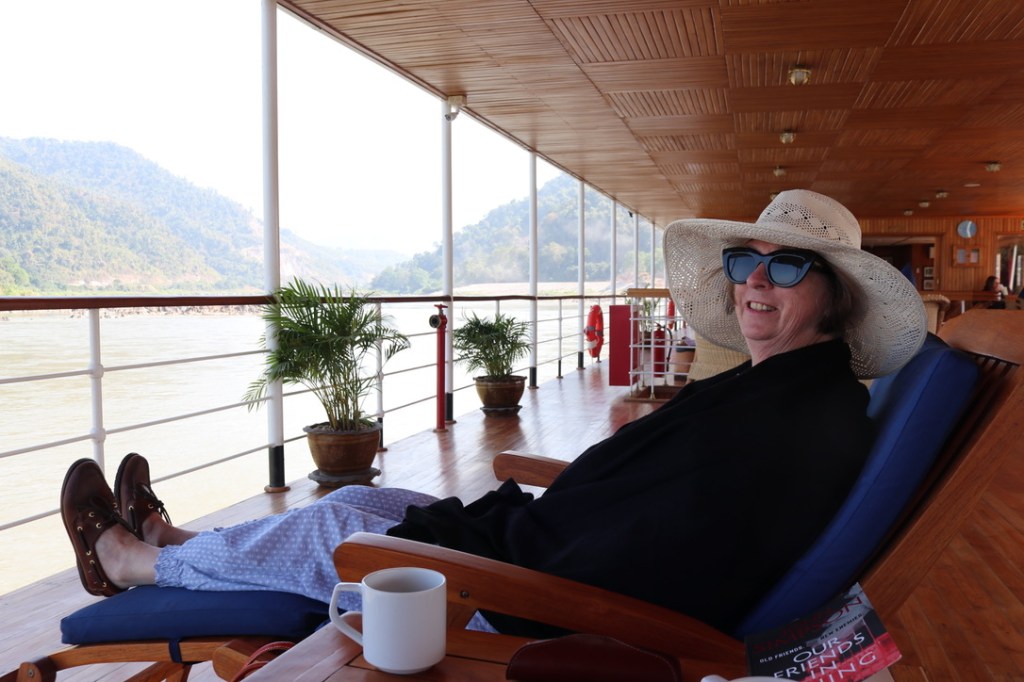
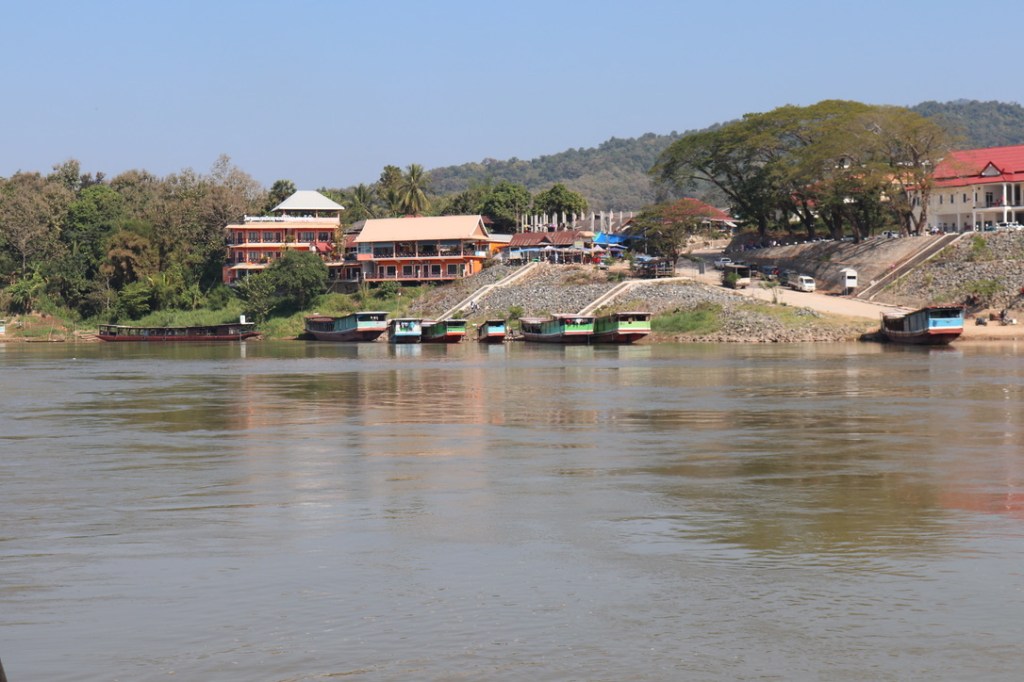
For the first couple of hours we had Thailand on one side of the river and Laos on the other, until the Mekong turned and flowed just through Laos. As we travelled down the river we passed what looked like gravel extraction from the river bed but turned out to be gold panning. The river was fast flowing and twisty with many rocky sections leading to some turbulence. After lunch we had an hour language training – more an introduction to Laos, its people and its culture. With the exception of the head chef the entire crew were Lao.
Sa bai dee – hello
Kop jai lai lai – thank you very much
Sap lei – delicious
Dee lai – very good
Khoy zue wa – my name is
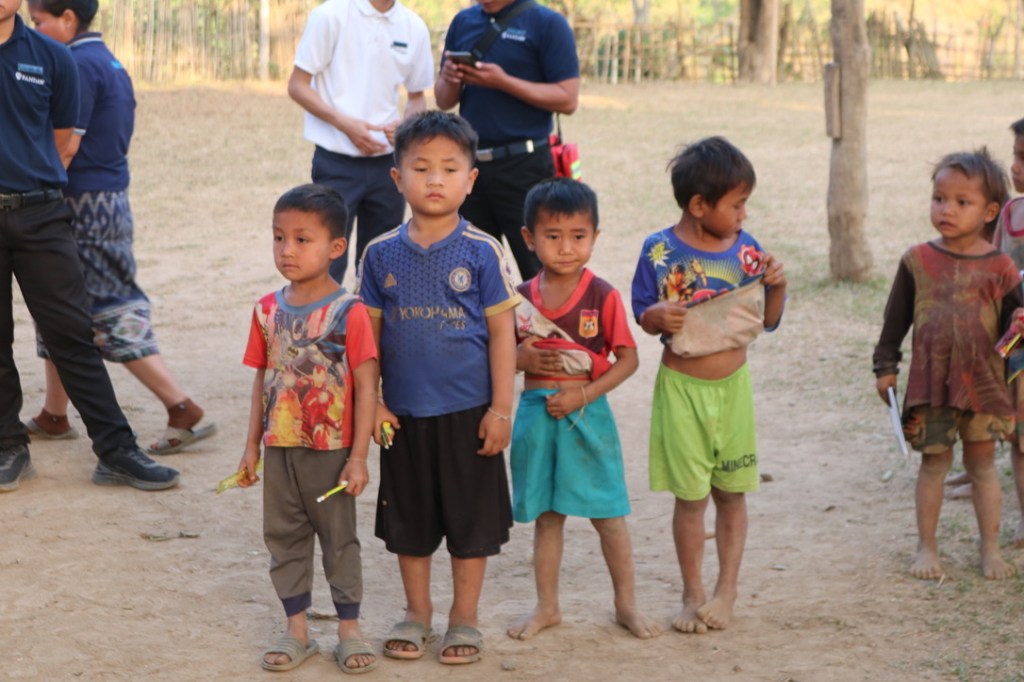
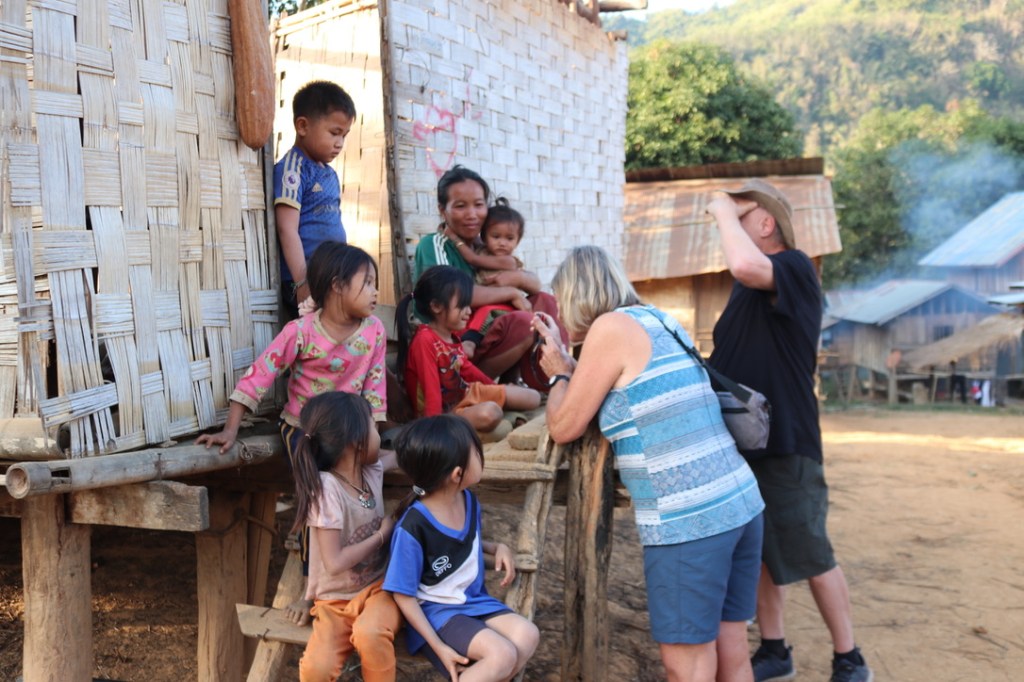
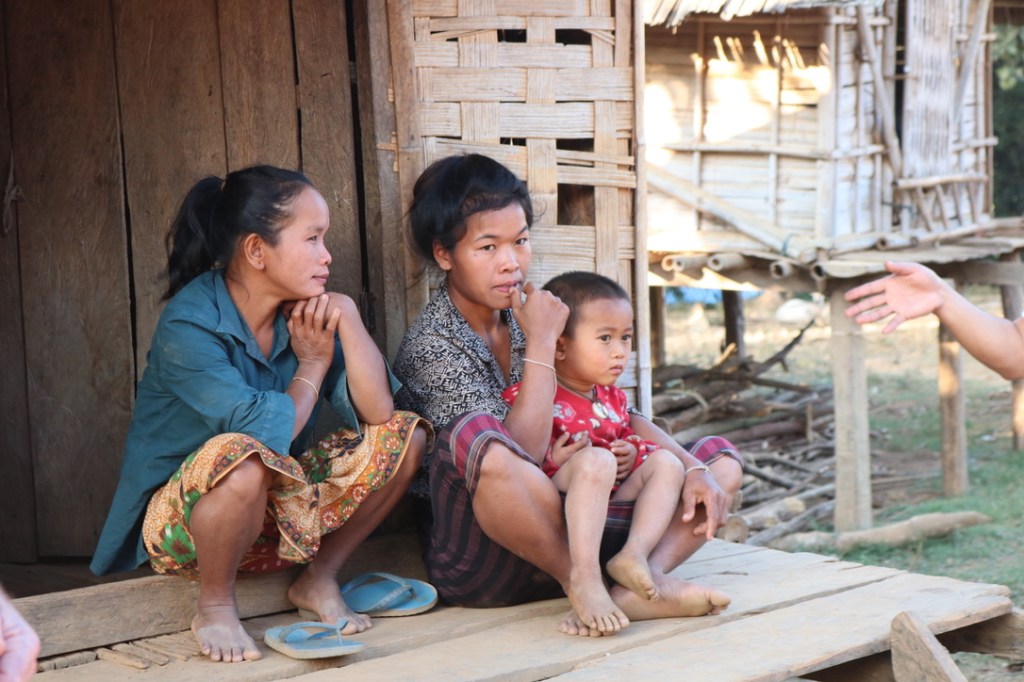
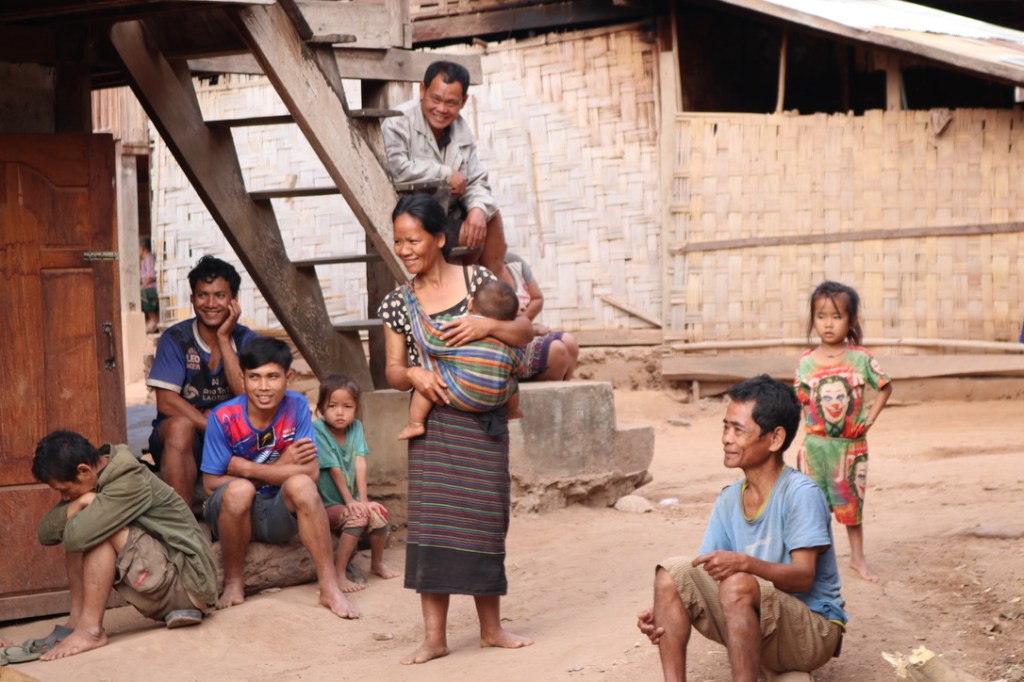
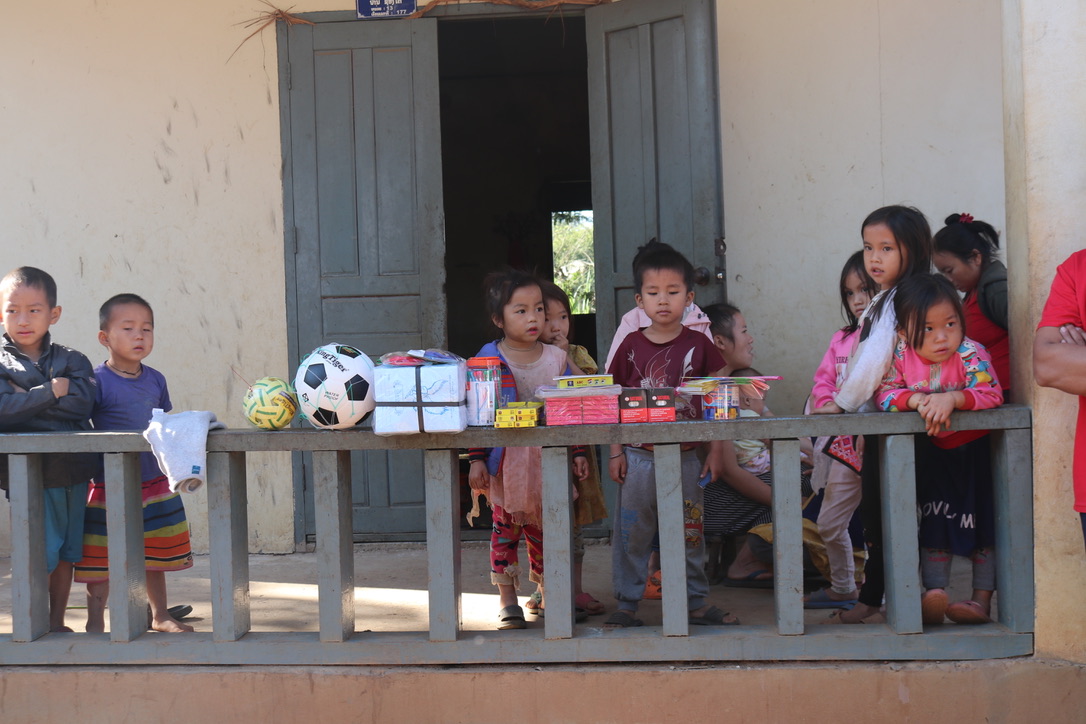
Soon after finishing this we visited our first village – Ban Paksith. I do find visiting people’s villagers a little awkward – here are we rich and pampered westerners taking photographs and looking into people’s less fortunate lifestyle. But on this occasion it was really well managed by the guide Vieng who chatted with the villages, cracked jokes with them and seemed to have a genuine rapport. There was no getting away from the fact that the people were poor – more or less subsistence farmers and hunters. There were virtually no birds near the river bank – they had all been killed. Most people are bare foot. But they did indeed seem happy. We walked through the village to the junior school where we were met by two lines of children who sang and danced for us. Vieng had brought pencils, books and games that had been donated by a previous passenger which were handed out to each of the children. Some of the parents – mainly mothers came along to watch and as we walked back out to the village we could see the young children showing to their parents what they had been given. When we got back to the boat there were a group of children sitting on the rocks gazing at us.
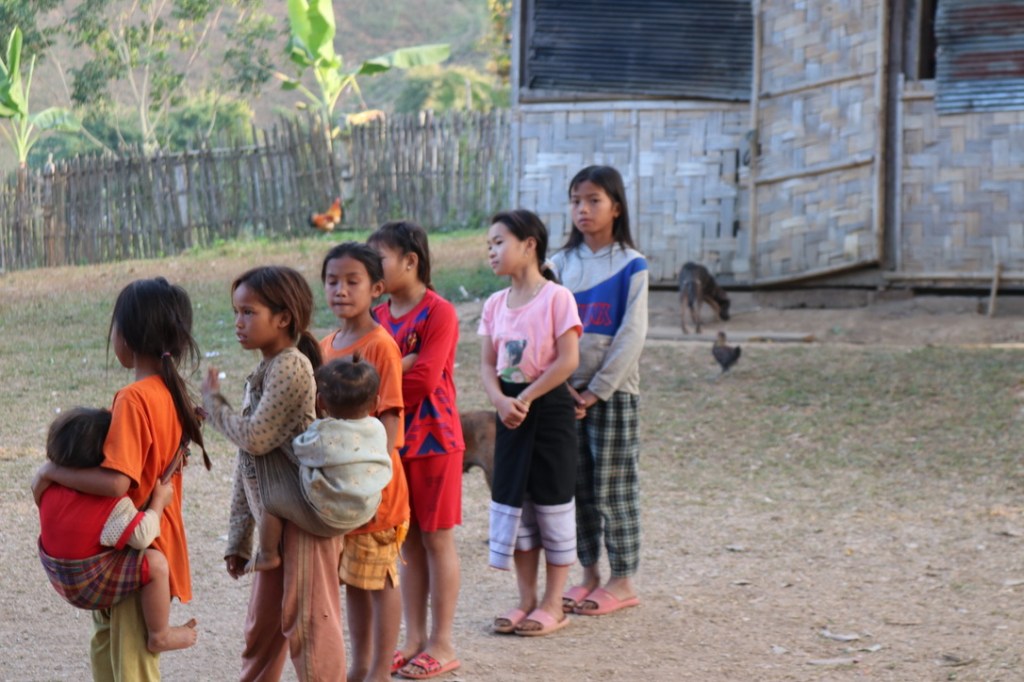
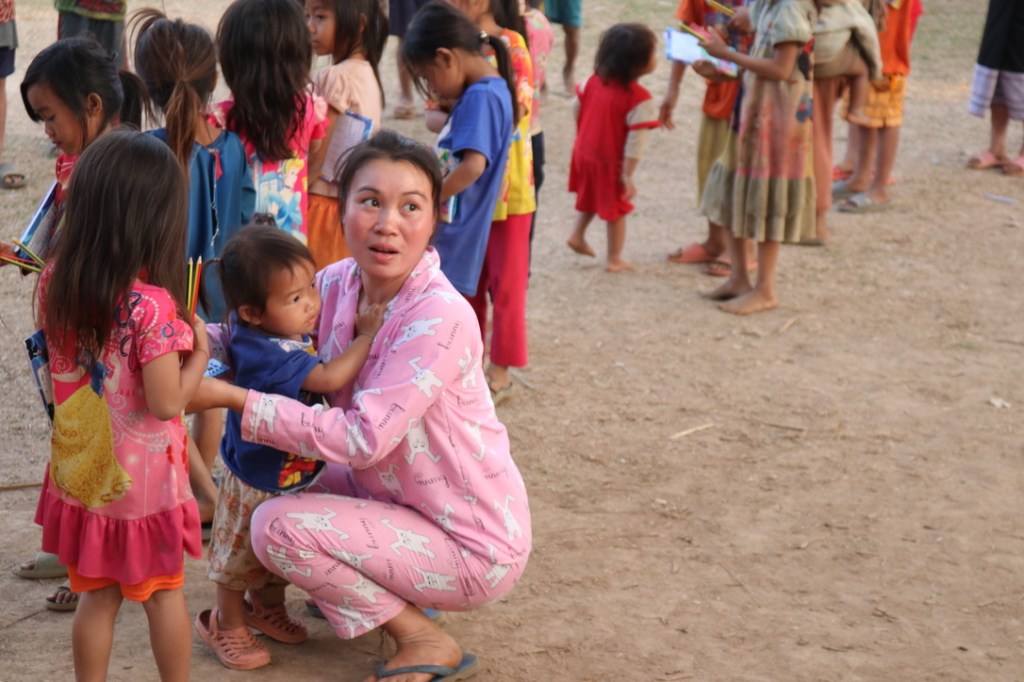
Dinner was excellent – giant Thai prawns with chilli sauce. After dinner was a film on the wildlife of Laos – its tigers and big cats. I was certainly ignorant when we started on this journey as to where we are going and on Laos. In a short period I had become very entranced with the country. One that has rich diversity of culture and wildlife, stunning untouched vistas but poor. Slowly you can see the Chinese influence, buying land and access by creating debt and dependancy of Laos via the Belt and Road Initiative.
10th January – Tuesday
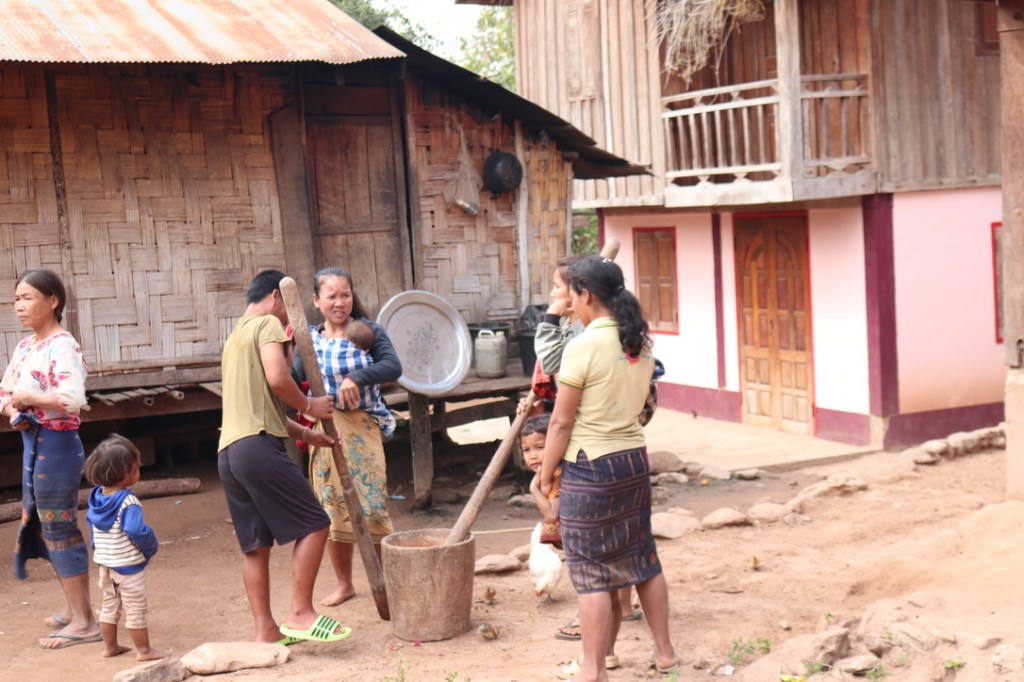
Woke up having had a poor night sleep; very bunged up. Slept with outer doors open with the inner neted doors closed to improve airflow. Got up at 0630 just as the boat was departing. Wandered upstairs in shorts, long sleeve shirt and jumper – it was very cold! So much for the advice from Alice and Jenny that we would never need warm clothes! Chatted to Vieng as both of us shivered by the guard rail. In a very nice way he observed the difference between us on the boat and all in Laos – we worked to have holidays and they worked to feed themselves. After breakfast finished we picked below a Khmer village of around 800 people – Ban Huey Laow. Was wealthier than yesterday’s village by the state of the houses and dress of the people. The teacher was introduced to us – she had worked and lived in the village for 7 years with no pay to set up and run the school. This year was the first year the government allowed a quota for a teacher to the village and she would now be paid. Vieng took us to one of the open areas and chatted to the locals translating back to us. We were introduced to one of the elder ladies who had 12 children but lost 4 – about the norm for Laos. Gillian had asked yesterday about birth control. Whilst the government have occasional campaigns, the villagers are too embarrassed to talk about it and they cannot afford the birth control pills or condoms. As we walked further into the village we watched a family pounding rice in a bowl and then separating the grains from the husks. Each family grows crops for just themselves and any surplus was sold at market. Rice crop is once per year in Laos whereas Thailand manages two crops. They still rely on hunting and fishing for protein. Vieng was put in a bit of a difficult position when one of the elders of the village asked why after independence were they even poorer yet the government said they were all better off. For the first time Vieng hinted at some of the problems in Laos – limited freedom of speech, monitoring of social media. People had to be careful what they said and to whom – disappearances still occured.
At the end of the tour we stopped at the village shop where they had opened some sticky rice whisky. It was like Nepal where the rice is fermented in a jug for 3 months and then either water or coconut milk added to it. People sit around and suck the whisky from the communal jar through bamboo straws. We left a small donation 10,000kip which is about 50p.
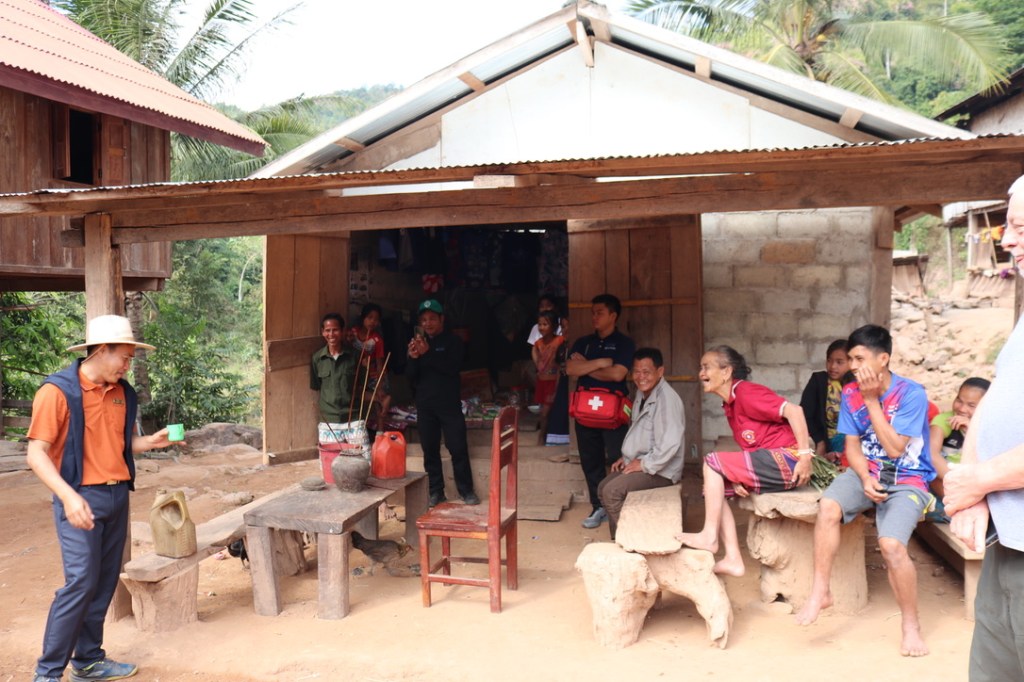
In the afternoon Vieng gave a talk on the history of Laos – its transition from a monarchy to a People’s Democratic Republic. Clearly a little difficult for him as there was a need to maintain the official line but there was mention of a ‘special zone’ where the remnants of the rebel army which seemed to be mainly Hmong seemed to reside and continue the fight. The growing influence of China was also a concern – loans to build infrastructure especially railways and road. The influx of Chinese people and the export of foodstuffs to China which was reciprocated with Chinese goods dominating the market.
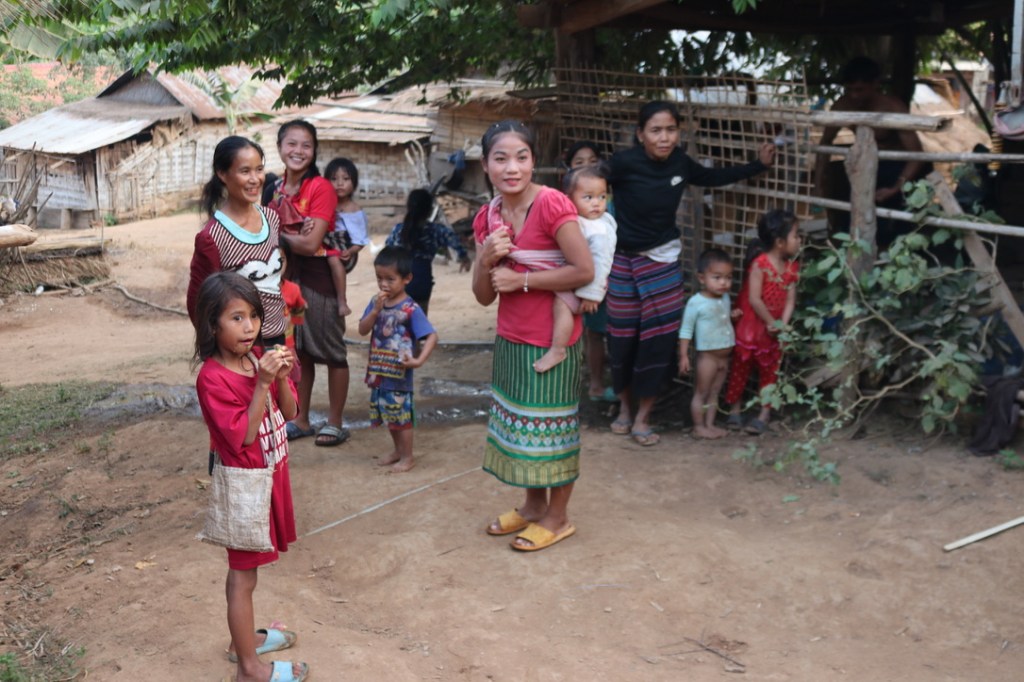
The afternoon was a trip to a different village – Kaengken Village (Pak Baeng) which was a mixture of lowland and and Highland people. We arrived as two ceremonies were taking place – the birth of a baby – one month after the birth so that the mother had recovered and the baby was going to live – secondly a wedding ceremony. The entire lower village was very drunk and very friendly! We were invited into the father’s house and offered Lao Whiskey and then to the wedding ceremony were we were invited to dance whilst drinking beer. Afer a little while we extracted ourselves and walked up to the highland village – after the noise and drink lower down this seemed very peaceful and calm!
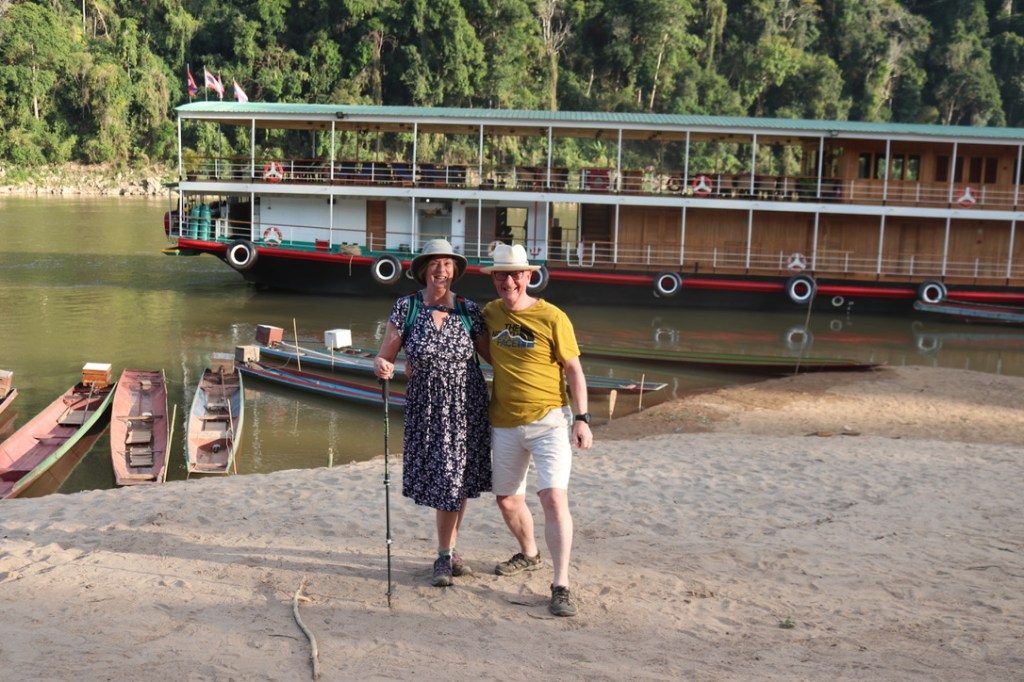
We moored down by the railway bridge so that everyone had Internet connection. It was a late night after dinner as we chatted with Peter, Fran, Michael and Sandra about our thoughts on the visits to the villages. Peter worked out here teaching in Luang Prabang – English as a foreign Language. There was a general feeling of discomfort with some of the visits – albeit they were extremely well run by Vieng. Pandaw did not pay any money to the villages we visited. We all felt it was a bit voyeuristic. Peter came up with the idea that we should ask everyone if they would be willing to pay a little money into a fund for Vieng to buy materials for a school in a village that we visited as a thank you.
That evening the dreaded cold struck – a very uncomfortable night. Gillian was very glad that we had separate beds in the room!
Laundry – $25
11th January – Wednesday
This was not a good day. I had gone down with a cold overnight and felt terrible in the morning. It was a fairly action packed day with a visit to Pak Ou Buddha caves in the morning. We transferred to a smaller boat to get us into the docking point at Pak Ou and then a short climb up to the lower caves.
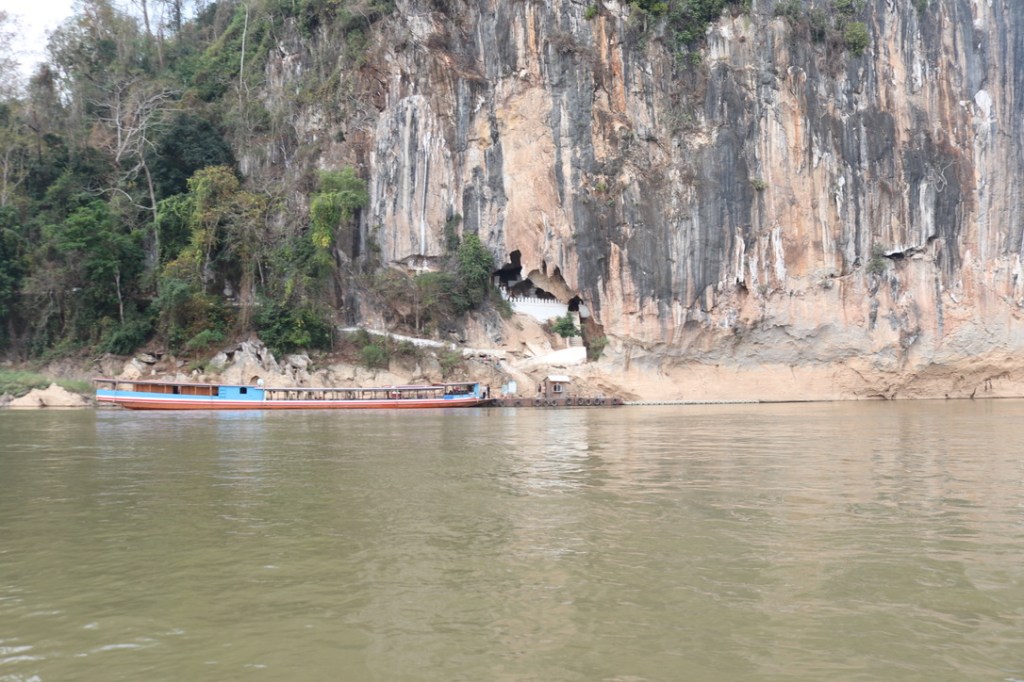
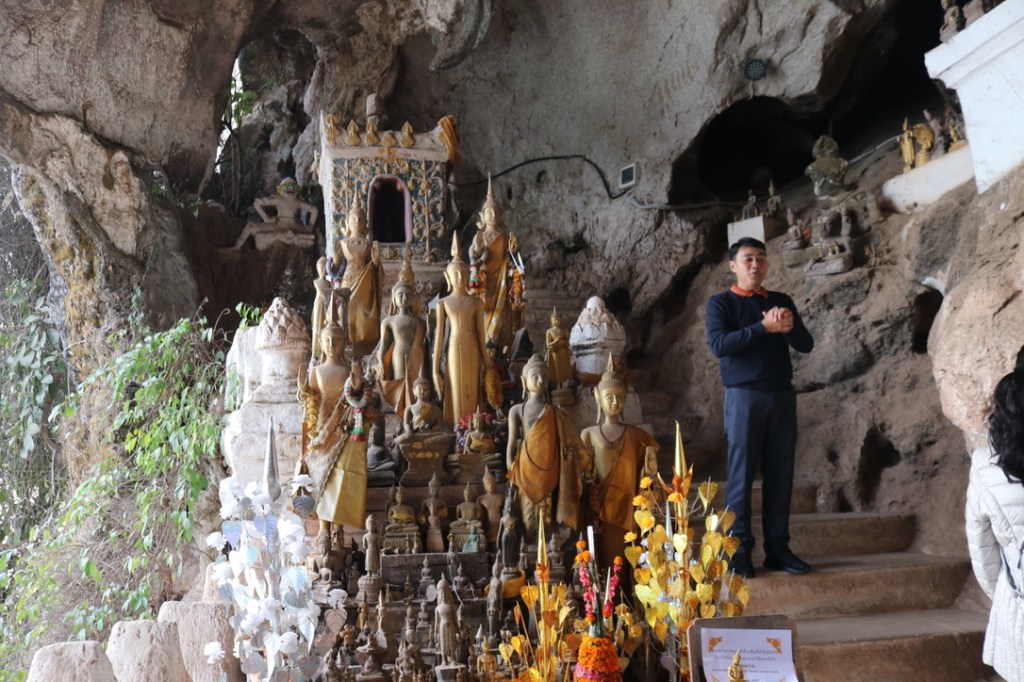
Located inside a scenic limestone cliff, the Pak Ou Caves are home to thousands (4000+) Buddha statues. It’s believed that the Lao people first entered the caves in the middle of the 8th century (when they moved south from China). At that time, Buddhism wasn’t prevalent for the country, so the Pak Ou Caves were used as a shrine to the river spirits. By the 16th century, the royal family has adopted Buddhism as a national religion, and every year (at New Year’s Day), the King and the people of Luang Prabang would go on a pilgrimage to the Pak Ou Caves. The thousands of Buddhist statues you see today are left by worshipers during hundreds of years of visits. You can find Buddhas from various centuries made from all kinds of materials and having plenty of different poses. There are two sets of caves – lower and upper. The walk to the upper is via a set of steep sets where you run the gantlet of many sellers of goods. But being Laos they are all very friendly and do not take offence when you say no!
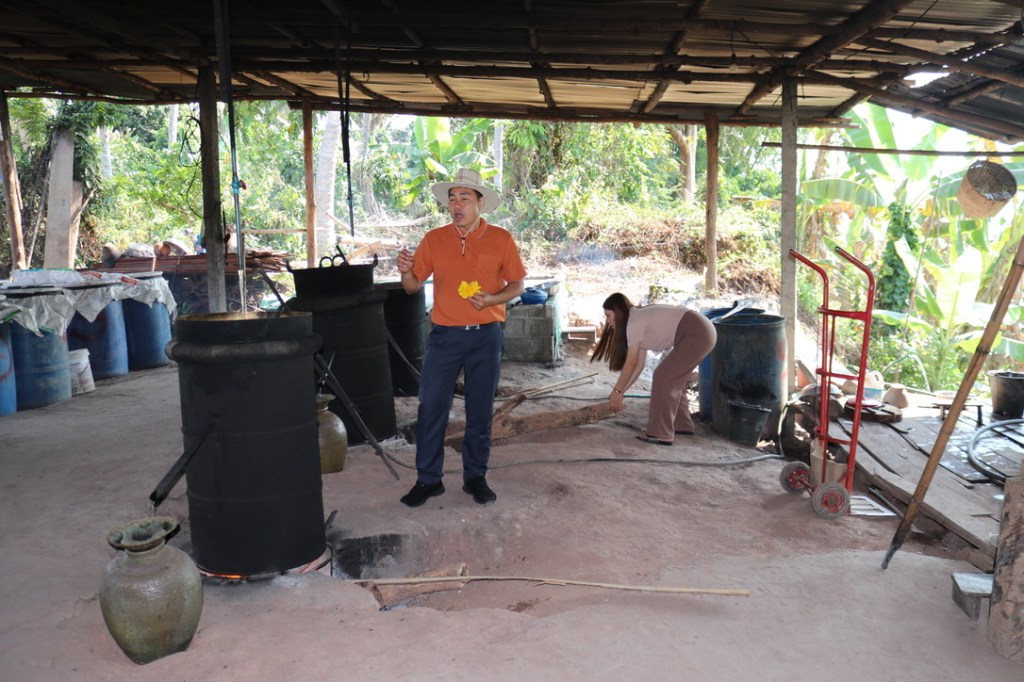
Back on the boat to travel a little further down stream to the town of Ban Xieng Lek which was on the other side of the river. The town is famous for its whisky making from fermented sticky rice. Huge cauldrons over open fires were producing a steady stream of the clear coloured whisky from the condensed liquid created by ensuring a continuous flow of cool water across the top of the cauldron. Beyond the the distillery, an open sided building overlooking the river, were streets full of weavers and their associated stalls – from cotton to silk. Bartering was a must with a reduction of 20%-30% achievable for those willing to take the time. She would put a price in the calculator and invite you to counter with a different price. Wherever you looked there were traditional looms being used.
Over lunch we drifted down to Luang Prabang, a large town that used to be the capital of Laos and where the last king resided before they were overthrown by the communists in 1975. When I asked what happened to the King and his family, the response was that they had been invited to take part in a re-education camp and had not been seen since. Although it is rumoured that two of his children who were in European schools escaped ‘re-education’.
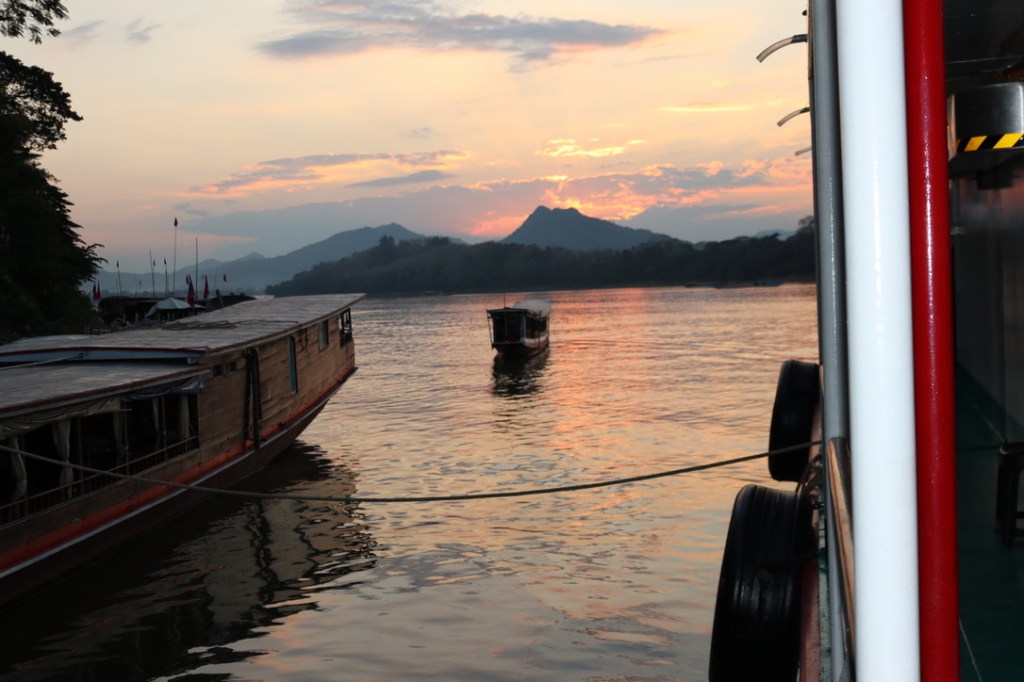
We did not venture out to the town in the afternoon as it was stiffling hot and I was feeling very unwell with the cold. Gillian read on the upper deck whilst I got some shut-eye.
In the evening after cocktails we were entertained by Lao Traditional dances in the Baci Ceremony. This is common place in Laos and is undertaken when there is something to celebrate – from birth to a family member returning home. A man and young boy played a Ra Nat and a drum respectively. The women sang and used miniature cymbals and the girls danced in traditional costumes. The very young boys danced Khon – with elaborate masks that covered their entire face and body suites of monkey or dragons.
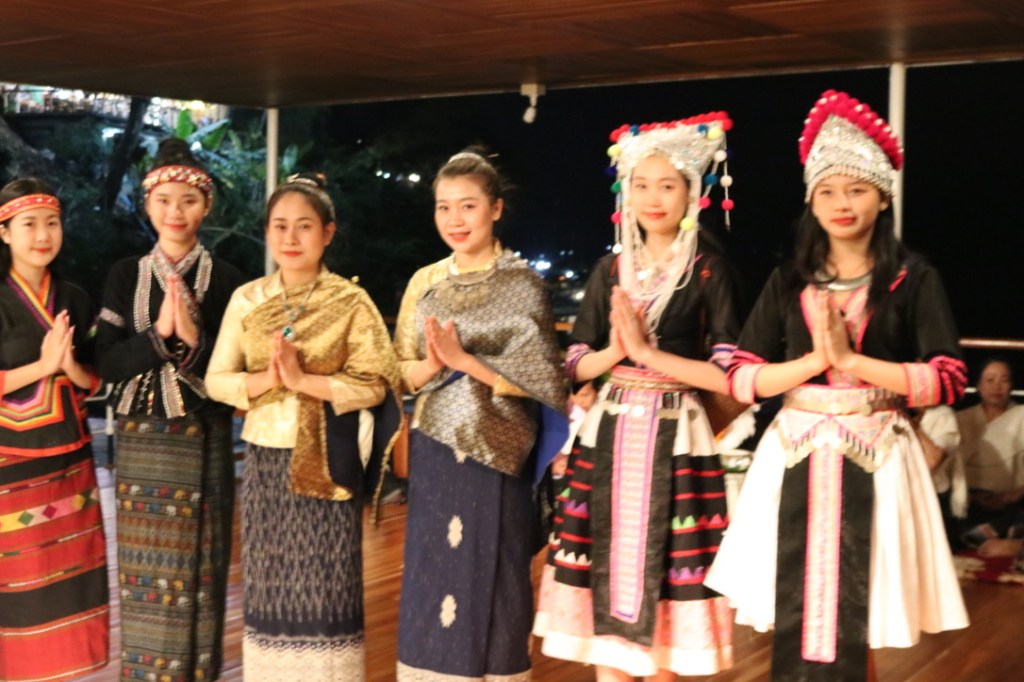
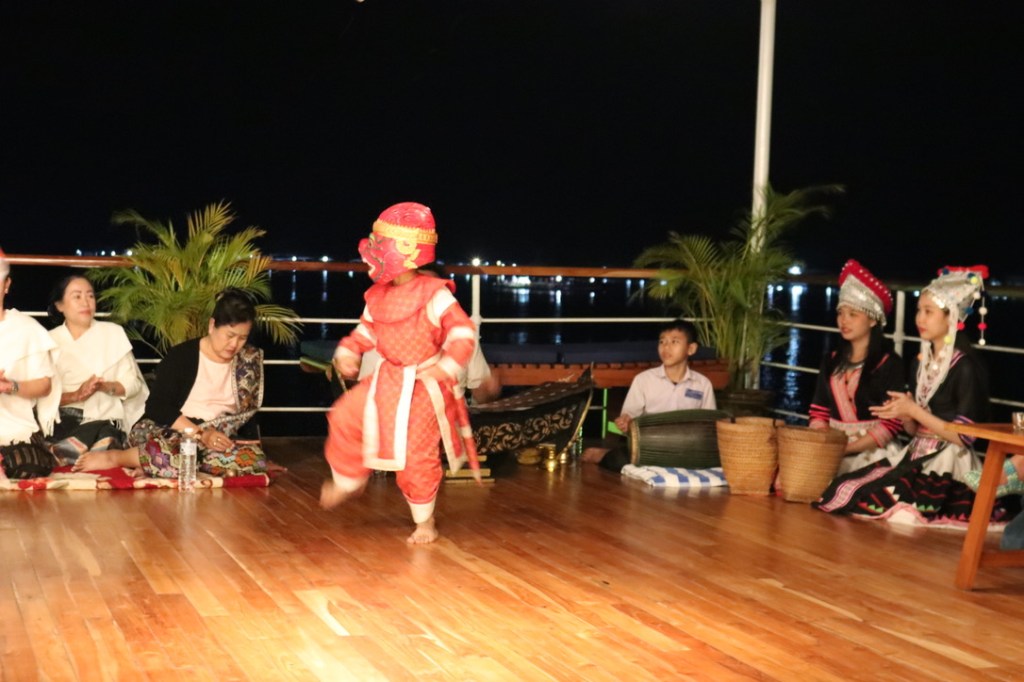
During the Baci ceremony, a white (symbolises purity) thread of silk or cotton was tied on the right and left hand wrist. The white thread is symbolic of “peace, harmony, good fortune, good health and human warmth and community”. The thread is worn by an individual normally for a minimum of three days and is untied thereafter.
After dinner it was an early night.
20,000 Kip – donation to shrine
12th January – Thursday
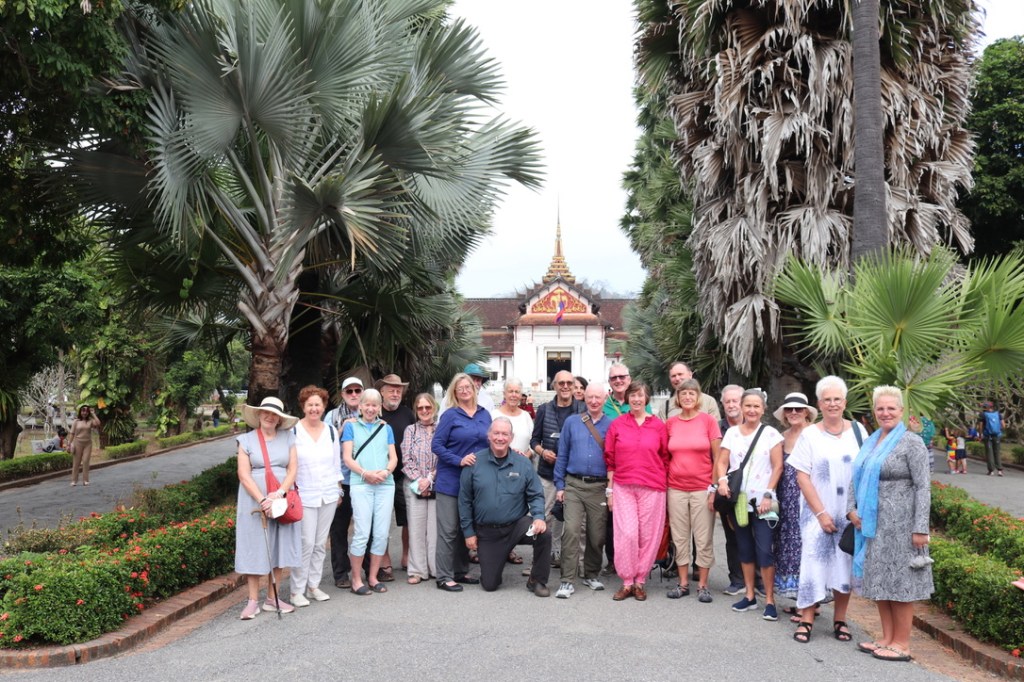
Feeling slightly better today. After breakfast we all boarded the Tuk-Tuk for a short tour of the highlights of the town – Luang Prabang. First stop was the National Museum – former palace of the Royal Family that was deposed in 1975 after the victory of the Lao Communist Party supported by Vietnam. As a palace it was not ostentatious and had been well preserved. We walked through the greeting areas, throne room and private apartments. The King and Queen had 5 children, 3 went with them to re-education camps where they died through neglect and malnutrition but the whereabouts of the other 2 seems to be uncertain – they were out of the country at the time of the takeover. We also had time to look around the King’s cars – mostly Lincolns but there was a Citroen that was not liked as it was manual and beneath a royal driver to drive.
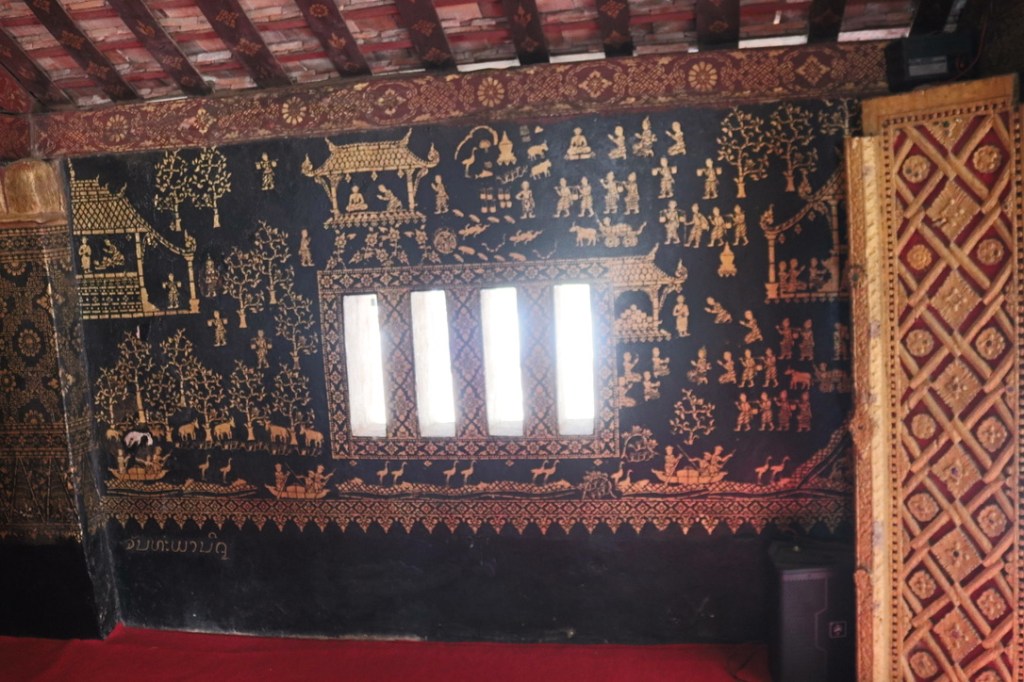
We then visited two further temples Wat Mai and Wat Xieng. Both incredibly beautiful, especially the latter with its glass mosaics.
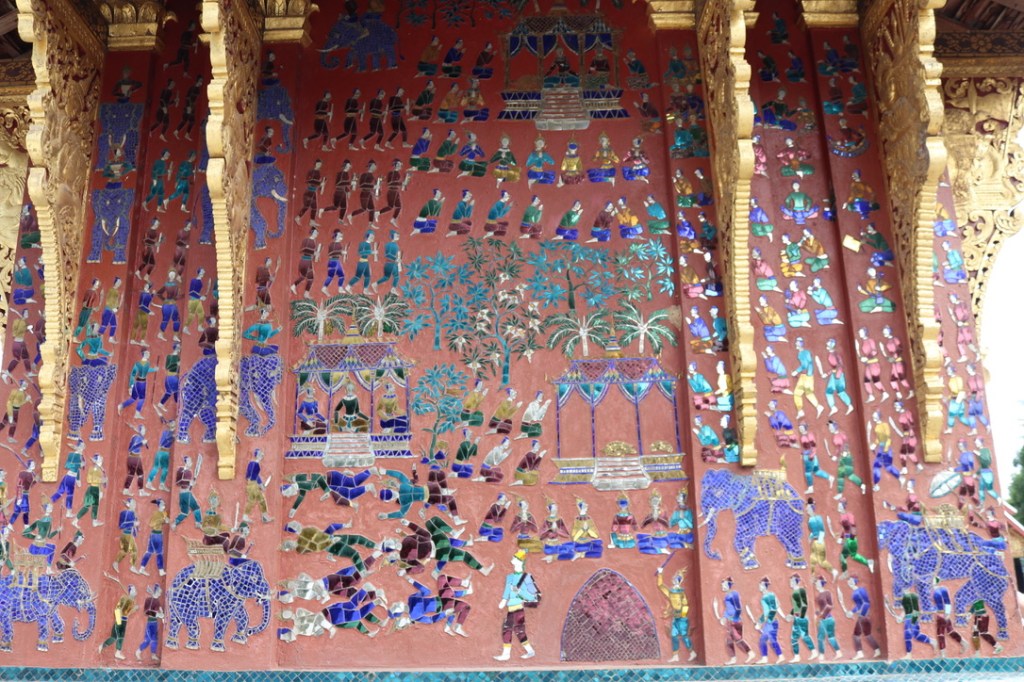
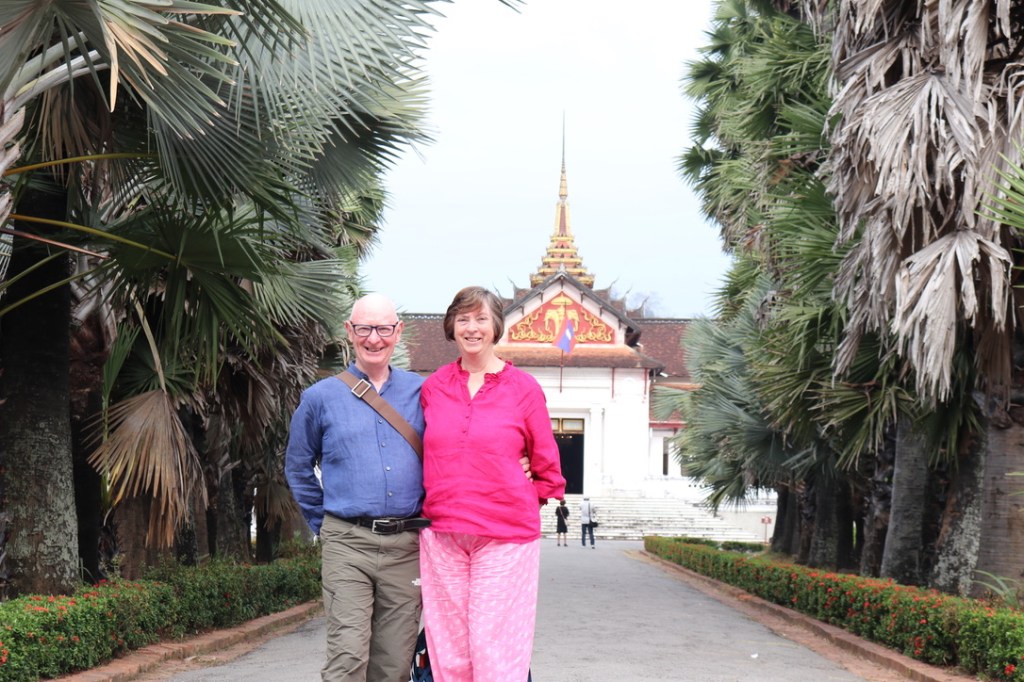
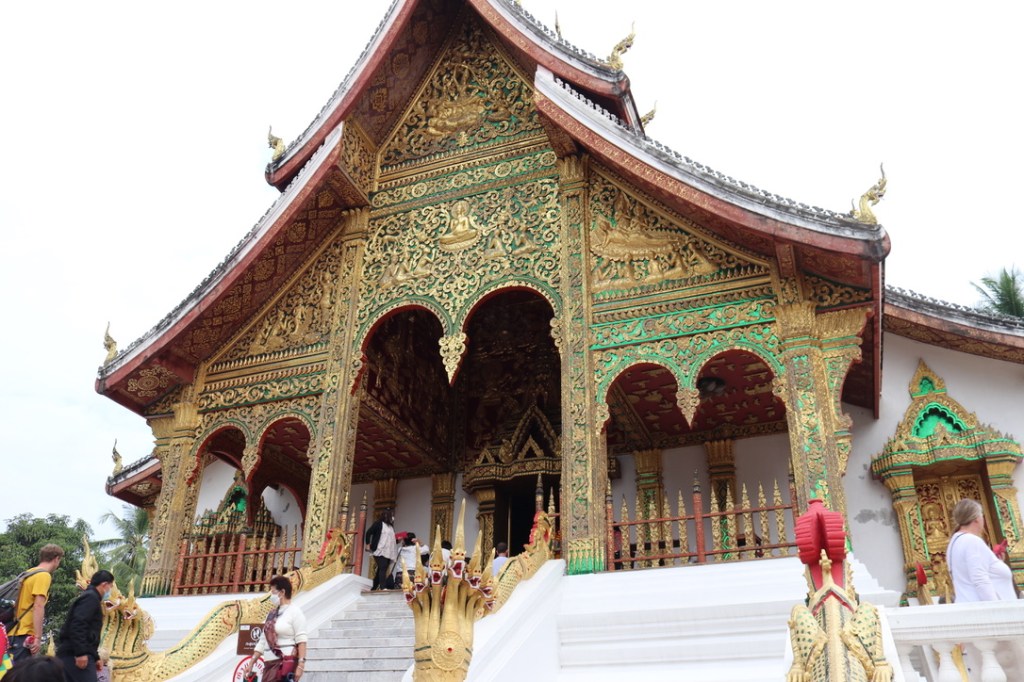
Late afternoon we went for a walk around the town, first stopping off at a coffee shop that roasted its own coffee beans from south of the country. Then down to the ‘bamboo bridge’ across the Khan River. This is only viable in the dry season and it is rebuilt each year. On the other side we had grabbed a table overlooking the bridge as subset occurred – slowly sipping a cocktail and a beer. Back across the bridge we wandered into town. I drew out 1m Kip assuming this would last me till the end of the trip – that was until we came across a shop selling Buddha’s. Gillian wanted to get a Tuesday and a Wednesday Buddha – there is a different one for each day of the week – but two for Wednesday. My negotiating skills departed me and I ended up paying far more than I should have – but still not that much. It is difficult to resent giving money to the people of a country which is so poor.
After a walk through the market we returned to the ship for a drink before bed. We noticed a huge pile of books, pens, footballs and other such equipment which was the result of Peter’s initiative to ask all the passengers to donate a small amount of money so that we could buy equipment for the next school we visited.
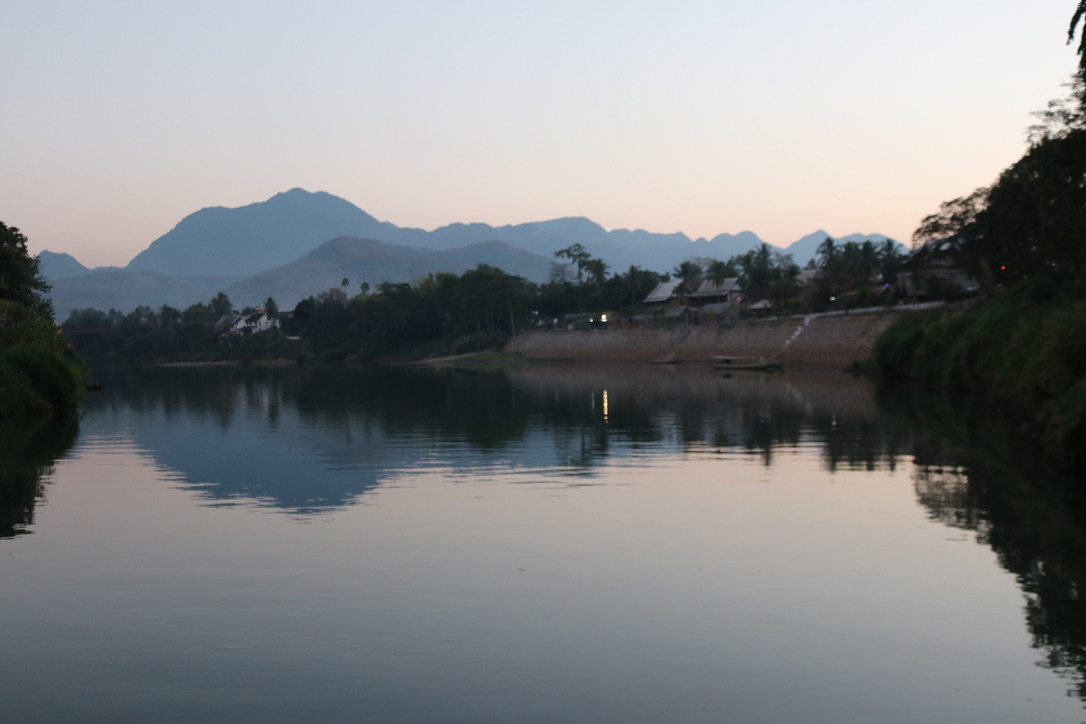
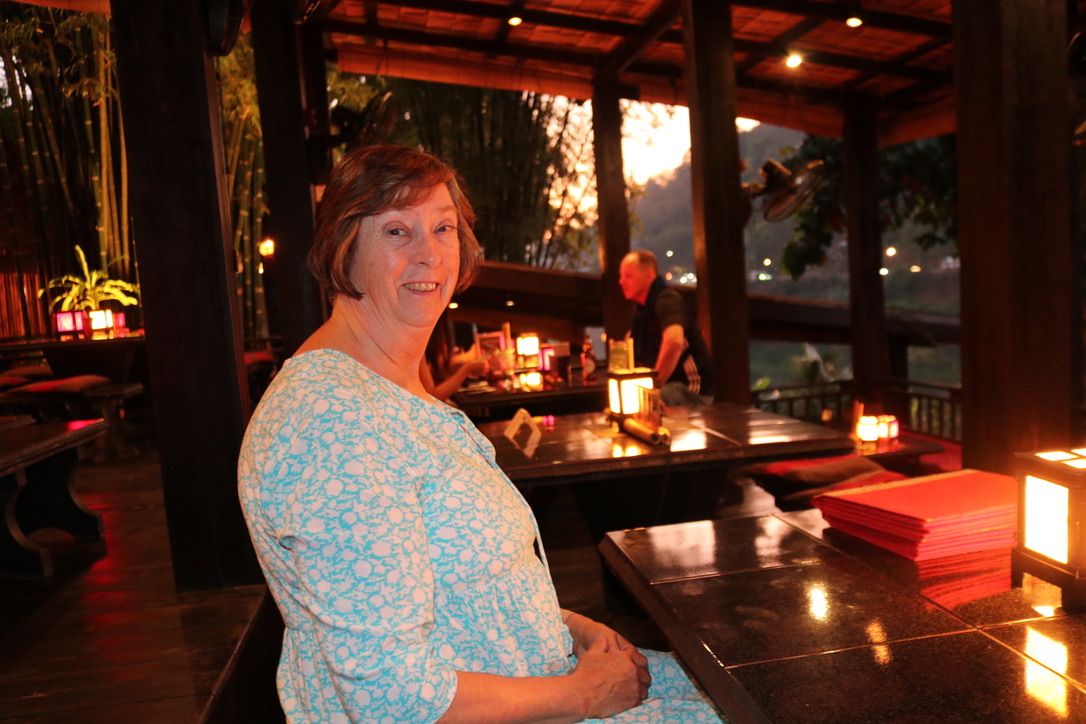
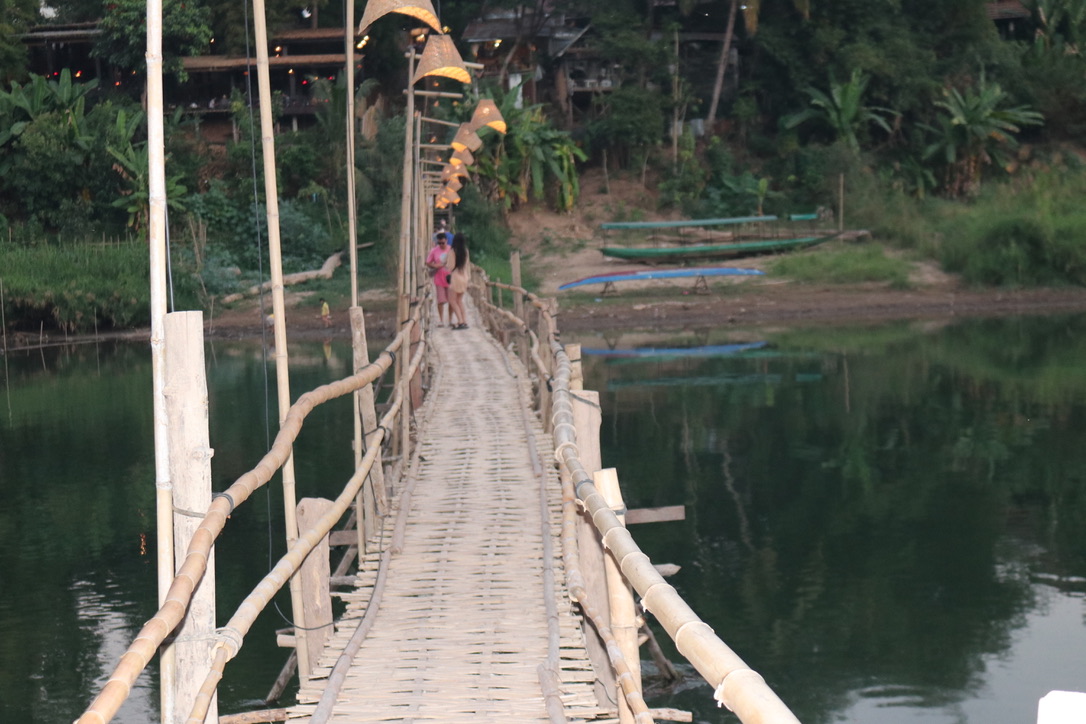
Whilst having a drink on board I read through a potted modern history of Laos. A country that has suffered much away from the eyes of the world, caught up in two Indo-China wars and suffering the most out of all the countries in the region. The Ho Chi Mingh trail ran through the SE of the country and as a result had more ordnance dropped on it than in all European countries in WW2. After the fall to the communists vast numbers of educated people left and the Hmong people suffered more than other ethic groups with 100,000 out of 400,000 purportedly killed. The country remains poor and locked into subsistence farming with Thailand and China battling over access to its resources.
Coffee – 50,000 kip
Drinks – 70,000 kip
Buddhas – 700,000 kip
13th January – Friday
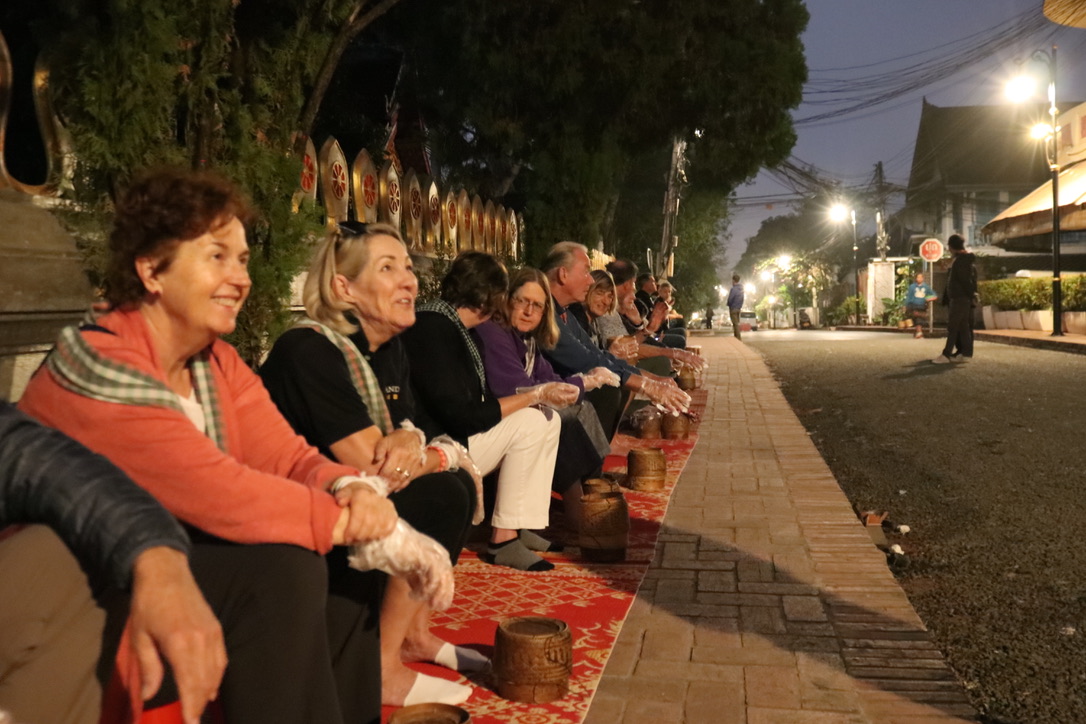
An early start – up at 0500 for tea and croissant in the salon lounge before walking into town for the Alms Giving ceremony. Each morning in Luang Prabang the monks from the different temples walk though the town collecting food from people by the road. Vieng had arranged for carpets, low stools and a basket of sticky rice for each of us to contribute to the monks food supply. We made little balls of sticky rice and as they passed each of us we dropped them into their container taking care not to touch. A simple ceremony that has been ongoing for many years but probably most of the food is now provided by tourists. As we made our way to the morning market after the ceremony we came across very young children – 7,8,9 – with plastics bags which the monks had given some of their food to the boys to feed their families.
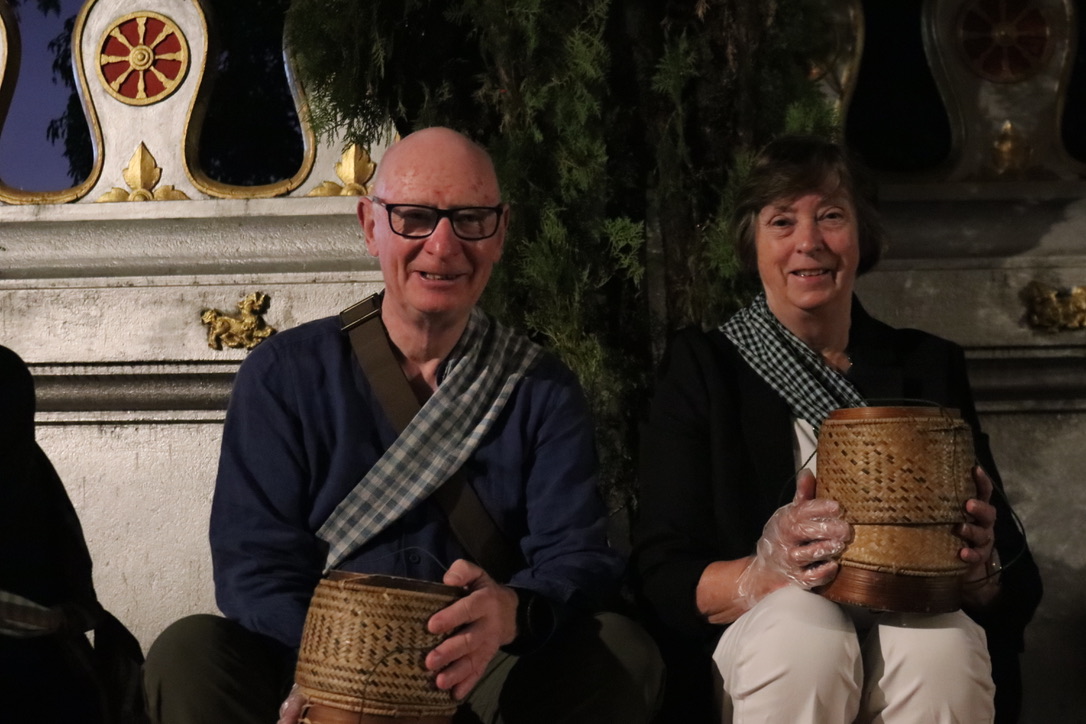
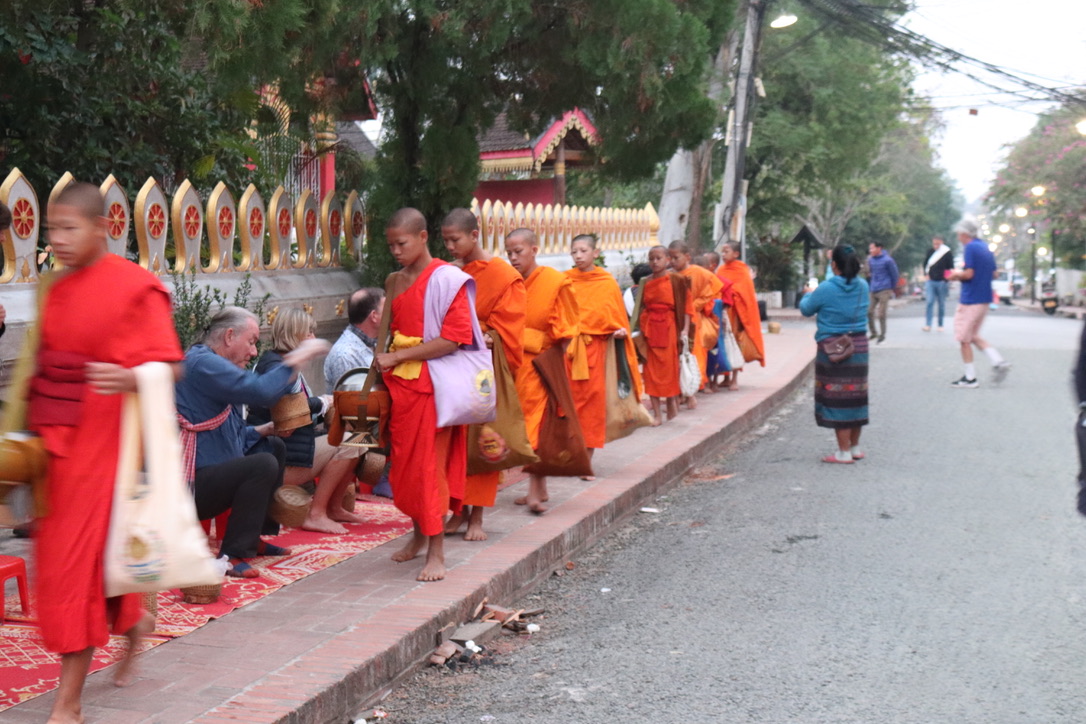
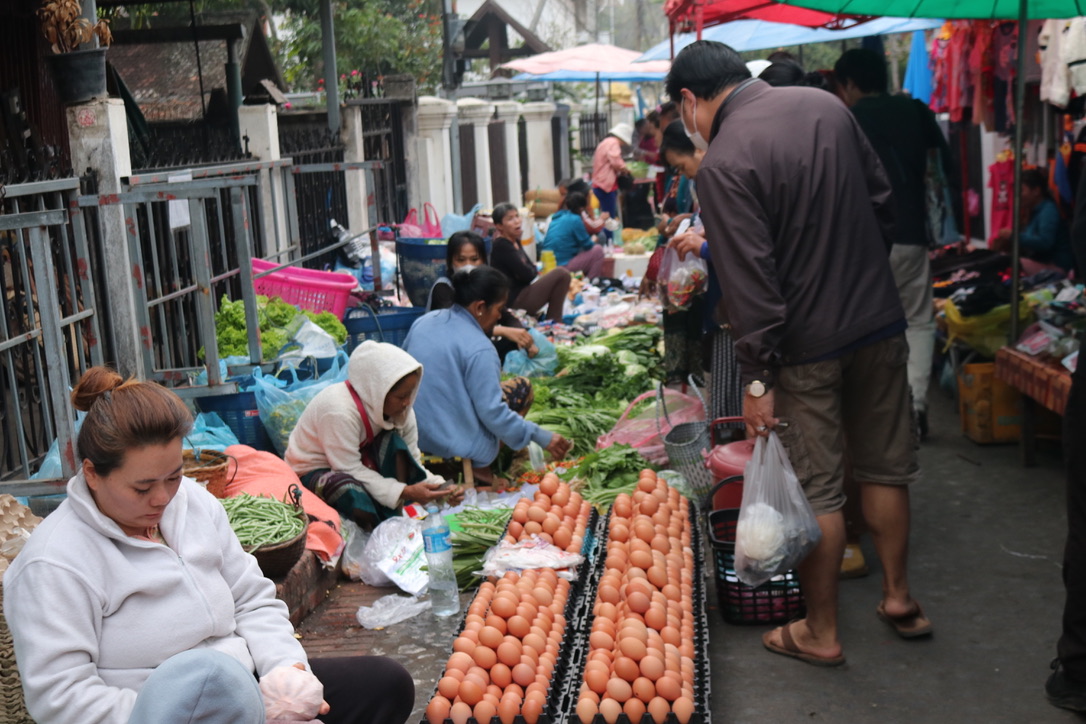
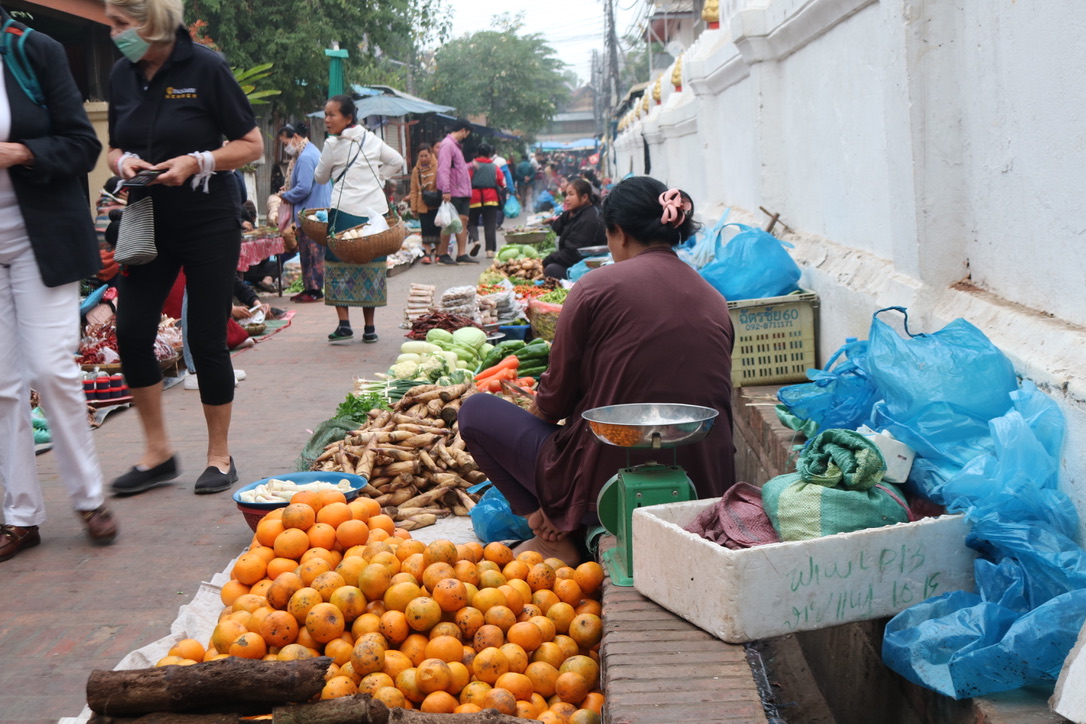
The morning market was large and bustling. Vegetables and spices of every variety as well as fish, meat and game. The Laos do eat whatever they can kill/catch – this includes, owls, rats, bats. Whilst we as westerners may have our own reservations, we are able to have the luxury of the thoughts based upon an ample diet. Who are we to say it is wrong when the alternative is no protein intake and just a diet of low quality rice.
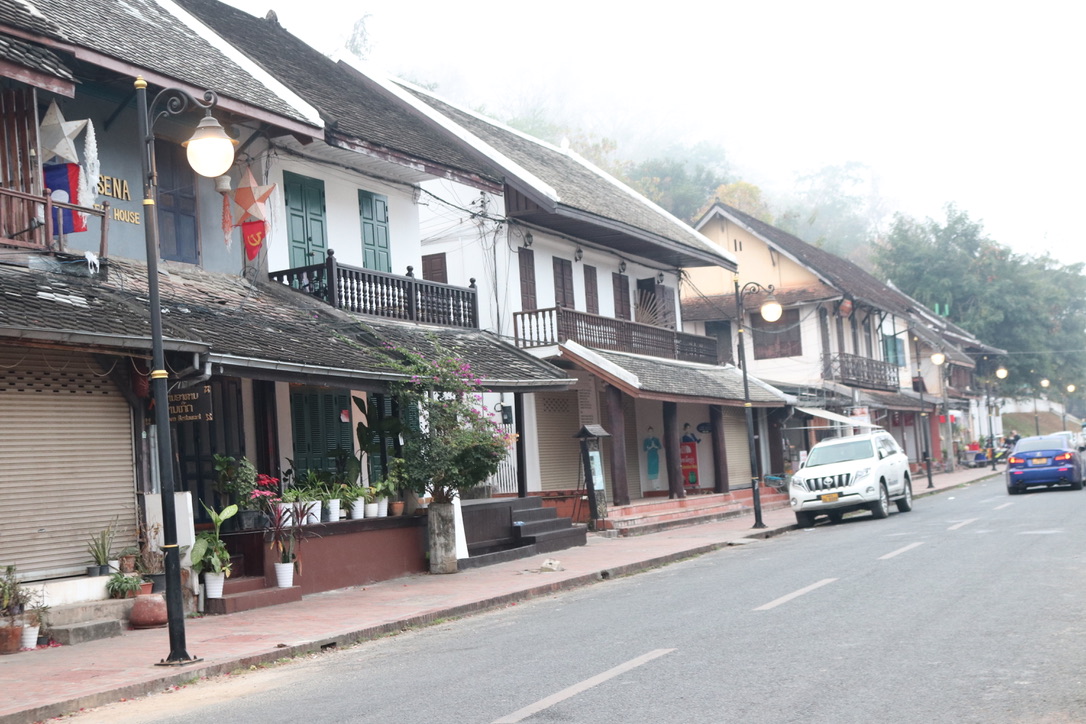
After breakfast Gillian stayed on the boat and I walked into town for a massage. I picked a location more or less at random on the main street but it turned out to be quite good. First my feet were washed and I was then taken into a room where I lay down om a mattress on the floor and had a back, shoulder and neck massage for 1 hour at a cost of 10,000 Kip – around £5. The etiquette was to change into the PJs they left for you on the bed whilst they were out of the room and they would then come back in to undertake the treatment.
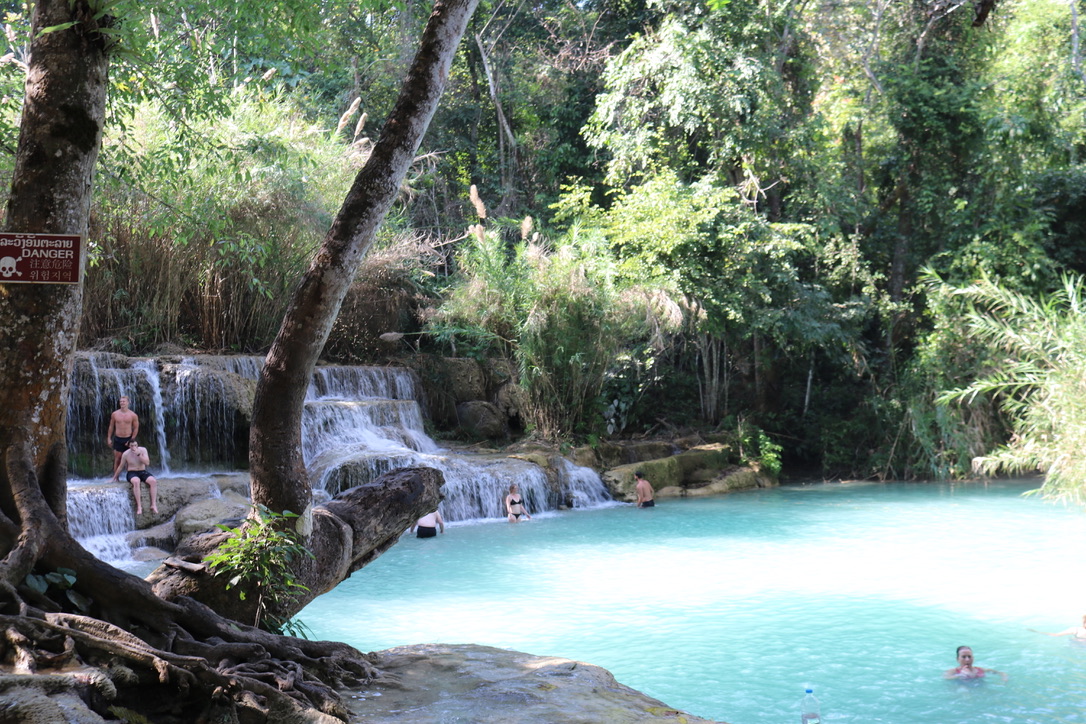
Back on the boat we sailed down the river to Muang Khan Village. The first visit was to the Kuang Si Waterfalls. The area was packed with tourists, quite a shock after the last few days where there had been relatively few people around, even in Luang Prabang. The area was laid out with 3 swimming pools and at the top, a huge waterfall. Gillian was in the water before me. It was refreshing but not cold and there were not too many people who were willing to get in, although they lined the banks to take photographs. Upon getting out we walked up to the main waterfall – it was quite stunning but again packed with people, many posing for photographs. There no longer seems to be a concept of point and click. We did manage to find a spot where we could quickly take some pictures before being again swarmed by other tourists.
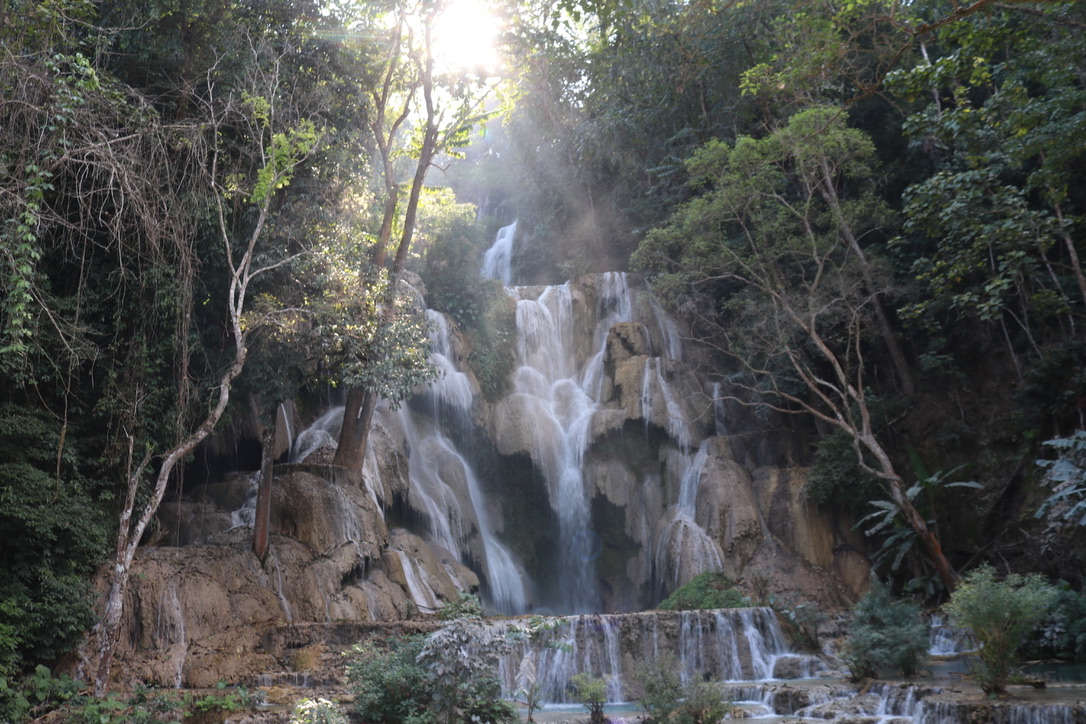
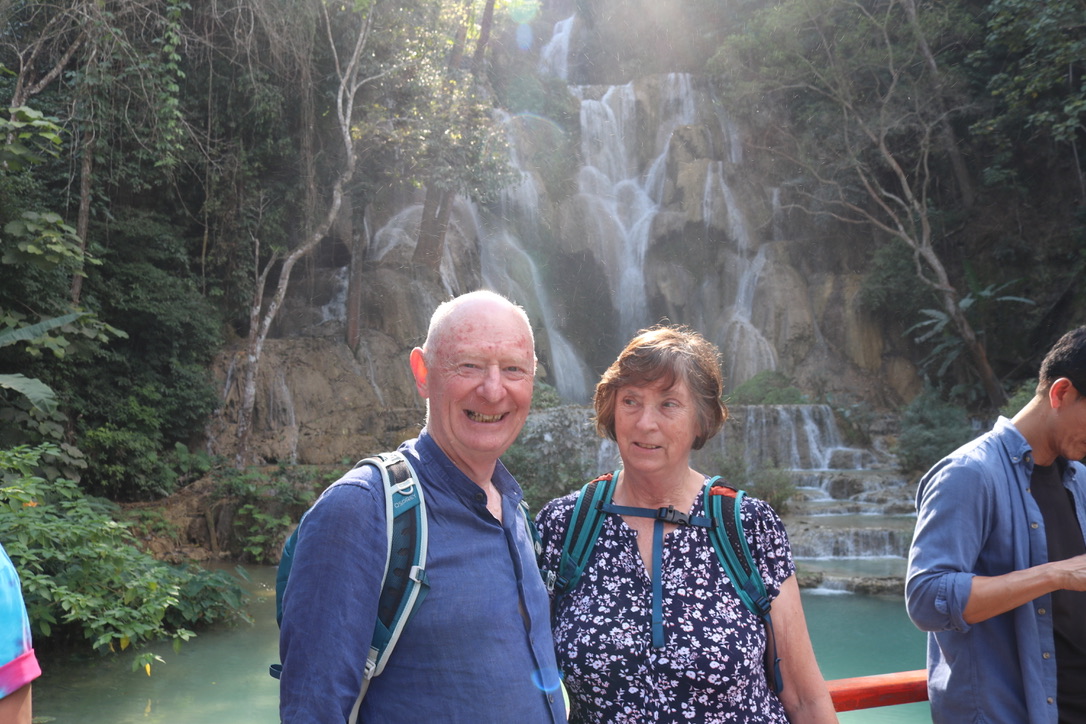
The walk back down was a little depressing. Within the complex there is a mini-zoo/sanctuary for rescued Sun Bears. We did see 4 of them but the enclosures were small compared to more environmental animal sanctuaries.
Next stop was the butterfly breeding programme. This has been set up just before Covid hit – a theme we heard regularly during the trip. All the hard work pre-pandemic did not bring in any money. But the volunteer team stayed out there and instead provided food and meals for the local villages who had no income or government help over the course of 2+ years. Everyone was in survival mode.
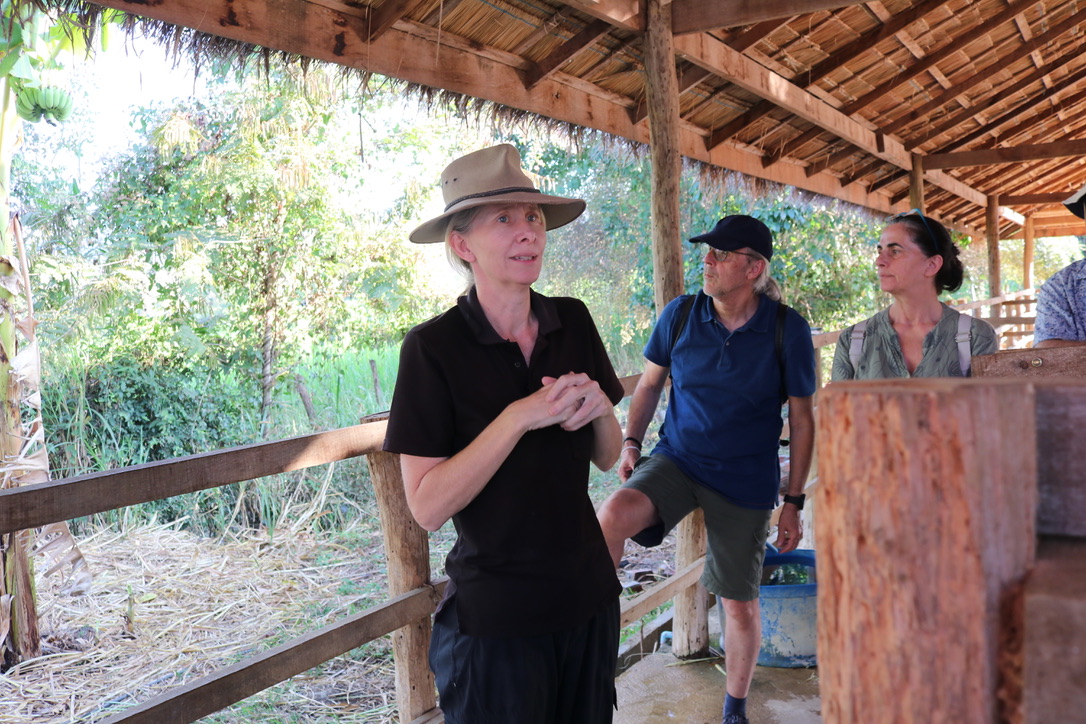
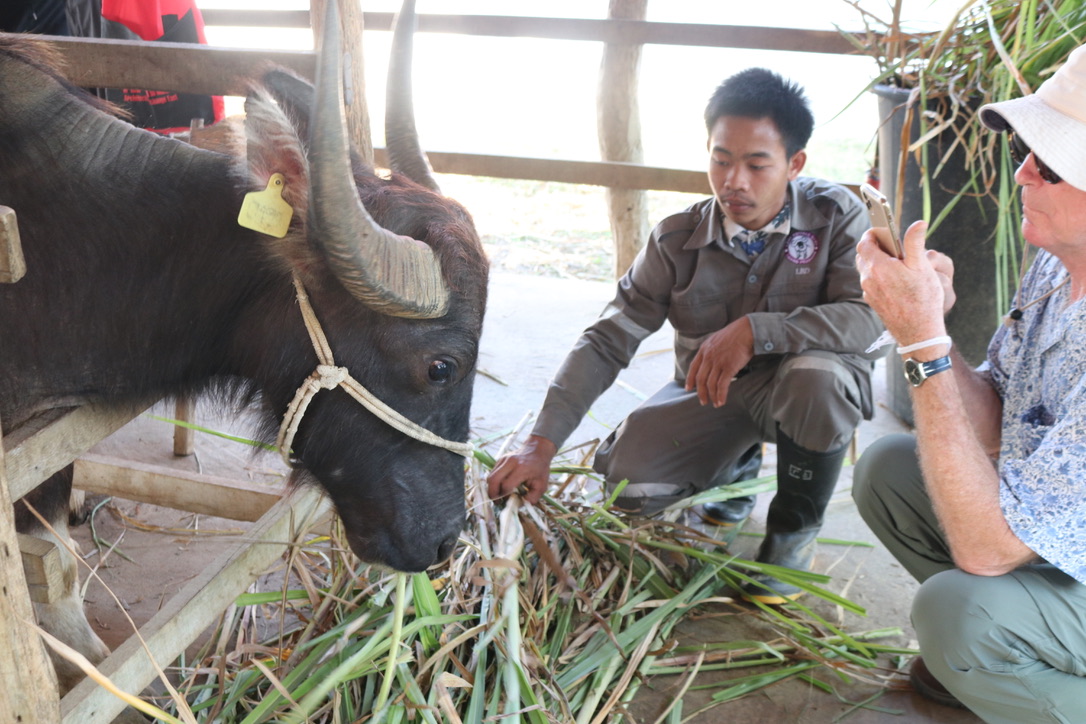
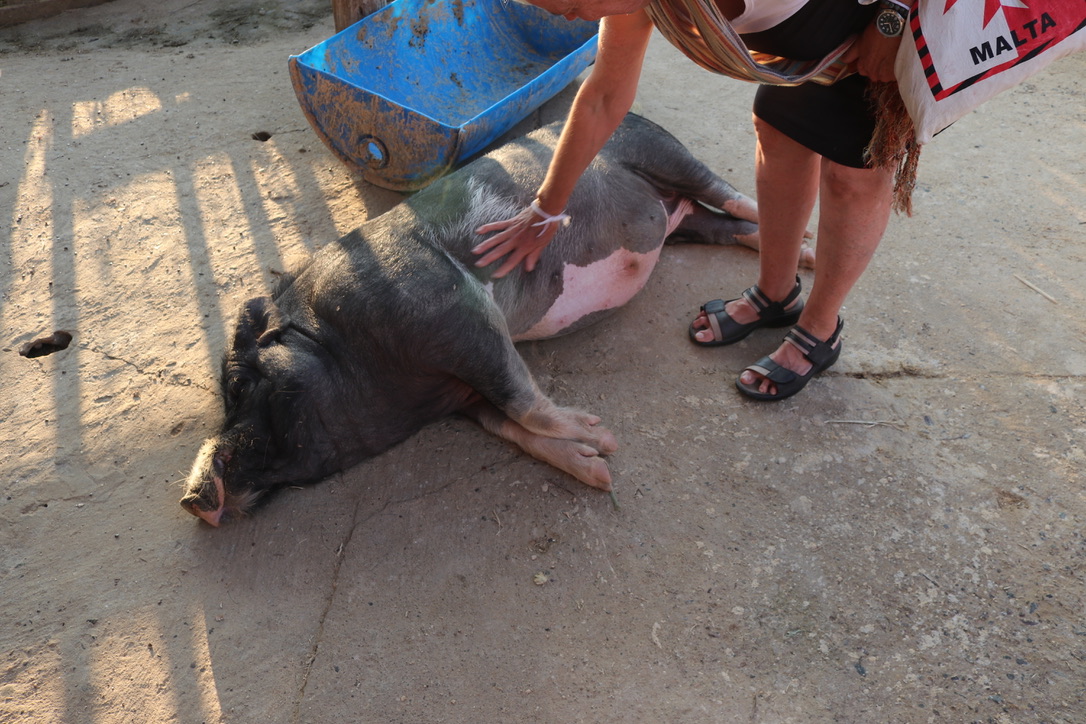
The last stop was the Buffalo Farm. There was a silent groan at this as it had been a long day with a 0500 start but this ended up being the best visit of the entire day and on a par with visiting some of the villages. An Australian and American women had come out to rent land to set up a buffalo milk production centre. Surprisingly Laos do not make milk either from cowes, goats of buffaloes. This causes significant vitamin deficiencies in young children. So single handedly they started an education and breeding programme with local farmers. Teaching them the benefits of buffalo milk in simple rice dishes and every day meals. They rented pregnant buffaloes from the farmers to collect the milk on their farm before sending them back to the farmers once the calf had weaned. As well as producing local milk they also had worked out how to make mozzarella cheese and were starting to create a market for its use. This took a number of years to achieve and again Covid blew a hole in many of their plans. Now they have expanded into goats and rabbits – again to improve nutrition and create additional income for farmers. They have been so successful that Cambodia has asked them to help set up a similar programme. The farm also had a ice cream shop by the side of the road – with the ice cream being made from buffalo milk. A delicious end to the visit.
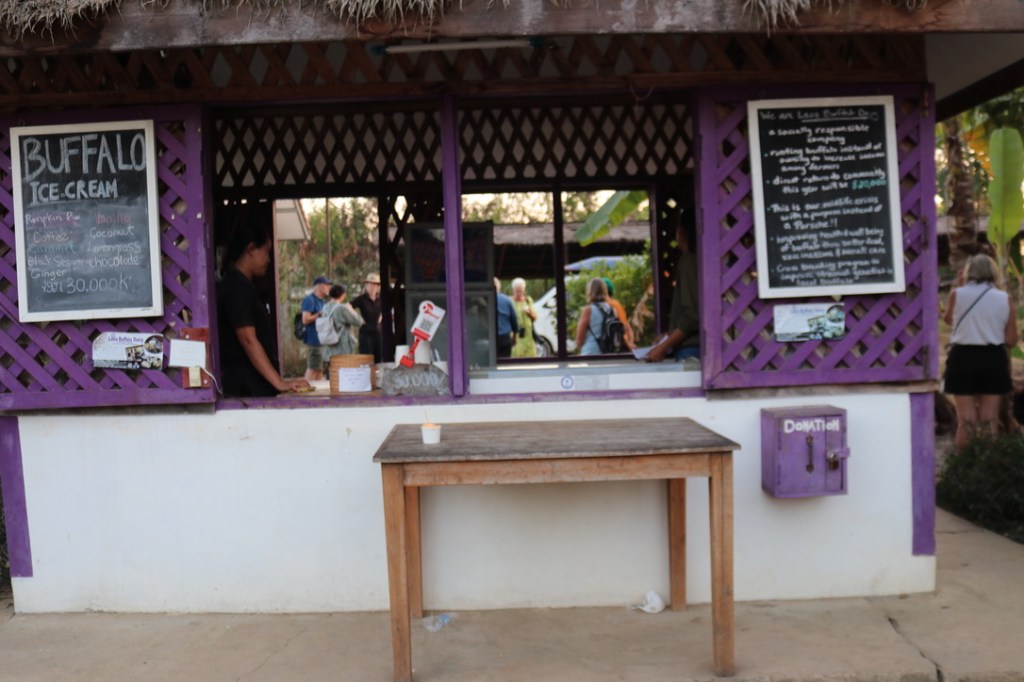
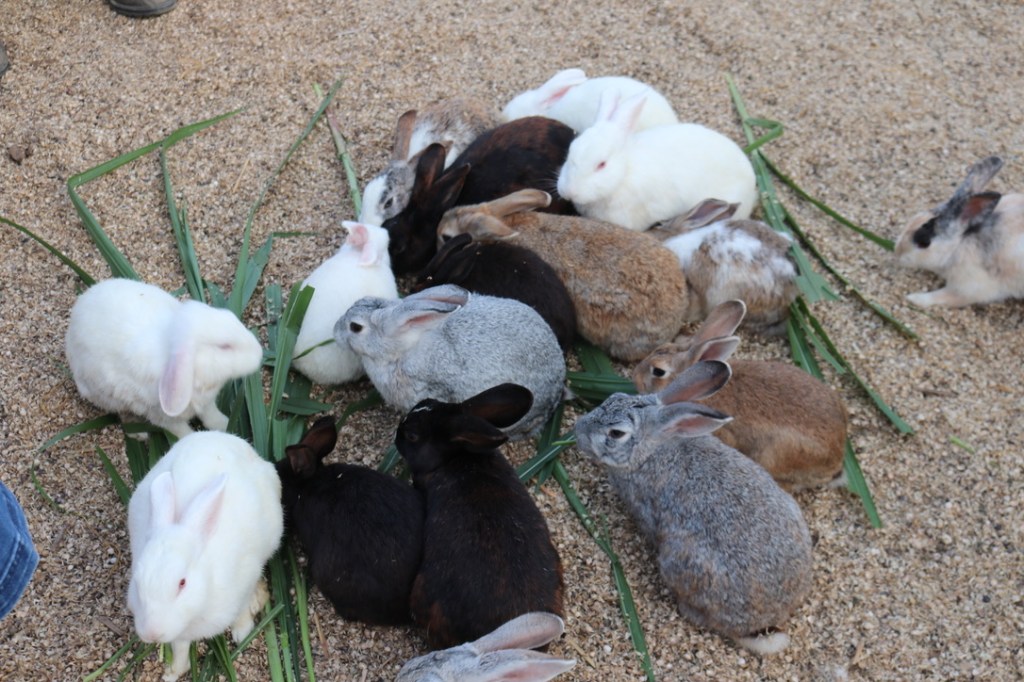
Back on the boat we had supper followed by the Sue Perkins BBC documentary on the Mekong River which covered the part we were on. It was both uplifting in that it did capture our experience of the Mekong River and its people as well as having a cynical streak through it as she was met by officials. The depressing element was the transformation that was taking place with the build of multiple dams to generate hydroelectricity with the consequent impact on the flow and life of the river plus the building of Special Economic Zones by the Chinese which were huge gambling estates with hotels, zoos and 365 days a year gambling. These were open to the Chinese but not Lao and were staffed almost entirely by Chinese. It did make us pause for thought and wonder how long the current river cruises will be able to continue and whether that which we saw will survive the changes.
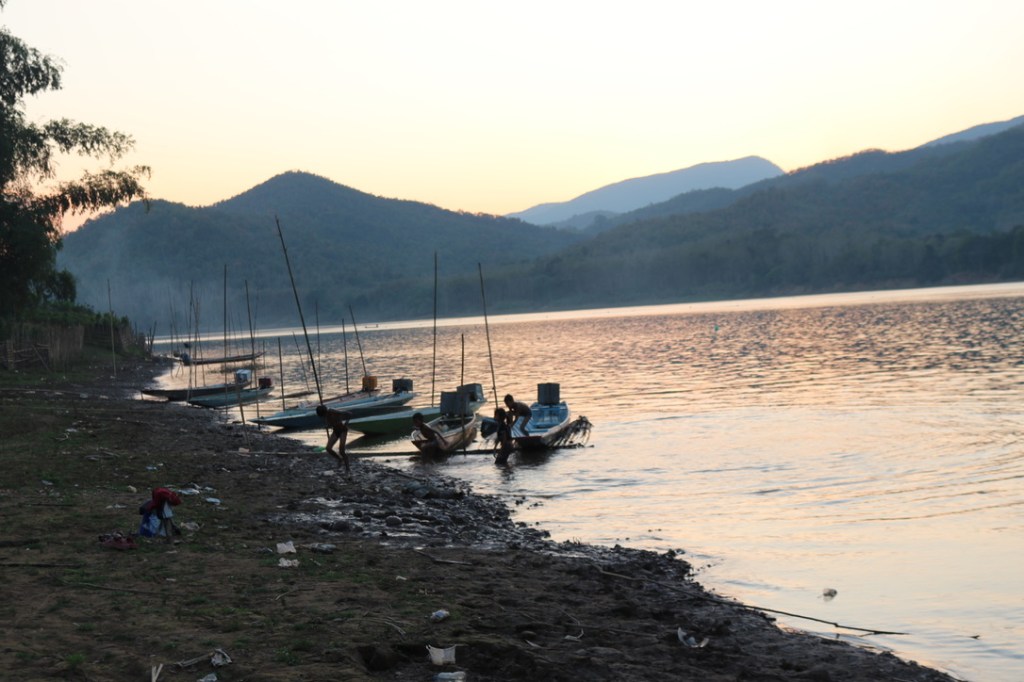
Massage 100,000Kip
Driver tip 50,000kip
Donation to Butterfly Sanctuary 50,000kip
Buffalo Ice Cream – 90,000 Kip
14th January – Saturday
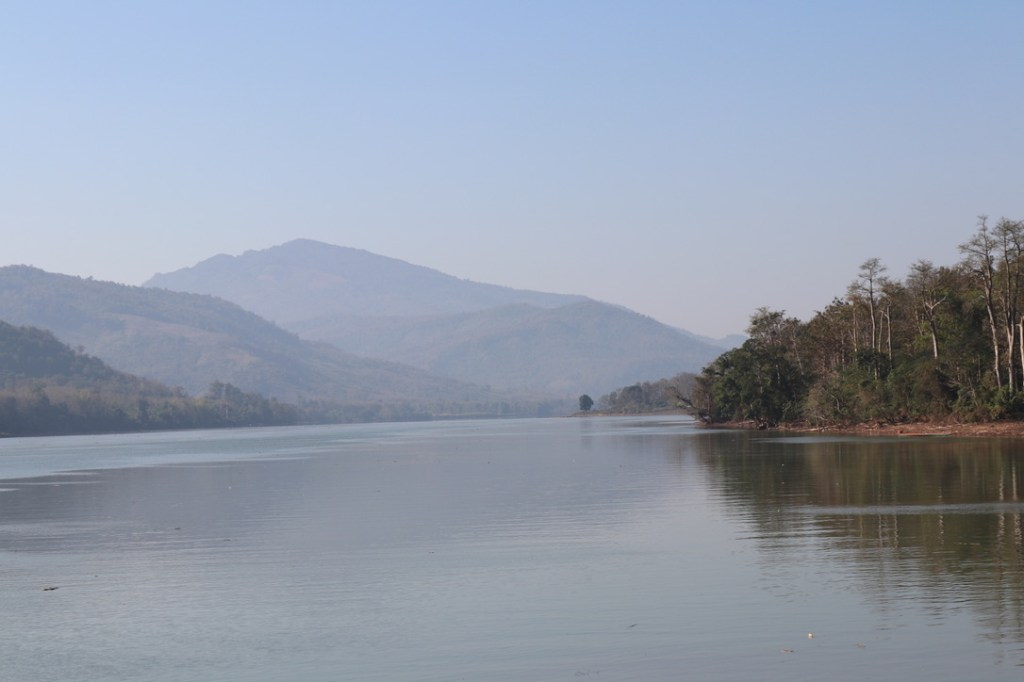
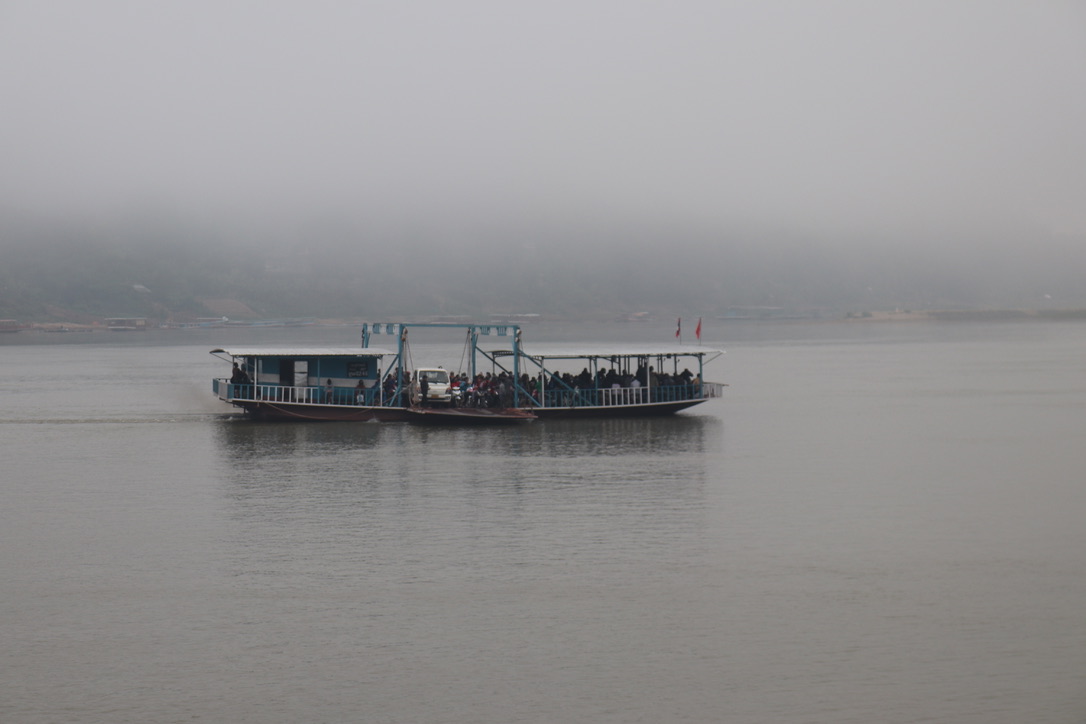
We were due to cast off at 0700 and arrive at the first village at 0830. We both slept very heavily and awoke at 0800ish and for a few minutes were in a little rush to get to breakfast before the trip ashore. However there was a heavy fog on the river and we did not depart till near 0900 which provided plenty of time for breakfast.
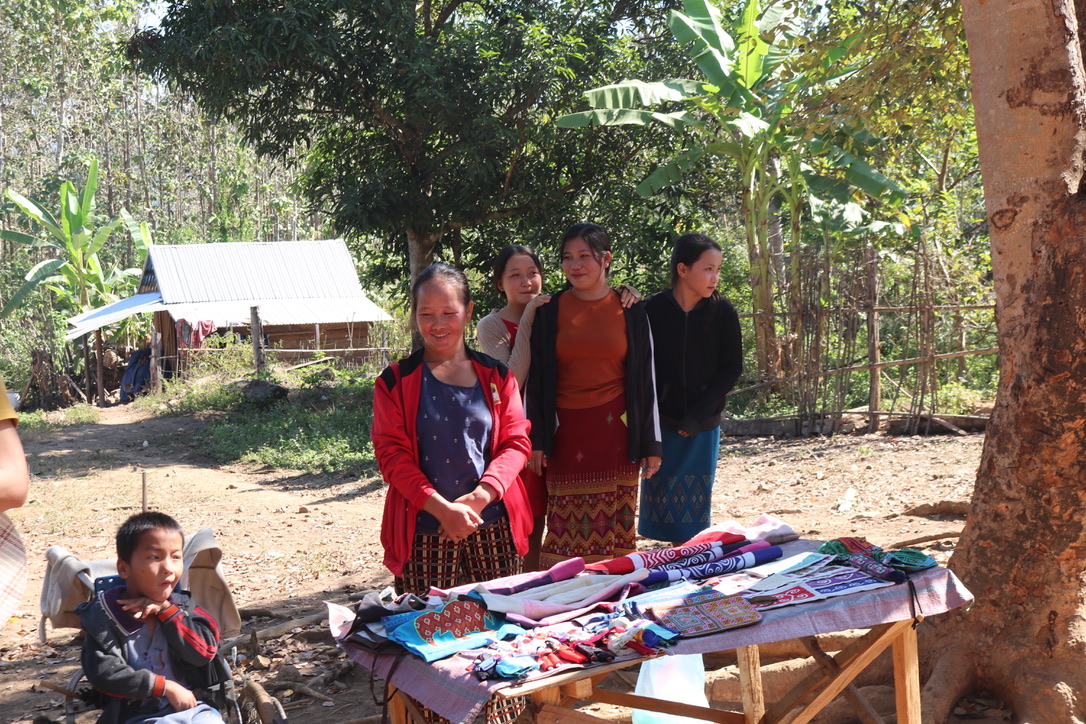
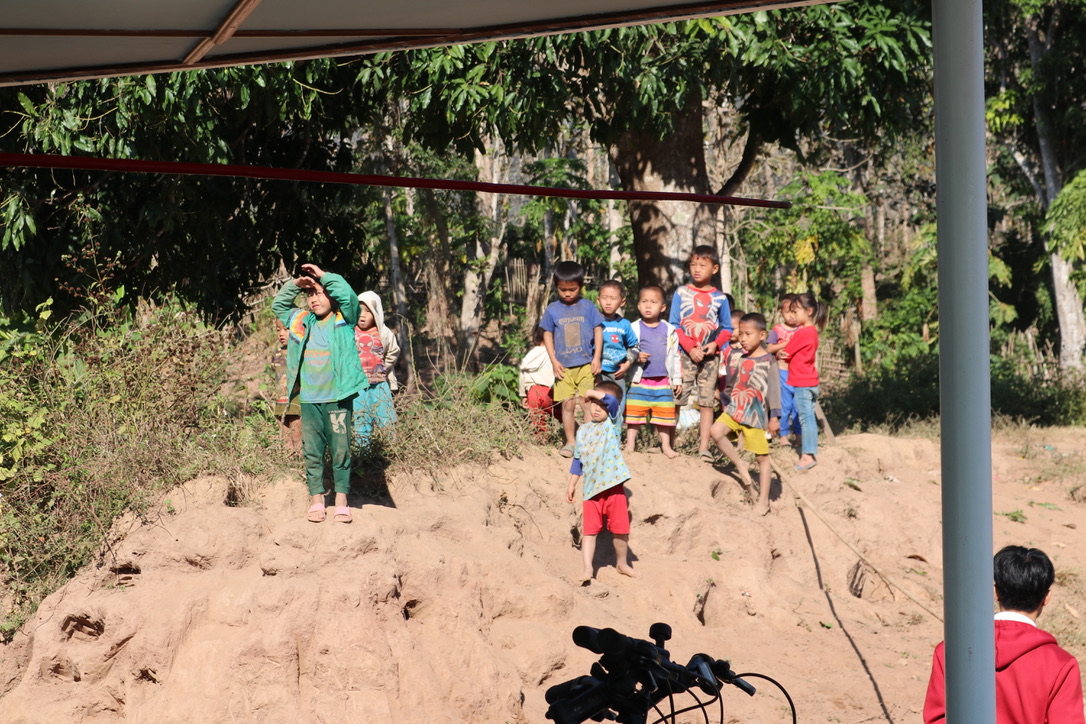
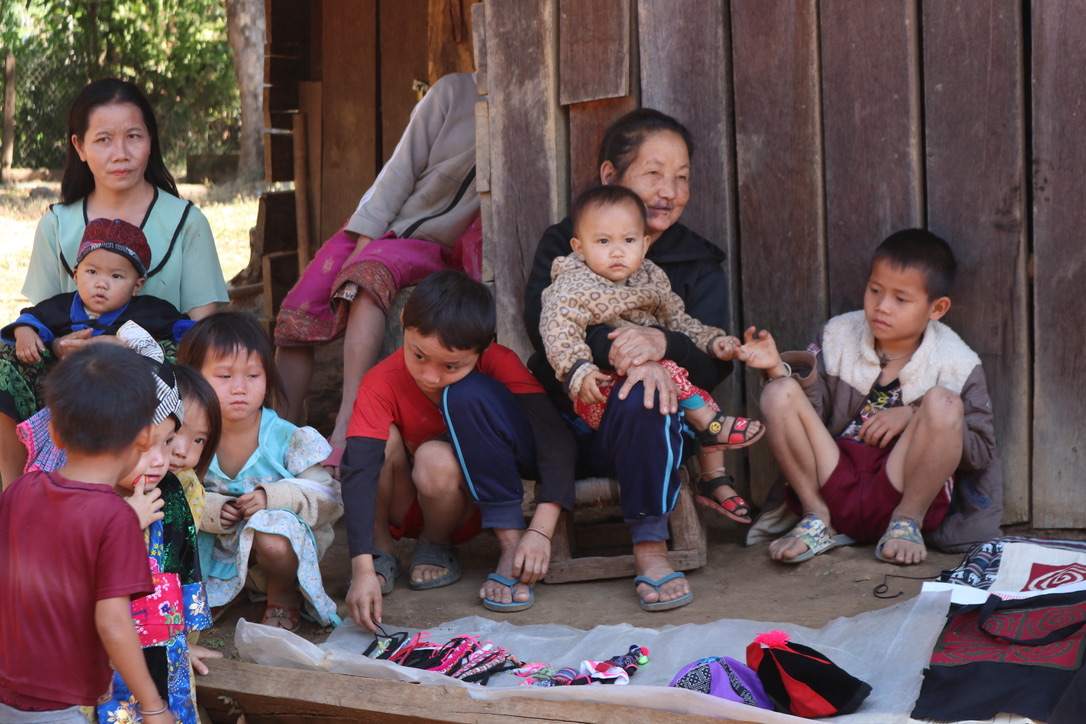
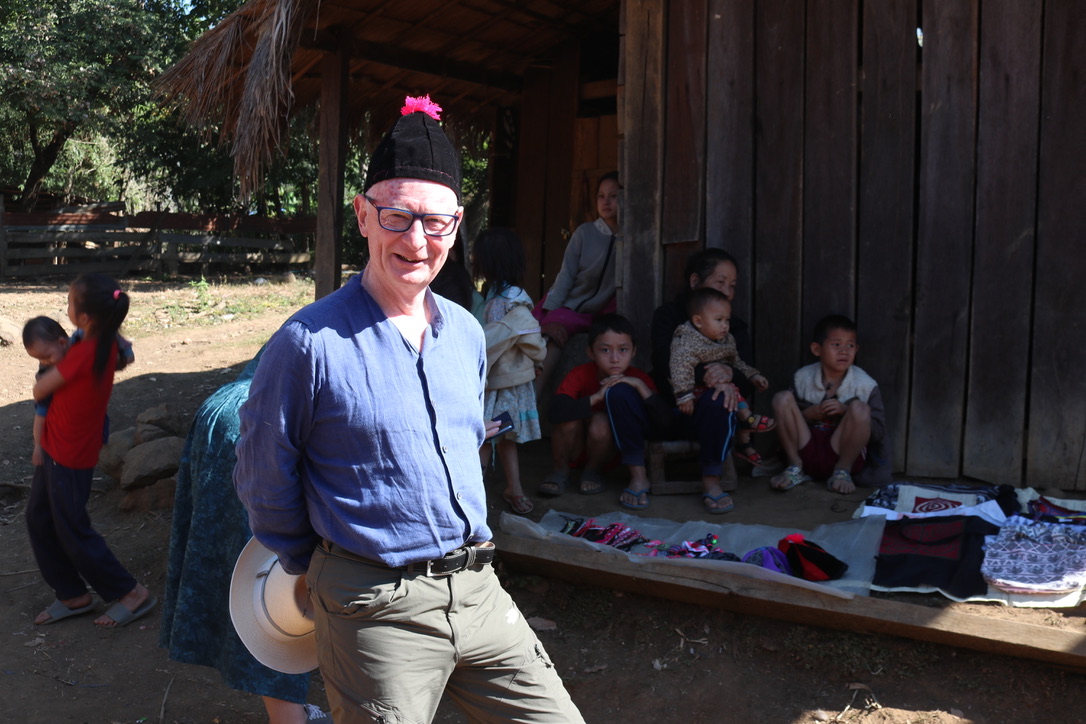
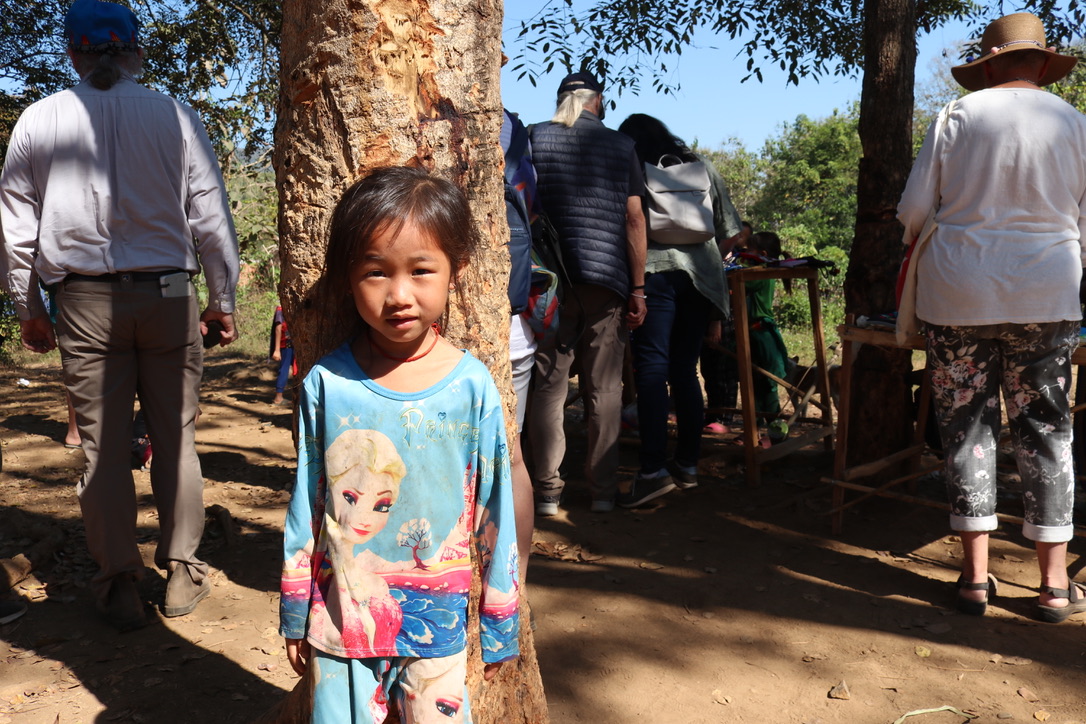
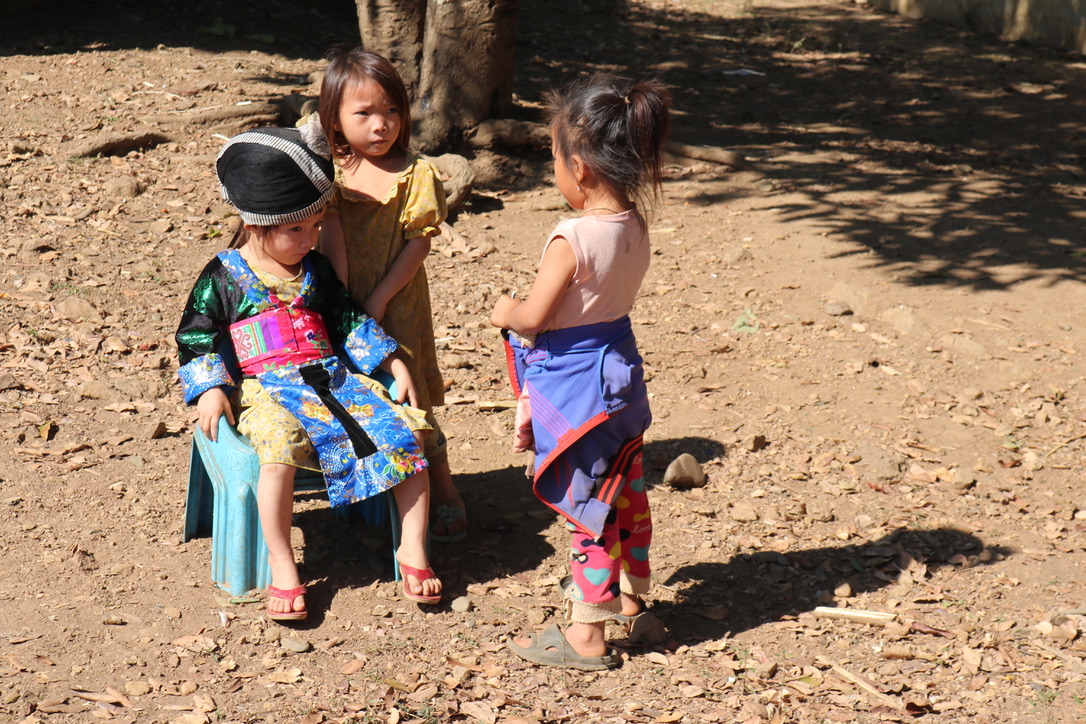
The village of Ban Ba San was a Hmong village – people originally from China who had migrated south. We were clearly expected with a group children ready to meet us as we docked. After a short walk we arrived at the schoolhouse. As previously mentioned we had all contributed to buying various items for the schools and this was the first one where we were able to present our ‘presents’ – footballs, skipping ropes, writing books etc. It was a Saturday but the teacher was around to accept the gifts. As we walked through the village there were small stands/tables with various items for sales. We all felt a bit of an obligation to buy something – to put money back into the community. It was actually fun chatting with the women who were selling and we did end up buying some little bags, a scarf and a fabric elephant. They were not expensive and it was clear that they appreciated the contributions. One of the women we met had just qualified as a teacher. She had to pay for her education and having finally qualified discovered that there was no quota for her to be employed. Further into the village we came across another table selling goods with one of the men playing a traditional musical instrument and one of the children in a wheelchair with what looked like cerebral palsy. It was the first time we had seen a disabled child in Laos. It was clear he was much loved and you could see that he wanted to interact with the visitors. It was both lovely to see but also a little heartbreaking to wonder what his life would be in the future.
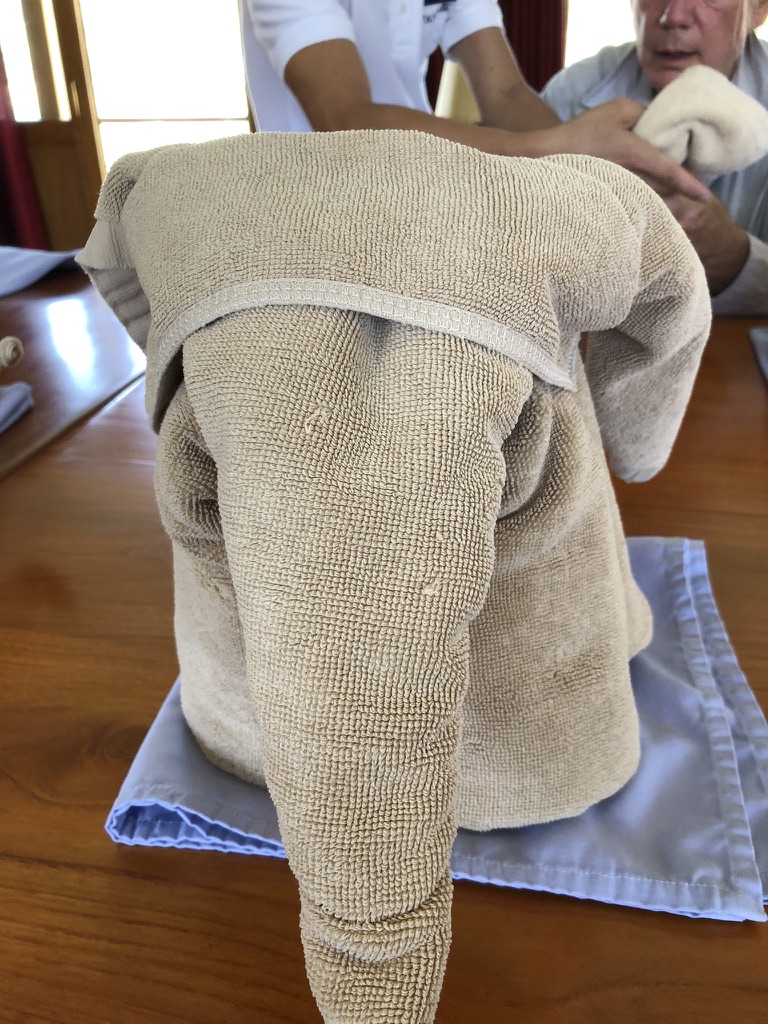
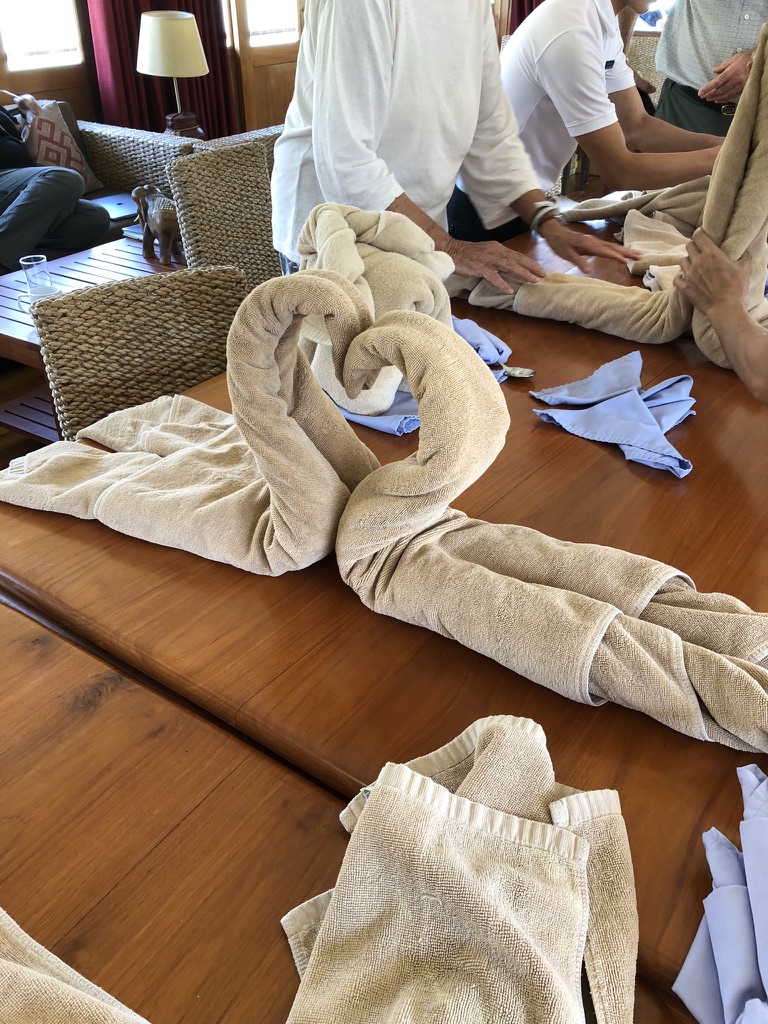
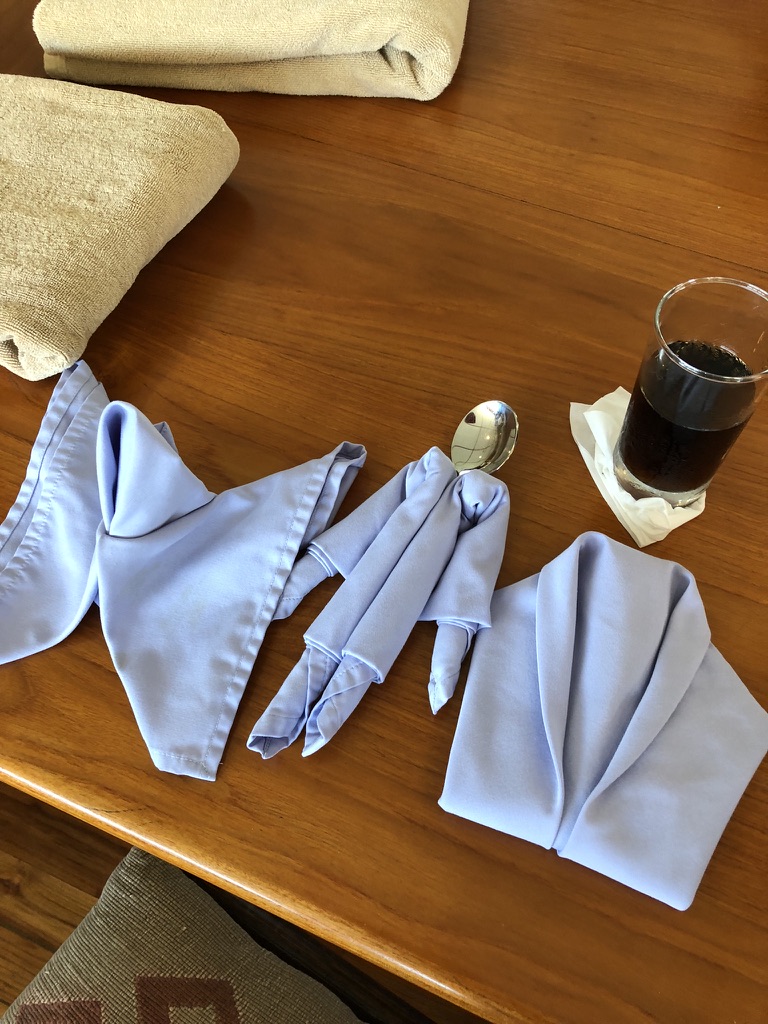
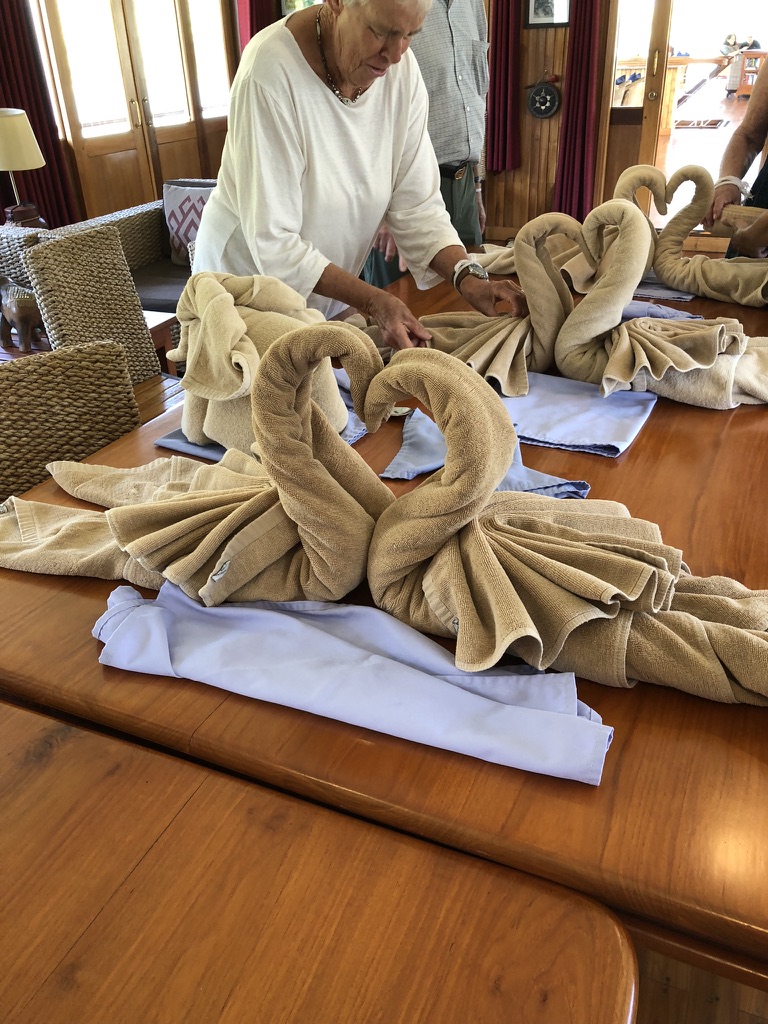
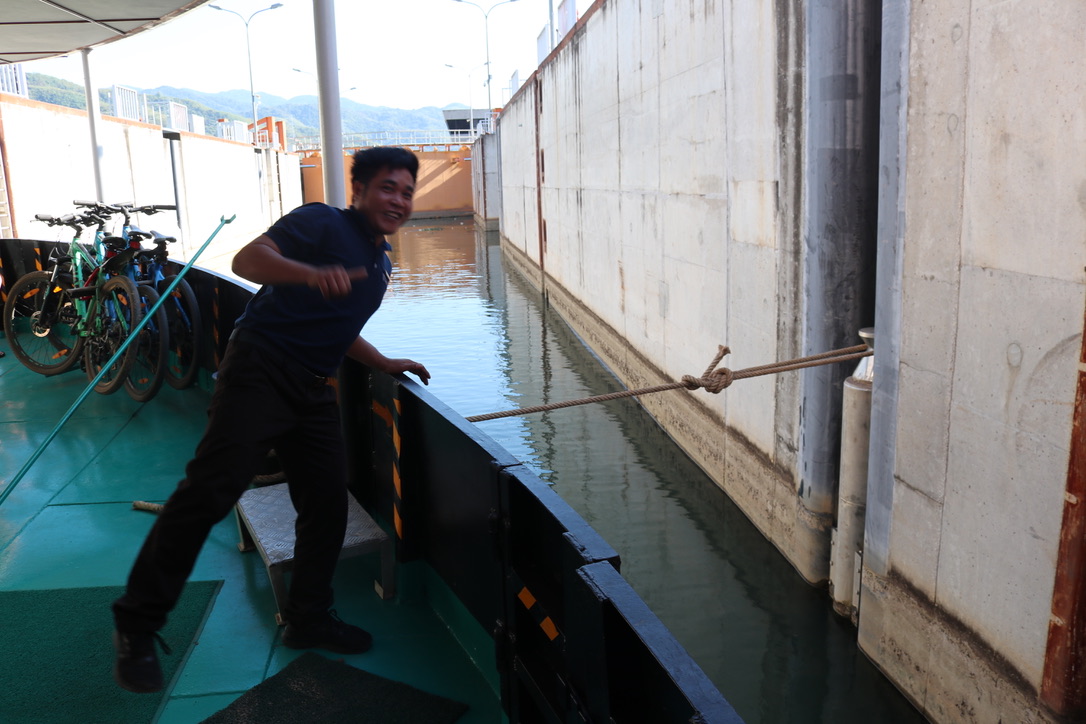
Back on board Gillian had a napking folding demonstration – flowers, shirts, elephants and swans. I read spent time reading. The highlight of the afternoon was passing the Xayaburi Dam with a drop of 40 m through two locks. It is a very controversial construction. On the upstream part of the river the dam has created a deep lake that had required the rehousing of 2,000 people into model villages. The long term effect on the environment is unknown. On the other hand it is an impressive piece of civil engineering to a Finnish design and constructed by Thailand. 95% of raw hydro electricity produced will go to Thailand. The photographs do not do justice in visualising the scale of the project.
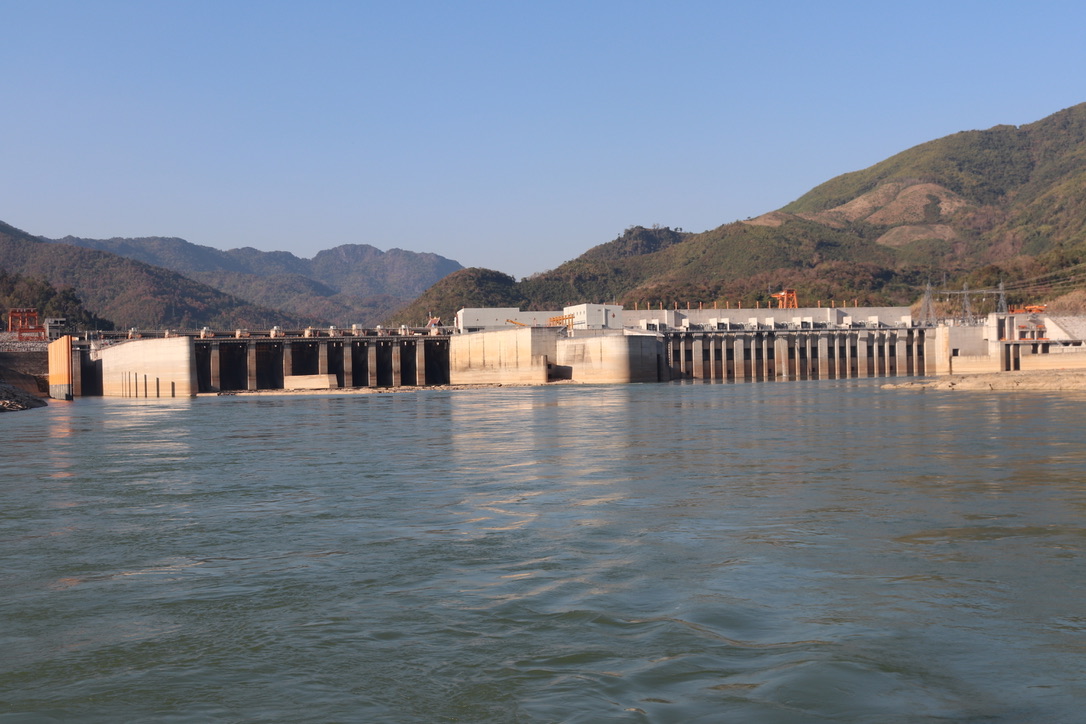

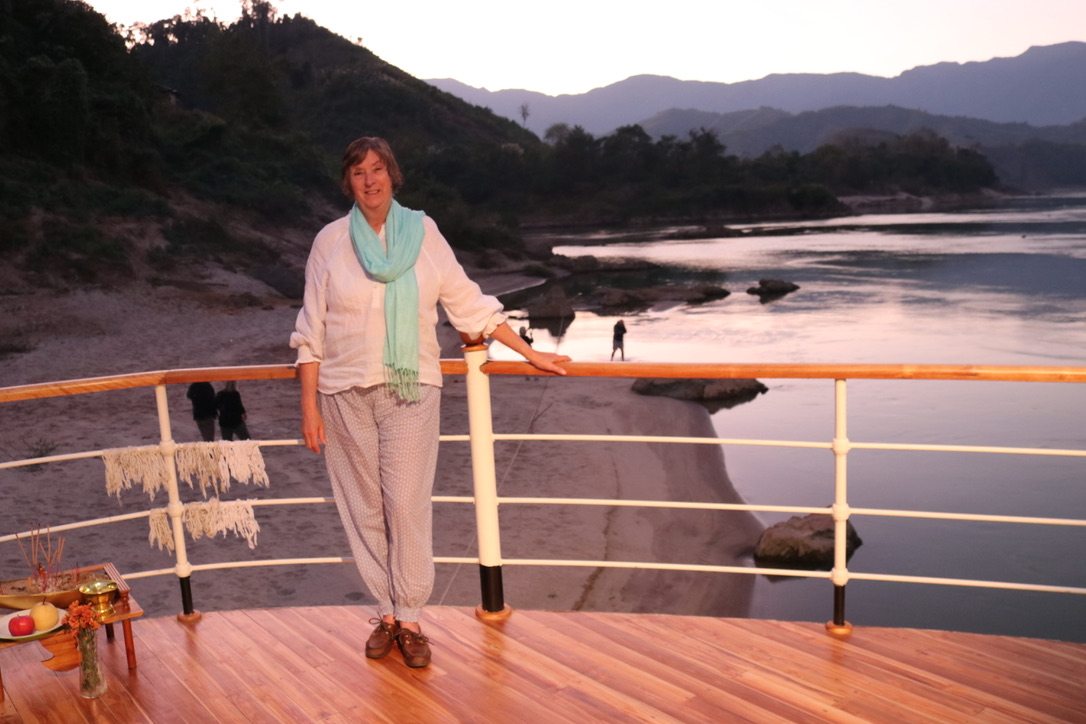
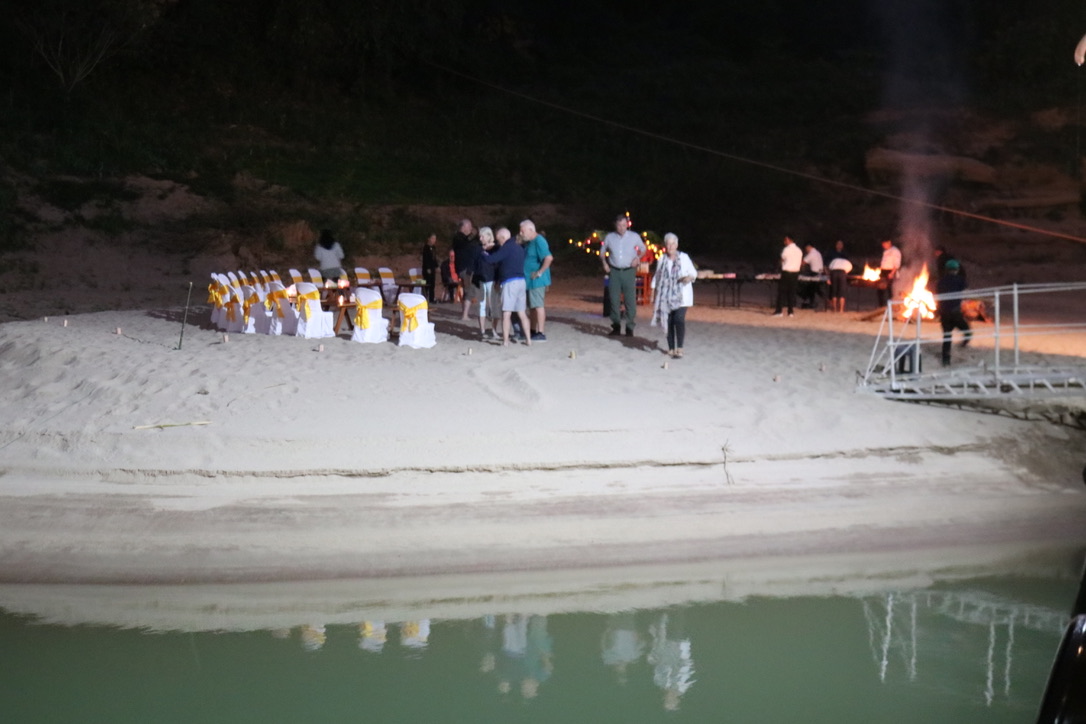
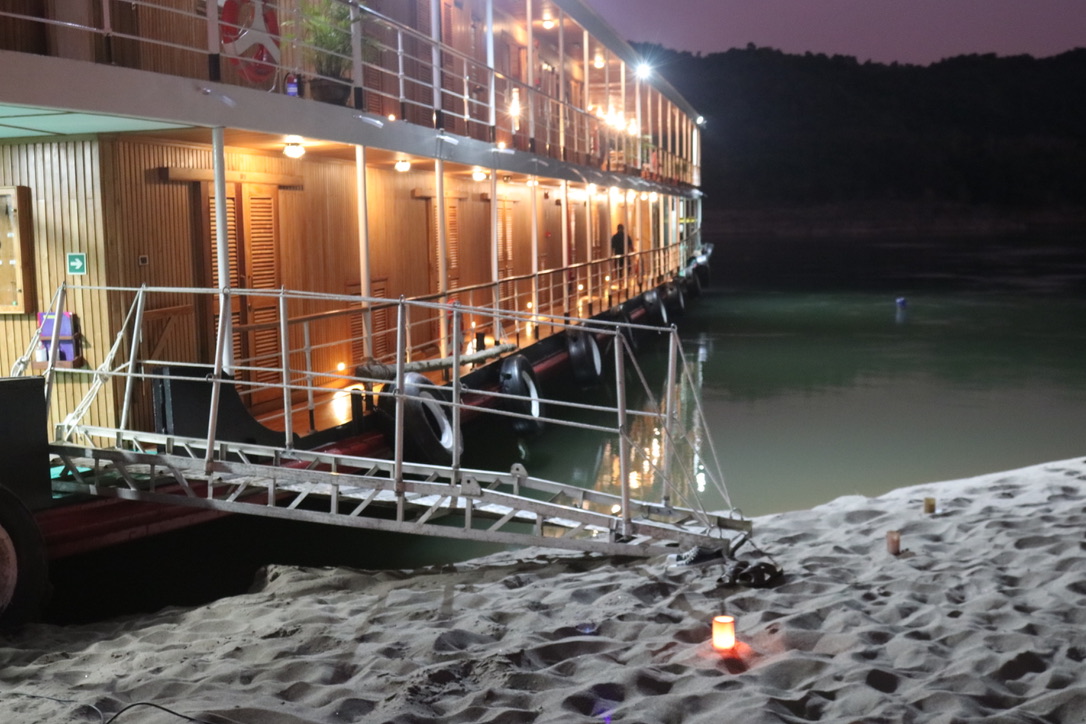
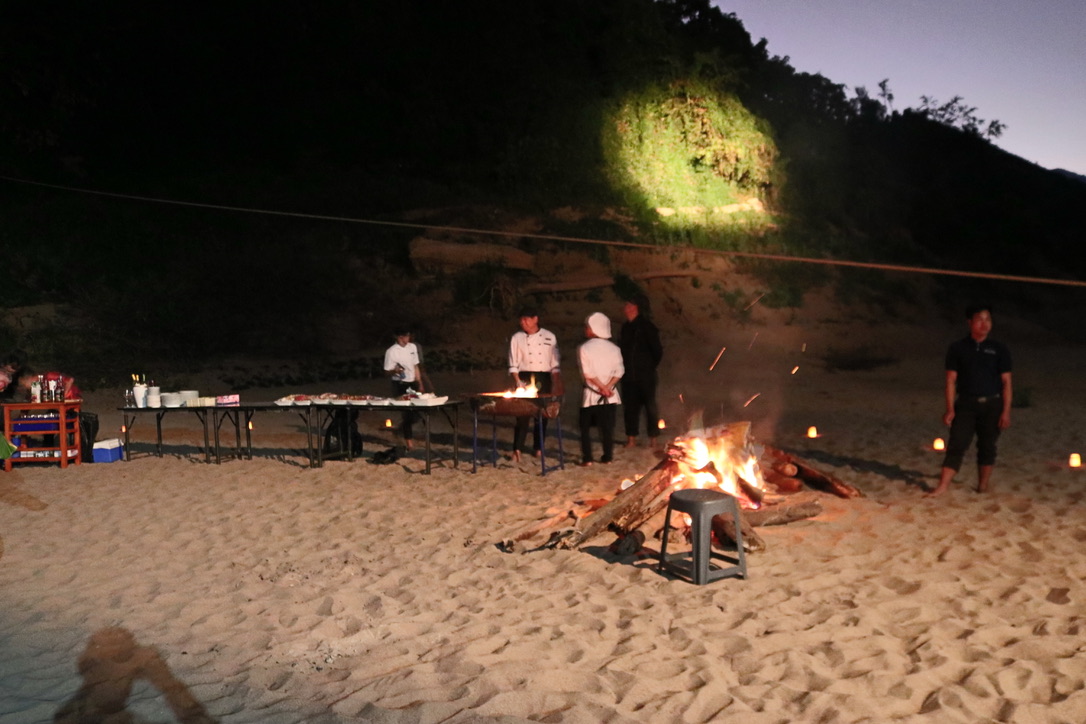
Downstream of the dam the river returns to normal albeit shallower than it was before the dam was constructed. We anchored for the evening on a sandbank south of the dam. It was quite a special location with views up the river to the mountains we had passed between and down river to the next days journey. The ships crew set up a fire and BBQ on the sandbank and we went ashore for cocktails and the evening meal. We spent the time with Joerg and Gabby, chatting, looking at the stars and sharing life stories. Towards the end of the evening we sent Khom Ly (Fire Lanterns) into the night sky. To see them floating upwards against the background of the stars and constellations was a moment in time which felt very special. We then danced barefoot on the silky sand to Abba and Lao music before retiring to bed. It was a day and evening that we did not want to end.
Village spend – Scarf 30,000 kip, little bags 60,000kip, Elephant 80,000 kip
15th January – Sunday
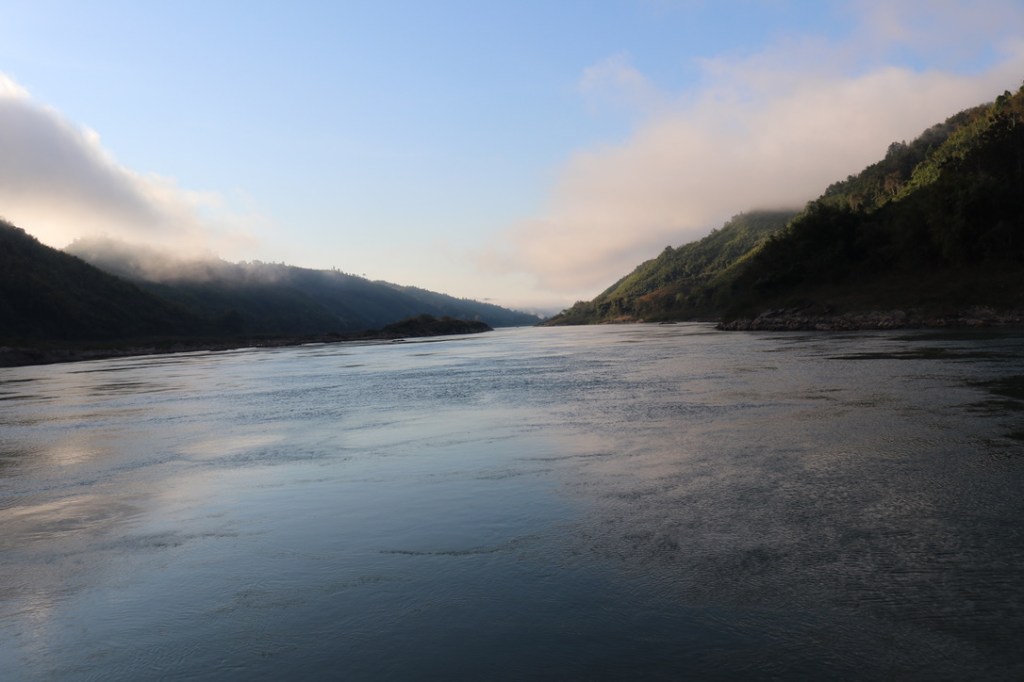
This was our last full day on the boat. As a result of low water levels, probably exacerbated or even caused by the dam that has been built, we will transfer from Champa Pandaw to a shallower draft river cruise boat for the down-stream travel tomorrow. Even that boat cannot get as far as Vientiane and we will need to stop after 5 hours to get a minibus.
The temperature had noticeably risen from 27deg up North to 32 deg today.
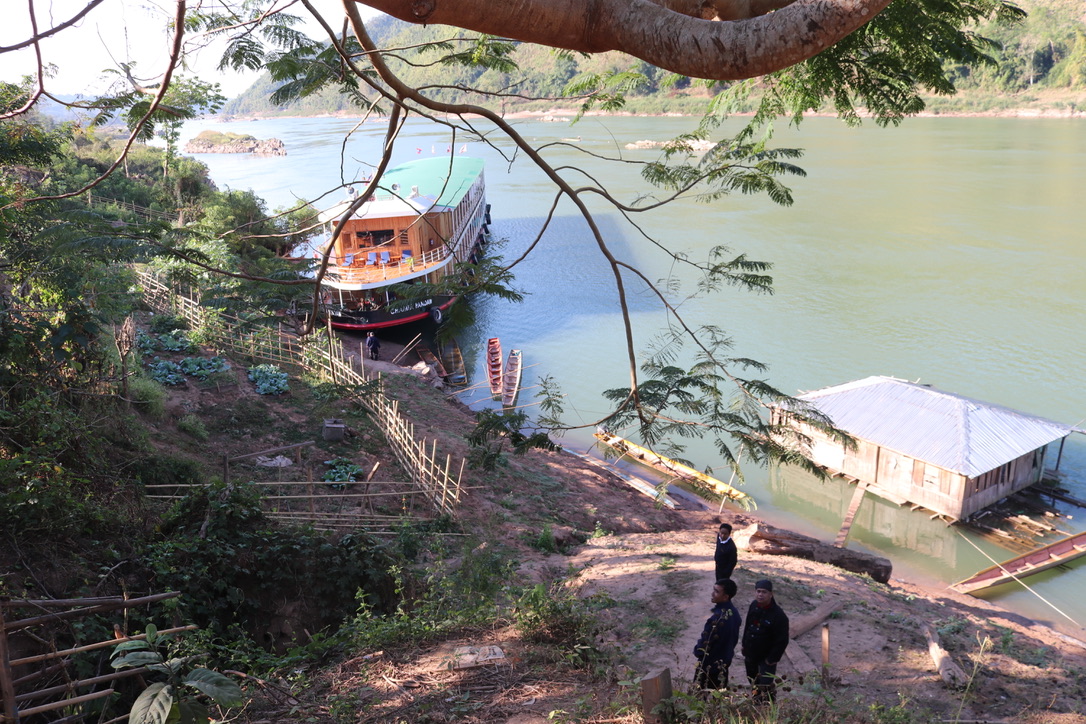
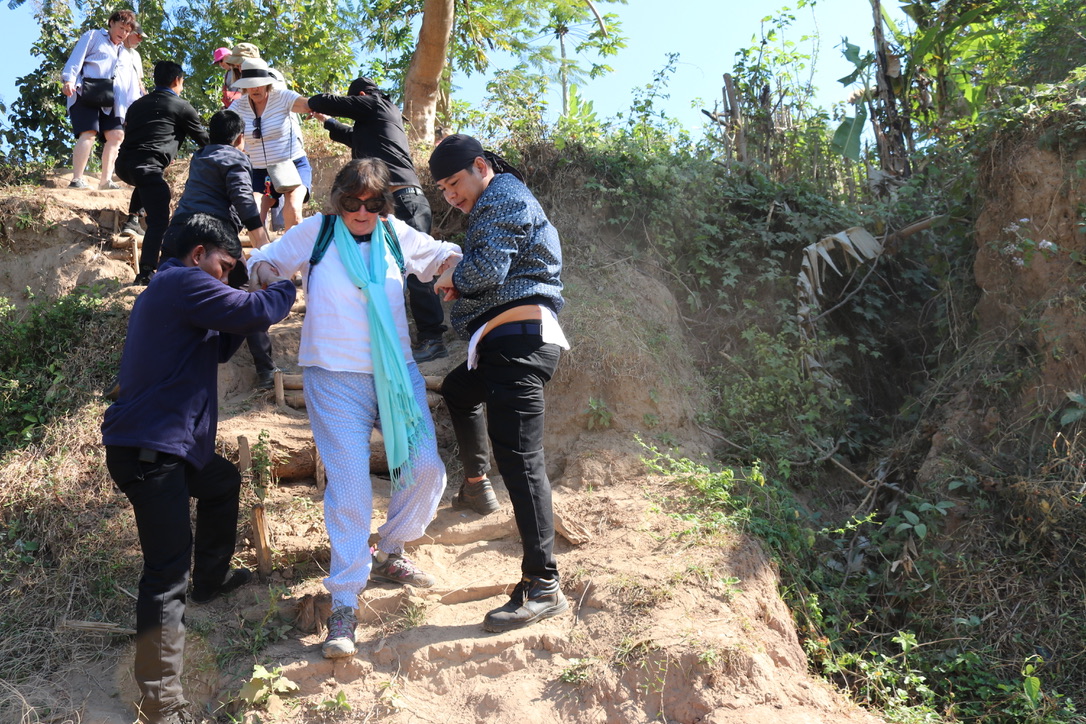
After breakfast we visited our last village at Ban Pauk Yum. It was a relatively new village and a unique build in that it had 3 tribes living there together – Lao Lowland, Khmer and Hmong. Each spoke a different language and each had different religions, Buddhism, Christianity and Animalism. In order to get to the village there was a very steep climb up from the river bank that required a line of crew members to lend a helping hand to the top – and subsequently back down. Both Gillian and myself were feeling fairly sluggish today and it took a little time to get into the rhythm of the trip. Vieng talked through the different types of house construction and more detail on the plants and fruit being grown – mango, starfruit, gouda, black jack?, and herbal plants. Unusually each house had a bamboo fence around enclosing a kitchen garden. The village also had a large school and overall seemed quite prosperous. There was some residents who lived/worked in Thailand and had left their family behind to look after the house and land. There were very few men around, it appeared that they were either away from the village or hunting or preparing fields for the next season.

Peter spent some time chatting with an individual who had been an English tour guide in Vientiane but as a result of Covid all work had stopped and he had returned to the village. He expressed concern at the building of more dams and the village had been told that they would all be moved in 2025. They would get free house but no-one know what they would be like and most were unhappy that they were having to rebuild a village after being in this one for such a short time. There was implicit recognition that there was nothing they could do and they were entirely at the mercy of the Lao government.
Sailing further down-stream the landscape was definitely changed. Larger villages, a substantial amount of land clearance for growing vegetables on a commercial rather than subsistence scale. Just before lunch we passed a large limestone escarpment – home to bats and what looked like swallows.
The afternoon was slow paced which was nice. We packed our suitcases ready for the transfer tomorrow morning.
We had a ship tour at 1500; engine room, kitchen, storage, laundry and wheelhouse. As you would expect everywhere was immaculate and all seemed to have great pride in the job and role they had.
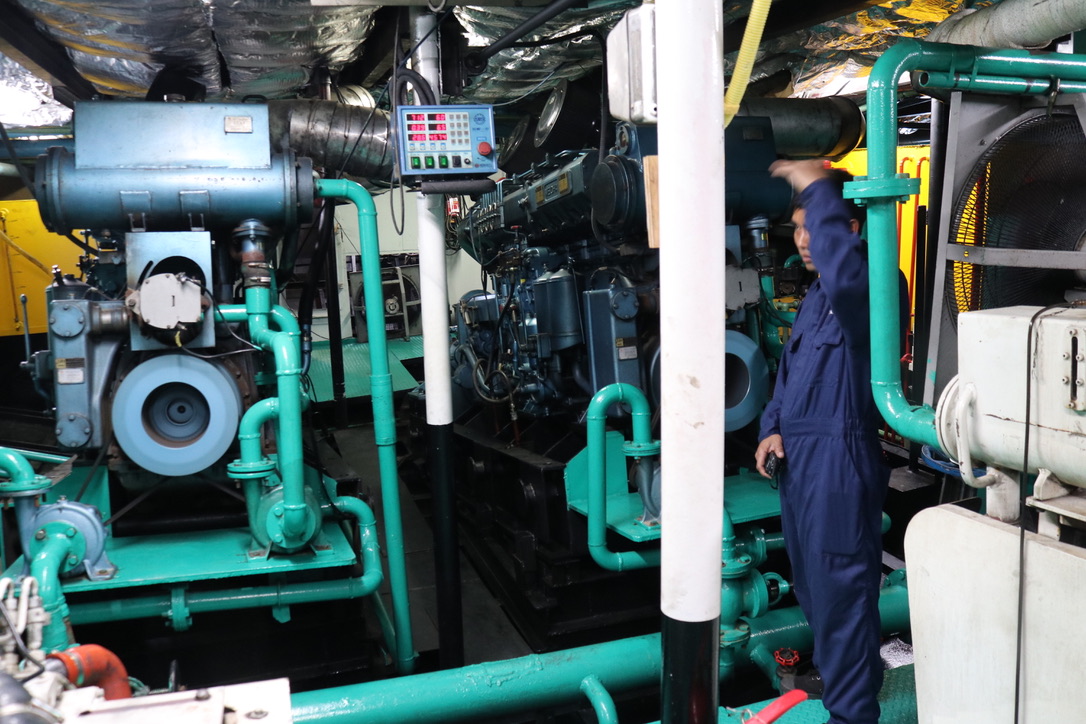
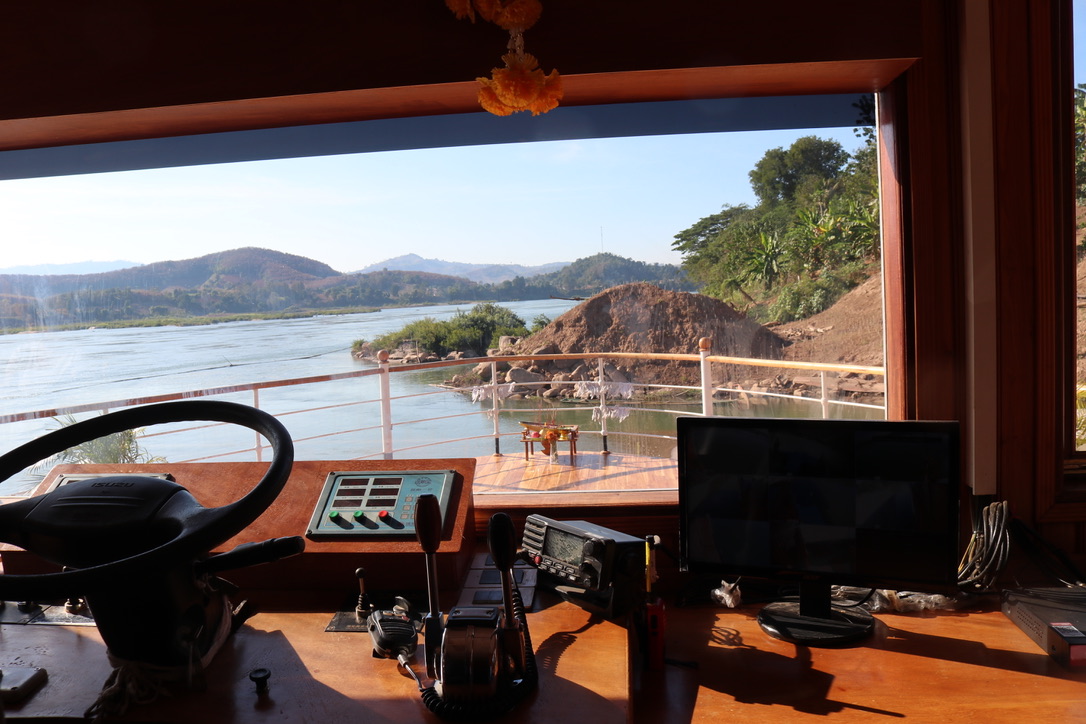
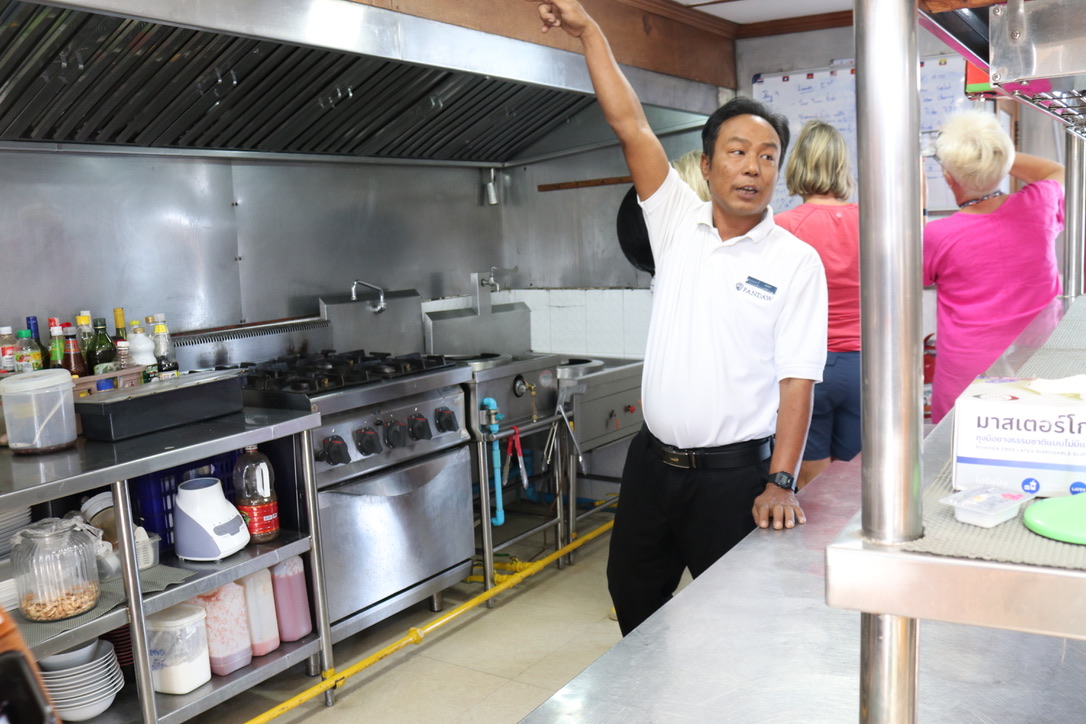
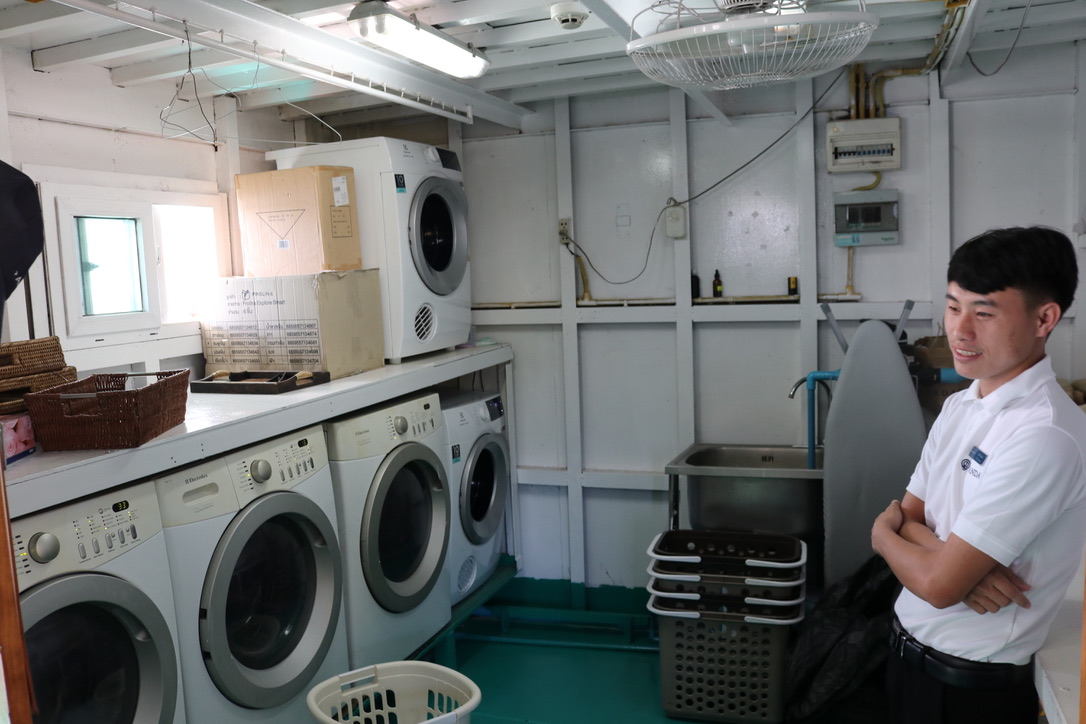
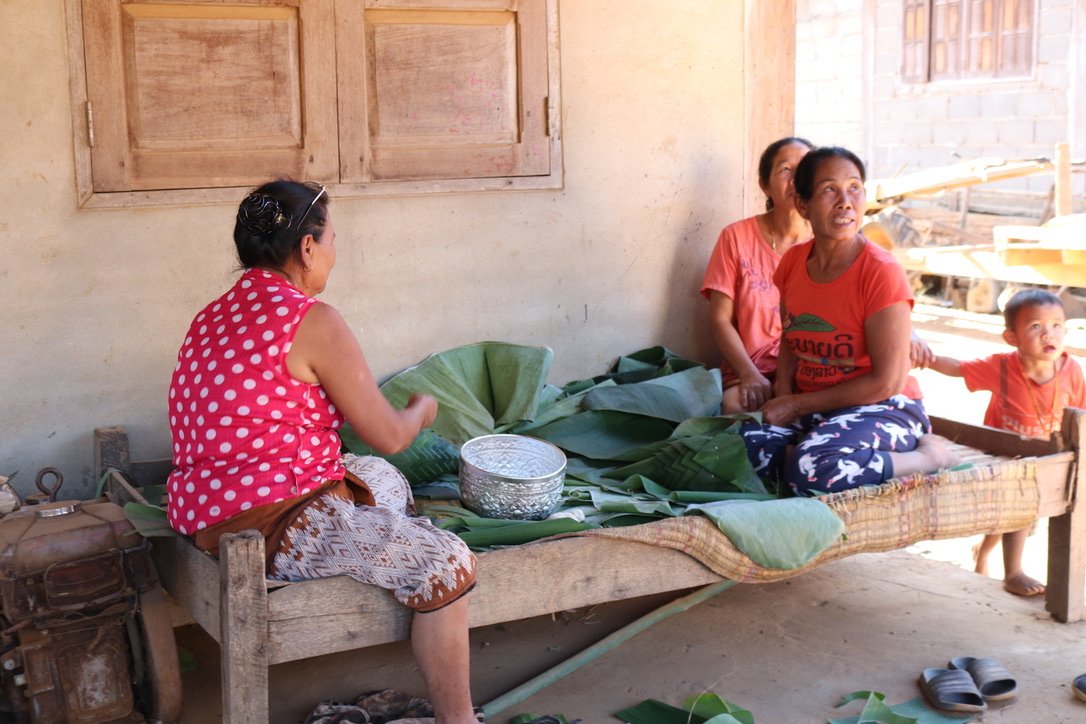
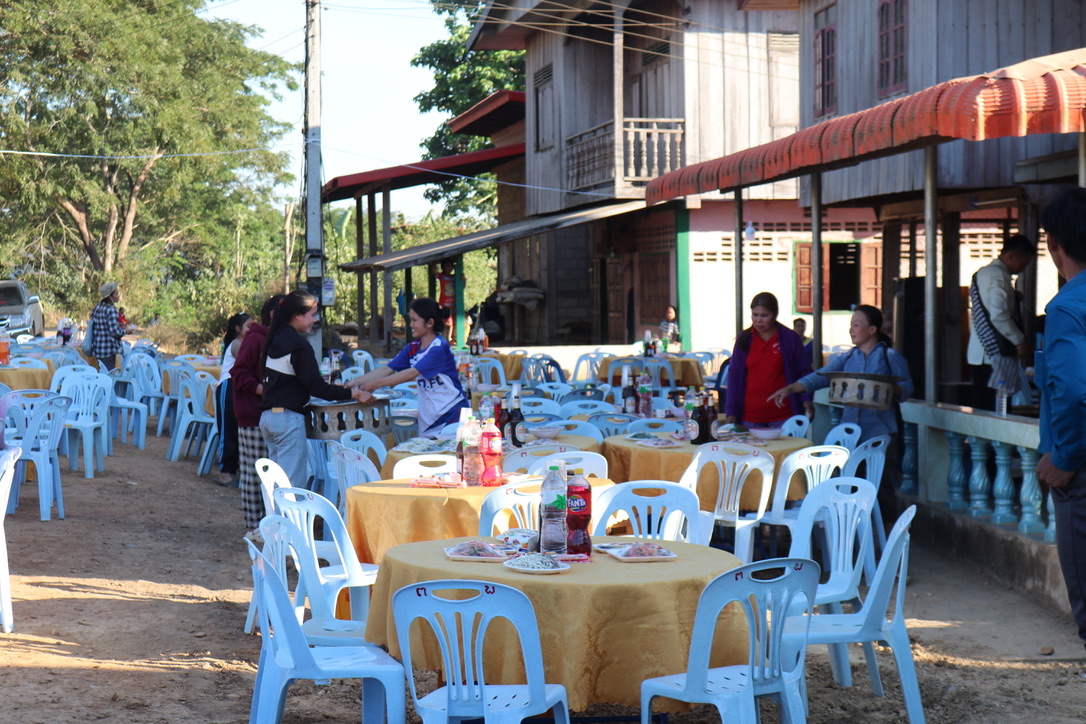
The original location we were going to moor for the night was unsuitable as it was right next to a hotel and it was felt it would be too noisy. Hence we travelled a little further down river past Pak Lai to a small village and the opportunity to look around another one – one last time. Gillian stayed on board – by this time it was very hot and humid – 32 deg+. The village was very modern and as the people were Lao Lowland the houses were built on stilts. However as many of them had concrete floors, there were now 2 stories high with the lower level for storage or a large open area. The village was preparing for a wedding with the table set out and decorations being made. There is still the tradition of the man and his family visiting the brides house and negotiating a dowry for the bride. We met one set of mothers who were preparing gifts and decorations for the visit of their son/grandson to the future wives house.
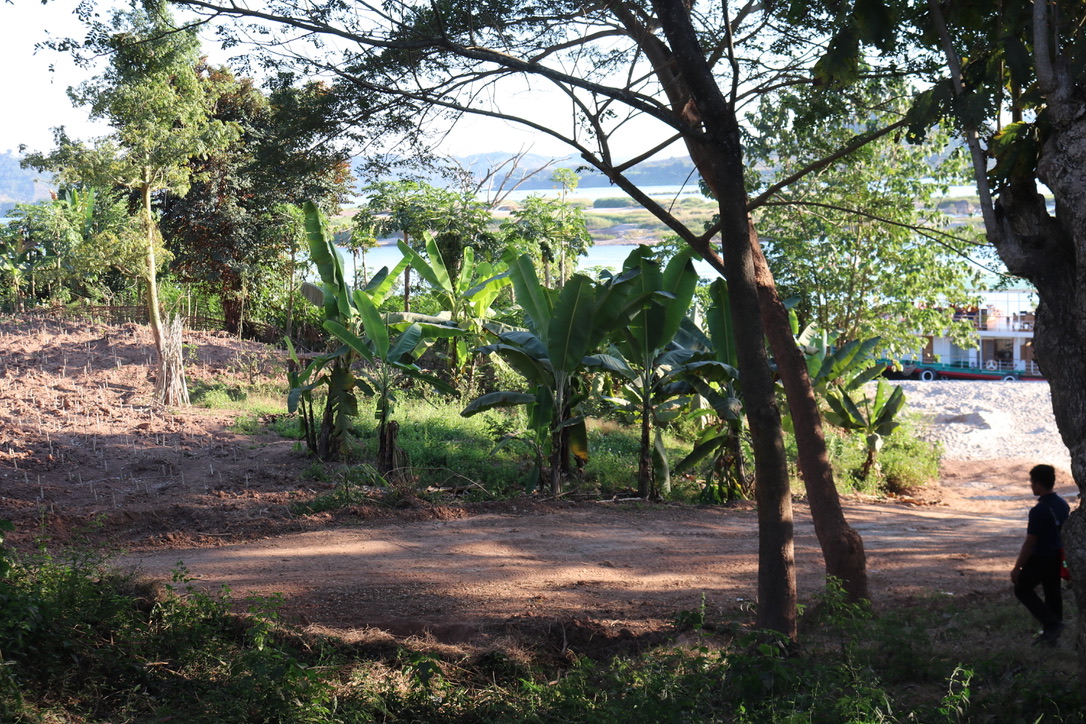
Upon returning to the boat we went back up river and moored just below Pak Lai. We watched as the long boat brought up the passengers for the Pandaw boat on the opposite river bank that would commence its trip upstream tomorrow morning. That same river boat would come across to us in the morning to take us down river towards Vientiane.
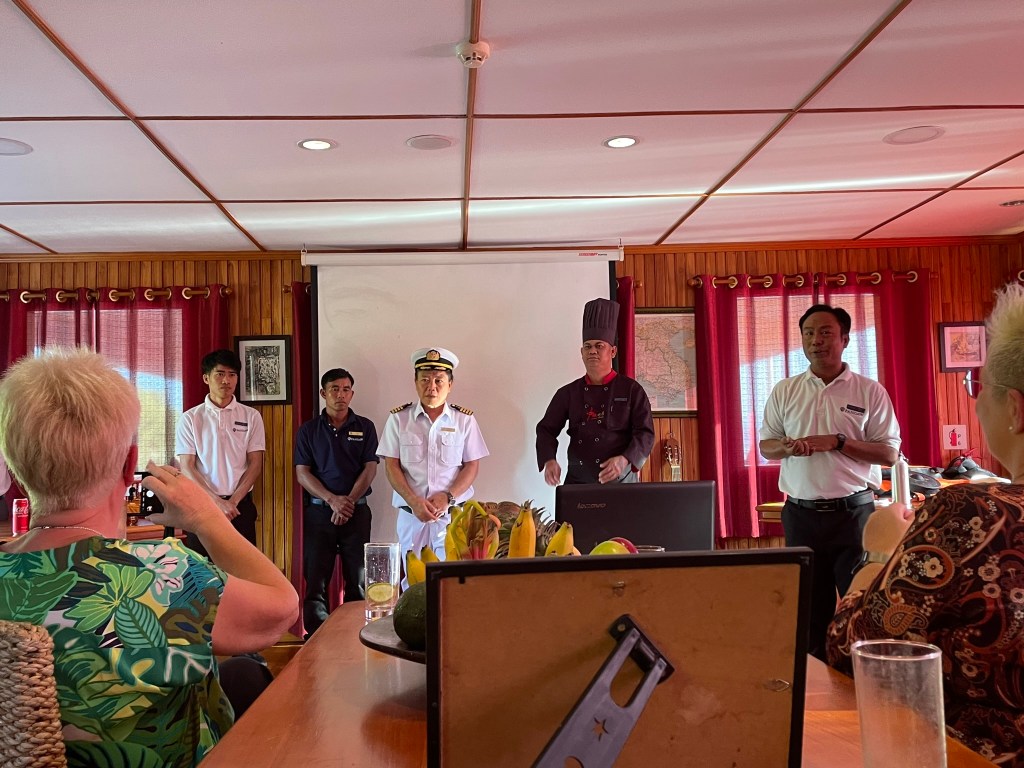
After cocktails Jimmy introduced the crew to the passengers and thanked us for being good guests. The crew was 2 Captains – one for each section of river we had come down, 2 engineers, 4 chefs, 2 barmen, 2 cabin crew and 2 to 3 general crew members. We also thanked them for being great hosts.
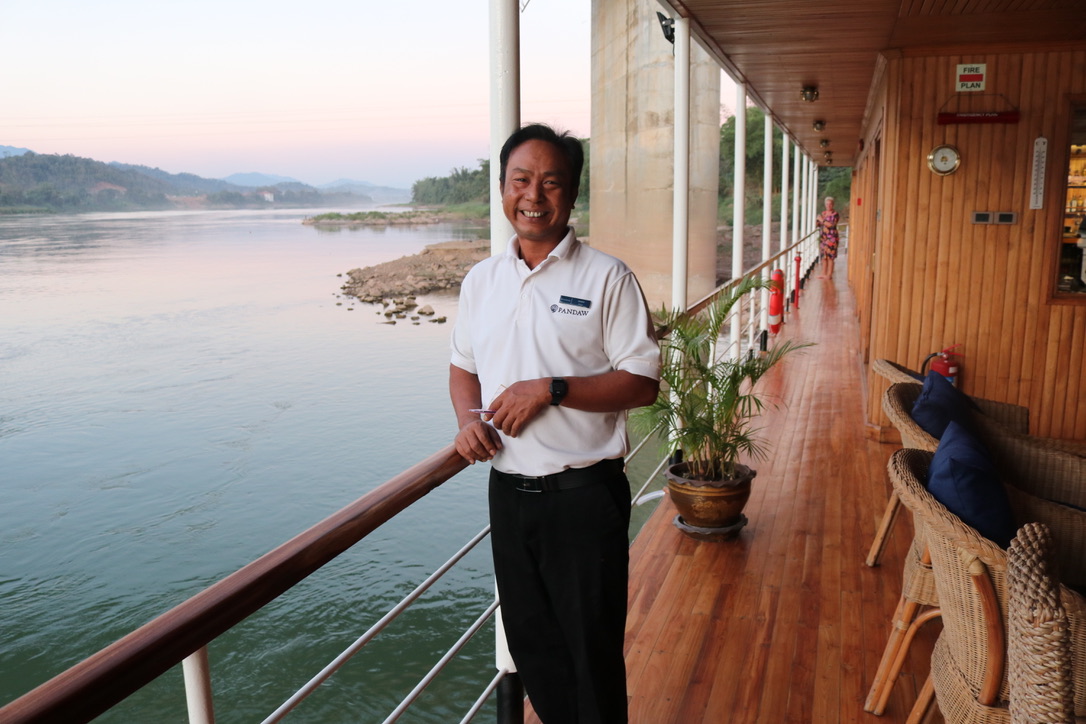
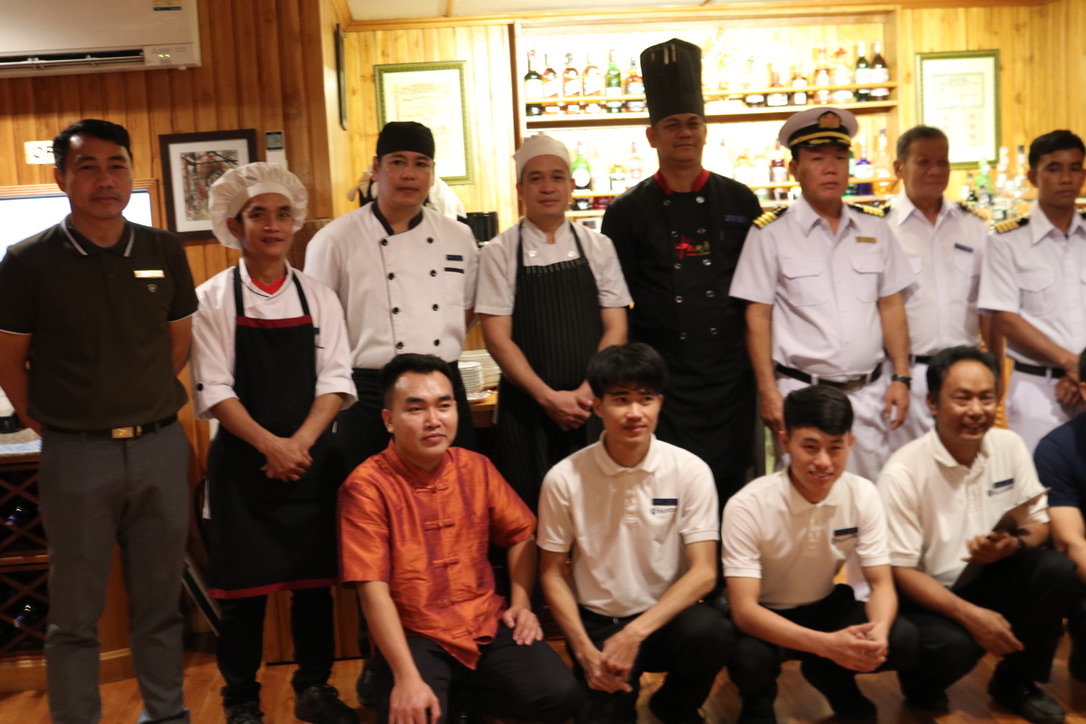
The bills were settled and we sat down to a final dinner. On our table were Peter and Fran, GiGi and Kim, Anya and Sabina.
Post dinner we watched a film on the Irrawaddy Flotilla Company with which Pandaw has a historic connection. The IRC operated in Burma and was the world’s largest river fleet unto the invasion of Burma (Myanmar) by the Japanese when all ships were sunk.
Laundry $75
Tip $75
Tip Vieng – 500,000 Kip
16th January – Monday
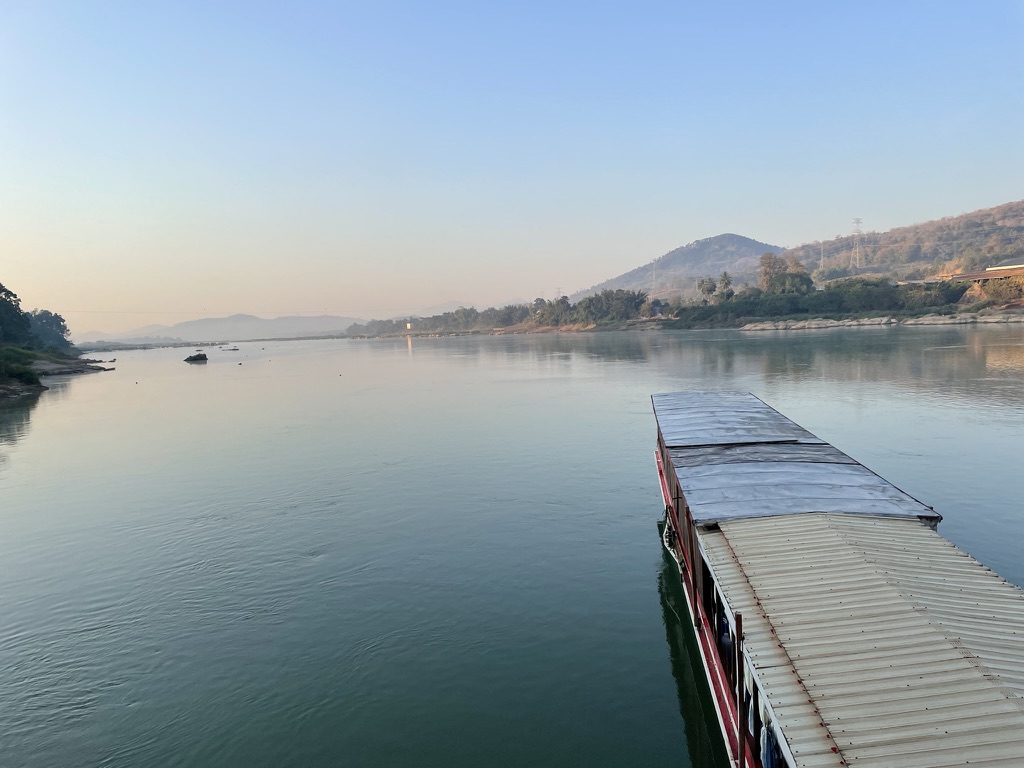
Early out of bed to finish the last of the packing for picking up to put onto the long boat. Breakfast up stairs – hot oatmeal with cinnamon. It was cold this morning – we were all huddling in jackets and jumpers. We transferred to the long boat at 0830 and left the Champa Pandaw. The crew waived us off from the deck as we made our way down river. The cruise was intended to go all the way to Vientiane but the water level was too low, so we had a 5 hour trip by long boat down river for 100km and then picked up by bus.
Pandaw had organised it very well. On the longboat was Vieng the guide, Sonar the barman and a chef plus one of the Captain’s from the boat. As we made our way down to the pick-up point the temperature slowly rose. Tea and coffee was served on board and by mid-morning wine, beer and soft drinks. At one point the river was so shallow that they were polling with bamboo to gauge depth of water – we scrapped the bottom once but only for a very short distance.
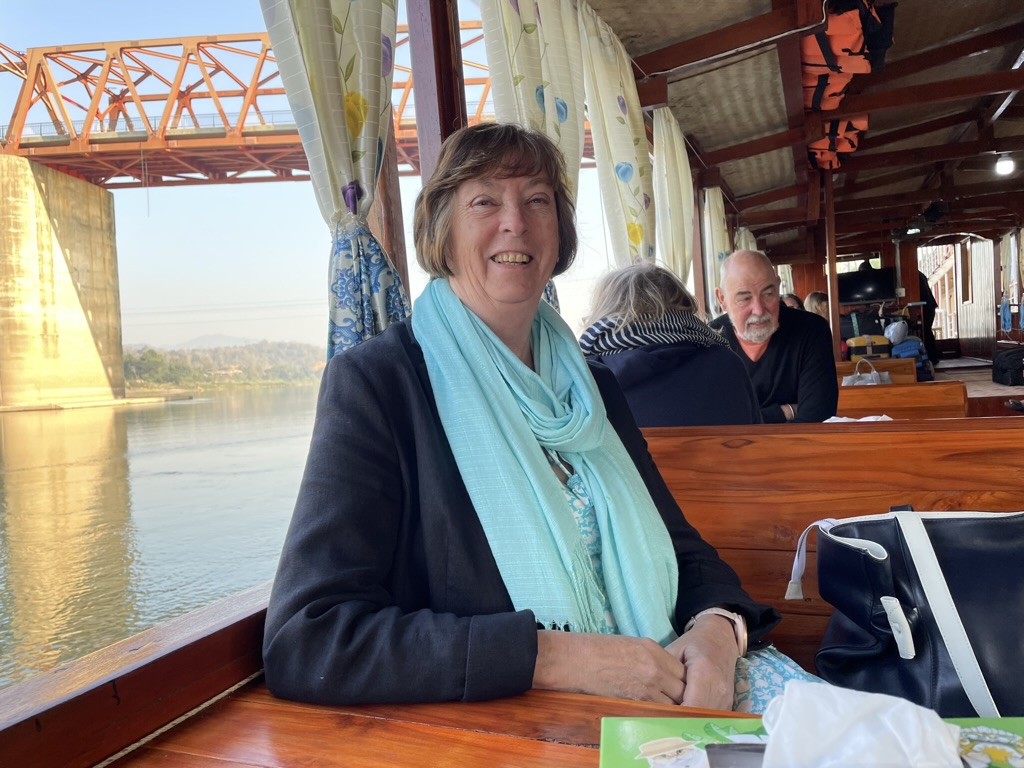
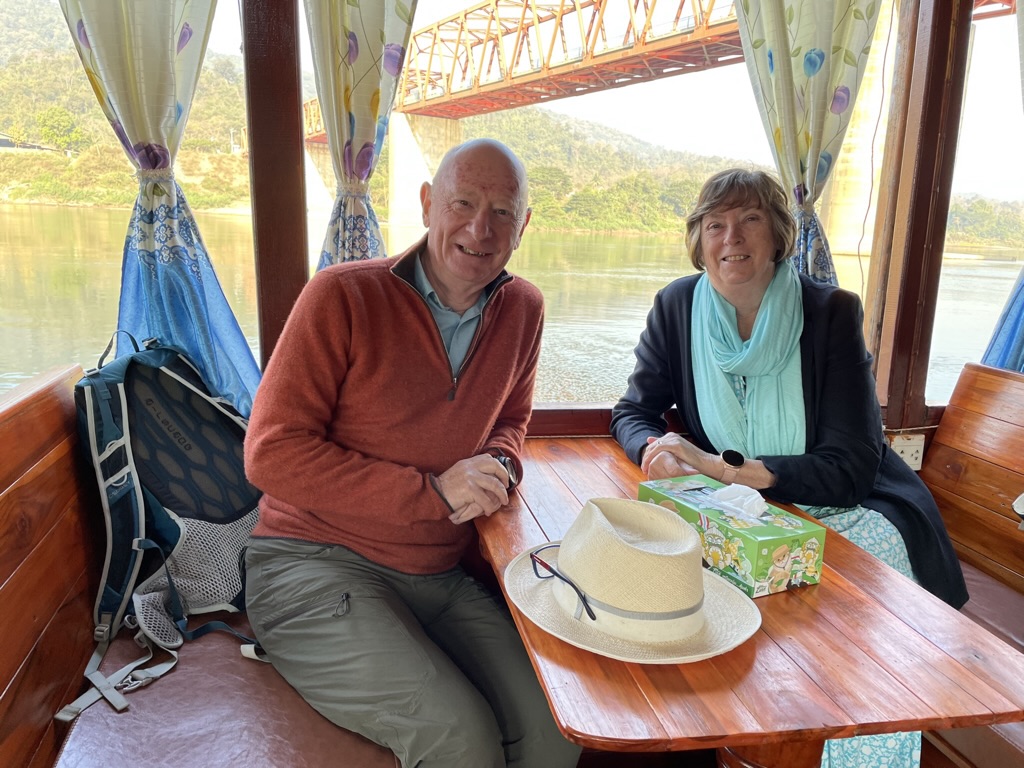
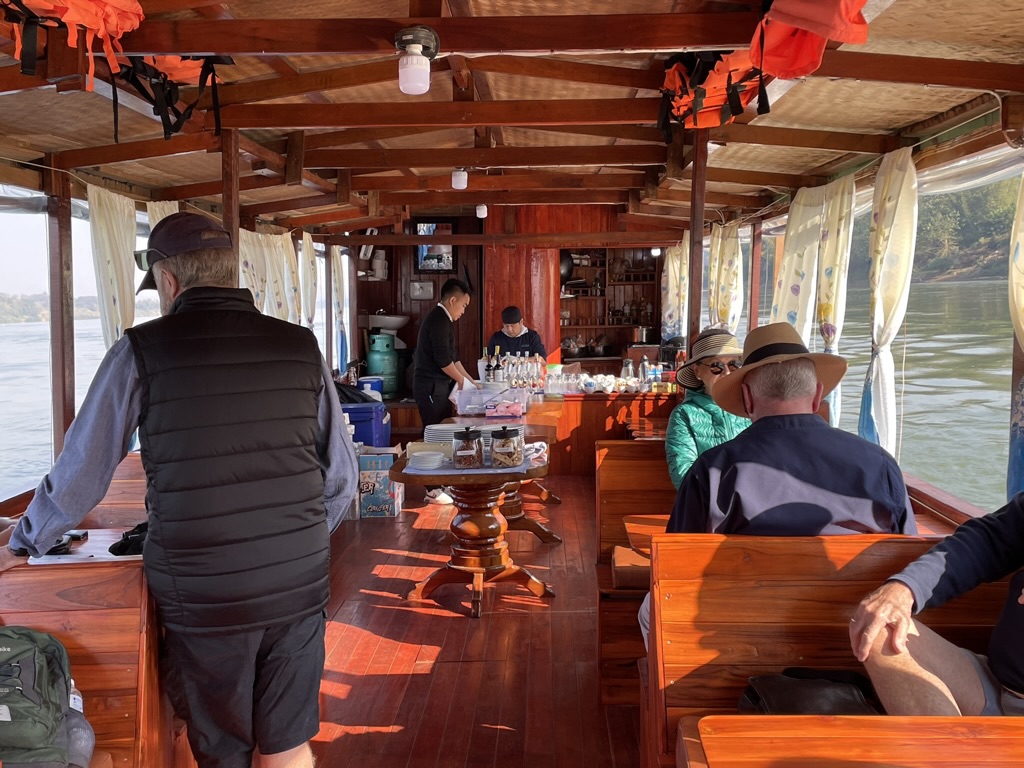
Lunch was very nice – served buffet style and we both had a glass of red wine to ease the rice down. Anne sat next to us for lunch and we picked up some of her life story of losing both parents at 14 in a car crash. For the rest of the trip we read and chatted amongst ourselves with the time passing very quickly.
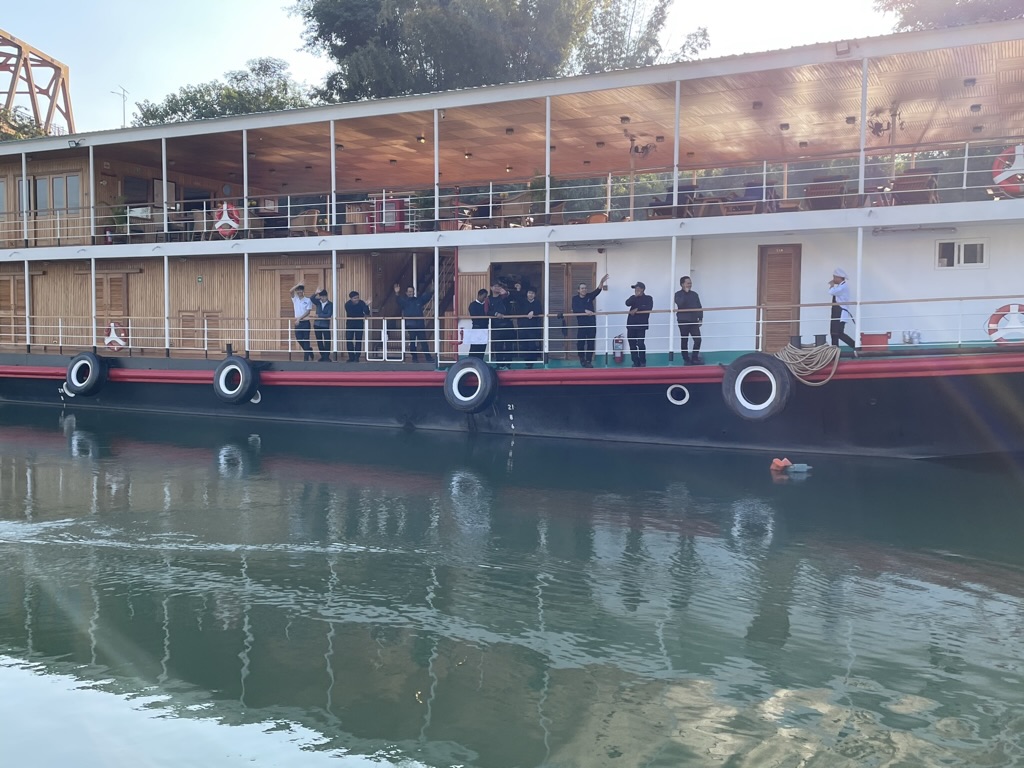
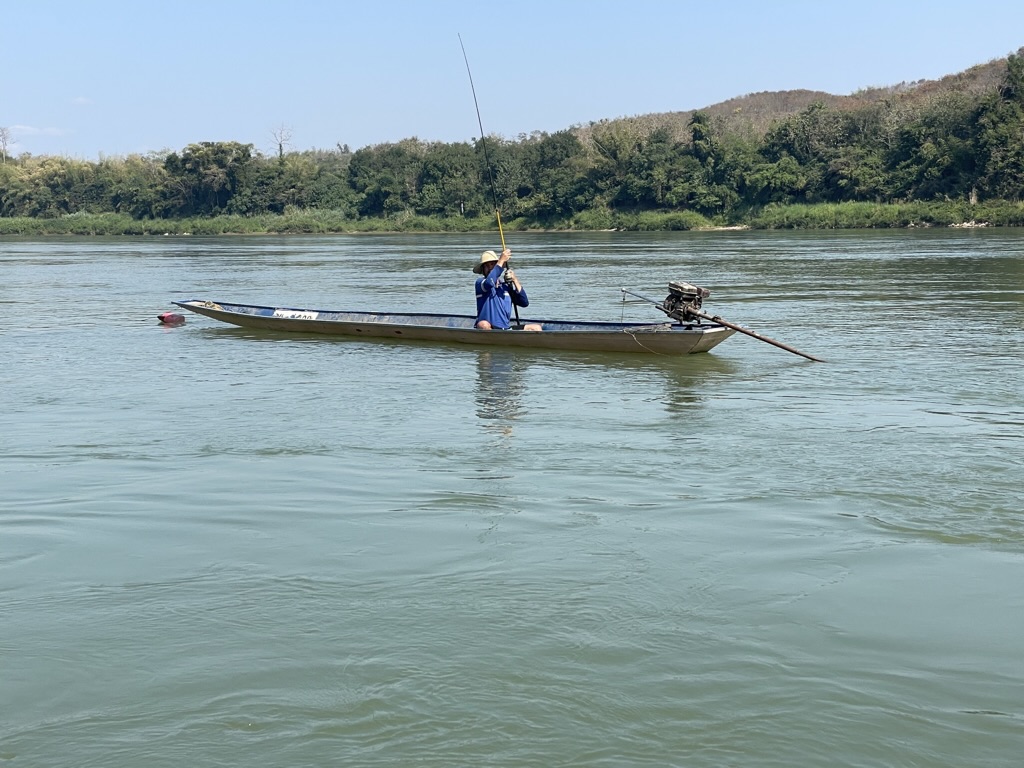
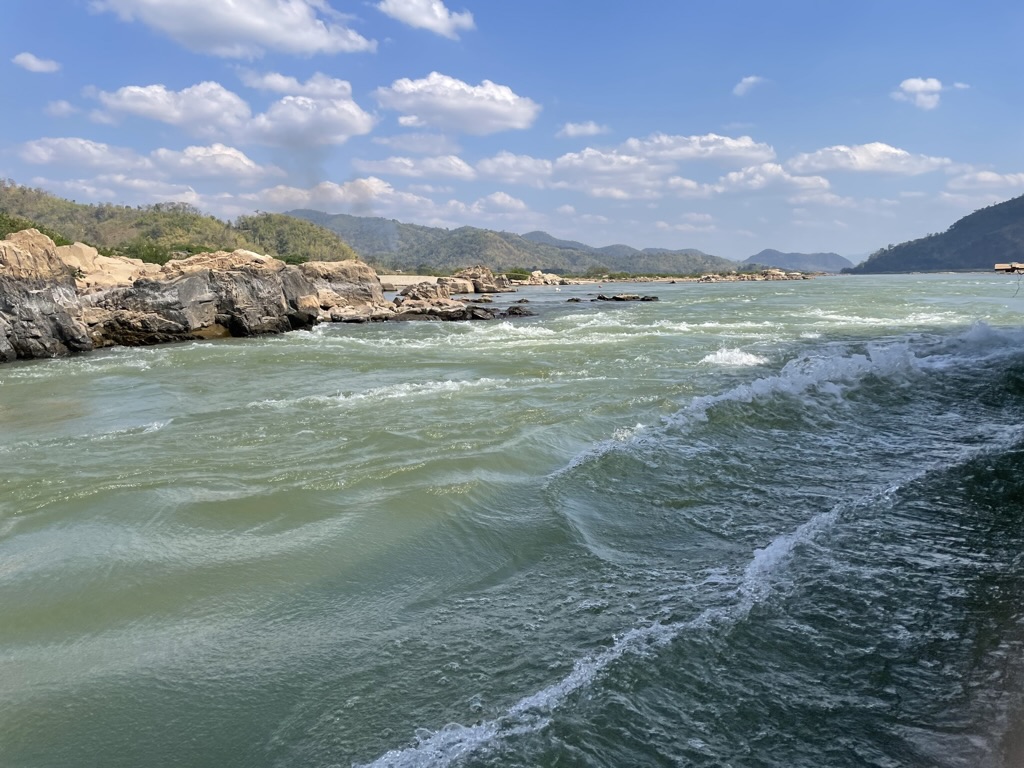
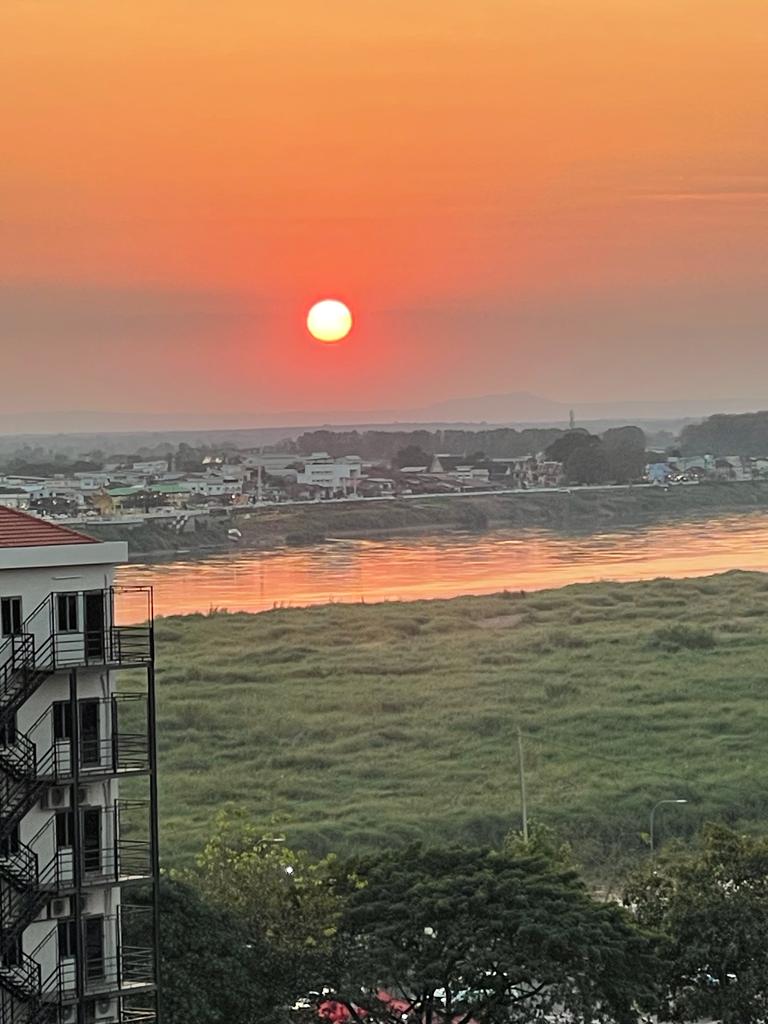
At 1400 we arrived at an unknown location, 100kms from Vientiane. Waiting there for us was a coach and it was finally time time say goodbye to the Mekong River. It has been a fabulous trip. The bus ride took a further 2 hours to get to Stay Sure Hotel in the centre of Vientiane. Suitcses had all been taken care of from Champa Pandaw to the hotel room. We had a bit of a lazy afternoon before cocktails at the Sky Bar. Pre-dinner drinks and canapés were lovely – overlooking the river across to Thailand and watching the sun go down over the city. We sat next to Mel and Liz for dinner – both from California. We had not had chance to chat with them much on the boat. Mel drew during the trip and Liz spent a lot of time on her computer. They both were fascinating individuals. Liz was an accomplished author with books printed by MiT on the impact on social life of technology. They had also travelled extensively including to Armenia and Azerbaijan. Mel was in the entertainments industry and organised major pyrotechnics and laser displays for extraordinary large events – including Frank Sinatra birthday party!
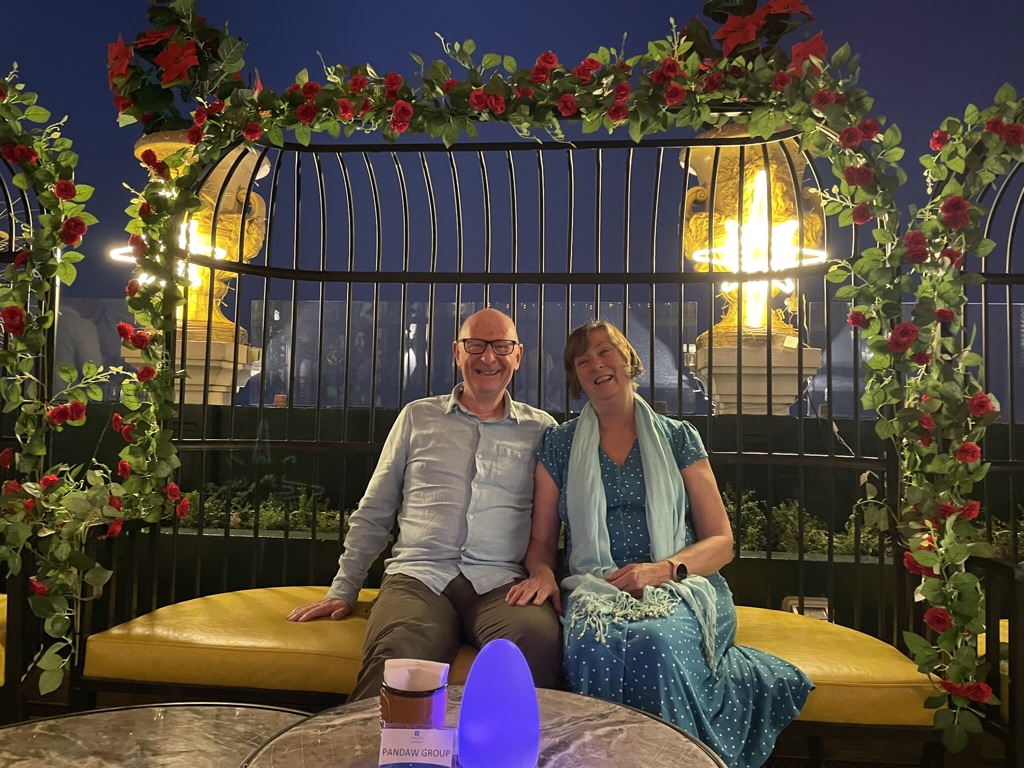

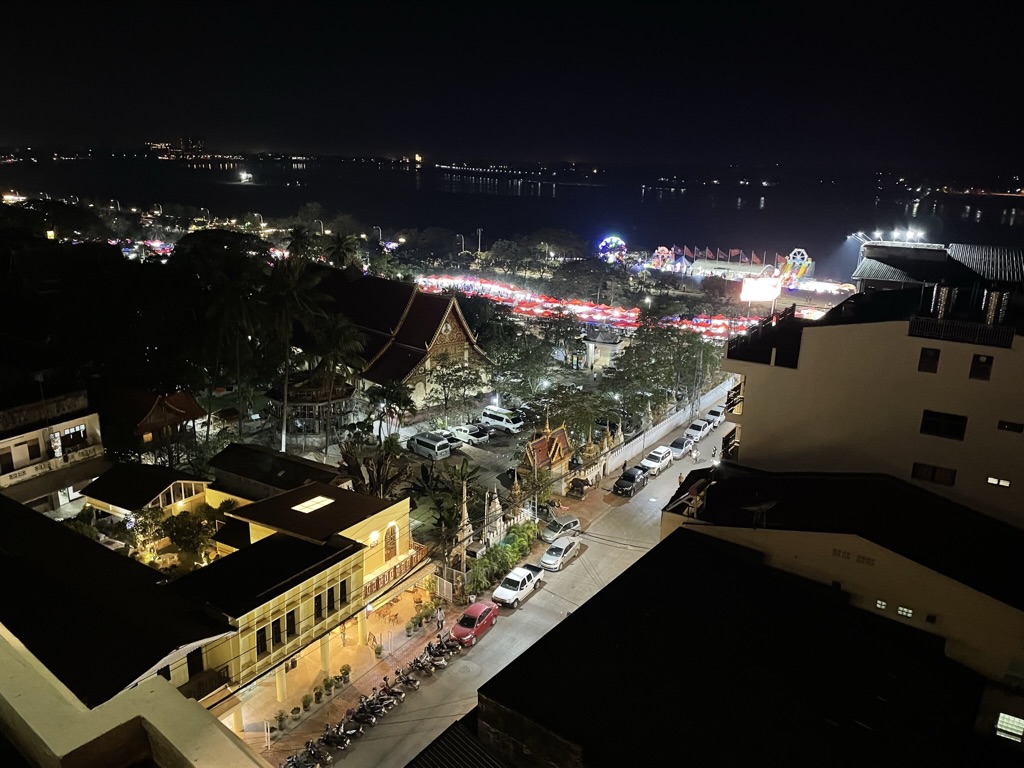
After dinner we wandered around the small area next to the hotel. The main purpose was to recce the French bakery for breakfast tomorrow morning. I casually mentioned we were going to go there for breakfast and we are now taking 10 people to an unknown place!
17th January – Tuesday
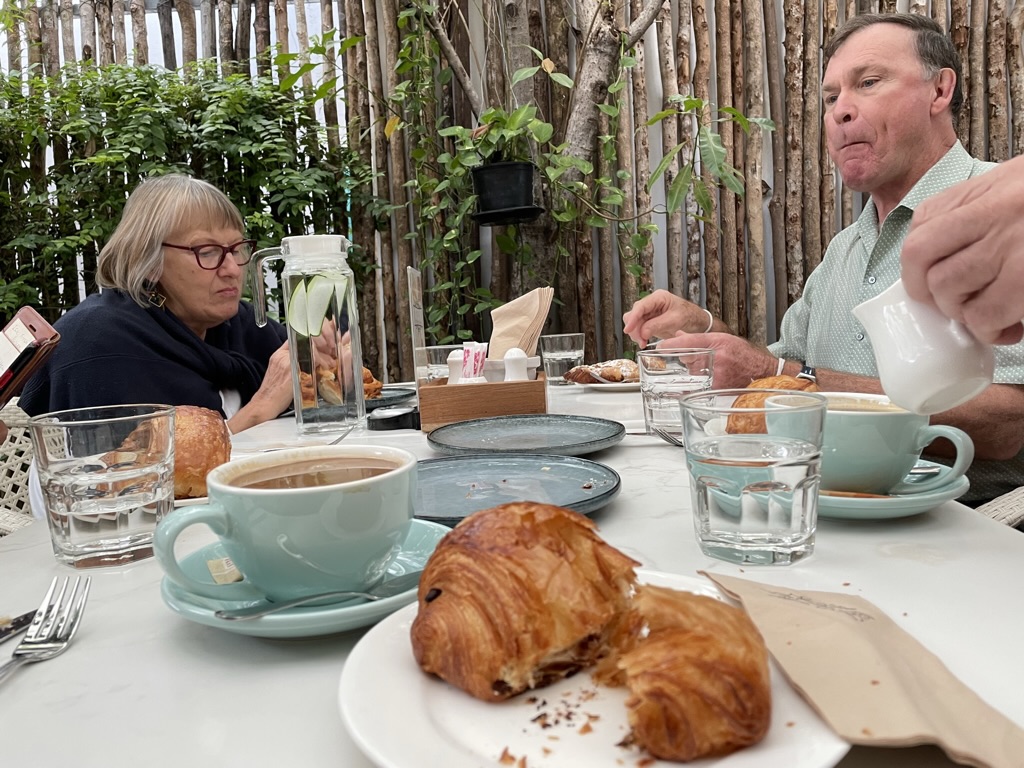
A few of us went to Annabelle’s for breakfast – Peter, Fran, David and Rhona. A small cafe where we sat outside under an awning. The croissants were outstanding and a relief to have some decent coffee. Laos PDR (Please Don’t Rush) lived up to its name! But the staff were young and very helpful. I did give them a review on TripAdvisor and it was noticeable that for many places in Laos no-one had commented since 2020 which is an illustration of the impact of Covid on the country.
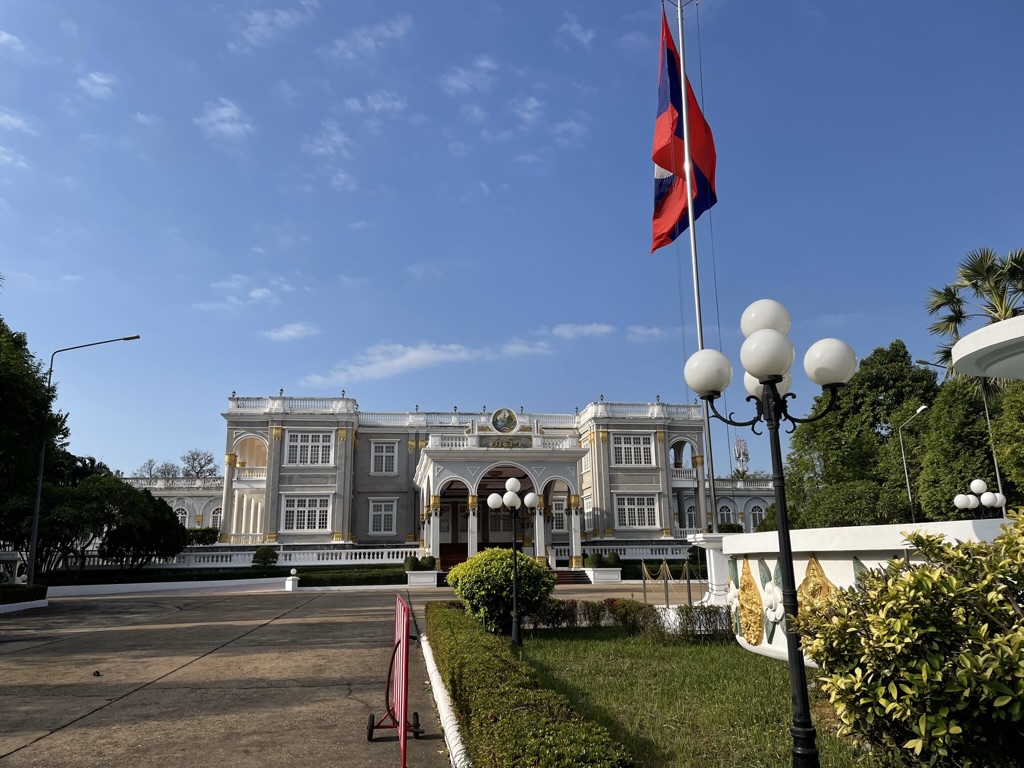
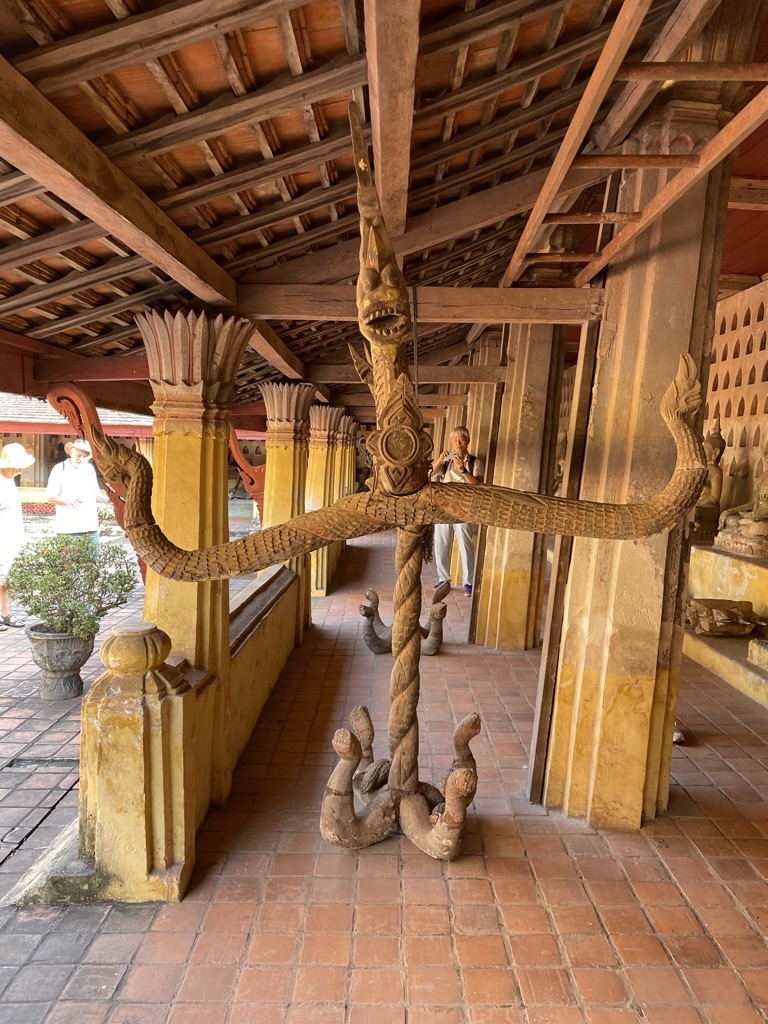
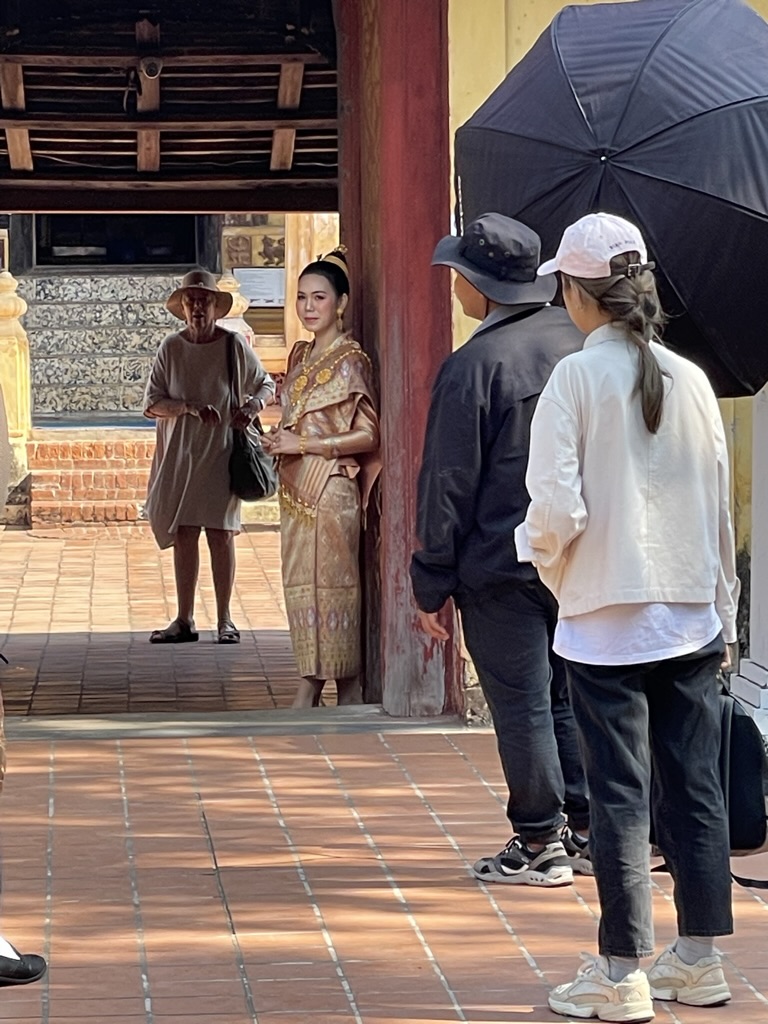
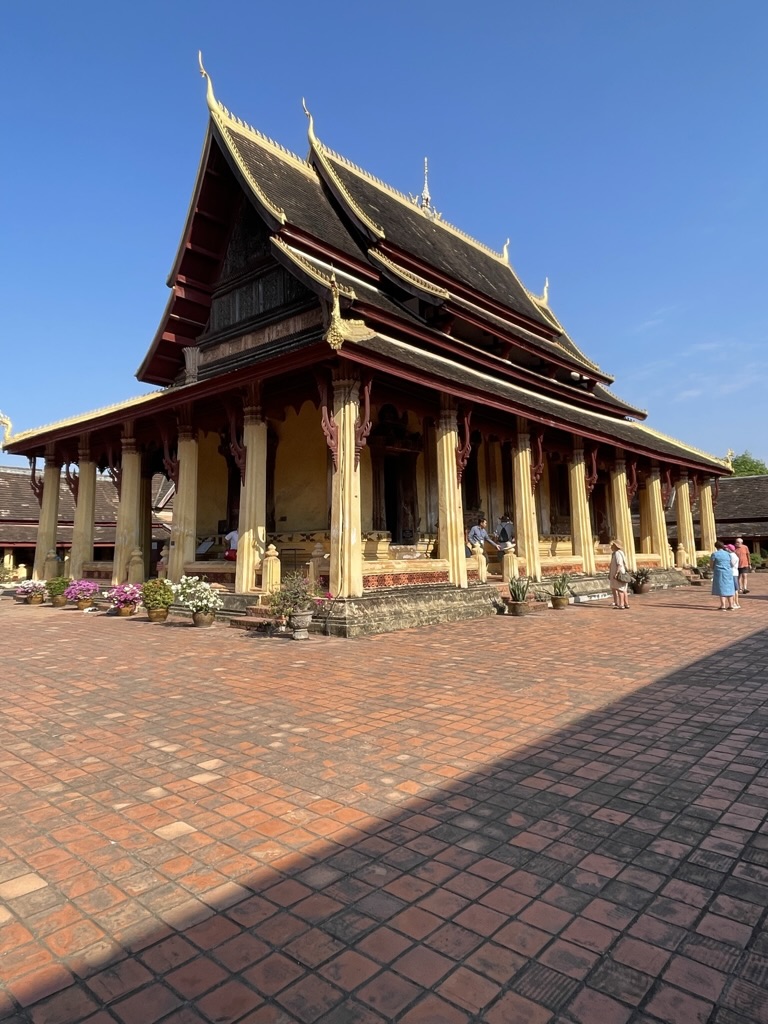
The morning was a tour around Vientiane. It had a city feel to it and did not seem to have a heart/centre anywhere. We stopped off at the Presidential Palace. For such a poor country the government clearly puts a lot of store in big buildings. From there we crossed the road to Sisaket Temple. One of the few temples to survive the sacking of Vientiane by Thailand in 1827. Another beautiful and peaceful temple. It has on display one of the ceremonial Nagar’s for the washing of the Buddha. The French was funding a project to bring back the colours to the frescos inside the temple – adding to the serenity and beauty of the place.
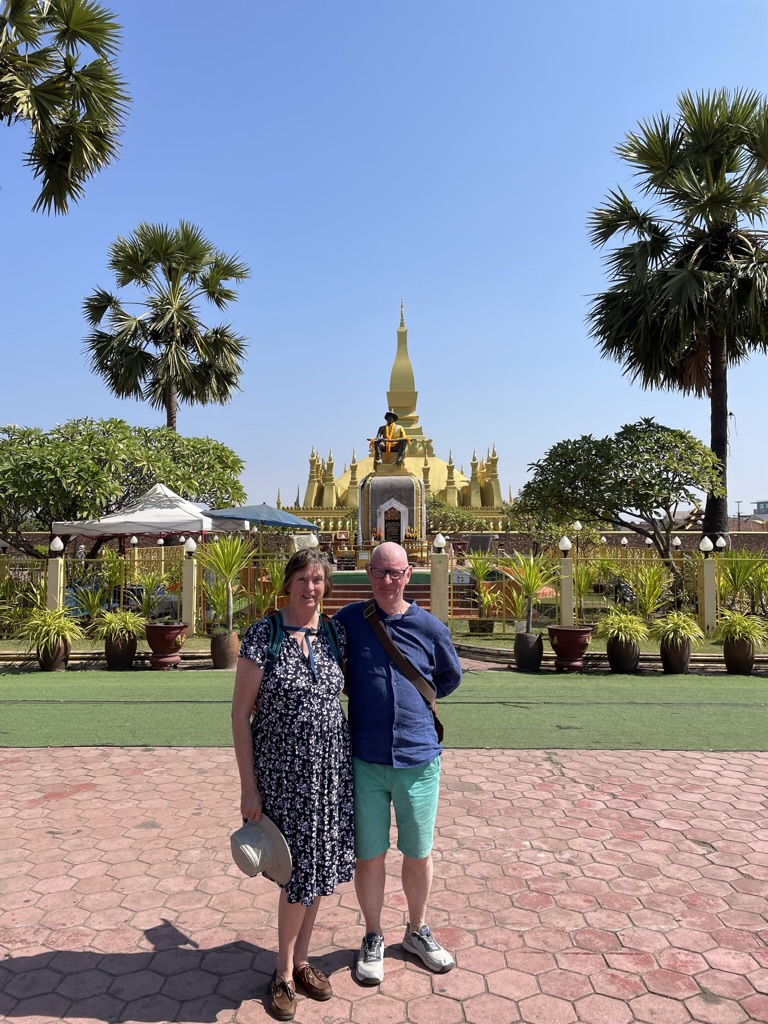
From there we traveled to the Golden Pha That Luang Stupa – one of the highlights of Vientiane. Inside the huge gold painted stupa is reportedly a small inner one that contains the collar bone or breast bone of the Buddha that was brought here in 3rd Century BC. The Stupa had been destroyed many times and latterly in 1827. The French rebuilt in 1900 and since then it has had a number of modifications. It is a place of great significance to Lao people.
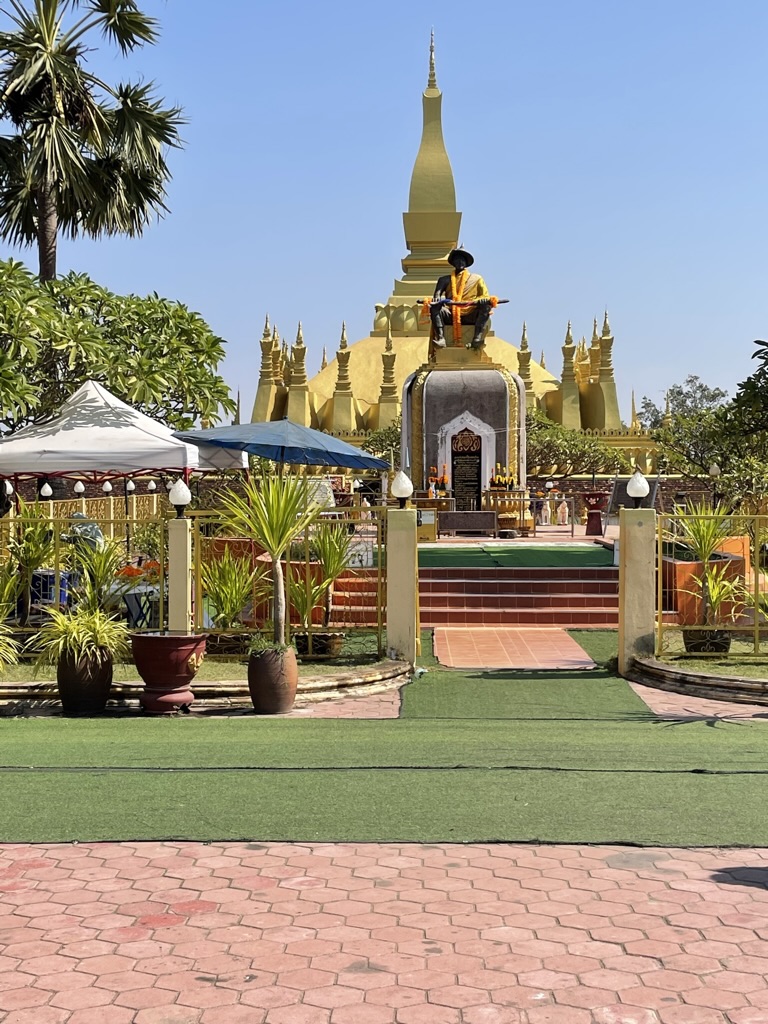
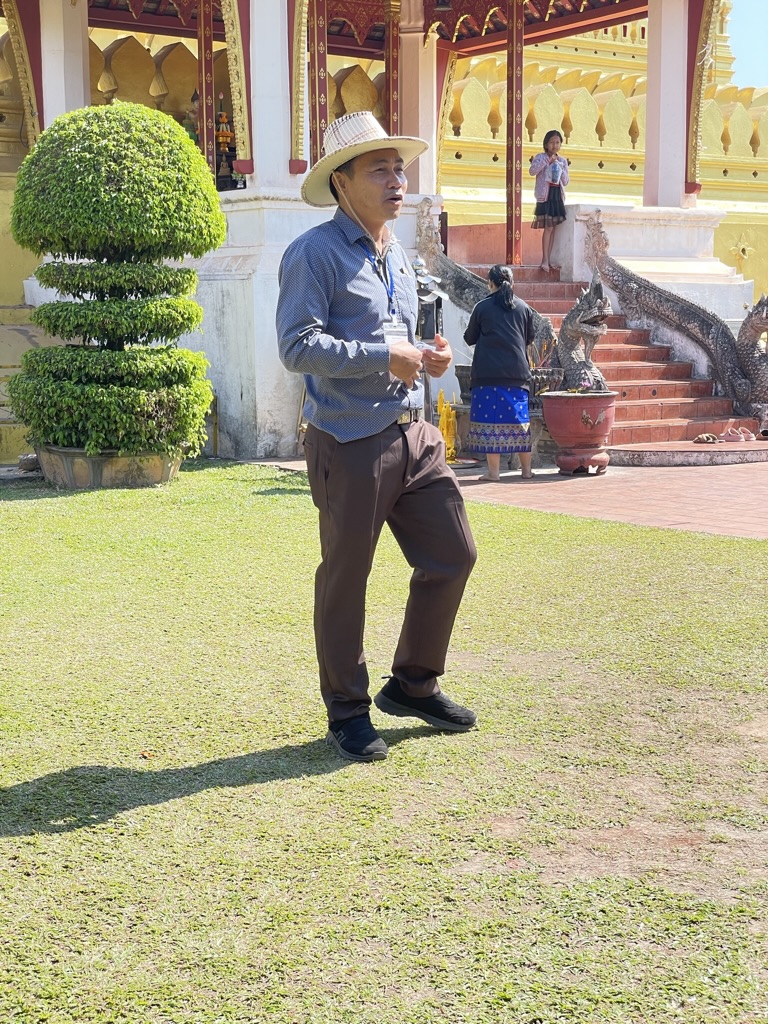
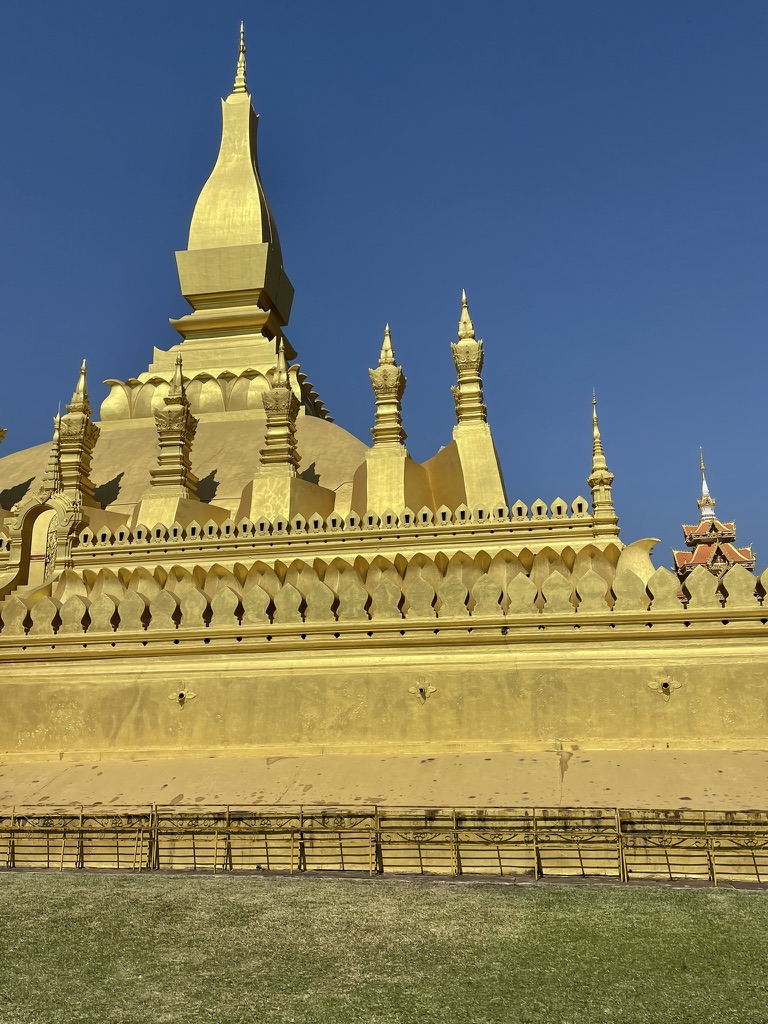
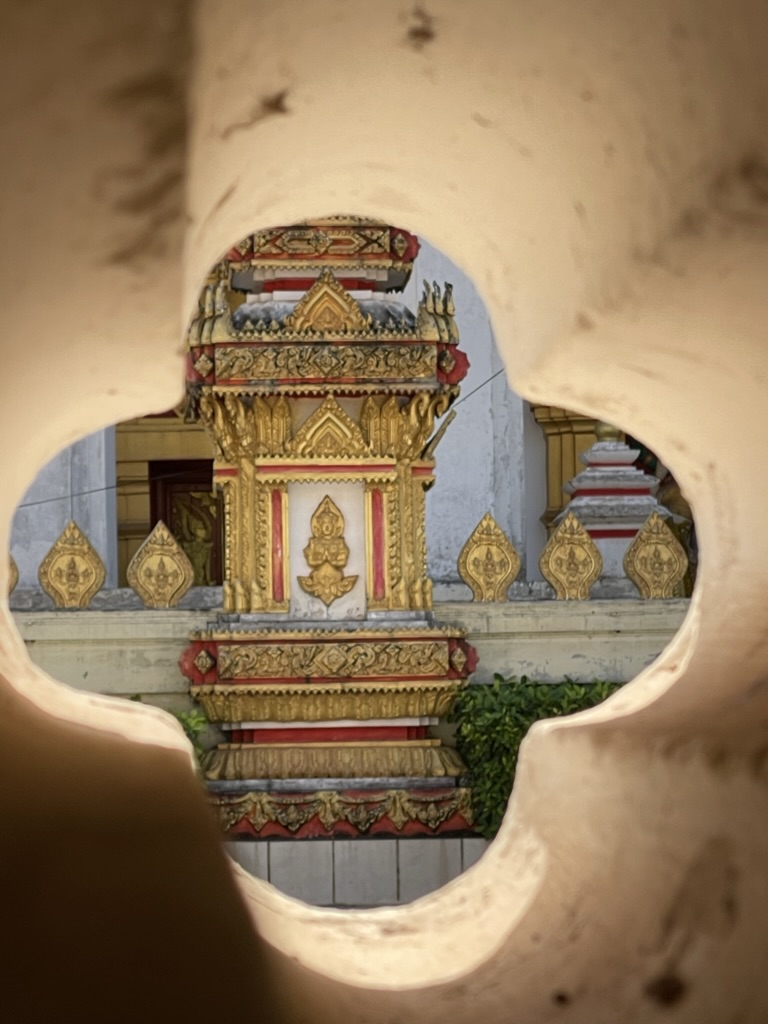
We had two more visits before lunch. One to Phatouxay Monument, described by Lao as the equivalent of the Arc de Triomphe. We found it a bid of a disappointment. Made out of concrete which is now crumbling and surrounded by rather tacky tables selling gifts and t-shirts. It is supposed to be a place where at night the young people gather around the fountain and lighting. Having seen the rest of Vientiane, I can understand why they go here as there are few gathering places in the city where you can lounge about. The final temple of the trip was Watt Prakeo Temple. We arrived at what looked like a group of trainee Lao Tours guides who were going around – it looked to be a 4 year course. It was an impressive building but by this stage we had just about templed out.
Lunch was at Lao Derm Restaurant. It was very upmarket. We sat at a large table with a rotating table in the middle for the various dishes that were served. It was a very good meal and good conversation with those around us.
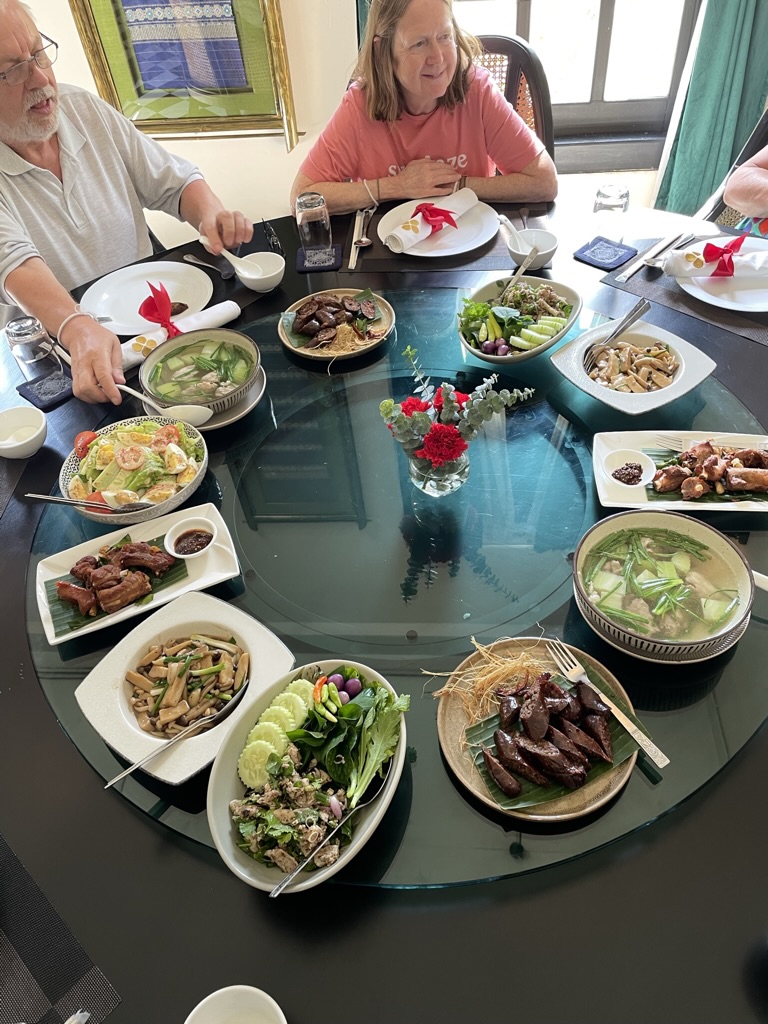
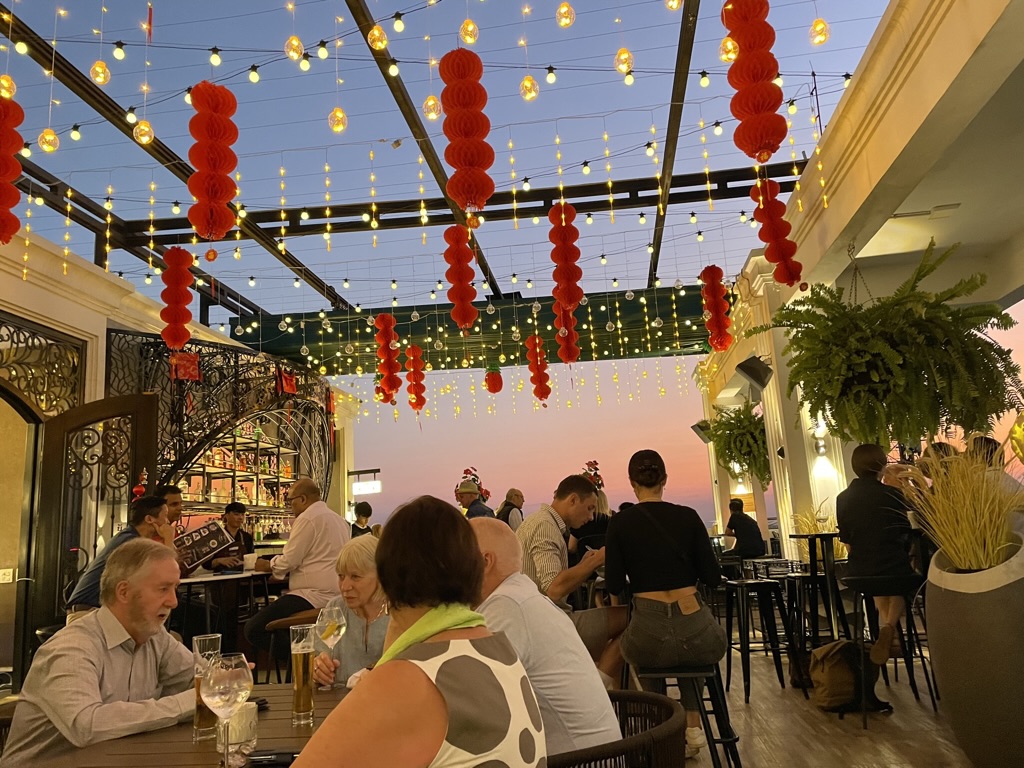
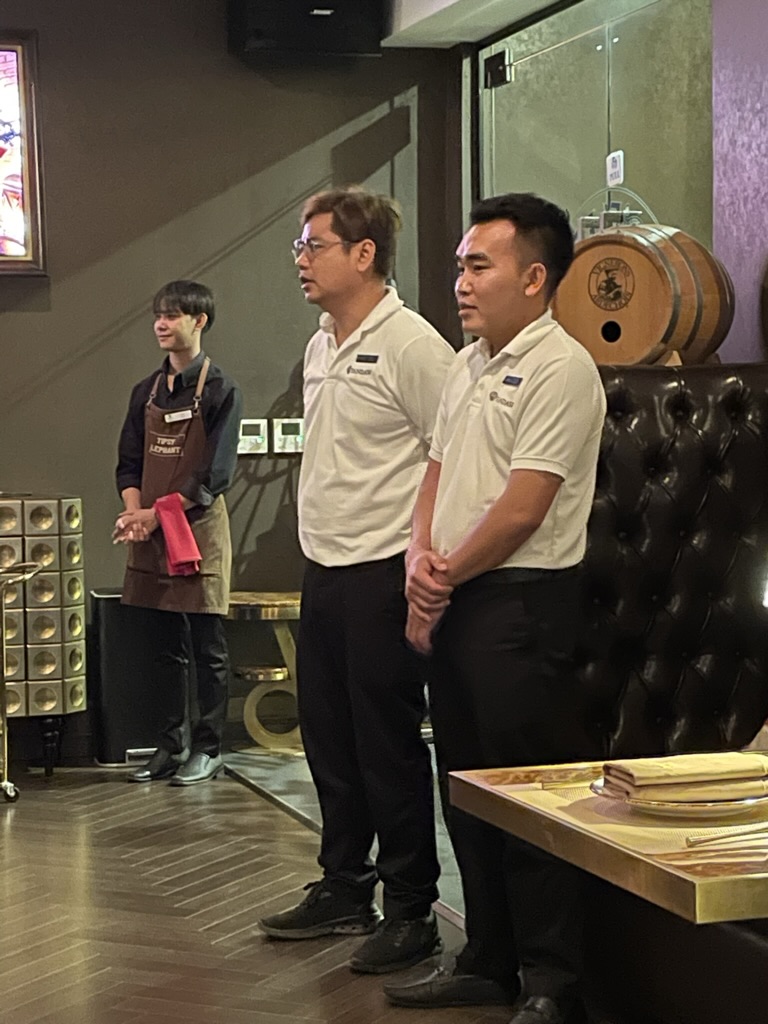
Not much was done in the afternoon. Back to the hotel where we snatched some sleep before going to the Sky Bar for drinks – in time for sunset. As this would be our last meal together we made the most of the drinks and company. It was also the last time we would see Vieng who was travelling back to his family for a couple of days before the next tour began. Solar, the barman had stayed on to supervise the evening and ensured we were all looked after. Final farewells were made and I took the lead in standing up to thank all of the Pandaw staff. We were the last to leave with Derrick, Jane, Anna, Michael and Sandra. The wine kept flowing as well as the beer. We had a warm feeling as we went to bed after a lovely end to a fantastic holiday.
18th January-19th January – Wednesday
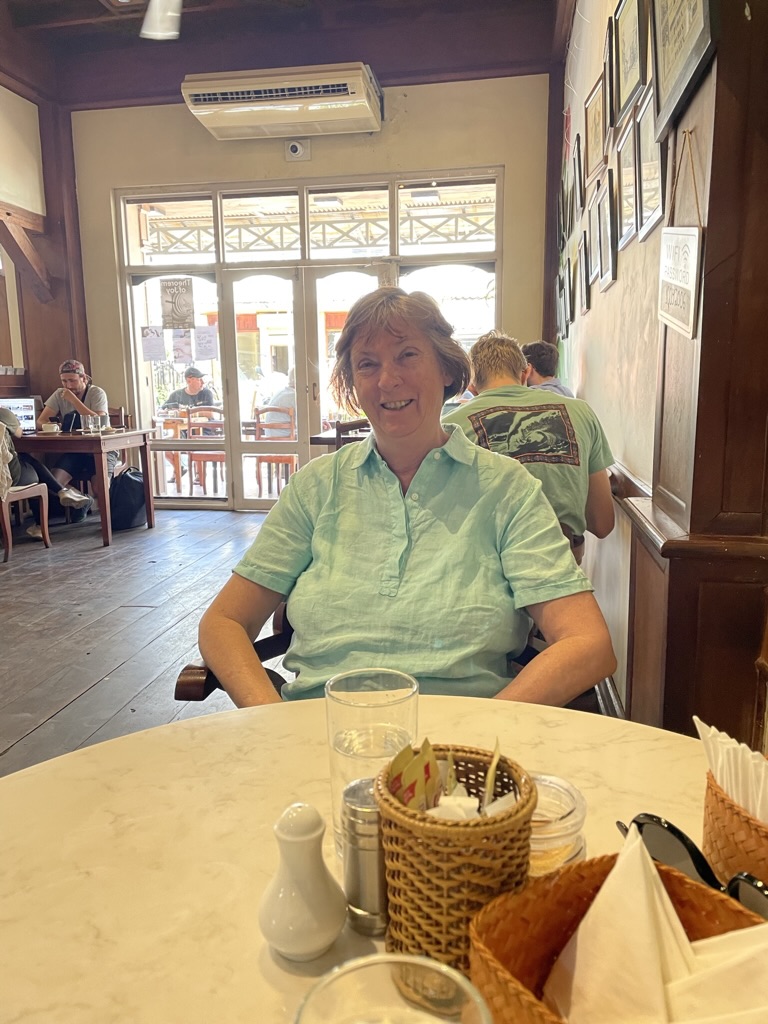
The last day! This time a group of 10 went to Annabelle’s – a bit too many for them to manage. Nevertheless we sat around for over an hour with croissants and coffee – although Mel had a green tea latte which he insisted was extremely enjoyable – a few of us were a little more sceptical. We wandered back to the hotel and finished off our packing. It was also time to say the last farewells as everyone started to make their own way back home – some to other hotels for a few more nights, others preparing for a back to back cruise and others to stay on in Laos and travel back up to Luang Prabang. We wandered around the city fairly aimlessly for a couple of hours before finding a French cafe for coffee and then somewhere for a light lunch – Cafe Vanille. This was a real find. Extremely French with high ceilings and round wooden tables. The food was delightful – we had eggplant, cheese, chickpea, salad and deliciously light French bread. We lingered here for over an hour.
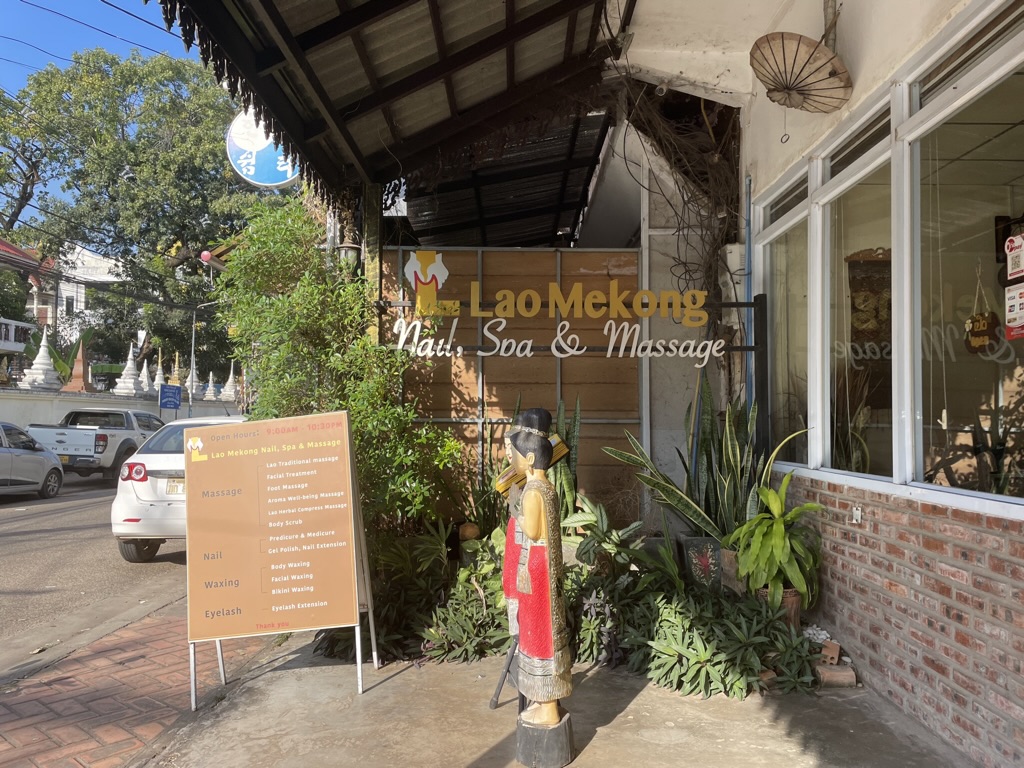
I had persuaded Gillian to have a Lao massage with me and so we walked next door to the massage parlour. We decided to go for a 2 hour full body massage. We both sat down to have our feet washed before being taken upstairs to a room which we shared. After changing into light pyjamas, the two ladies came in to start the session. Laos massage is probably not as painful as Thai but there is an element of no pain no gain to the session! It was wonderfully relaxing and a great way to end our stay in Laos. We both came out relaxed and having paid around £13 for the both of us. After reading a little in the hotel lobby we went upstairs to the Sky Bar for one last drink. Usually having been away for so long we are ready to come home – but on this occasion we were both sad to leave. It had been an incredible holiday in a stunning country which we felt would not stay like that for that many more years. Our travelling companions were a group of highly talented and interesting people. The crew of Pandaw were attentive and caring. It was a trip that widened our minds.
The trip back to the UK was a lot better than expected. A bit of hanging about at Vientiane airport and them to Bangkok where we had a much longer wait. However we found a noodle bar/restaurant that made a perfect ending to the trip. The flight took off at midnight and we both fell instantly asleep. The 13 hour journey passed very swiftly. Arriving in UK at 0630 in -2 deg was a bot of a shock but the glow of the holiday keep us warm as we travelled back to Faringdon.
 Purrfect Tale