Part 3 – Tour of South Island – 1st March –
1st March – Wednesday – Travel to Christchurch
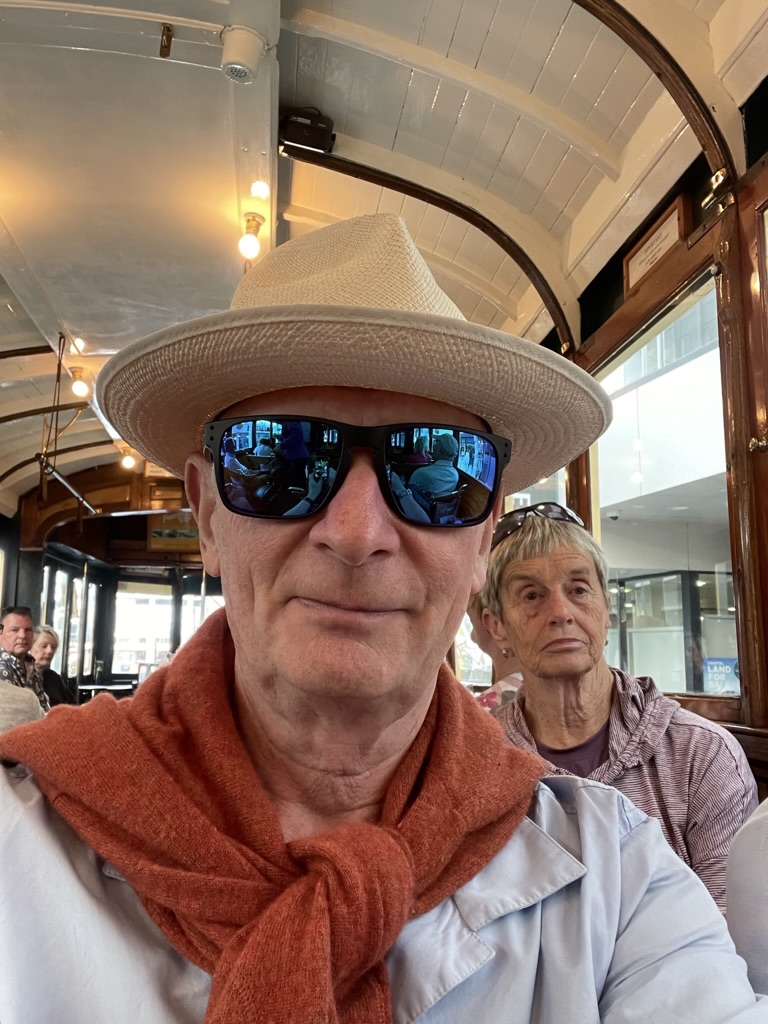
A very early start at 0520 to pack and leave for the airport with flight leaving around 0800. It was a bit hectic but we managed to pick up our breakfast bag from reception. Mmmmm – not the most attractive meal! But the muffin went down well – more so than a cold muesli that looked like cold cat sick. I was admonished by Gillian when I voiced my views to other!
We got the airport in relatively good time. Booked in via one of the machines that also prints out your luggage label thinking this would save time and there would be a bag drop off point. Not so – we just joined the queue at the back rather than the front! However it did give time to re-arrange bags as the carry on was overweight. Transferred all the heavy stuff to Gillian – bogs, laptop, iPad, power leads. By which time I had gone from 12kgs to 7kgs. After all that effort no-one weighed them or really cared.
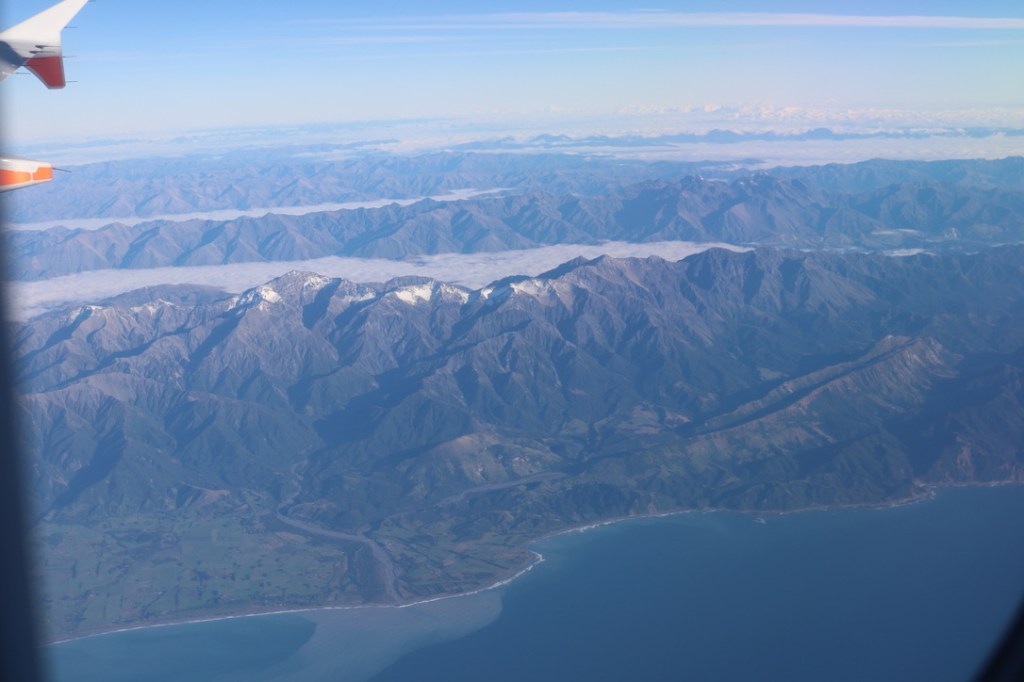
It was a short flight to Christchurch across the Cook Straight. Having landed we in a very spacious airport I finally bought a pair of sunglasses which I should have done when we got to NZ – but as the saying goes better late than never. Having loaded the cases on the bus we went back into the terminal for breakfast and coffee this time minus the muesli.
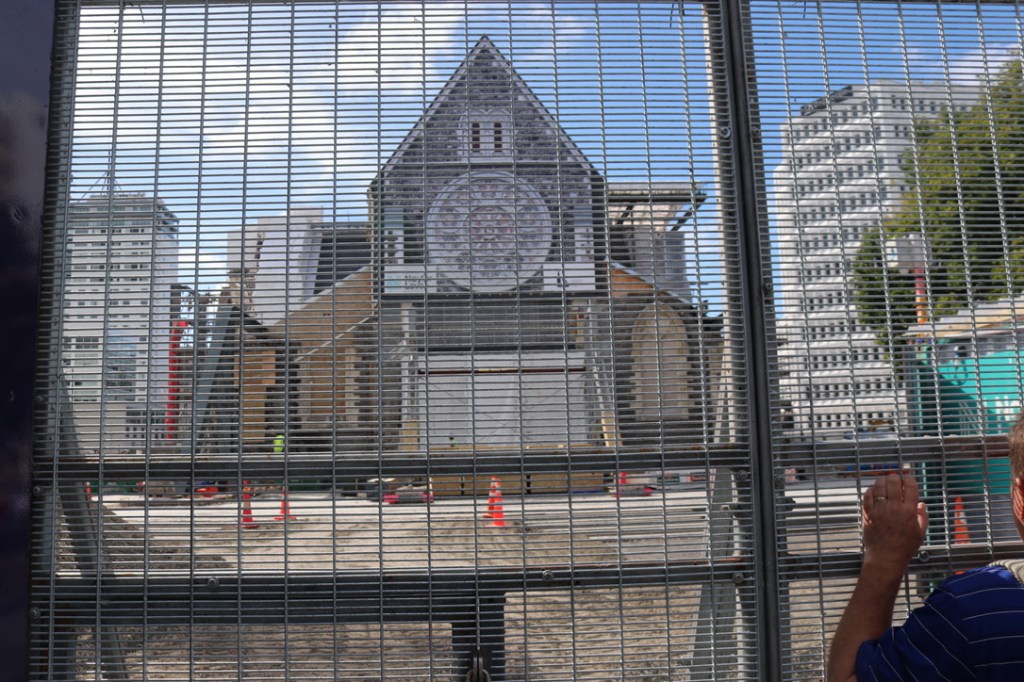
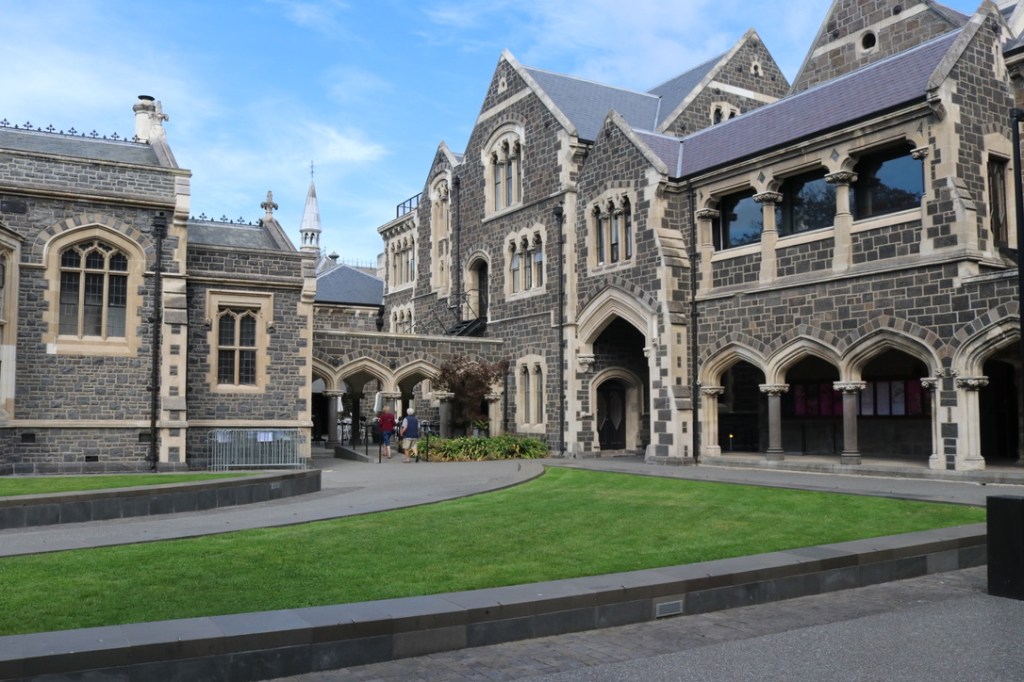
The rest of the morning and early afternoon was clearly an exercise in killing time before our rooms were available in the hotel. We drove around Wellington, stopped at the Botanical Gardens and took a tram around the city centre. The impression of Wellington was very positive. Since the devastating 2011 earthquake the city has begun to be transformed. A mixture of modern and old buildings all earthquake proofed. Very wide streets, everything extremely clean with people seeming to be proud of their environment. It had the feel of a young city. The Cathedral which had in effect been destroyed in 2011 had at last begun to be rebuilt in 2020 which has caused much controversy – firstly why did it take so long to make a decision and secondly why rebuild a fairly mundane Church – why not create something much more impressive. They are hoping it is going to be finished in 2027.
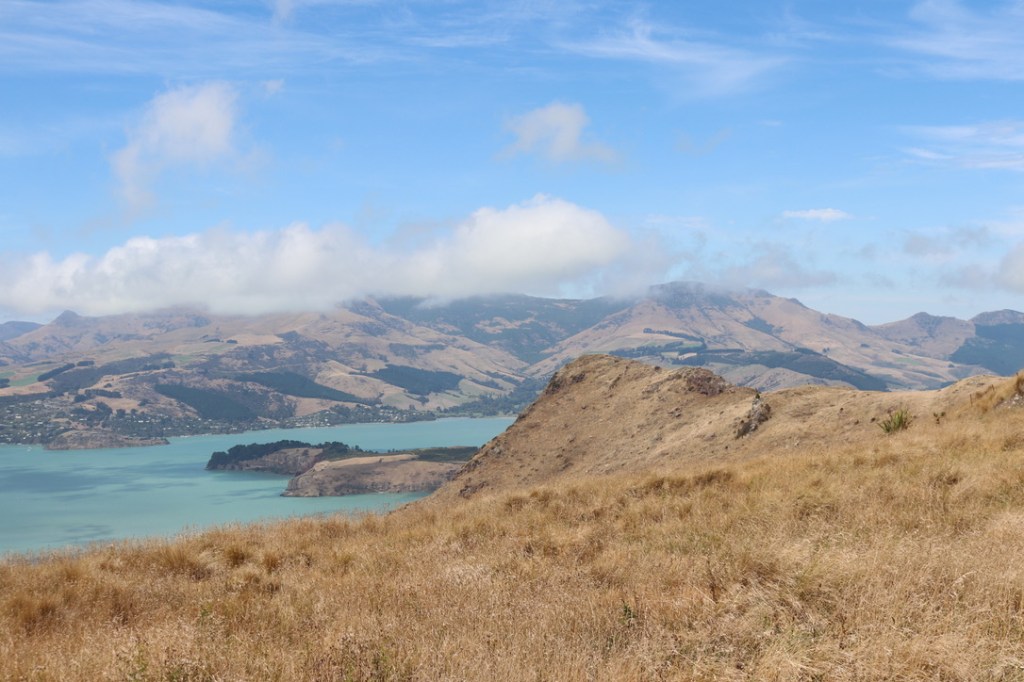
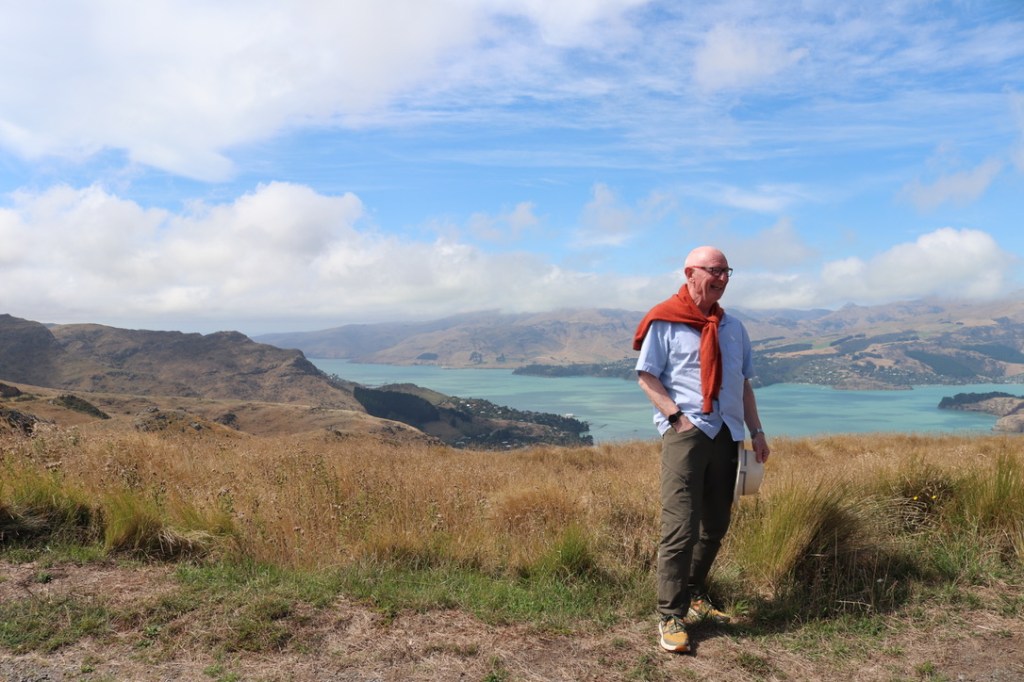
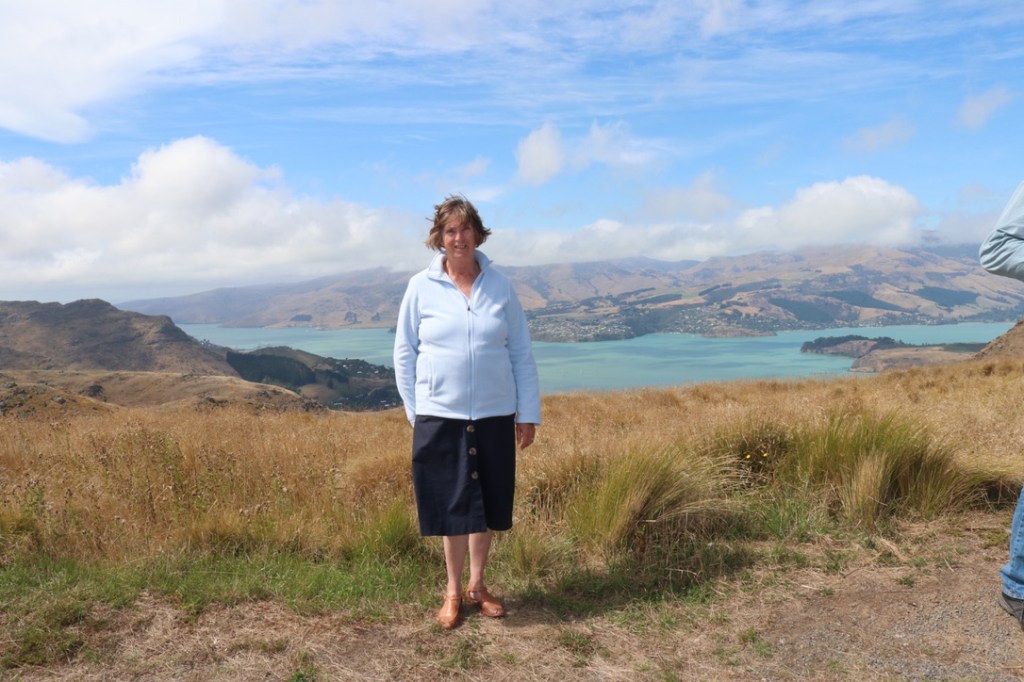
The bus took us up to Mount Vernon National Park – around 1,800ft – for views over Wellington and Governor’s Bay. The vista was as you expect in NZ – mountains, rolling countryside, clouds and mist at top of mountains and in the valleys.
In the late afternoon I went for a run along the Avon River – these runs do not get any easier especially after such a long lay off not to mention the food, beer and wine.
In the evening we were invited to Richard and Michelle’s home for dinner with Paul and Jo Keleghan. All friends from Army days. Richard was one of the Squadron Commanders when I was in 30 Signal Regiment. It was a lovely evening with a fair bit of swinging the lantern. We undertook to come back out in 2024 for the 3 Test series and spend a little more time with them. Richard, Michelle and Tom were planning to be in UK for end of March and we are hoping to meet up with them again then. An Uber back to the hotel for a few hours sleep before setting off for Omarama – another one night stop.
2nd March – Thursday – Christchurch to Omarama
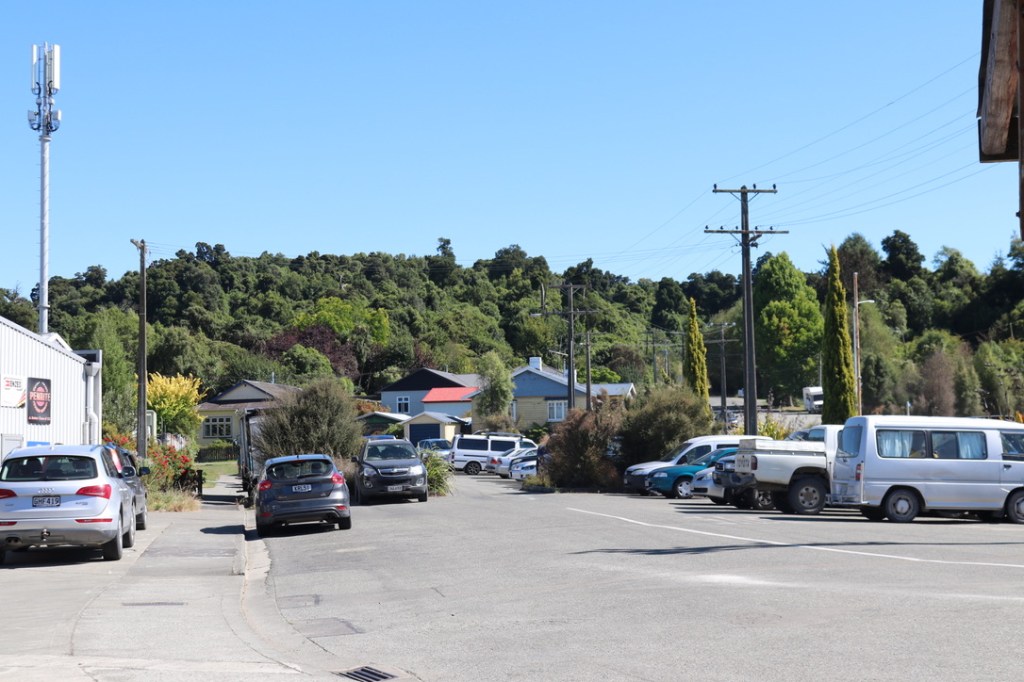
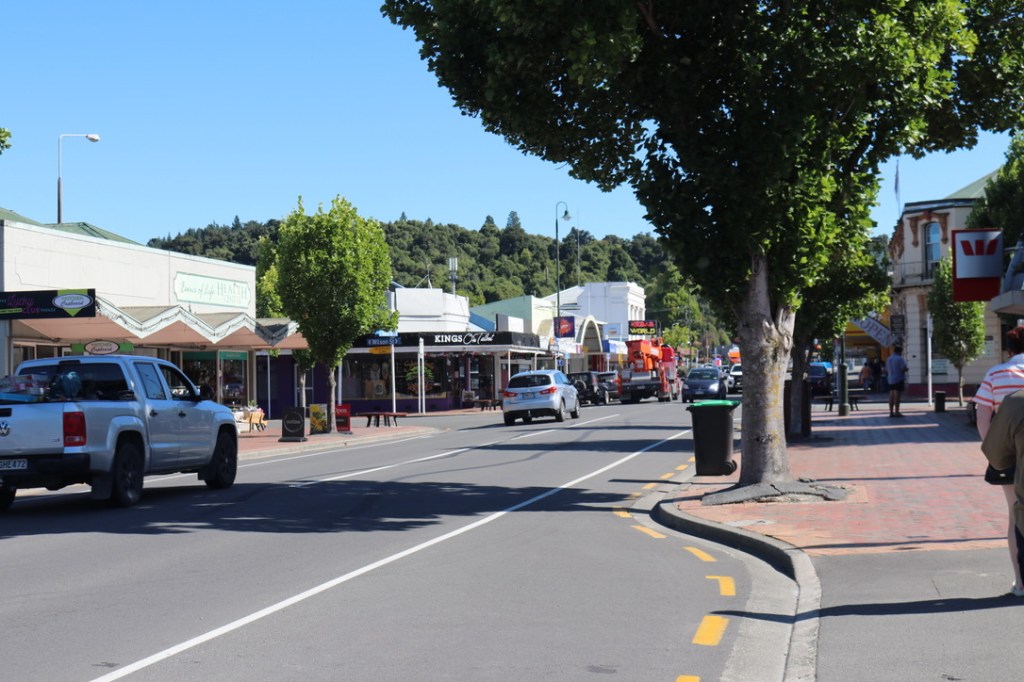
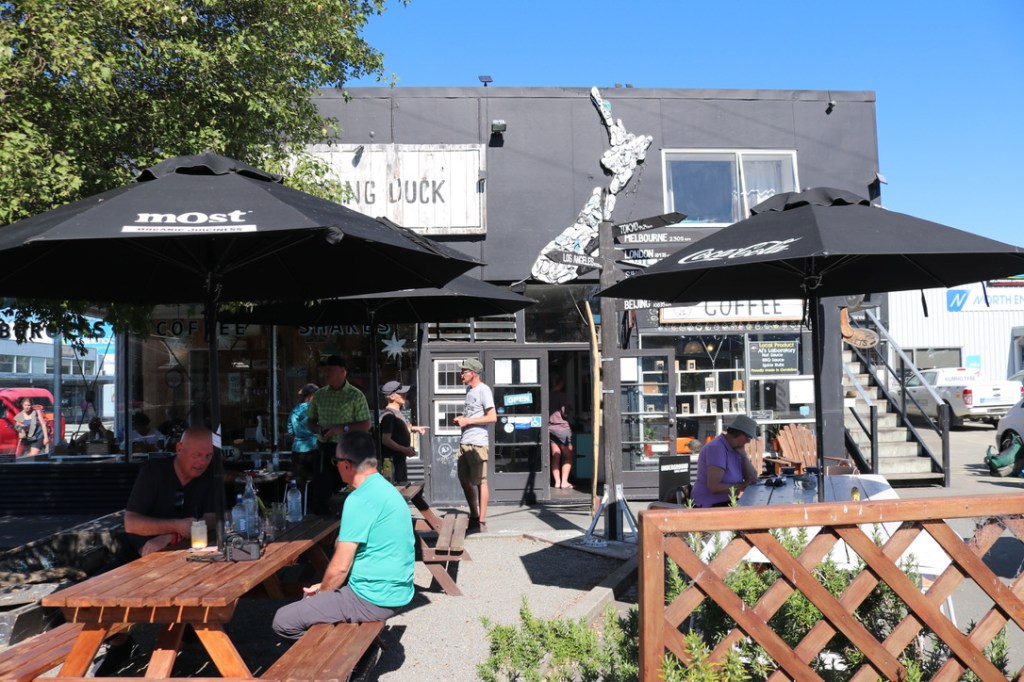
We left at 0900 from Christchurch for a long day in the coach – arriving in Omarama at 1830hrs. It was day of wonderful sights. We travelled down Route 1 through Ashburton where we had a quick stop for nature. Gillian managed to find a pharmacist for a replenishment of antihistamine tablets and some more Nurofen. The air conditioning in the hotels was starting to tell on us and we had decided wherever possible not to use. Coffee break was at Geraldine – a nice small town just off Route 1. We wandered down the street to find a coffee shop without crowds and found a lovely little place selling home made cakes and iced coffees. It typified many of the hotels, bars and restaurants we visited. If we thought we had a shortage of hospitality workers in UK – it is nothing like NZ. Pre-covid they relied upon students and tourists from outside NZ who had decided to spend a year in country. These have now mostly gone home and have not come back. So we waited getting a little more anxious outside for our drinks hoping we would not have to leave to get back on the coach before they arrived. Fortunately they did arrive in time.
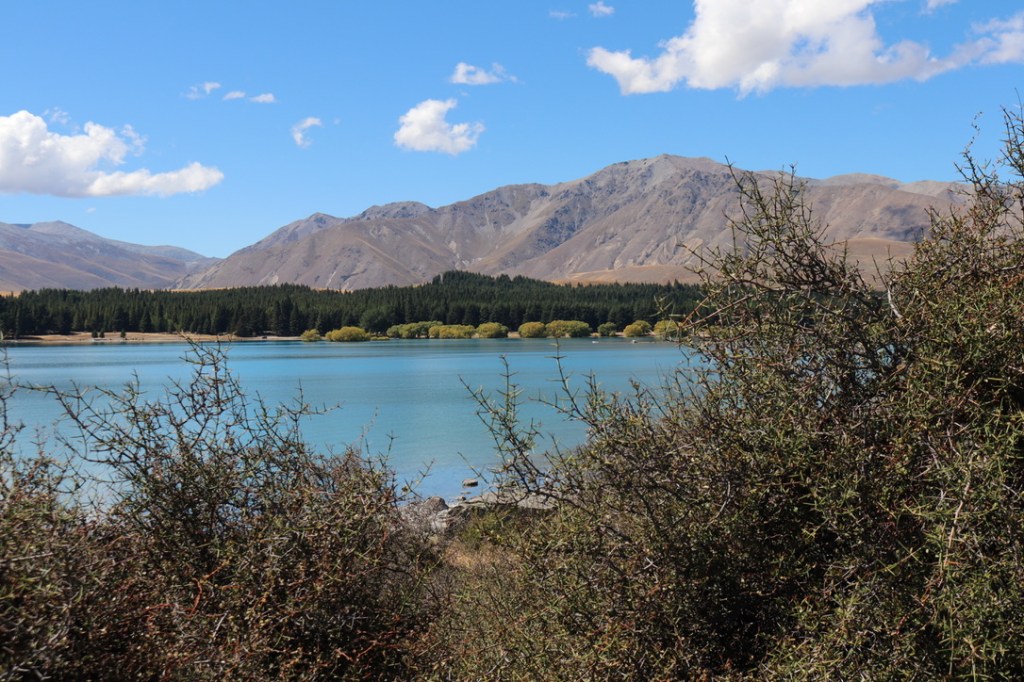
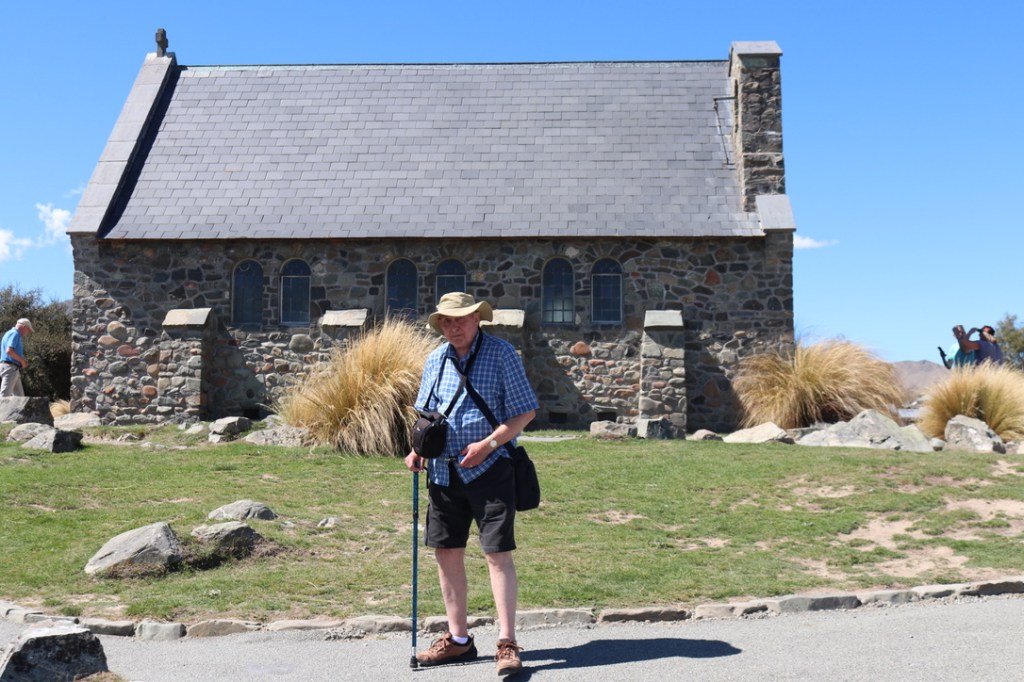
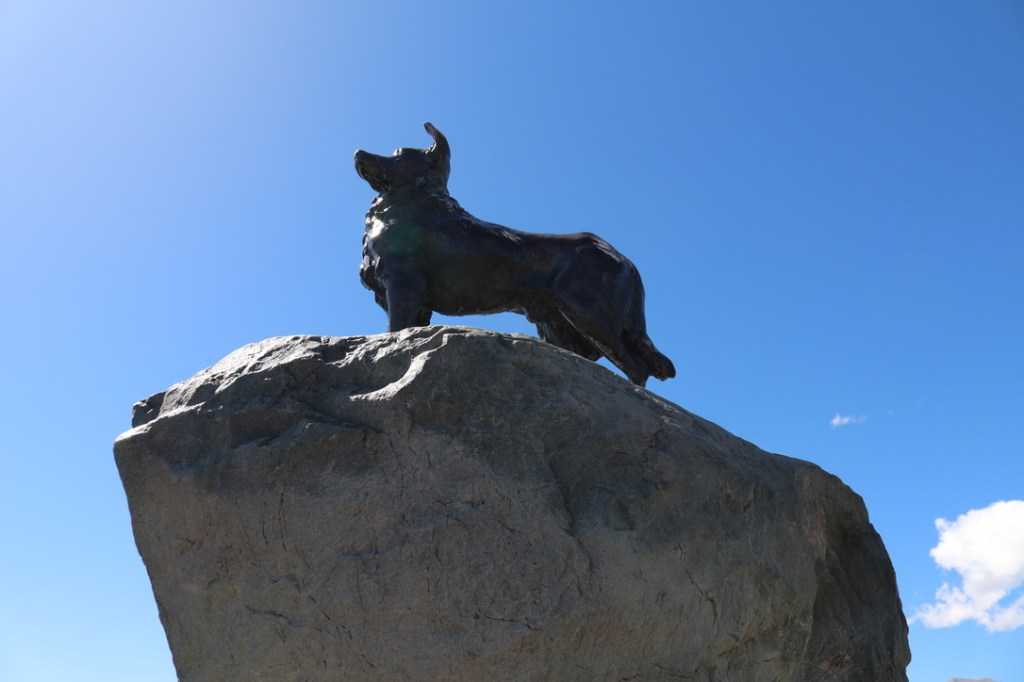
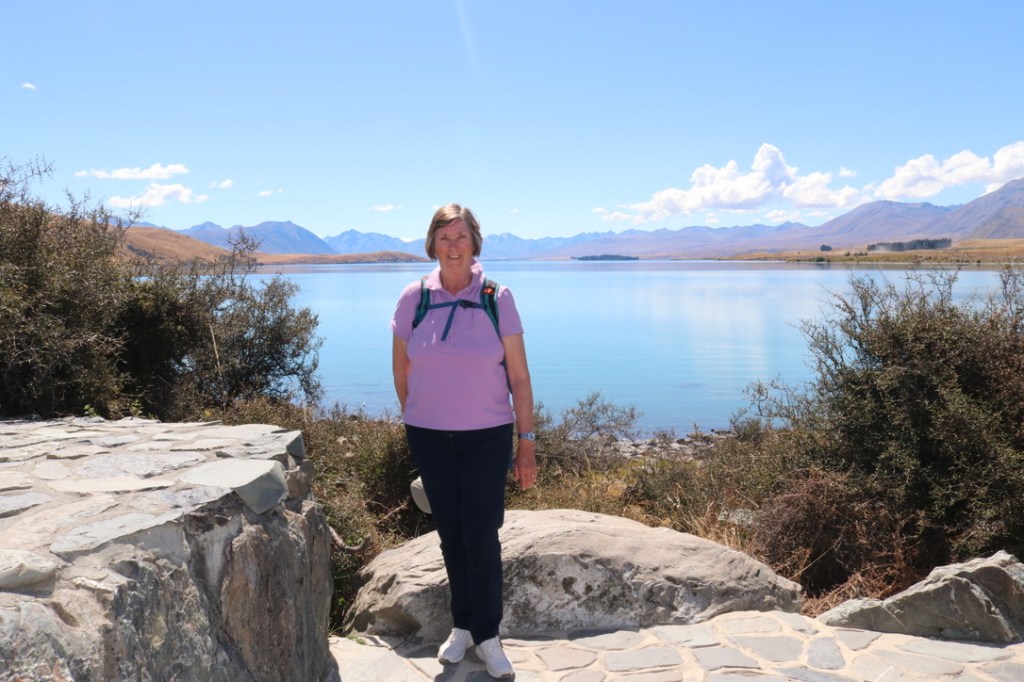
Back on the coach and it was off to Lake Tekapo via Route 8, in the foothills of the NZ alps. A stunning location with a very blue lake – the colour caused by rock flour – finely grained rock brought down from the glaciers and suspended in the water. The photographs do not do justice to the sheer wonder of the location. Also there was the Church of the Good Shepherd built in 1935 to thank God for caring for the frontiersmen who came here. Complimenting the church was a statue of a border collie in thanks to their help in making sheep farming possible on the mountains.
We were now into mid-afternoon as we came to Lake Pukaki through the town of Twizel which was a construction town for the hydroelectric facility. As an aside NZ claims to produce 80% of its total electricity needs from renewables of which hydro is by far the biggest proportion followed by thermal.
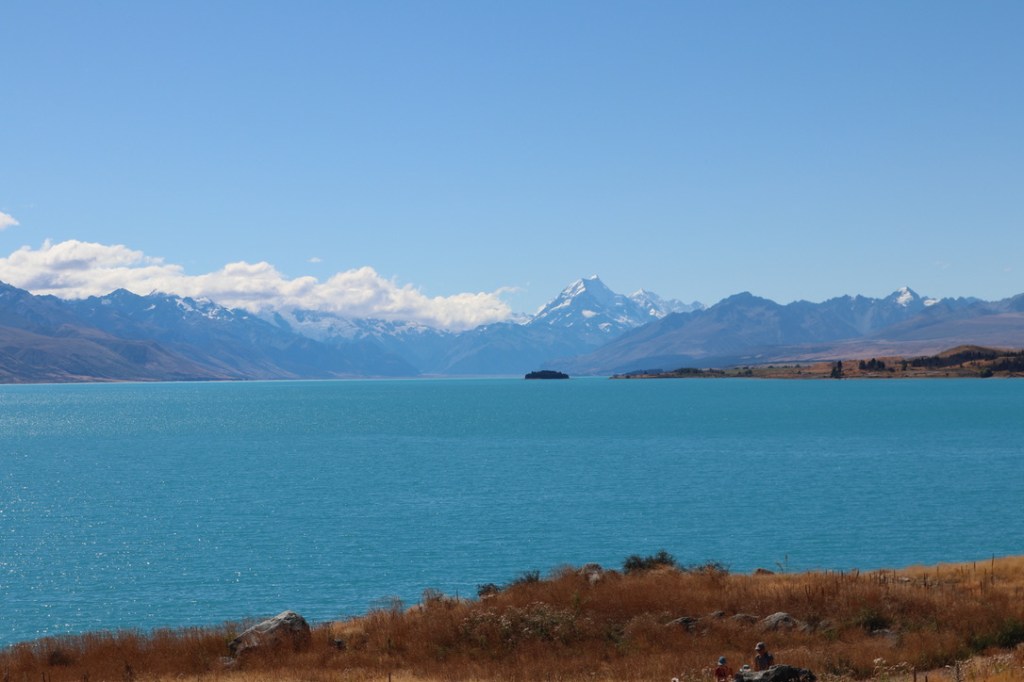
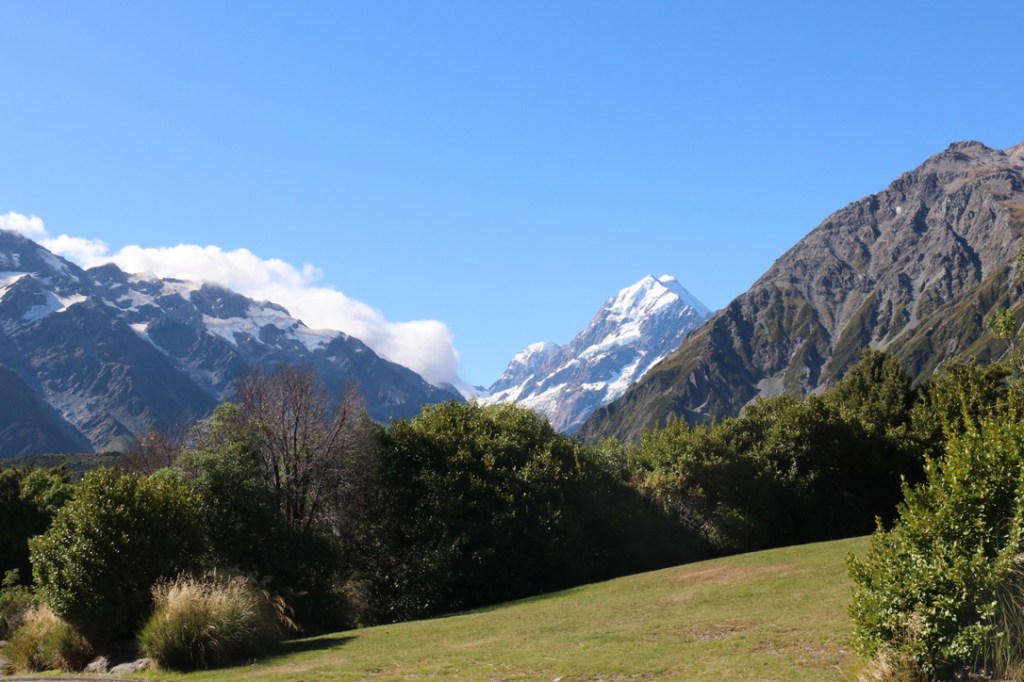
From Twizel we turned back north on the other side of the lake to visit the Hermitage. This is a hotel in the heart of the Mount Cook National Park – a magnificent place. One if we came back to NZ we would want to stay at. The views up to Mt Cook and the surrounding mountains is fantastic and very Alp like. Mt Cook rise to 12,300ft and is a technically challenging climb. Sir Edmund Hilary developed his climbing skills in this area before going on to become the first person to climb Mt Everest in 1958. The small museum was inserting especially the history of the Hermitage. Attempts to make it a going concern had been ongoing since the late 1800s. But the trick to get their by coach and horses from Fairlie took 2 days and the description did not make for a good advertisement of the joys of the hotel. The modern hotel is very splendid – 4/5*. From here you can take flights up onto the glaciers, boat to the head of the glacier and spend a dark night looking at the stars.
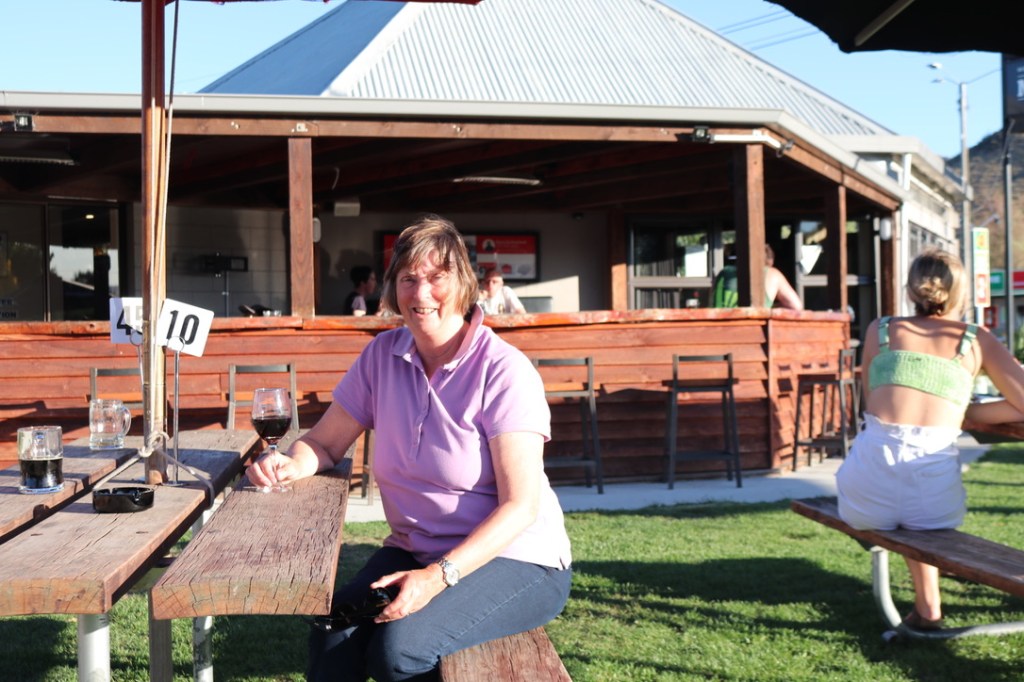
It was then a flog back down the road to Omarama. The itinerary described it as an alpine town – it would be pushed to make good on the description of a one horse down. The drive got lost looking for the hotel which turned out to be a motel. It was also short of staff so no bar or restaurant. But there was a pub on the corner which closed in an hour for food. We hot footed across there and ordered tow meals which turned out to he gigantic pizzas. Fortunately a couple form the coach trip Chris and Di joined us grumbling that the kitchen was now closed – we gladly offered them the other half of our pizzas. Prior to them arriving we had sat next to a data scientist who worked in Christchurch but lived out of Omarama. Her studies were into soils. It took her 7 hours to commute which included an hour to re-charge her EV. We spend an enjoyable 20 minutes chatting with her.
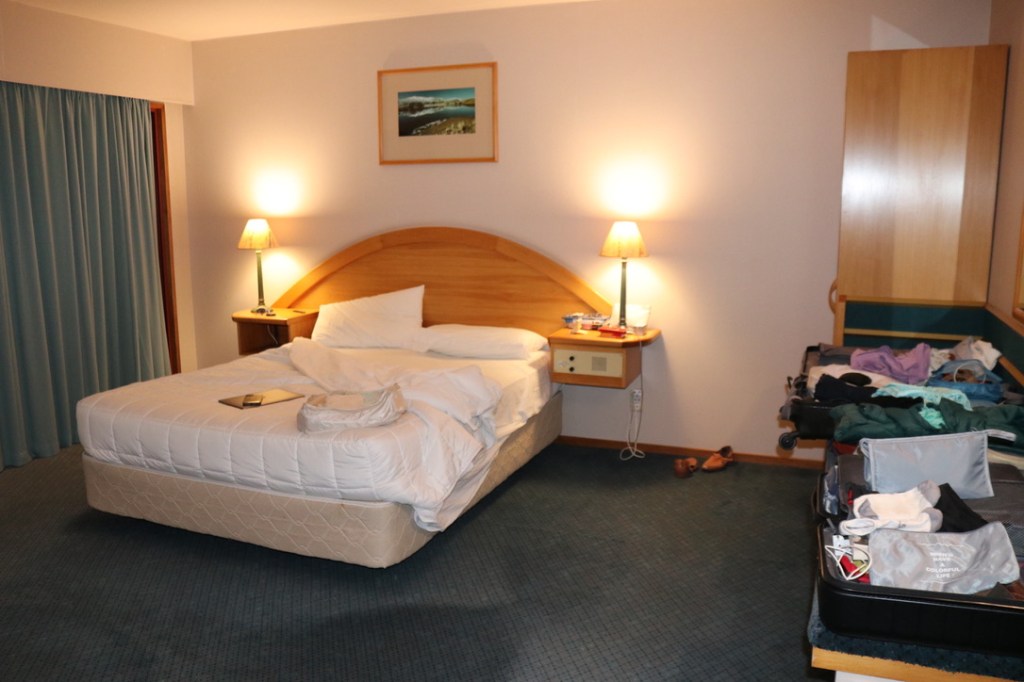
It was then to bed and despite being a motel was comfortable and we both slept well.
3rd March – Friday – Omarama to Queenstown
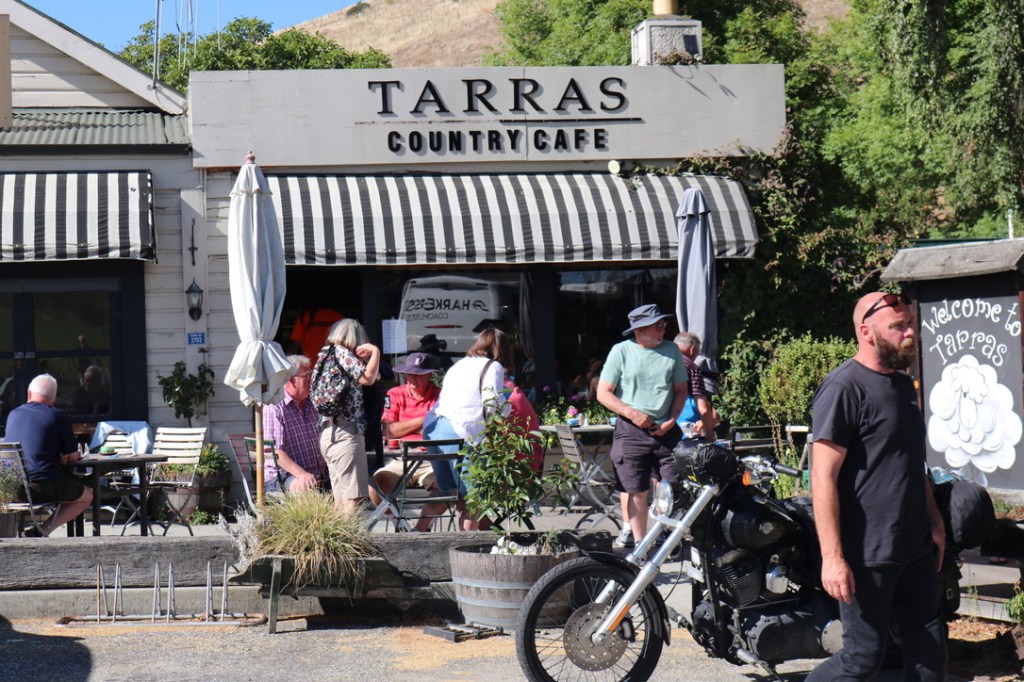
Our first stop of the day was Terras – coffee stop to refuel for the remainder of the trip. You could hear the groan as we arrived from everyone in the cafe including the owners! But we had a nice cuppa including a caramel shortbread cake which Gillian moaned at me for buying. It was quite heavy stuff. Parked outside were two Harley Davidson bikes each ridden by a couple of about our age. I did tentatively suggest to Gillian this would be a great way to explore NZ – it did not elicit an enthusiastic response – so I guess it will be a hire car next!
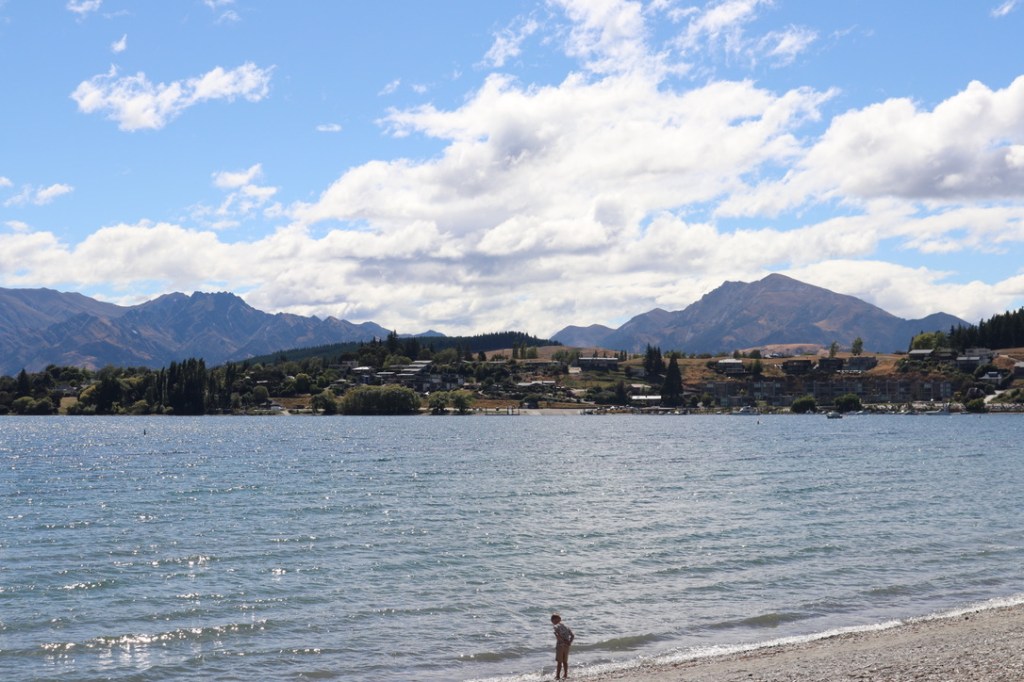
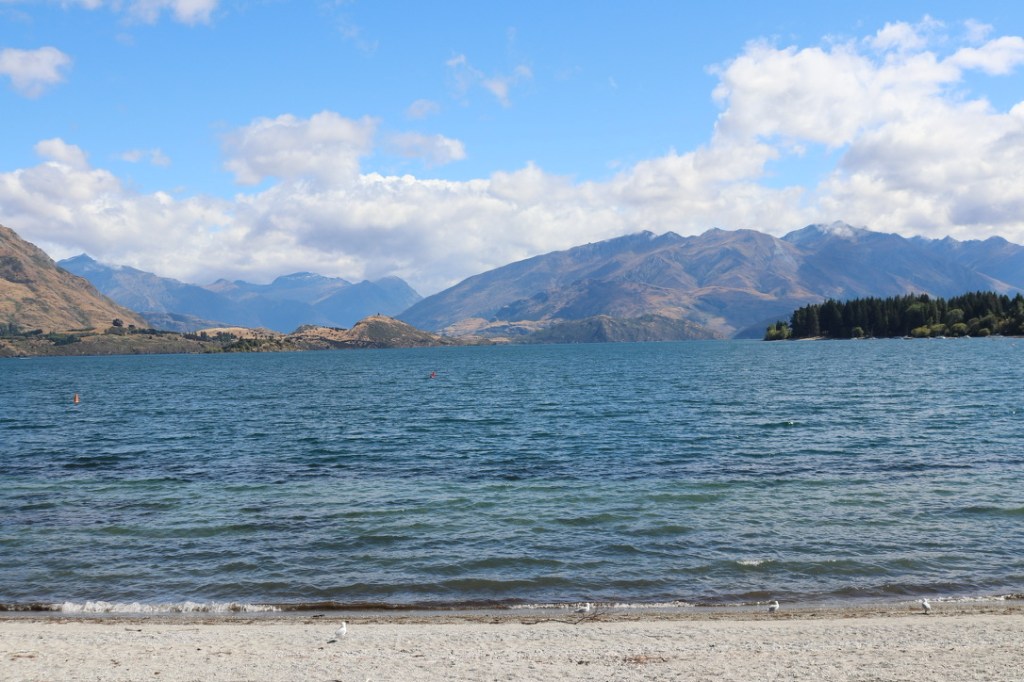
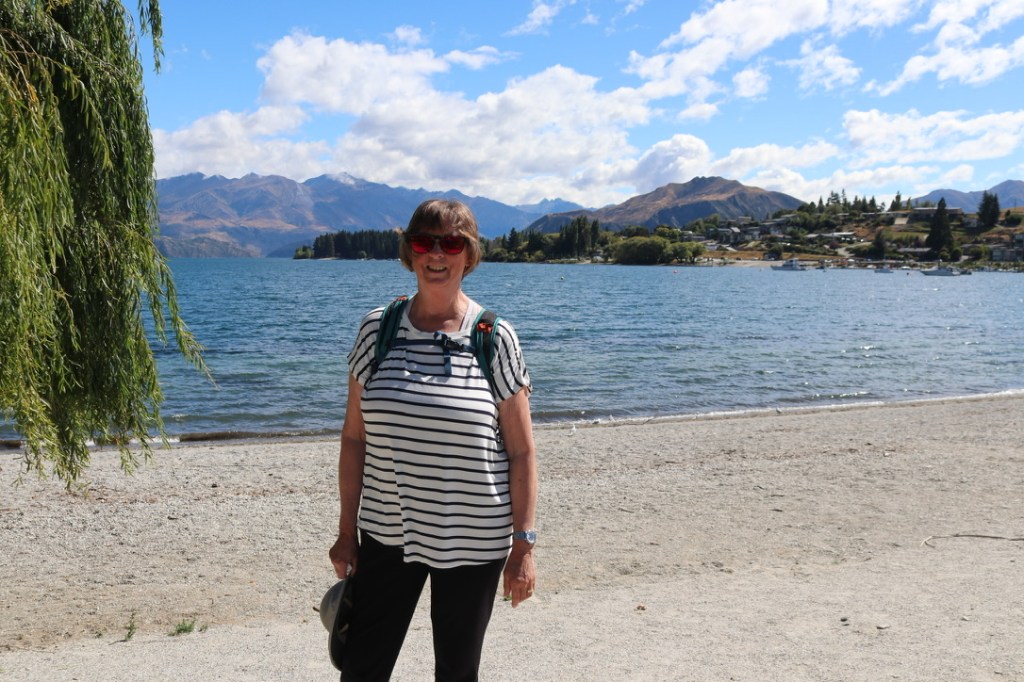
Lunch was at Wanaka at the south eastern tip of Lake Wanaka. Another stunning blue lake. This area is heavy on tourism both in summer and for winter sports. The weather was perfect and some of the tour including Paul the driver went for a swim in the lake. Having bored Gillian with how good my Oakley sunglasses were she tried them on and OMG she discovered they were actually extremely good. So after googling to find a seller in the town we visited Torpedo 7 where a very helpful lady assisted us in finding pair for Gillian. She was originally from Tauranga so we swapped stories of The Strand and Bobby’s Fish Shop. They were instantly worn as we walked along the lake before stopping for a drink at a local cafe. We were last on the coach having forgotten what time we were due ot leave.
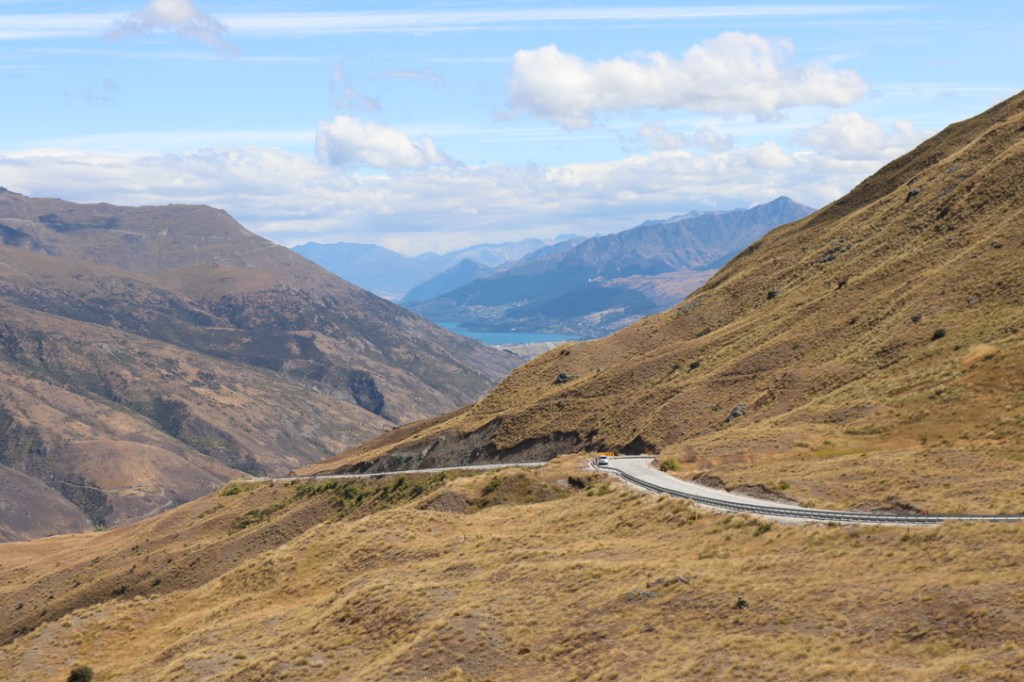
From Wanaka we travelled down the Cardrona Valley and up to the Crown Range, the highest paved road in NZ at a height of 3,540ft. From here you look down into Queenstown and can see the planes flying beneath you in the valley coming in to land. Another spectacular sight – there are just so many of them. The route was opened in 1860 by WG Rees (WG Grace’s cricket coach) and P Von Tunzelman. Both were sheep farmers looking for new land and new opportunities. It became know as the Rees run. The route then become the main access points into the Wakatipu Basin for gold hunters in 1863. Rees quickly shifted from sheep farming to gold mining. He provided supplies to the gold diggers and his boat was reputed to have carried the first 25,000 of gold. In todays money that is £35m!
The drive down the Crown Range road was more hairy the drive up. Tight hairpin bends. It was surprising to see people cycling up to the top – I can only dream of doing this these days!
Having booked into the Crowne Plaza which was right on the lakeside front. We walked out in the evening – quite a shock. For our entire trip NZ seems to go to bed at 9pm. This was definitely a party town. Quite a different mixture of people – from tourists like ourselves to mountain bikers, backpackers and walkers It felt very vibrant.
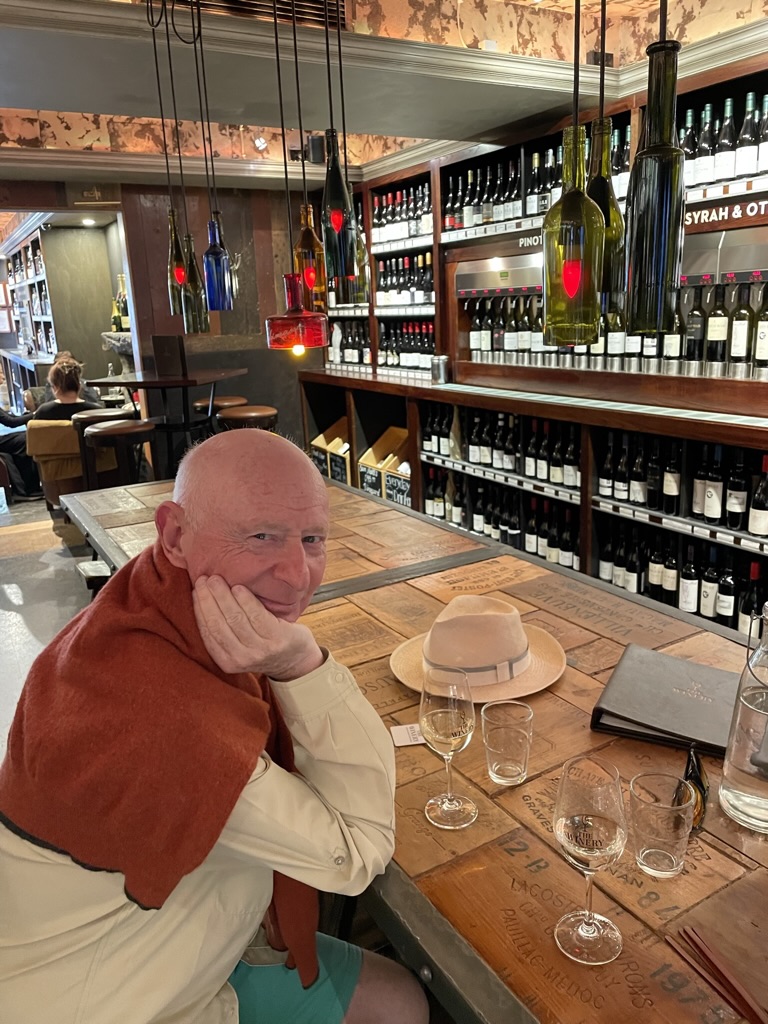
We found a wine bar similar to those in London which enables you to select your own wine from a huge selection of bottles using a credit card. Quite a peaceful spot where we sat down for an hour trying different NZ white wines. We have grown to appreciate them more since being over here.
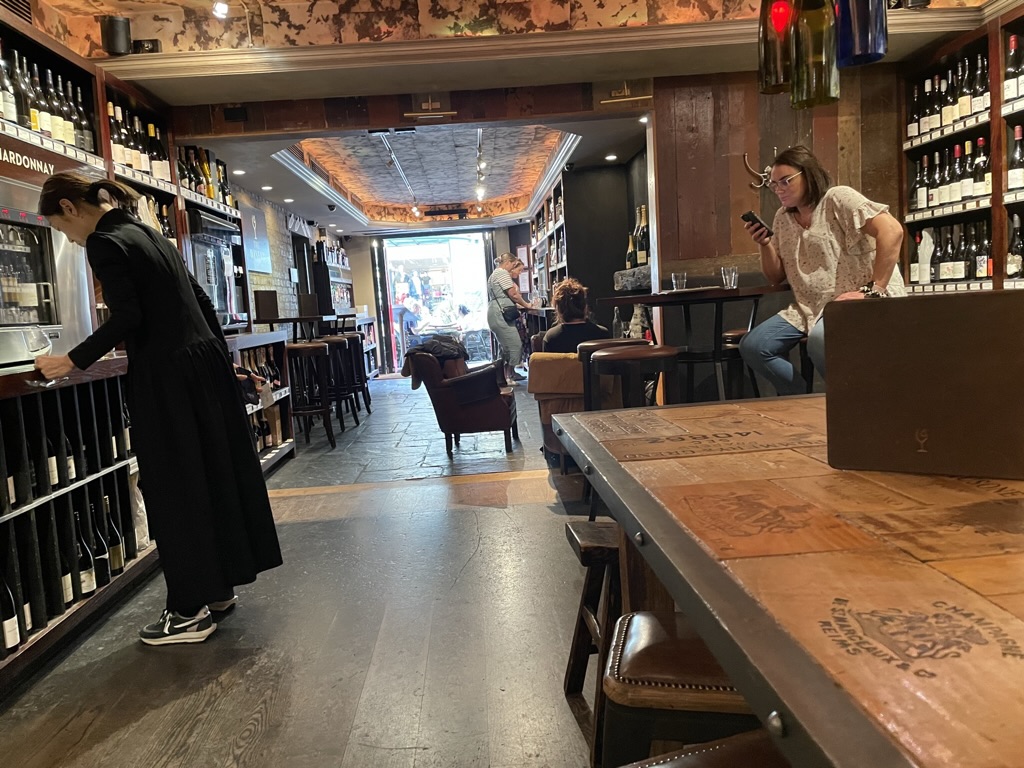
We needed food after this and wandered up the street to Captain’s Seafood and Meat Restaurant. No table was available but we sat at the bar with a bottle of NZ white and some garlic bread chatting away till a table became available. I choose a NZ rack of lamb and Gillian had pan fried Mount Cook Salmon. Food was good but again the ability of the chef let down the quality of the food. This became apparent when we went the following evening to Walter’s Peak BBQ
4th March Saturday – Christchurch
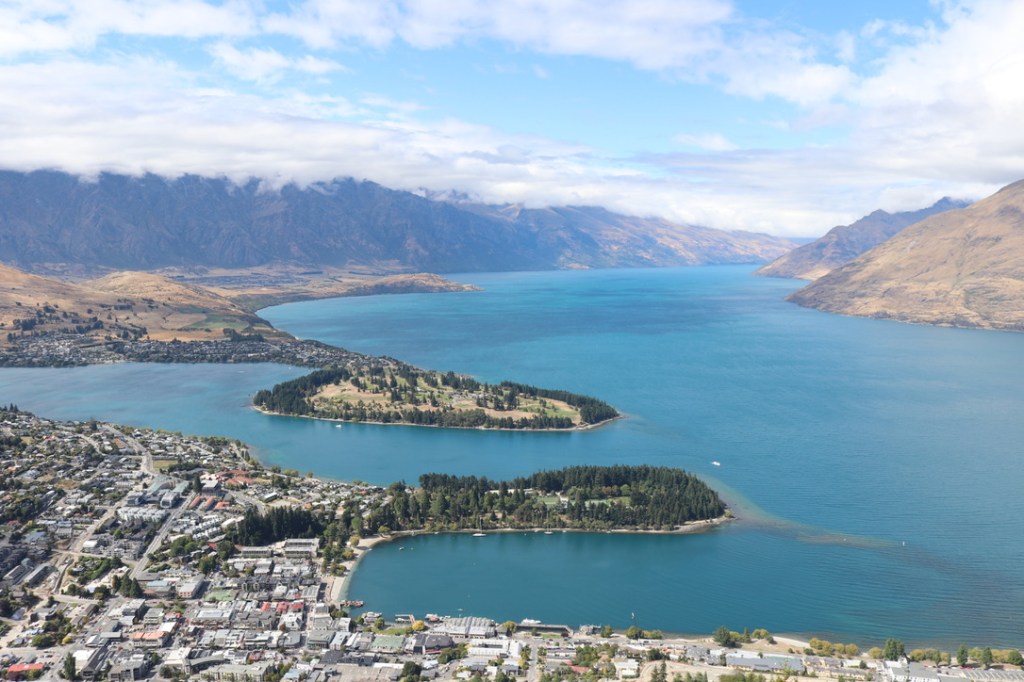
A fairly packed day with a visit to Arrowtown followed by a trip on the skyline gondola, then a run and finally a sail on a 1912 coal powered steamer on Lake Wakatipu for a BBQ at Walter’s Farm.
Arrowtown grew around the gold fever in the 1860’s and is the only town left in NZ with the architecture intact. Post gold mining it converted into a sheep farming town whereas many of the others became abandoned as people moved on. To get to Arrowtown we passed over Shotover River via the Edith Cavell Bridge, now a location for white water rafting but in the 1860s-1880s was one of the good bearing locations. The route over this bridge was well travelled by goldmines and an old miner call Jack Clark whose hut overlooked the bridge took it upon himself to name it after Edith Cavell. She was a 1st WW nurse who was executed by the Germans for helping wounded soldiers escape Belgium. It was not popular with the local council who wanted to name it Cooper’s Crossing after the mayor of the time. So Jack Clark pained a sign to the Cavell Bridge and the name struck.
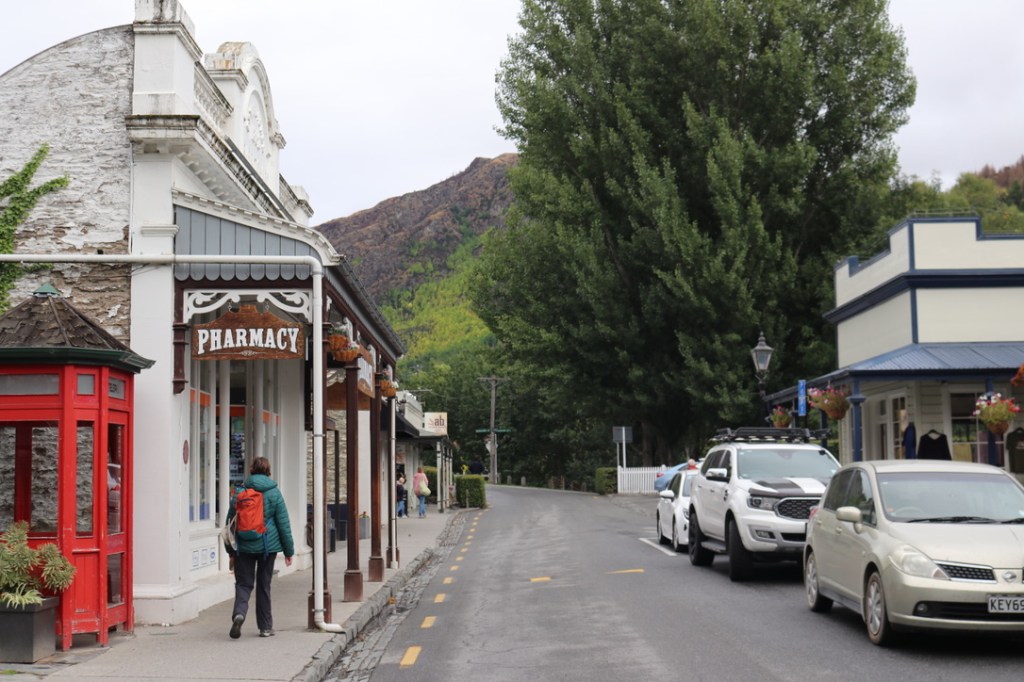
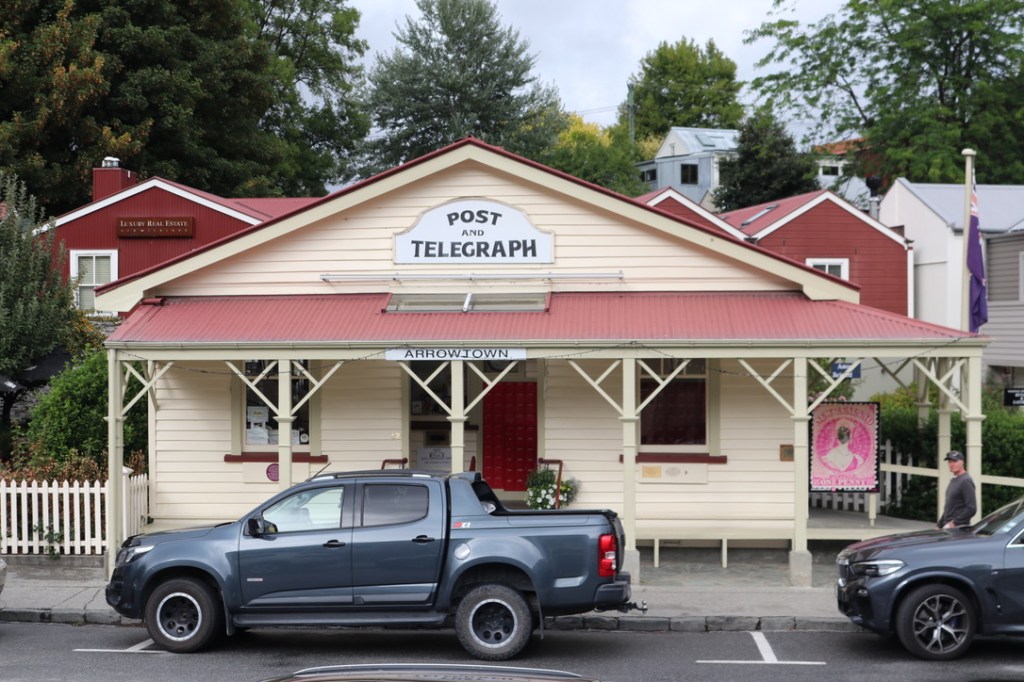
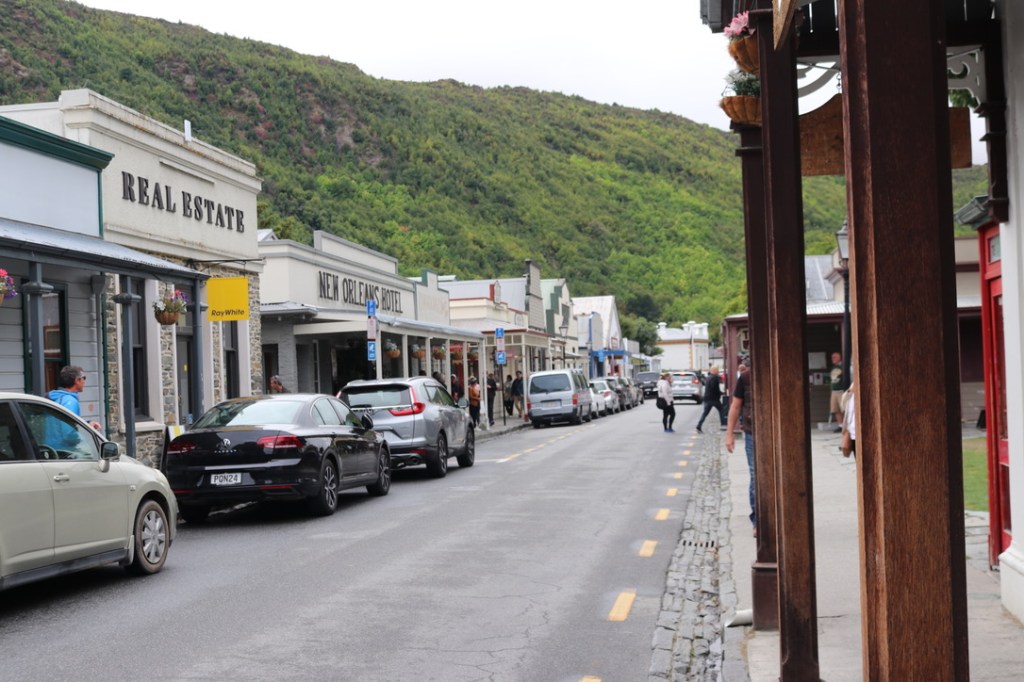
The museum at Arrowtown was well put together combining history of gold mining, the social development of the town and its transition into todays tourist attraction. As I suspect was the case in many mining towns women were scarce and where they survived they were tough. Nearly all of the women married much older men and survived them. Every hotel was run by a widower who were respected and influential people in the township. In the late 1940s what became known as cribbies were established. These were New Zelanders looking for a simpler holiday home where they bought a small plot of land and build basic holiday huts. Furniture was mostly second hand. Everyone looked after each others children and had a carefree time. This also helped to save Arrowtown from further de-population.
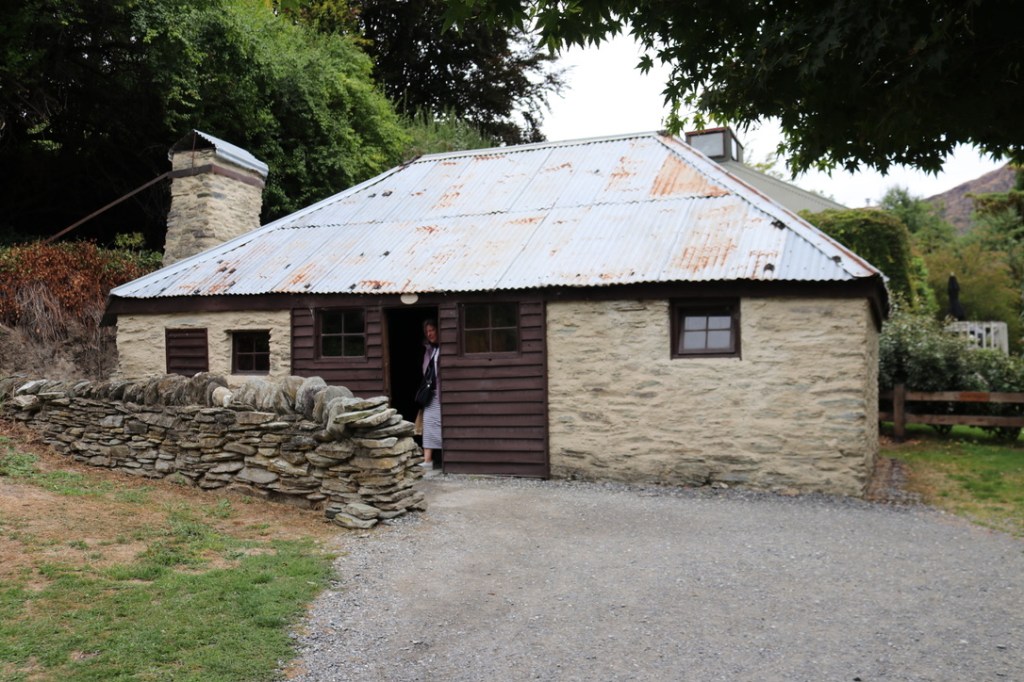
As the gold ran out and became too hard to work, the Chinese were encouraged to come in and take over. They were known as extremely hard working – they did not emigrate to NZ but came to work the mines and go home richer. Most if not all were without families and they created their own small enclave on the edge of town which is now preserved. We did not have time to look around it all but gained a little impression of what it was like from visiting what would have been the village store for the Chinese and an informal bank.
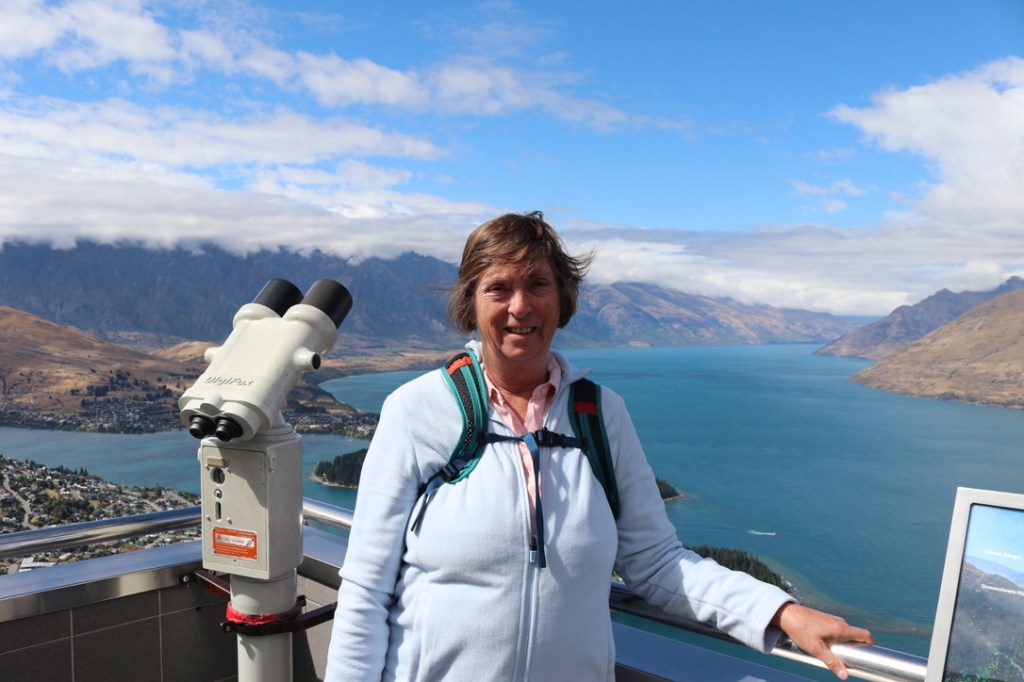
On the way back into Queenstown we stopped off at the Skyline Gondola. This runs from Queenstown up to Bob’s Peak. From here you get a great view of the Wakatipu Basin – Lake Wakatipu, Coronet Peak, The Remarkables and Walter Peak. The Remarkables gained their name as there are only two mountain ranges in the world that run directly north to south. The highest peak is around 5,700ft and is one of the two ski resorts in the area. The who area was formed by glaciers which also left behind the rolling mounds of debris as the glaciers began to melt away. The ride up was epic – jumped into a slow moving two person gondola for an initial steep climb up the slope before it slowed to a more leisurely pace. To come down the mountain you have the option of a mountain bike trail and every 4th gondola had bikes hung on the front and back for use at the top. We were fortunate in that the 2-4 man gondolas are due to be changed this year to 10 man versions that will enable them to move 3,000 an hour up and down but it will lose some sense of adventure with just two of you squeezed into a small gondola.
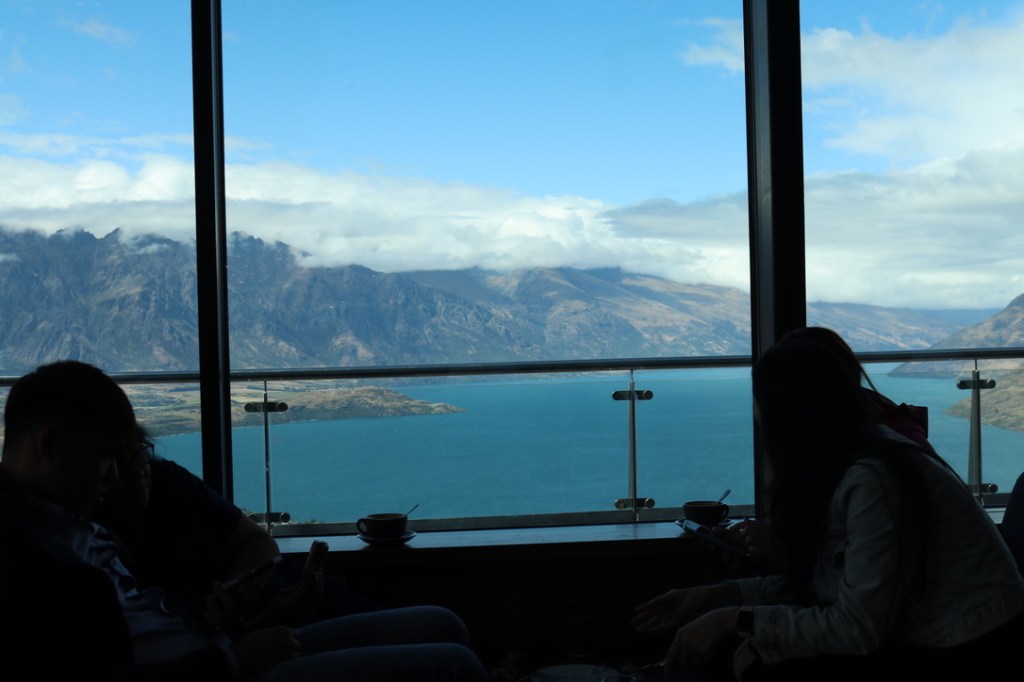
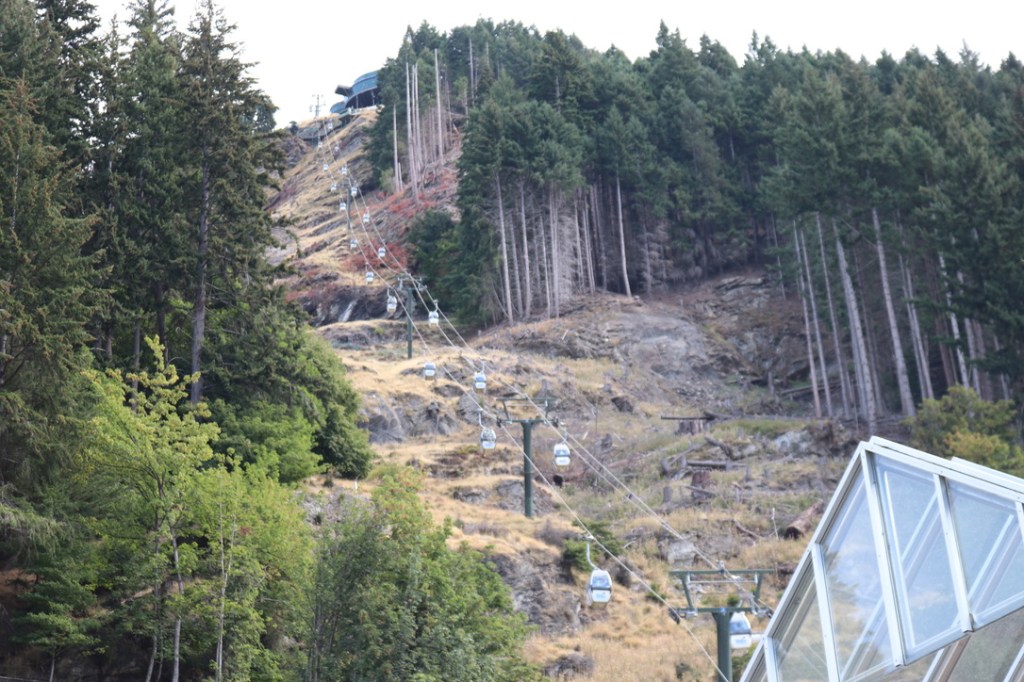

In the afternoon I went for a run along the shore before walking around the Saturday market. A lively place with stalls around the green and music being played by an outstanding guitarist. We bought our only souvenirs from a woman from Stockton in UK who had emigrated out here. Lovely laser cut wood carvings of the Mount Cook.
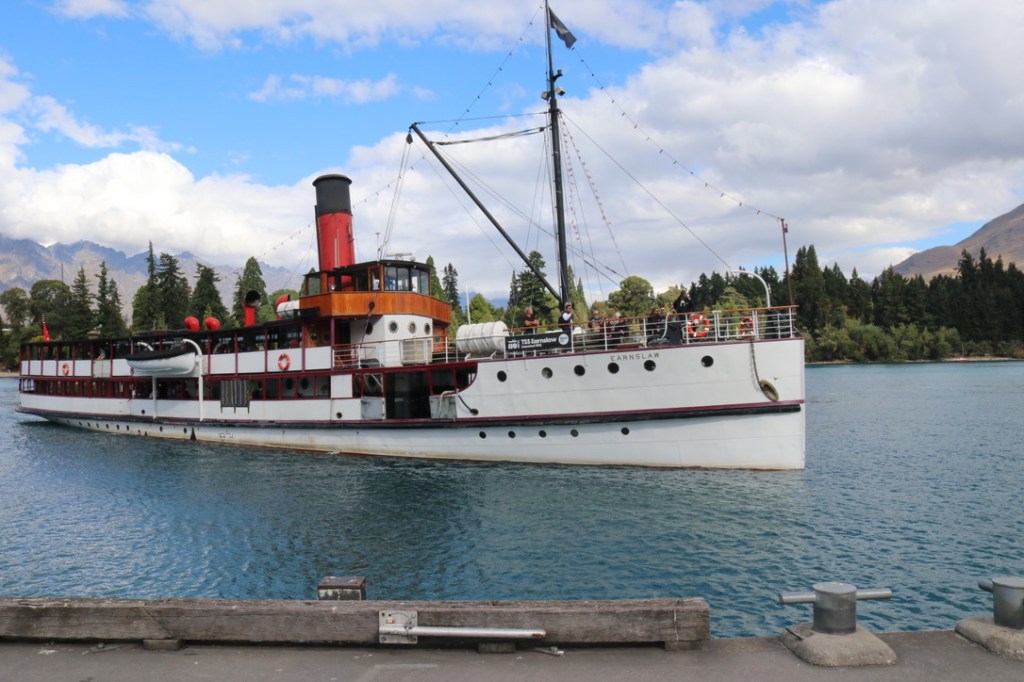
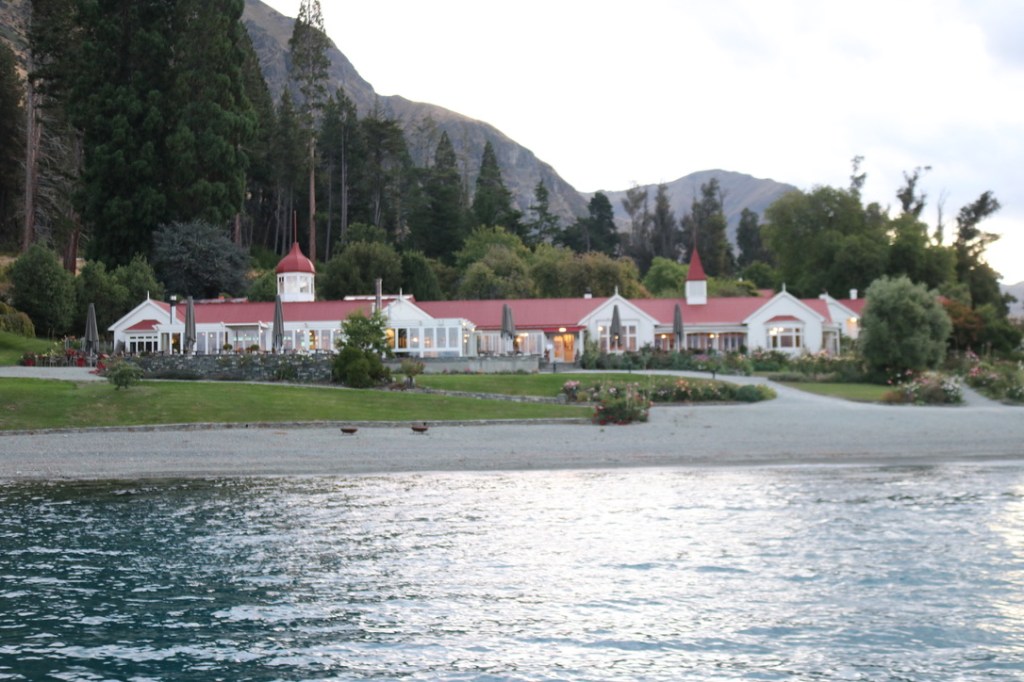
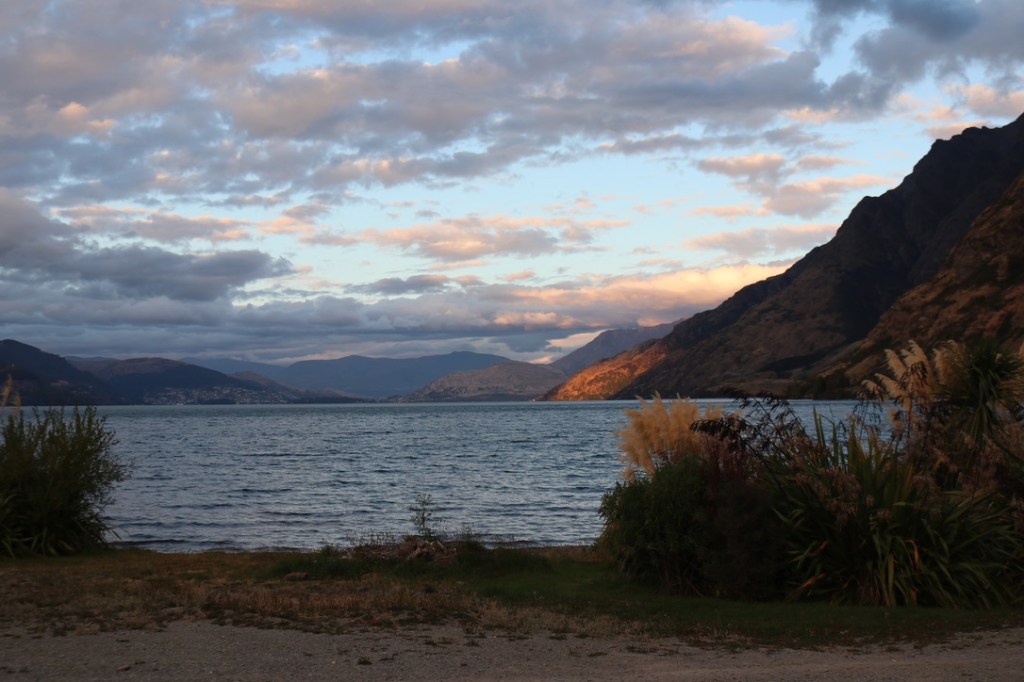
In the evening we boarded TSS Earnslaw for the Walter Peak BBQ. The ship was built in 1912 and is still the original ship and engine. A coal fired steamer that can crack along at a very respectable speed. It was a 45 min crossing during which we had a glass of wine and sat opposite a couple who had emigrated from the Philippines around 25 years ago to Australia – yet their English was still not great! Walter’s Peak is a very large farm now owned by the same company as the ship. It covers an areas the size of Singapore but only has 7 people living there. Now primarily sheep for meat and wool. We had dinner in the large farmhouse. The BBQ was extremely nice and like the farm large – salmon, prawns, pork, beef, chicken, lamb, mussels to name but a few of the choices. The two buffets wow have had in NZ have both been the best food we have eaten irrespective of how much we have paid in restaurants – they just do not seem to have decent chefs. After the BBQ we had a sheepdog demonstration – Tim and Mea combined with a sheep shearing demo. By the time we left we were pretty tired but stopped in the bar for a final drink and chat with a very cheerful Des before going to bed.
5th March – Sunday – Queenstown
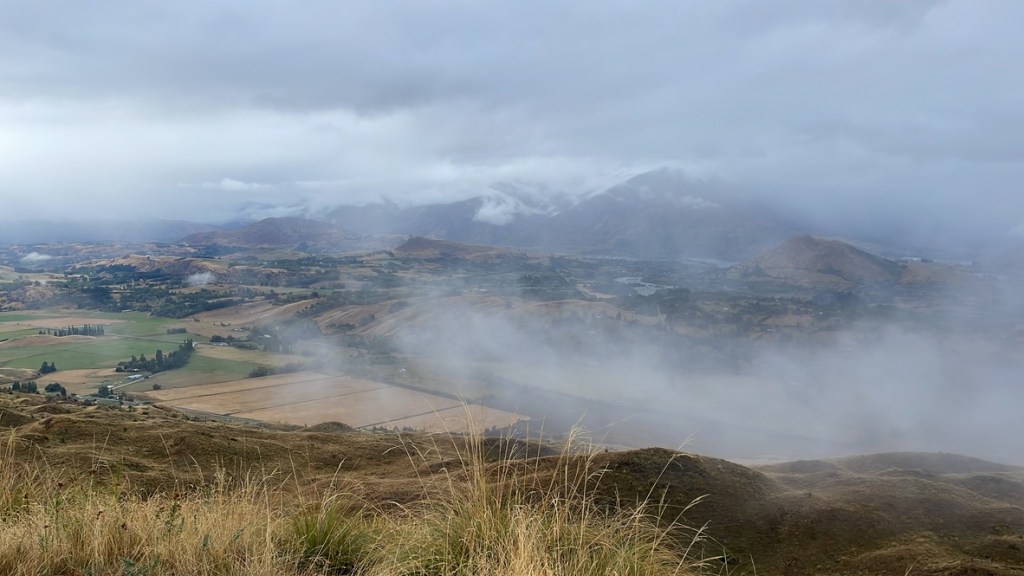
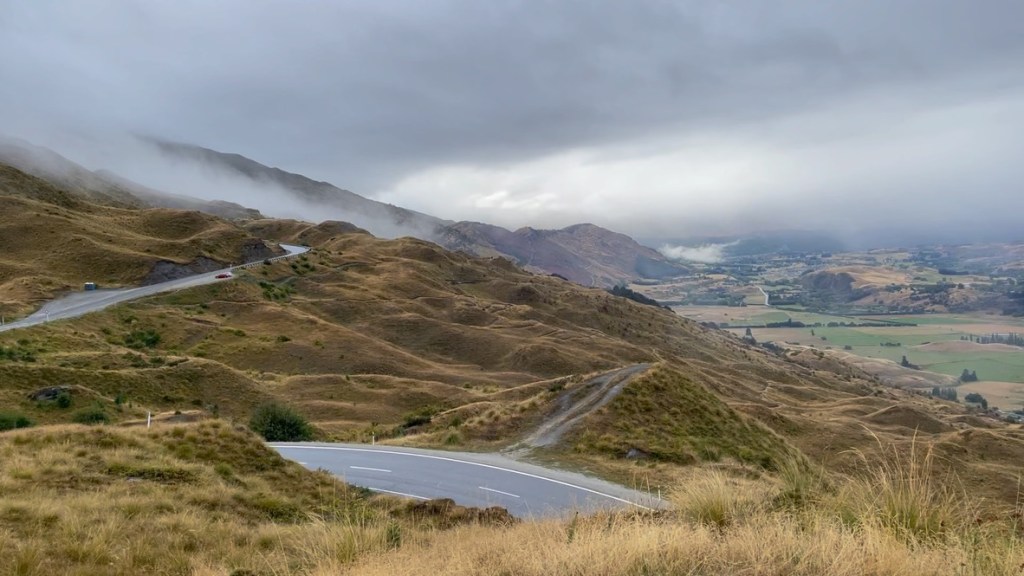
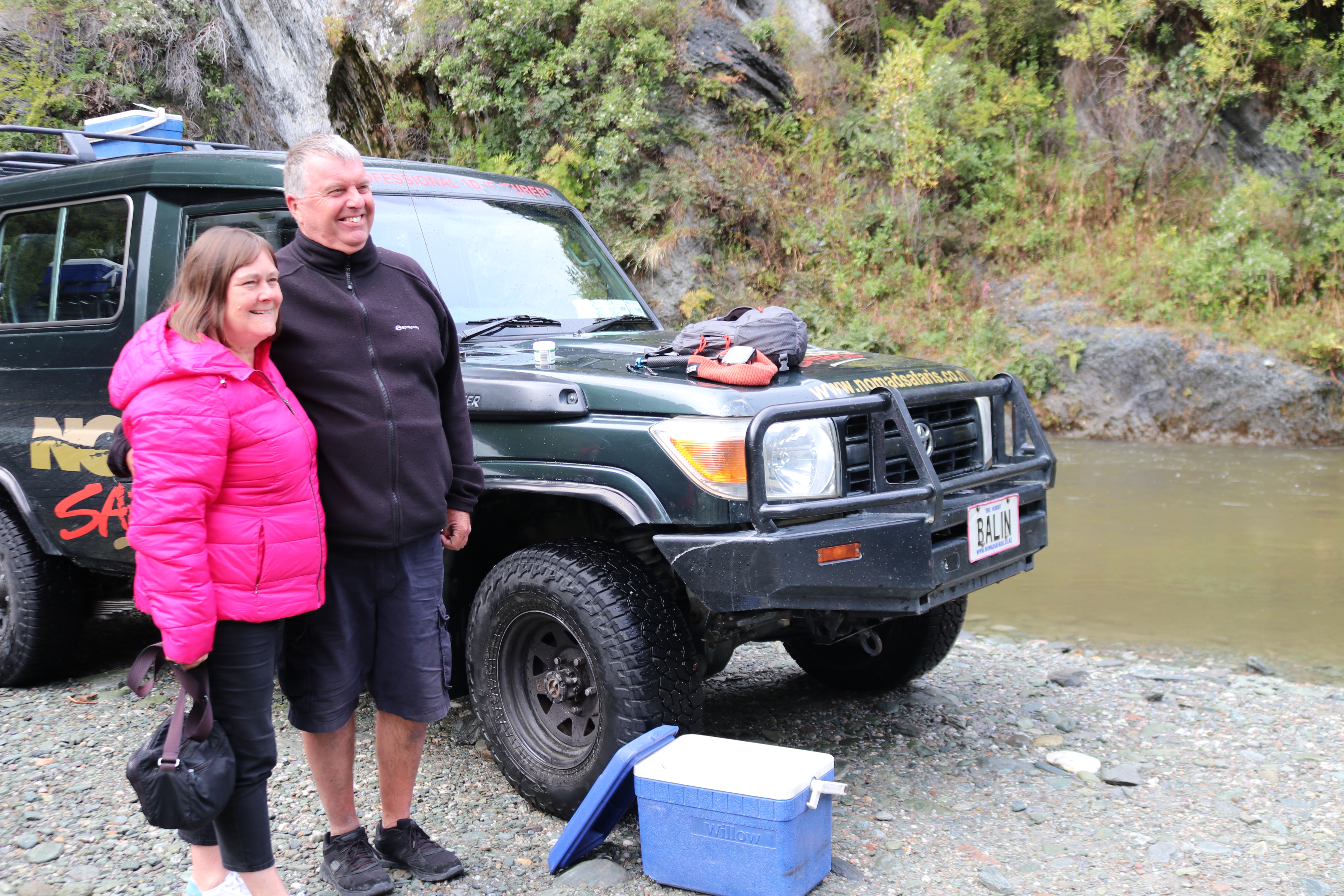
This was an organised half-day with the afternoon and evening free. For the morning trip we went with Nomad Safaris on a tour of the Wakatipu Basin. Two Toyota Landcruisers turned up ad our driver – Peter – was excellent. He had retired to Arrowtown and his brother plus sister had followed him. A good sense of humour who adapted his stories to the nationality of the passengers. As we had a German on board the Edith Cavell bridge was brushed over so as not to cause any offence. Our first visit was to viewpoint overlooking Coronet Peak and down to lake Wakatipu with Framktown at the eastern end and Queenstown at the western end. Some of the scenes of from Lord of the Rings and The Power of the Dog were filmed in the area. But to be honest with low cloud we could see very little.
In the vehicle with us was two additional passengers, one from German and the other from the US. The latter was incessant that she should sit near the window with Gillian in the middle. It turned into a bit of a farce as at the end of the first stop she dashed back to the Landcruiser in order to get in first. Gillian was quite content to sit in the middle.
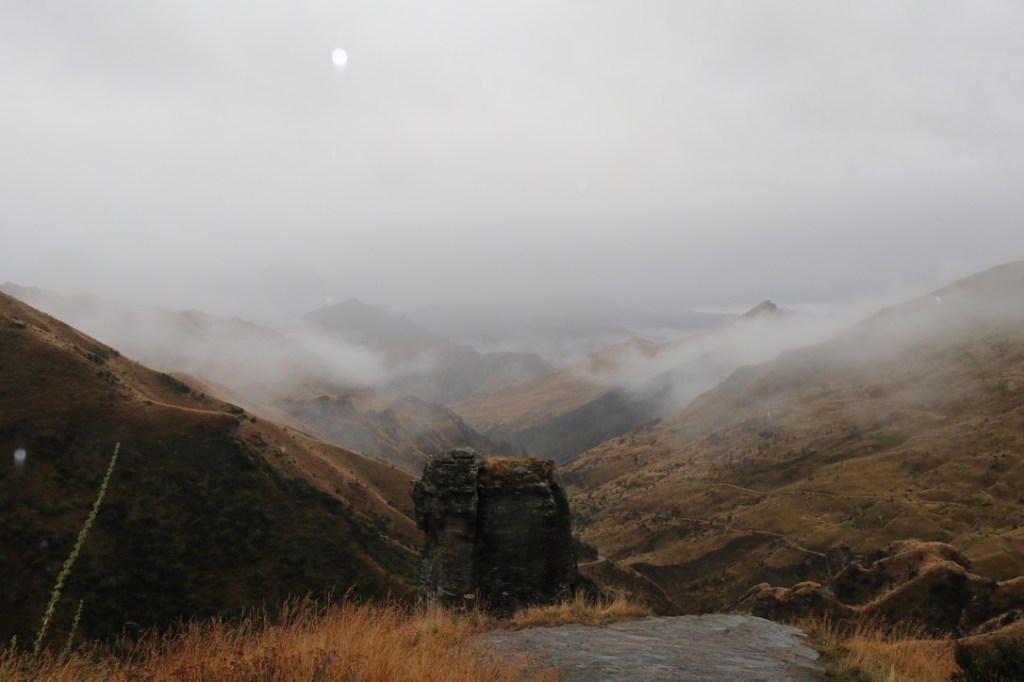
The next stop was much more interesting – Skipper’s Canyon. This is a historic gorge that is 22kms in length carved out by the Shotover River, the second richest gold bearing river in the world, The canyon was accessed via Skippers Road and the only road in NZ that is not covered by car rental. It is gravel, one lane twisty and steep with sheer drops. As it is a preserved and historic road there are no crash barriers and no safety signs as it is maintained in much the same state it was when it eventually allowed road vehicles to travel along it in 1915. The trail was forged in 1883 some 20 yers after the start of the gold rush when all the easy gold had been extracted and they needed to get heavier equipment into the canyon. Four contractors were awarded and parts of the road were given nicknames associated with either the difficulty or ease of building – heavens gate and hells gate. Prominent stones were named as makers – the Lighthouse, Elephant, Gorilla. You got a sense of the remoteness of the region and the challenges these miners faced.
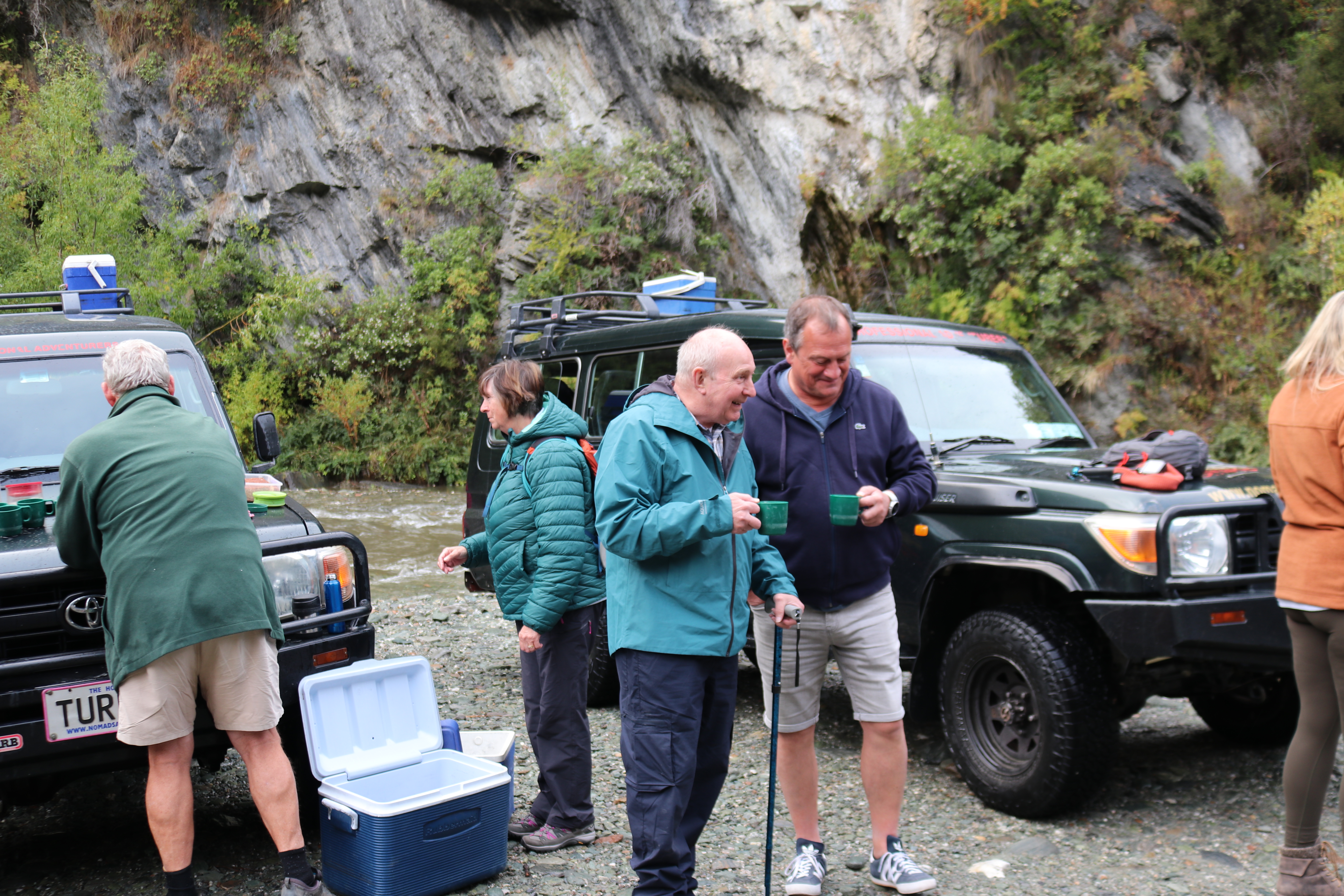
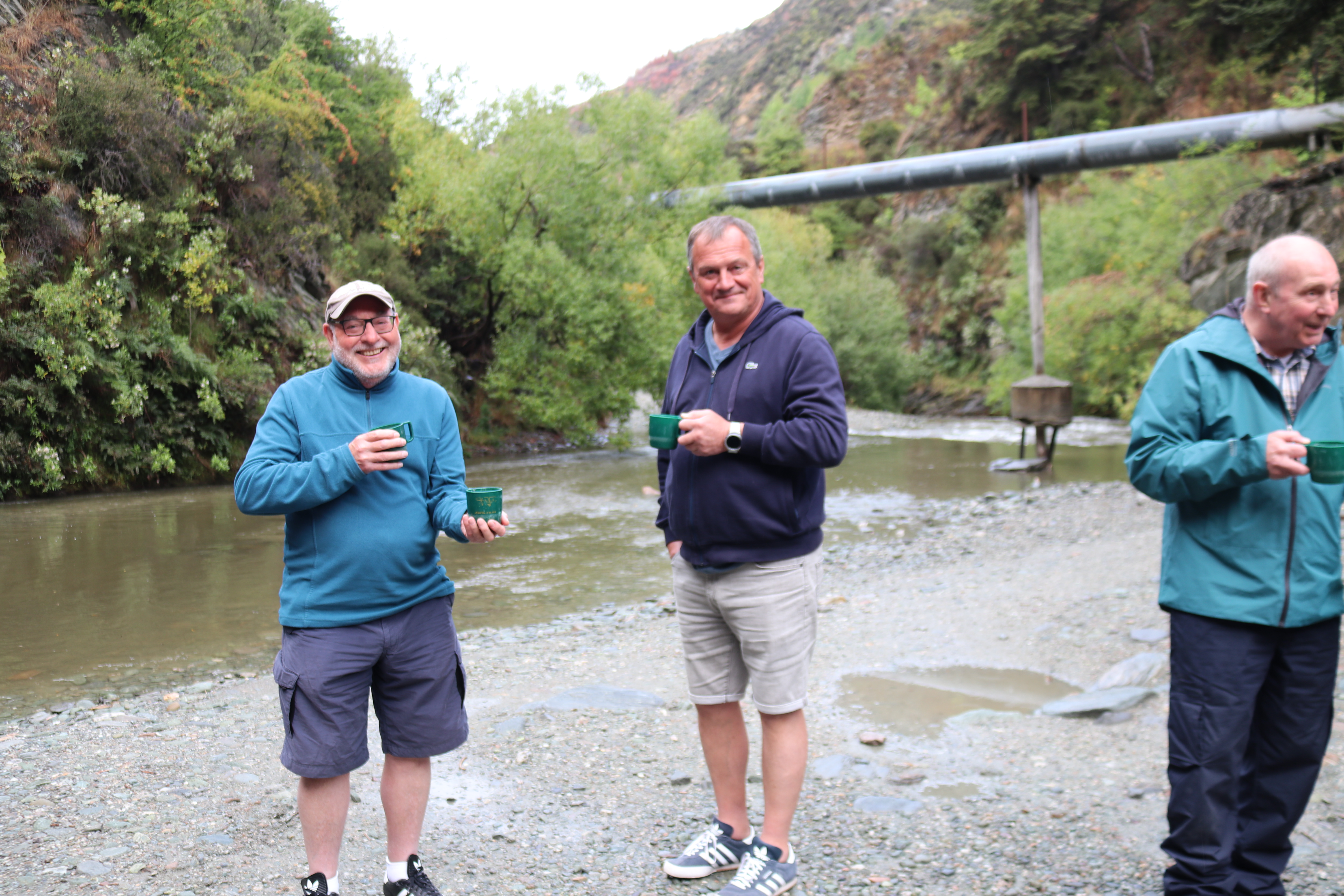
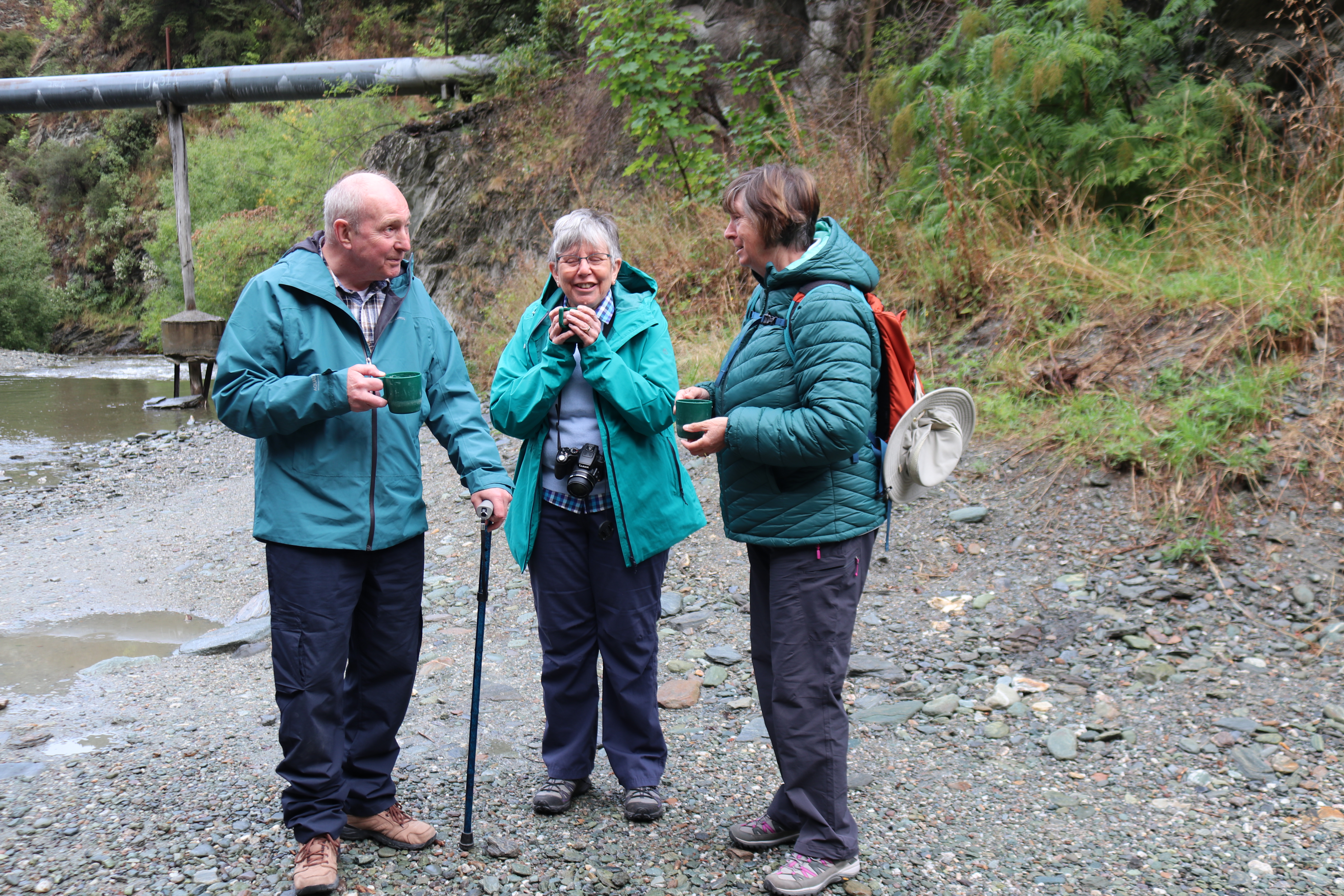
From Skippers Road we drove to Arrowtown but rather than visit the town itself we drove down a trail that wove in and out of the River Arrow. An exhilarating and very bumpy ride that did dismay the abilities of the Landcruisers! At the turnaround point we stopped on the bank of the river for tea, coffee and cake. This river was used as a scene in the Ford of Brunei where the black riders chased Frodo who was being carried by Arwen. The backstory to the scene was the request for local horses to be used. The only ones that came forward were the local pony club but the condition was that only they could ride them. So they dressed the young girls up in the appropriate Black Riders outfits as they were faced with no other option. It is reputed that if you look at the scene all the stirrups are short due to the height of the riders!
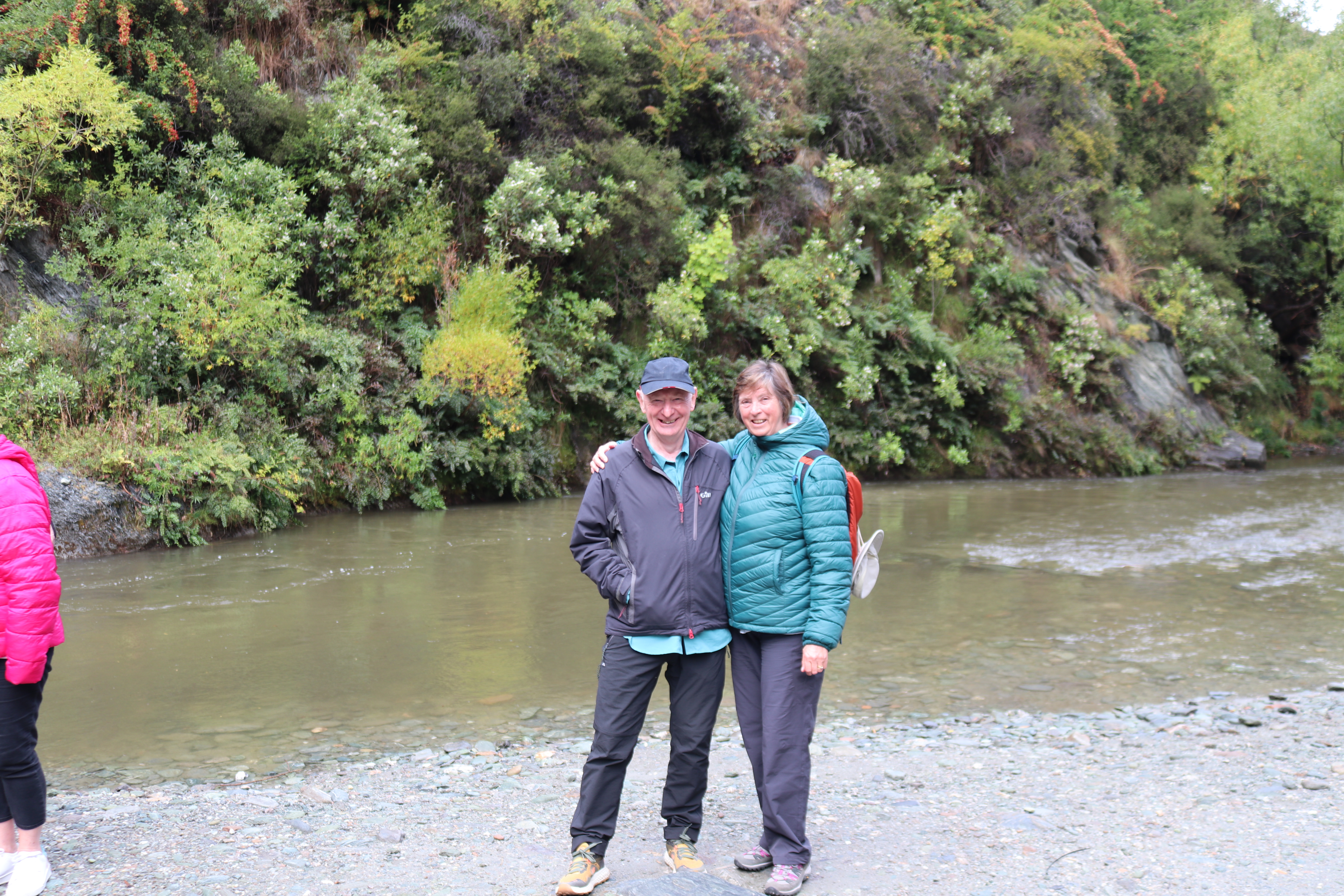
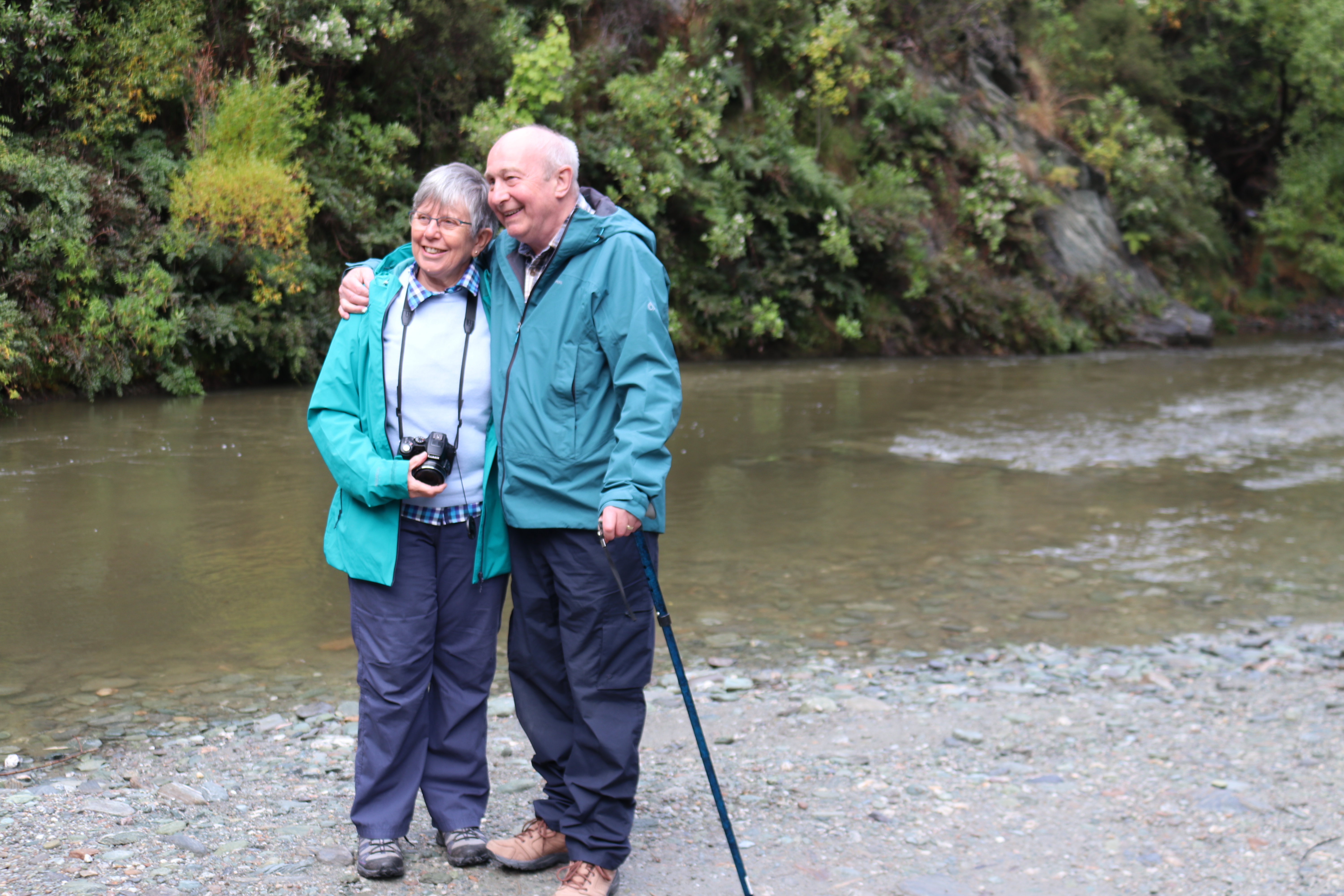
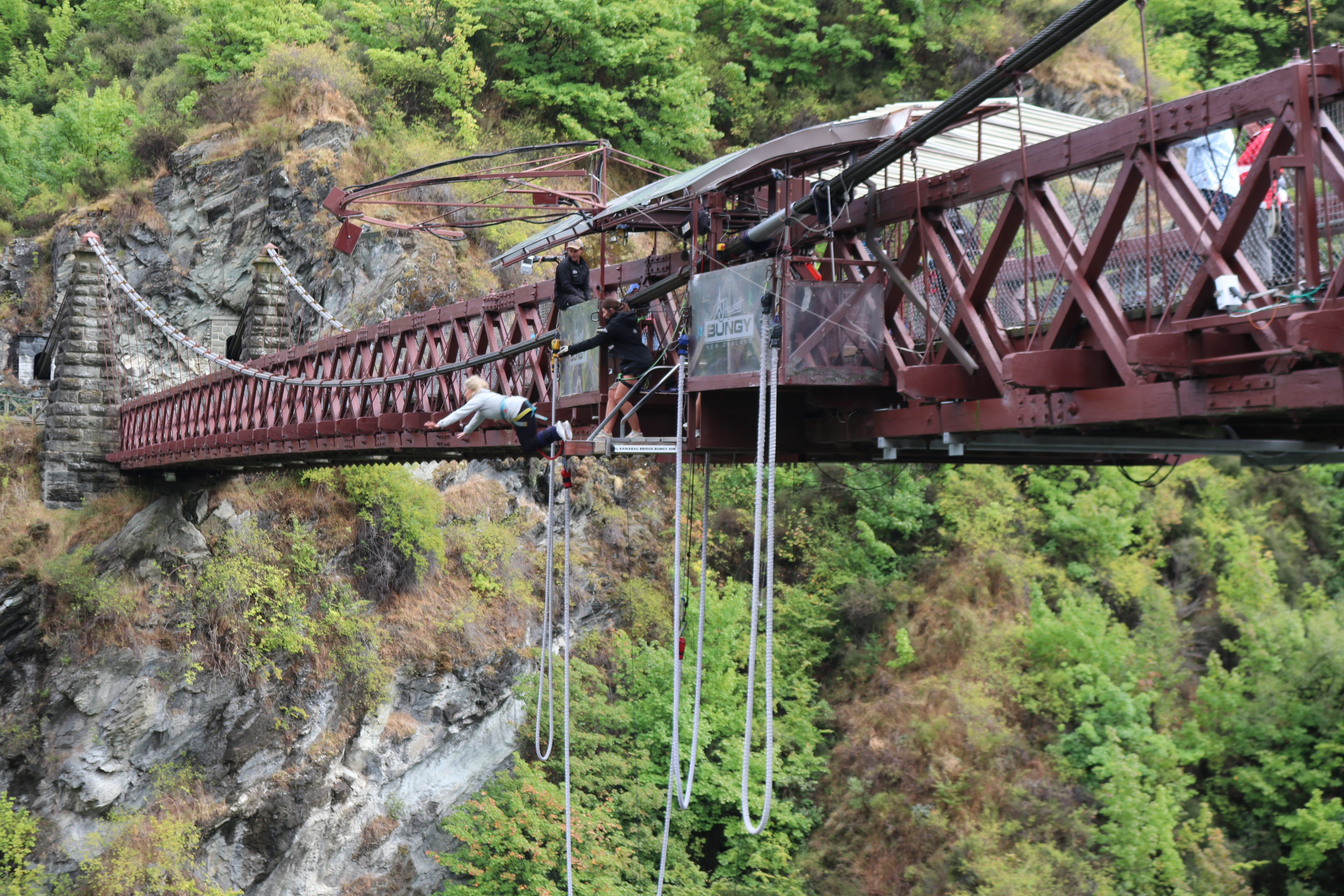
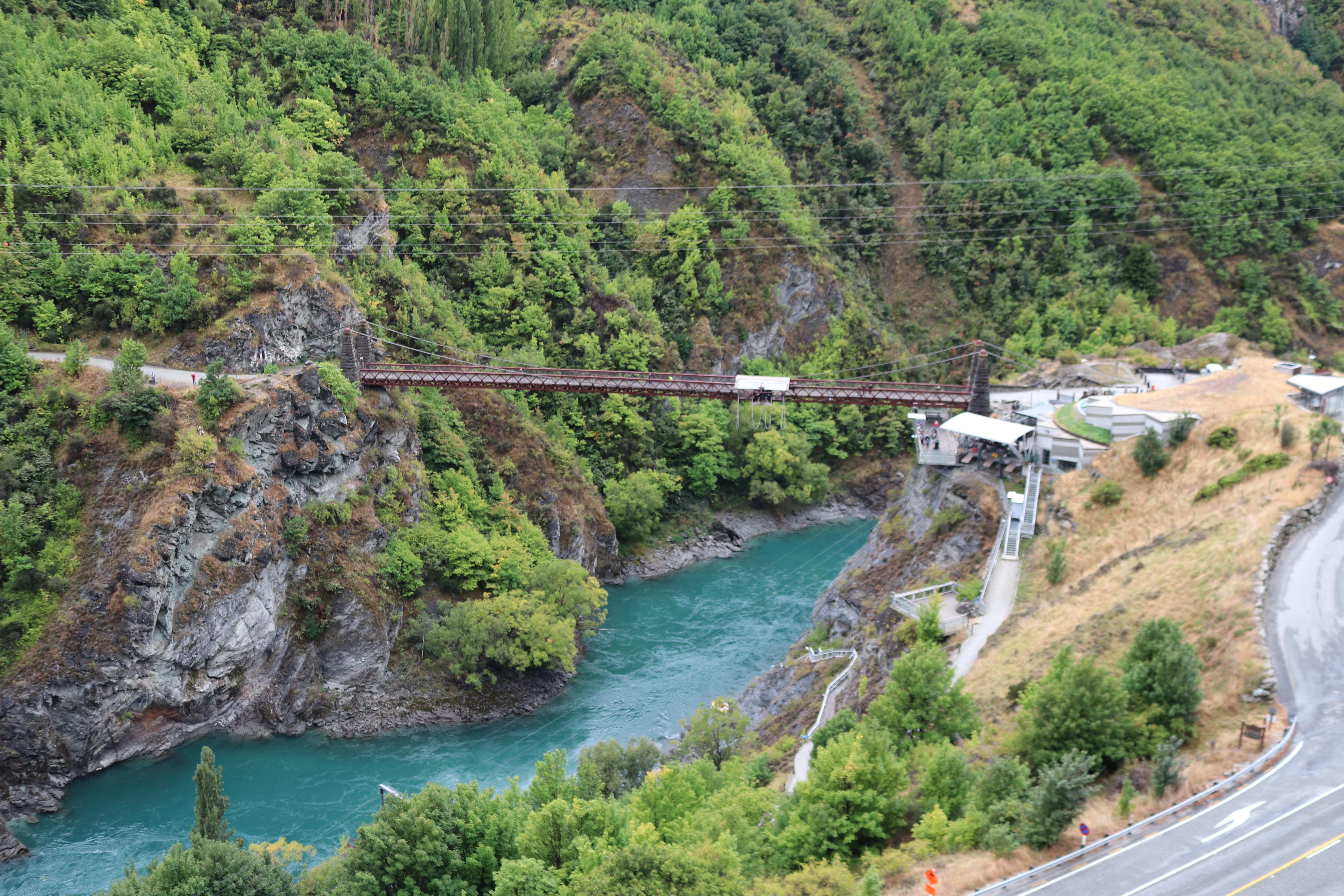
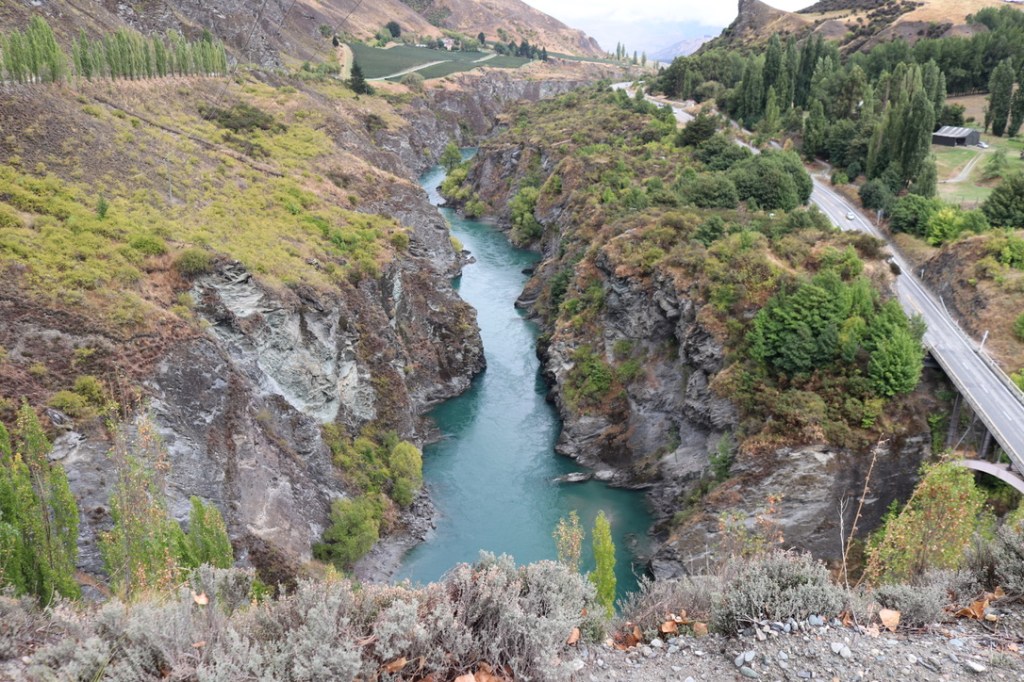
Our next stop was at the worlds first bunny jump above the river Kawarau – Kawarau Suspension Bridge. It was built in 1880 again to support the transportation of gold and mining equipment. It is now a protected and historic bridge that has no vehicle traffic but is open to walkers, cyclists and of course bungy jumpers. We spent some time watching individuals prepare for the jump into the gorge. I take my hat off to them. Near by was the location of the Pillars of Kings on the Lord of the Rings Andean River – Kawarau Gorge. You could visualise the scene in the film.
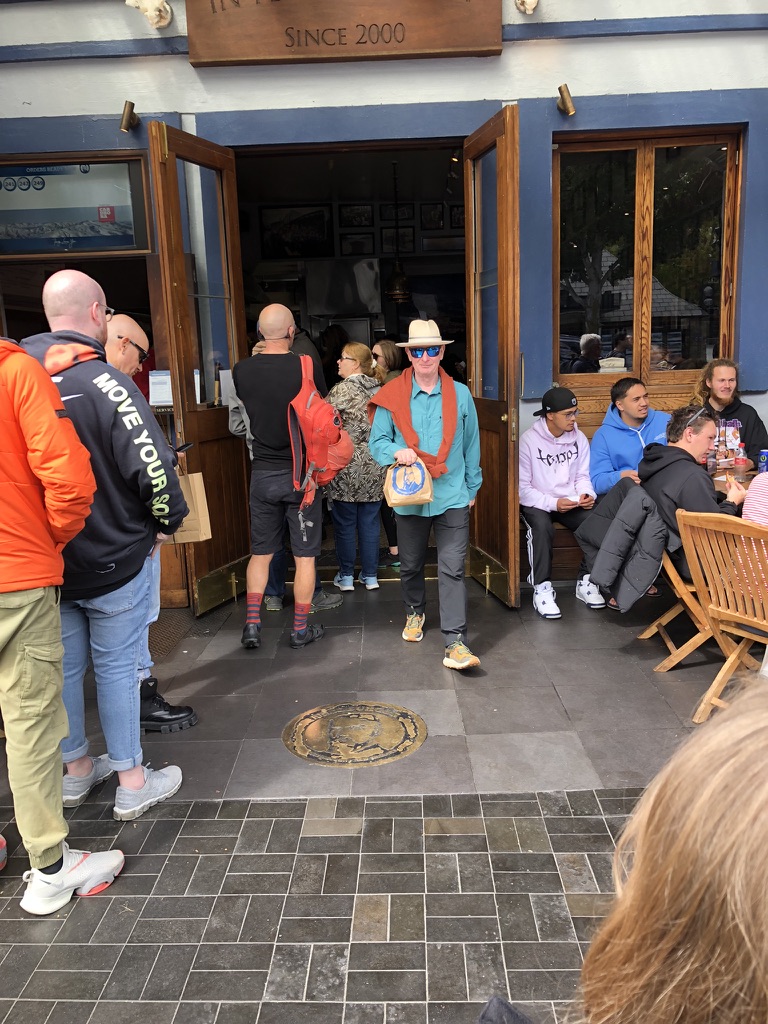
Once we got back I did another run along the Lake and did manage 5kms this time! After which we went for a Ferg Burgher – a must stop in Queenstown. At any time it is open there are queues outside of the door. But they have an efficient numbering system as you wait patiently for your order. I was a little ambitious and ordered a double burgher. Once collected we took them back to the hotel and sat on the balcony whilst we consumed them. They were indeed very good.
After a doze on the bed we had a couple of glasses of wine in the hotel sitting on a coach by the window whilst I brought the blog up to date. Around 8pm we wandered around the town to find something light to eat. We ended up at Winnies which was an upstairs casual eatery that mainly served different size pizzas which suited us very well. Medium size and a glass of wine for Gillian and her for myself finished off the day.
5th March – Sunday – Queenstown to Milford Sound
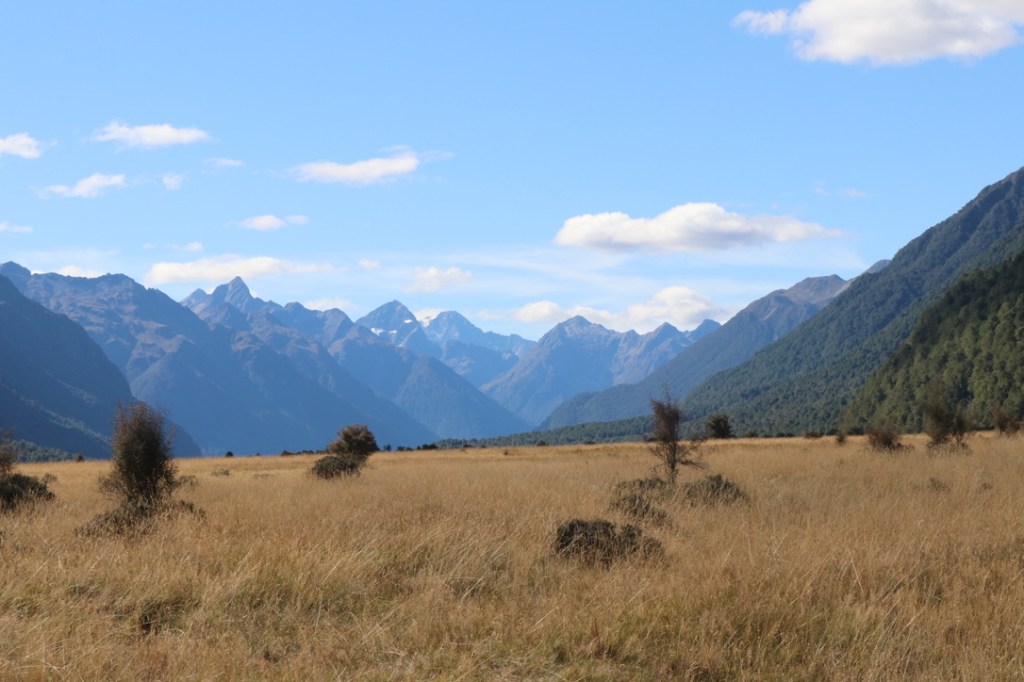
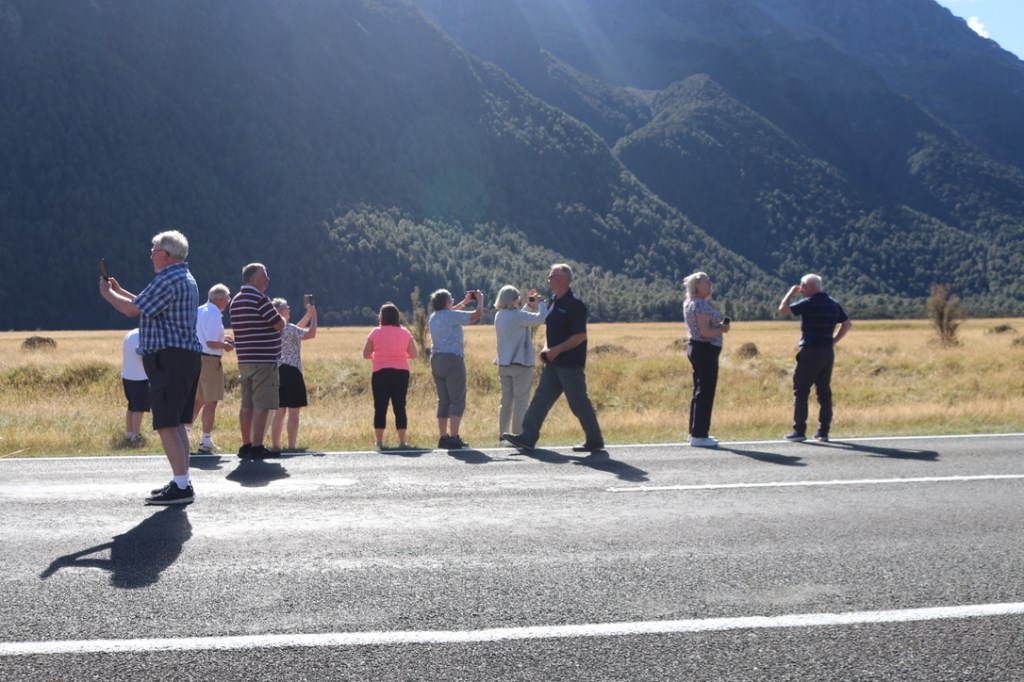
As the crow flies Milford Sound is not that distant but such is the topography of this part of NZ that it required a 4 hours journey each way. From Queenstown down the eastern side of lake Wakatipu to Kingston along a winding road by the lake with mountains around us. Continuing down the highway to Garston to Lowther where we turned west towards Mossburn our first stop of the day. All the coaches take the same route and seem to stop at the same cafes – probably as they are extremely efficient at managing very large number of people. Gillian was good and had a sandwich whilst I was not so good and had a NZ mince pie which I have discovered is their equivalent of fish and chips or perhaps a pasty. I felt especially guilty as it had been a very early start – up at 0630 and we both agreed to miss breakfast to have a few more minutes sleep. However as Gillian was chatting in the lobby I had sneaked into there dining room for a quick bacon sandwich. So mince pie on top of this and I was beginning to feel very full. From Mossburn we continued west to Te Anau at the southern end of Lake Anau which on the way out was just a toilet stop. Due to the Earl Mountains we turned north up the Eggleton River to the Mirror Lake. This gave a perfect reflection of the Earl Mountains and it was absolutely perfect. One of the co-travellers did complain bitterly when a duck swam by causing ripples which ruined his photo!
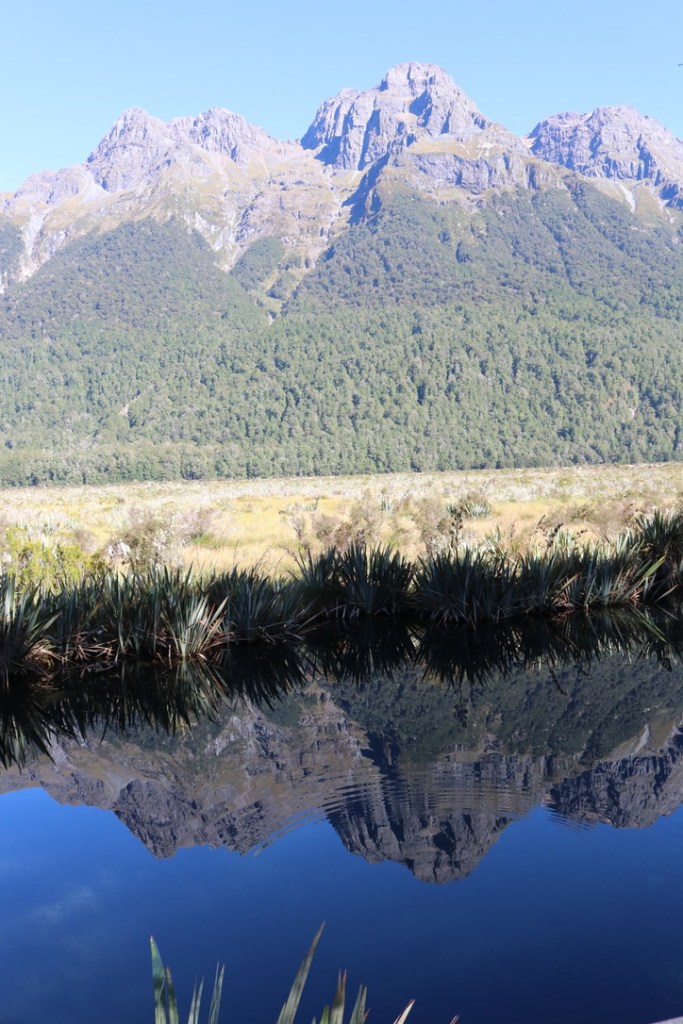
From here we began the long climb up the Milford Sound Highway to the Homer Tunnel which cuts its way through the mountain to the precipitous drop into Milford Sound. This tunnel is 1.2km long and opened in 1953 through the Darran Mountains. It connects the valley of Hollyford River to the east and that of the Cleddau Valley to the west. The build of the tunnel started in 1935 as part of a work employment scheme during the depression – initially just 5 men with wheelbarrows! They lived in tents with no sunlight for half the year. It remains a single lane tunnel to this day.
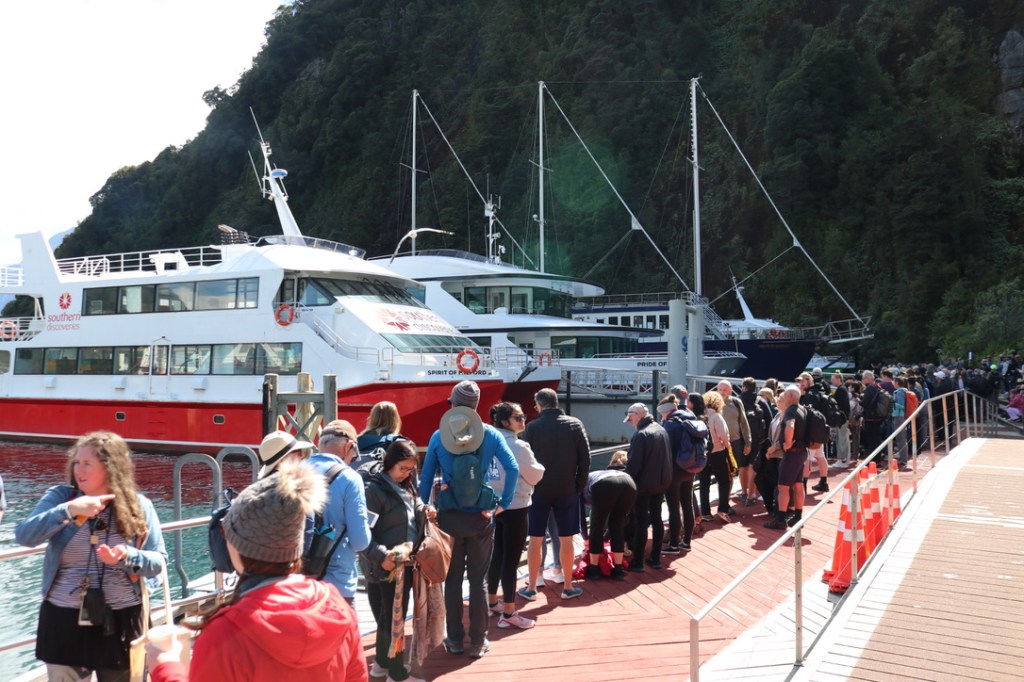
The drop into the Cleddau Valley is a foretaste of Milford Sound. Huge glacial valleys tower above you as you zig zag down the mountain side. Milford Sound is a well oiled tourist machine and I say that in the nicest way. It is done to minimise environmental impact and the necessity with that many people to get them in and out quickly. We lined up in the terminal till our boat arrived – Milford Haven which was one amongst many. On boarding we were given a box meal and had reserved seats downstairs.
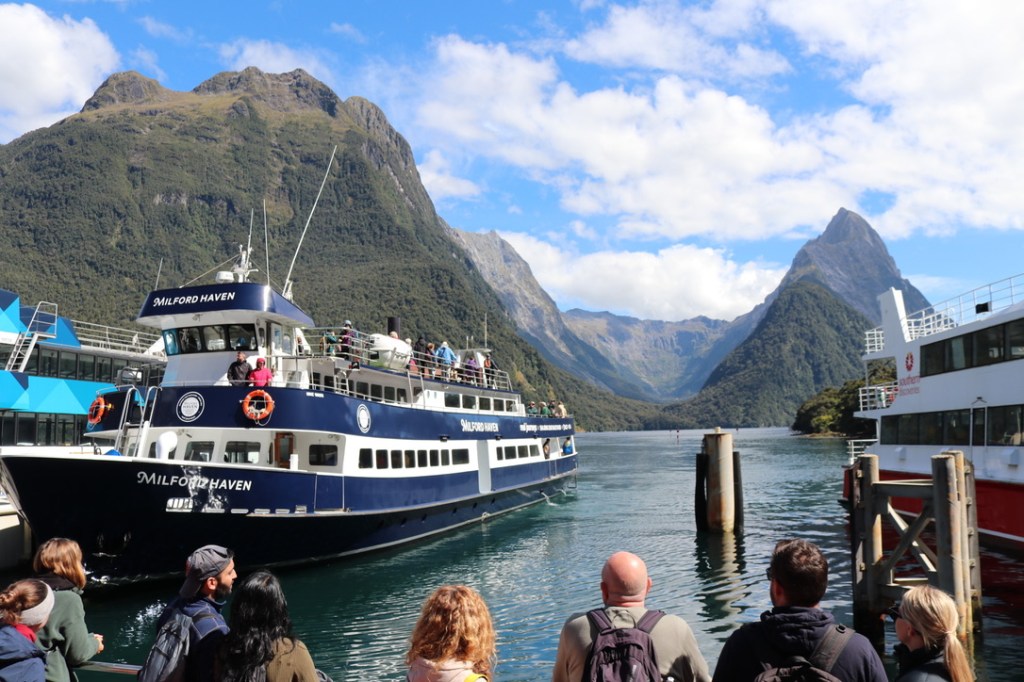
The Maori first came here 1,000s of years ago. The legend is that a godly figure Tu-te-raki-whanoa. Shaped the coast, carving the fjord with his tiki (adze) Calle Te Hama. A Maori hero called Maui who tried to win mortality for his beloved people died here and his constant companion a piopio (extinct bird) went into mourning and cried for him creating the lake with its tears. Piopiotahi means a single bird.
Early settlers did not explore the Sound as it was hidden from the sea and they just assumed it was a bay. In 1823 a sealer called John Grono was the first to settle here – he was from Wales and it reminded him of Milford Haven. It was later changed to Milford Sound by a Scotsman called Donald Sutherland who was the first permanent resident.
Today Milford Sound is often in the top most beautiful places to visit in the world.
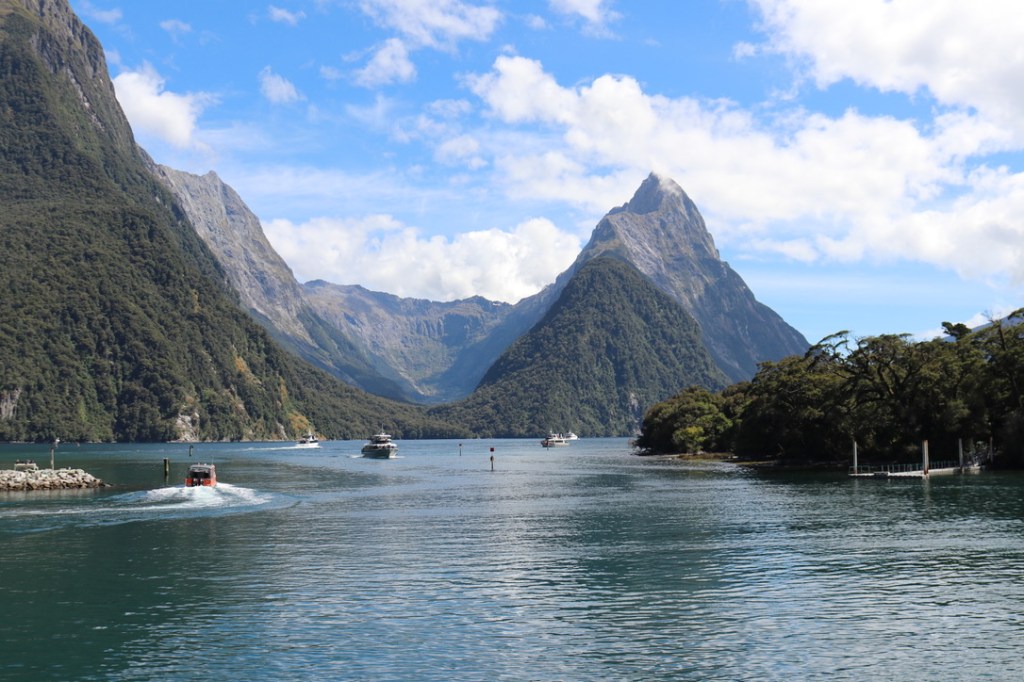
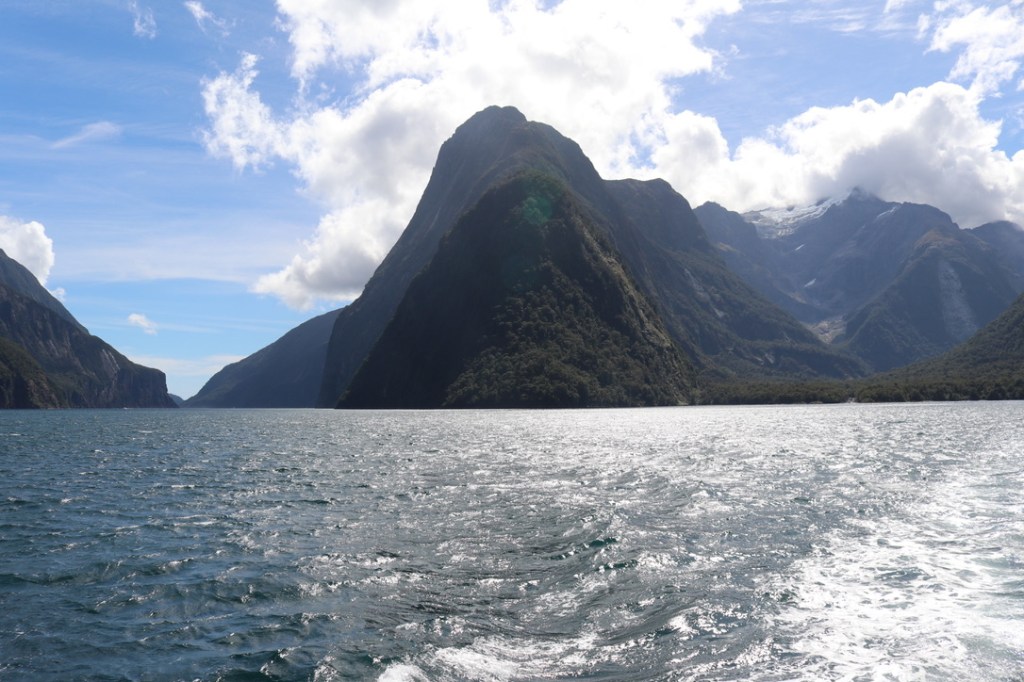
We departed the dock and made our way down Milford Sound or Piopiotahi in Maori. It is the most northern of the 14 fjords in NZ. They still get a sense of area has thankfully been untouched over the centuries and the mountain sides are still lush forest and vegitation. It is dominated by Mitre Peak and has some spectacular vertical waterfalls into the fjord. The waterfalls were spectacular and the sides of the fjord plunge 300m below the water line allowing boats to go right up to the rock itself to enable passengers to be sprayed in 1,000s of years old glacial water from the fall.
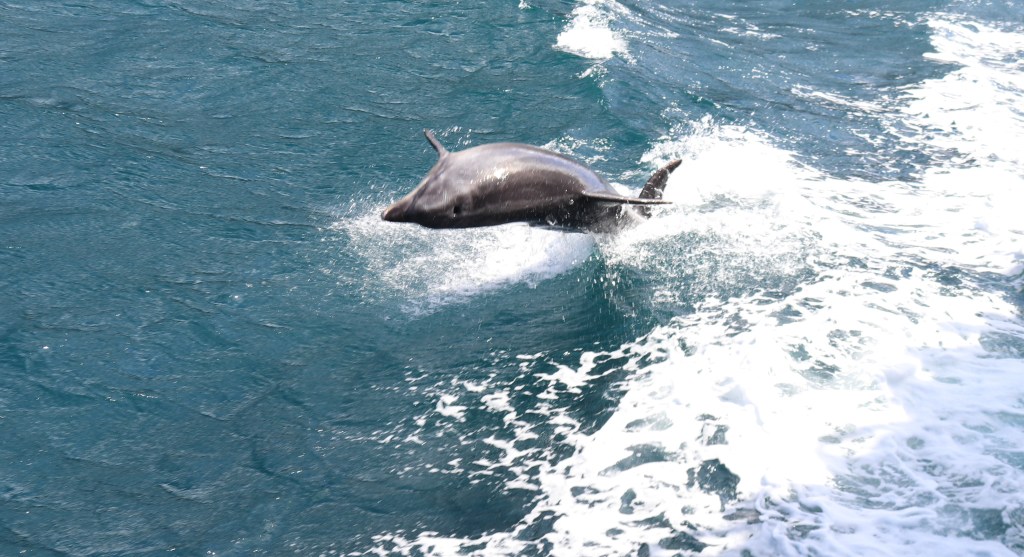
We were visited by a couple of blue nose dolphins on the way back – very large compared to the dolphins you see around the British coastline.
The journey back was quite long. We did stop for 30 minutes in Te Anau where we had a glass of wine and a wander by the lakeside in stunning late summer sunshine.
Once back on the coach we started the last 2 hours back to the hotel. Des had warned me that he would ask me to speak on the bus back to fill in the time. I had not realised how out of practice I had become at public speaking. But I reminisced on a few stories which occupied 30minutes. We then had a couple of singers and a talk on how an MRI scanner worked. Soon we back for our last night in the lovely hotel. After packing and eating the remainder of our boxed lunch we had a wine down in the bar and then to bed.
Monday 6th March – Queenstown to Dunedin
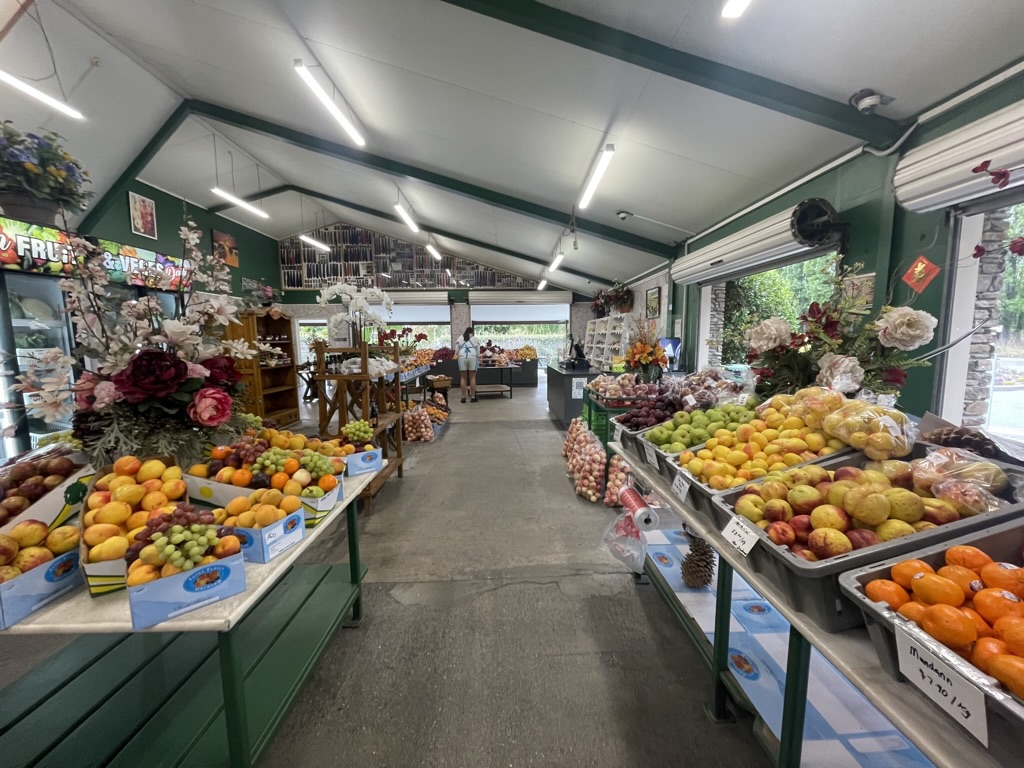
A bit of a drag to today as we drove down to Dunedin. From Queenstown we drove drove out towards Arrowtown past the bunny jump and through Gibston. On the way along the Kawarau River were the preserved remains of gold miners tin huts, Each was able to register a claim around 25m square, It brought home the fairly desperate living conditions people lived in. More money was to be made supplying the miners than actually panning or digging for gold. Before we got to Cromwell we stopped at a fruit store – beautiful laid out store with vibrant colours from the fruit on shelves and in boxes.
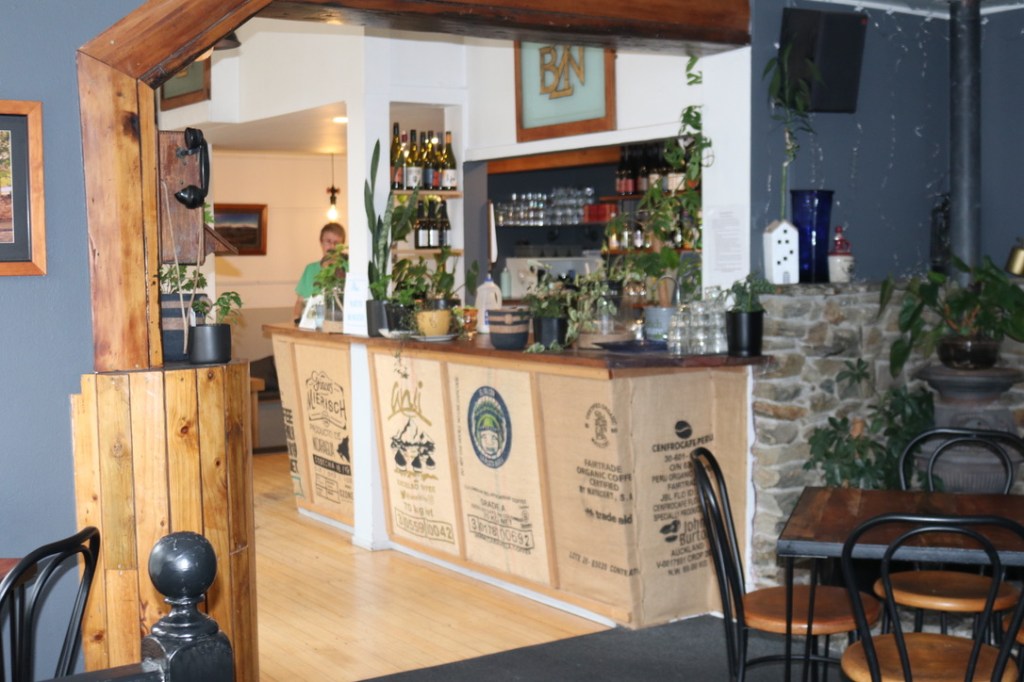
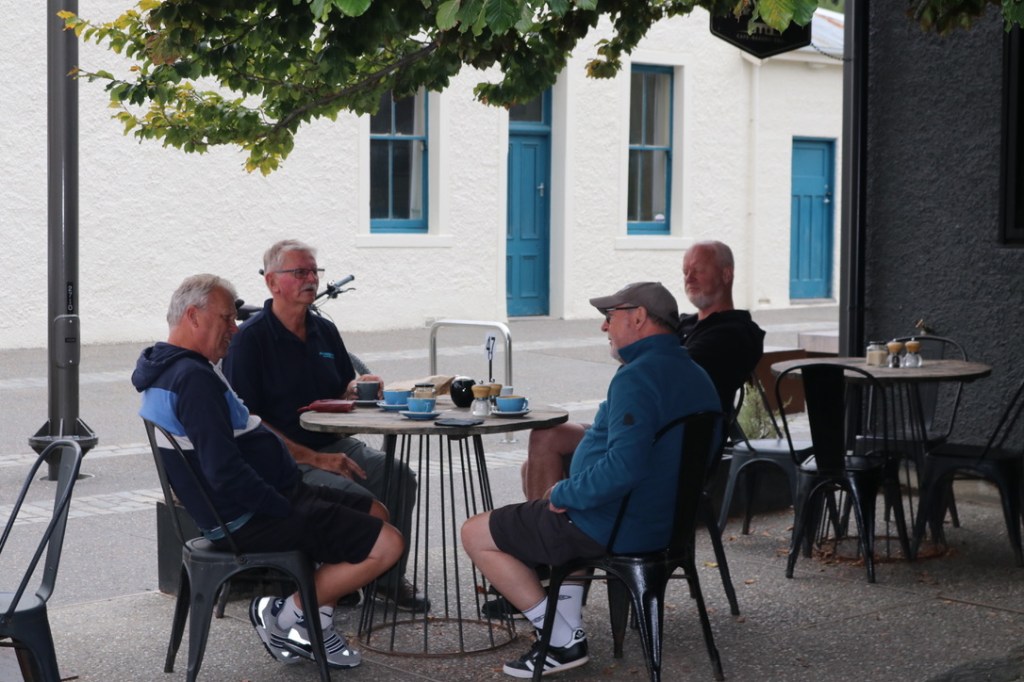
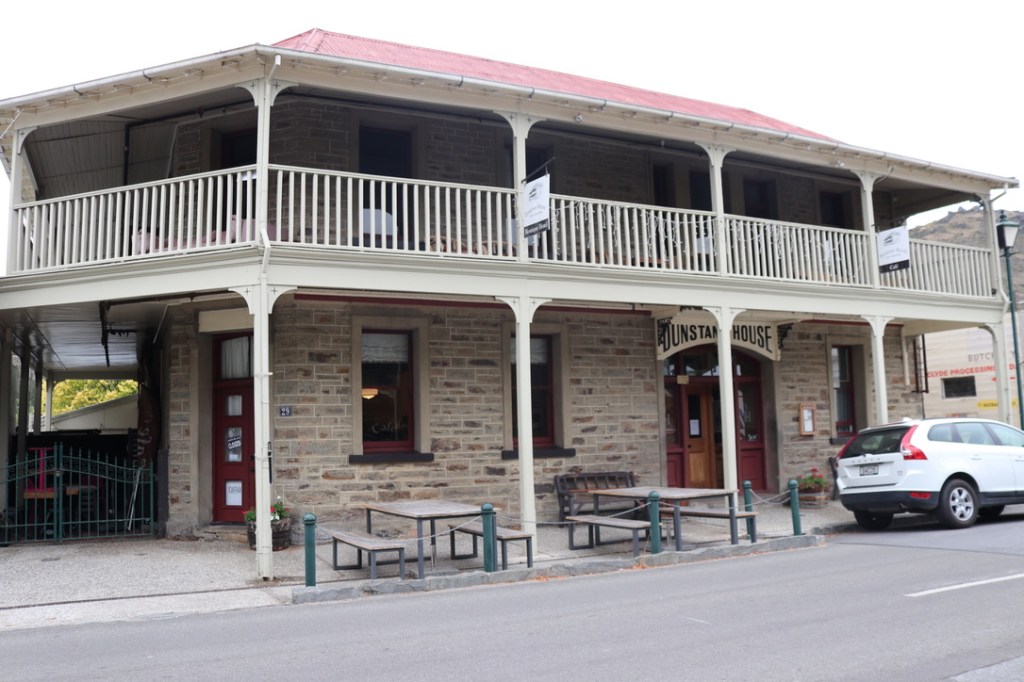
We now followed the Clutha River to Clyde. This was another town that was established as a result of the 1862 gold rush. It was fairly quiet as we wandered along the high street looking at what was now familiar architecture from the late 1800s early 1900s. We found a delightful coffee shop that had just opened with some very nice ginger caramel cake.
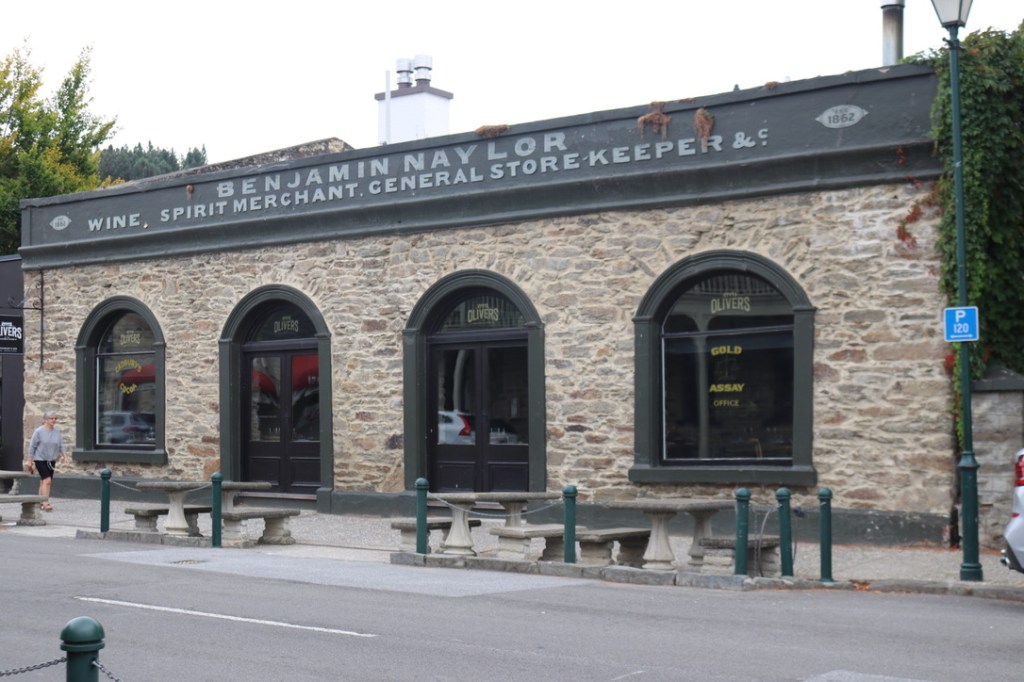
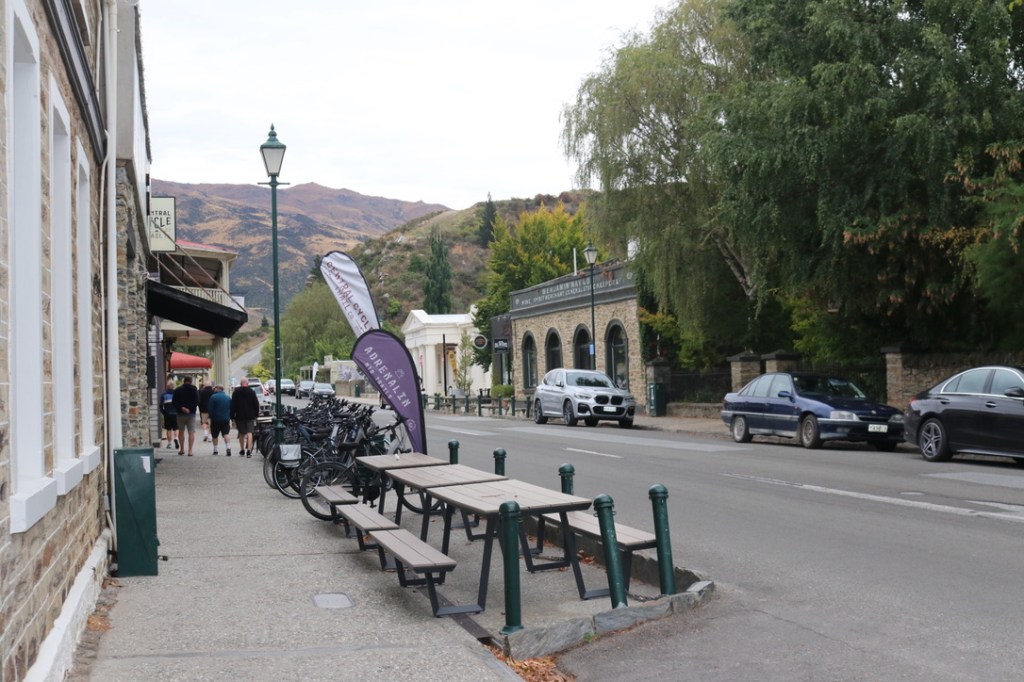
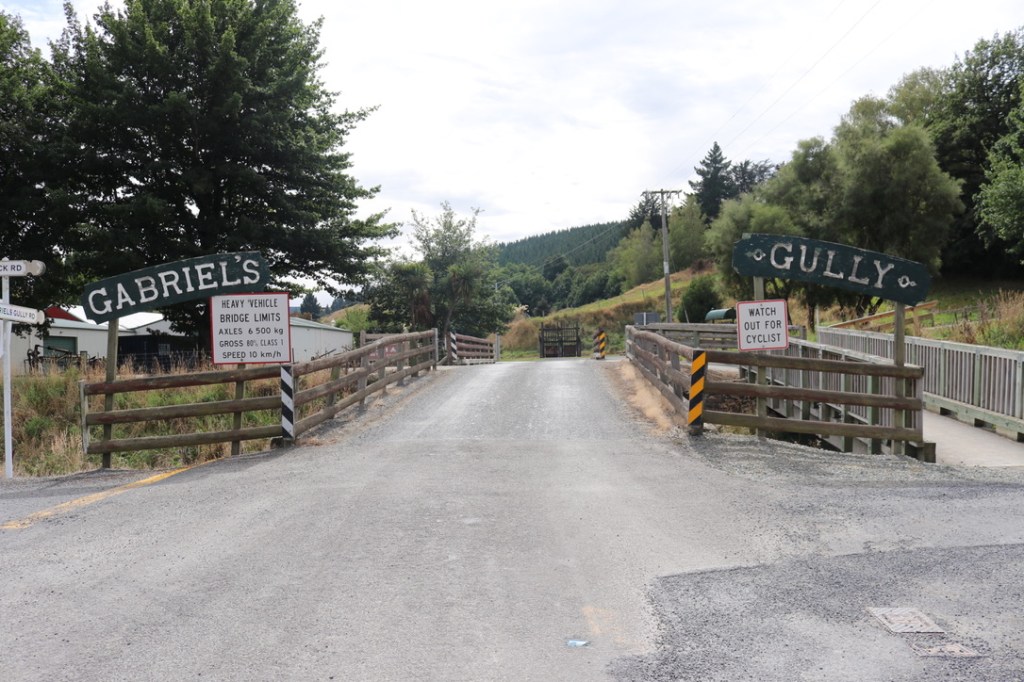
Onwards to the lunch stop at Gabriel’s Gully – Lawrence. This was probably one of the quietest towns we had driven through. It was on one of the epic cycle routes that the NZ government have created. These are 100s of Km long and mountain biking is a very popular pastime with all ages. Electric bikes were very much in evidence. We studied the information boards at the entrance to Gabriels Gully which had a couple of photographs – then and now. The now is very much farmland and the then a sea of tents as as miners clambered to stake a claim and make their money. This rush was short lived and within 3 years they had moved on. For lunch we shared one of the famous NZ mince pies – all made at the cafe.
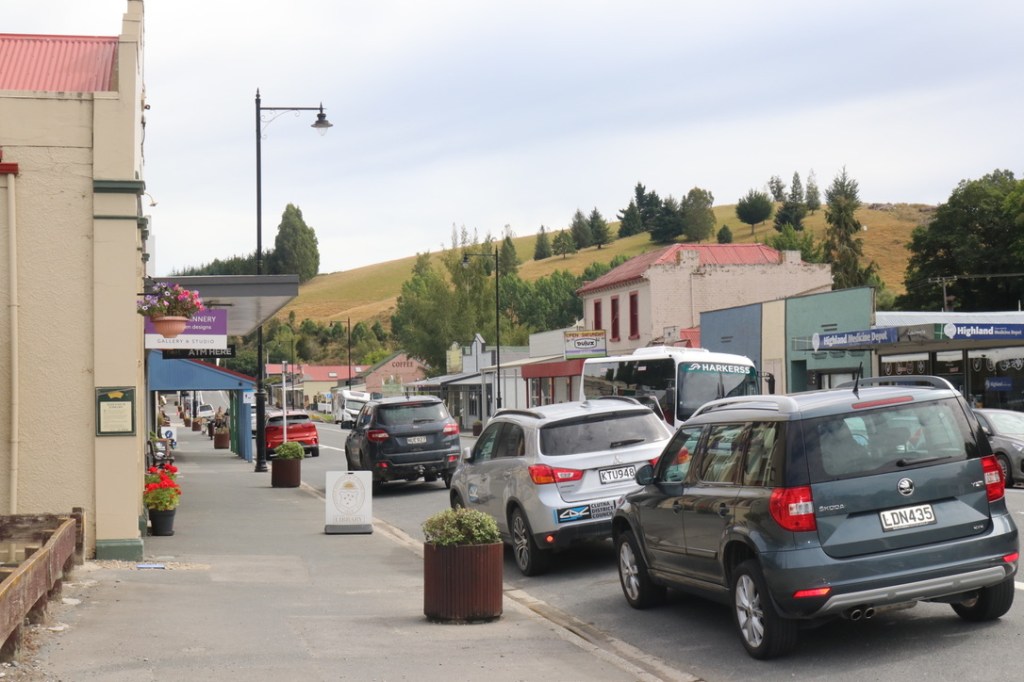
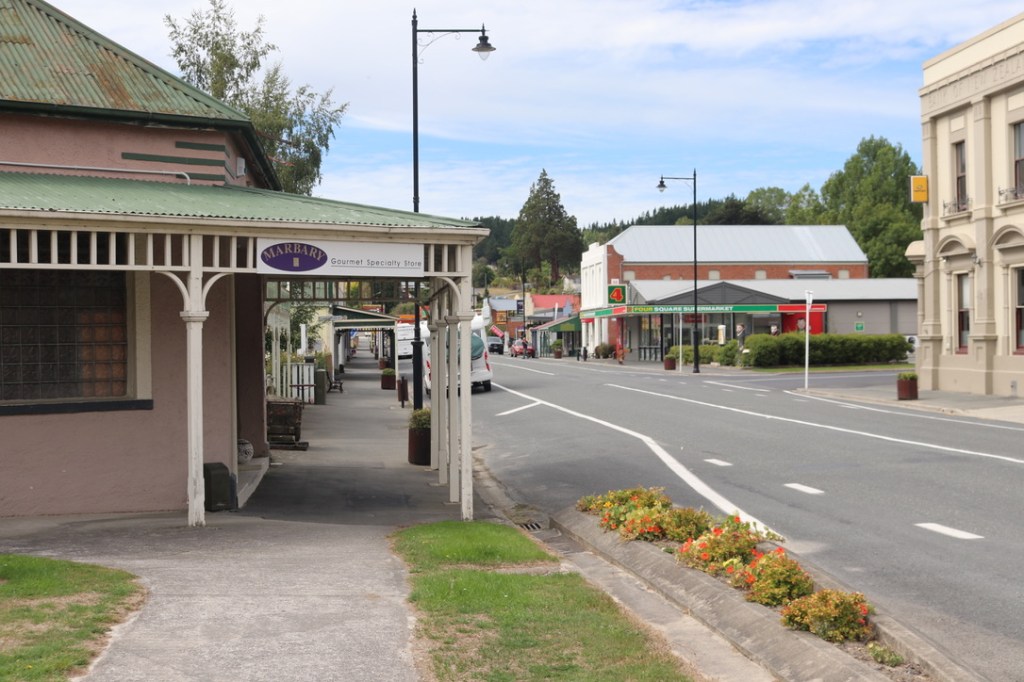
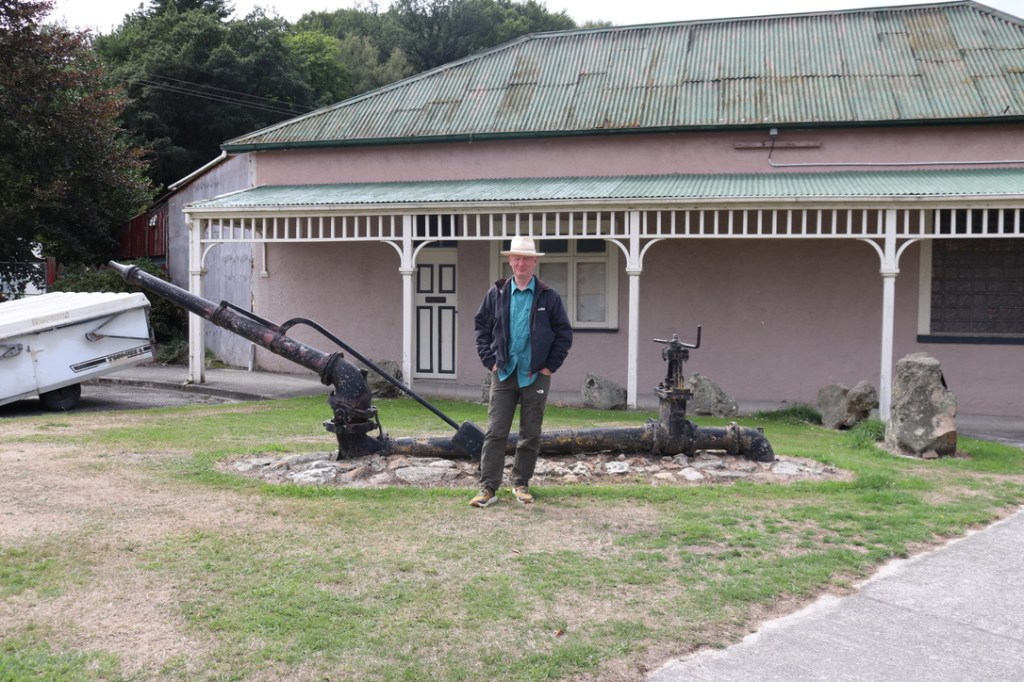
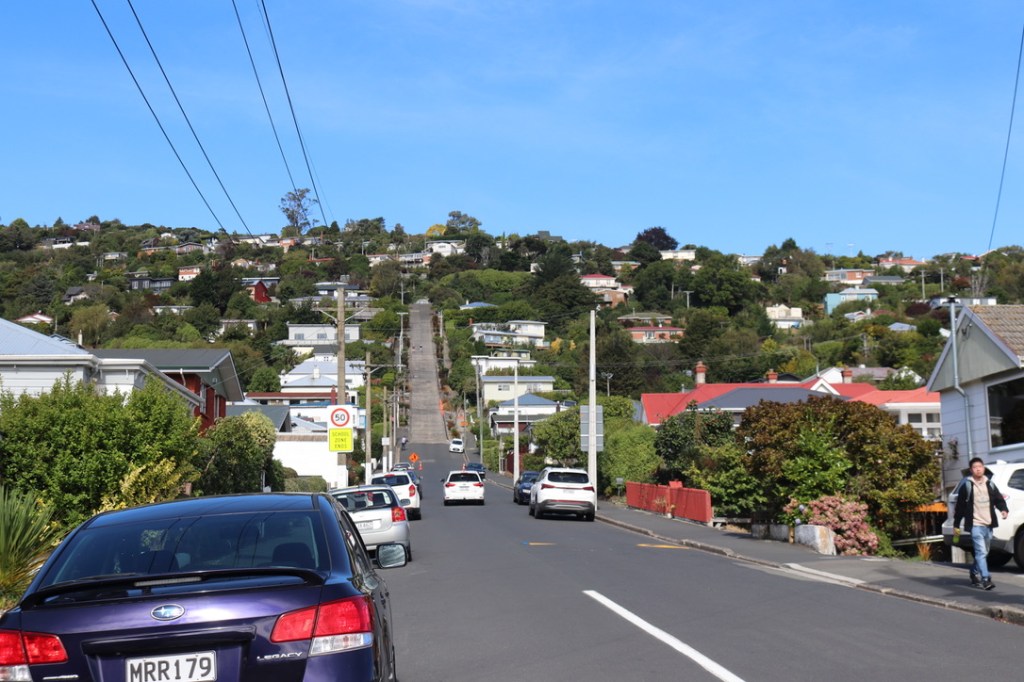
After lunch we made our way to Dunedin. We had a tour to the steepest street in the world before driving up to Signal Point high above Dunedin. There then followed a coach tour to hunt down the cricket ground where England had played which was in the region of the University. Eventually we came upon it and some got off to take a closer view. By now we were all ready to get to the hotel and sort ourselves out.
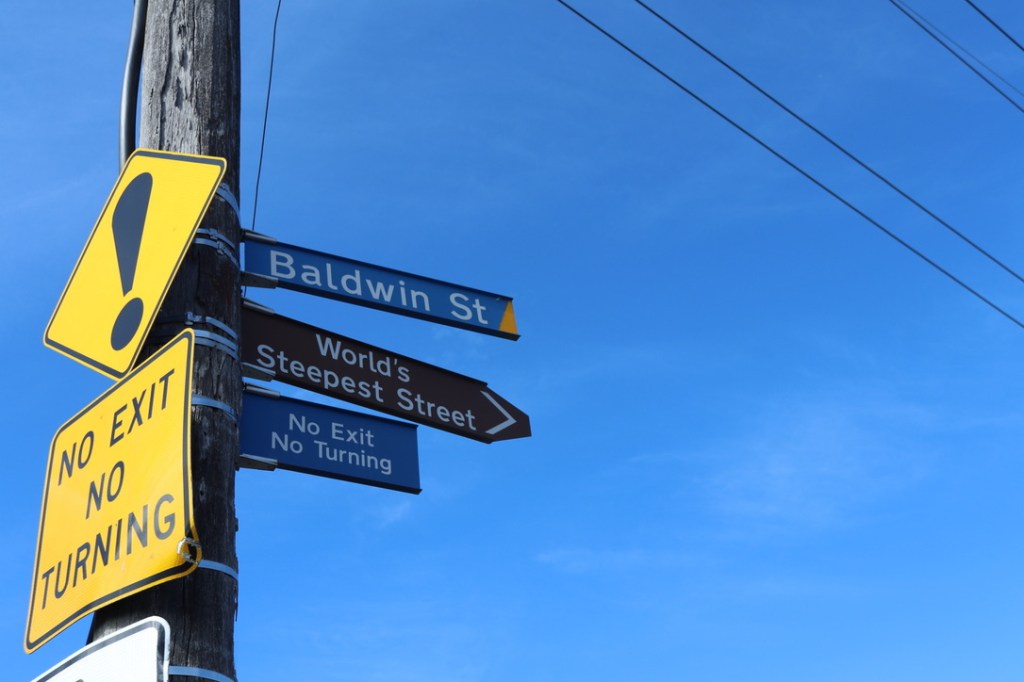
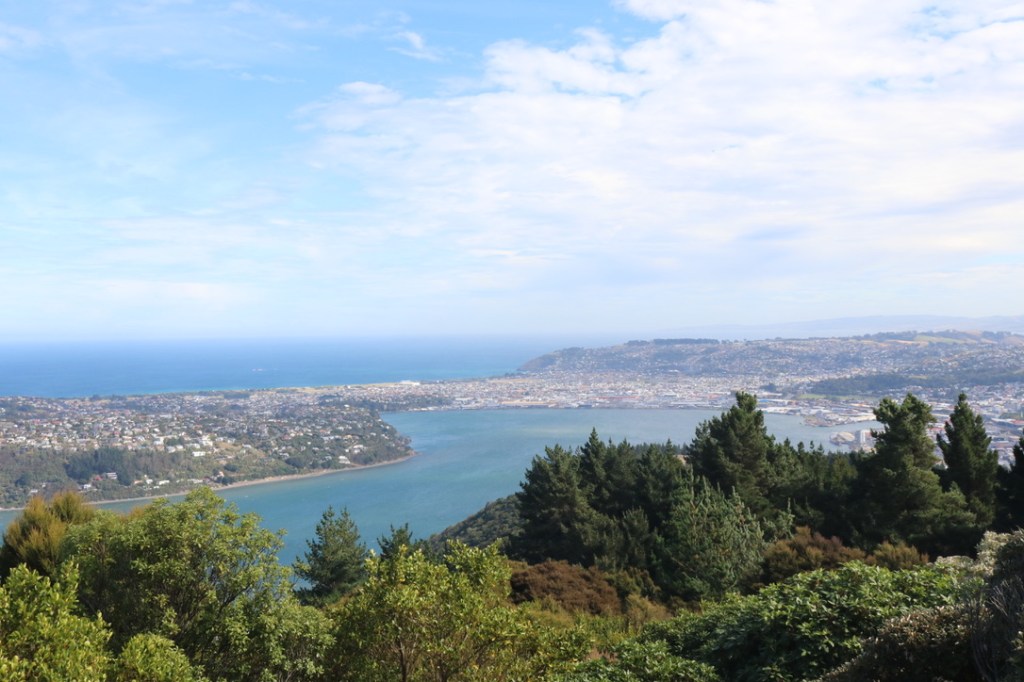
We stayed at the Victoria Hotel which was probably okay but after a long day in the bus and nearing the end of the holiday we were feeling a bit jaded.
We walked around Dunedin and it was not a particularly exciting place. One of the sights was the railway station but this was under renovation. We then walked up to the Octagon which is the heart of the city. There was not much to photograph here – sorry Dunedin. We did find a nice bar to have a few glasses of wine and some tapas like food before returning to bed.
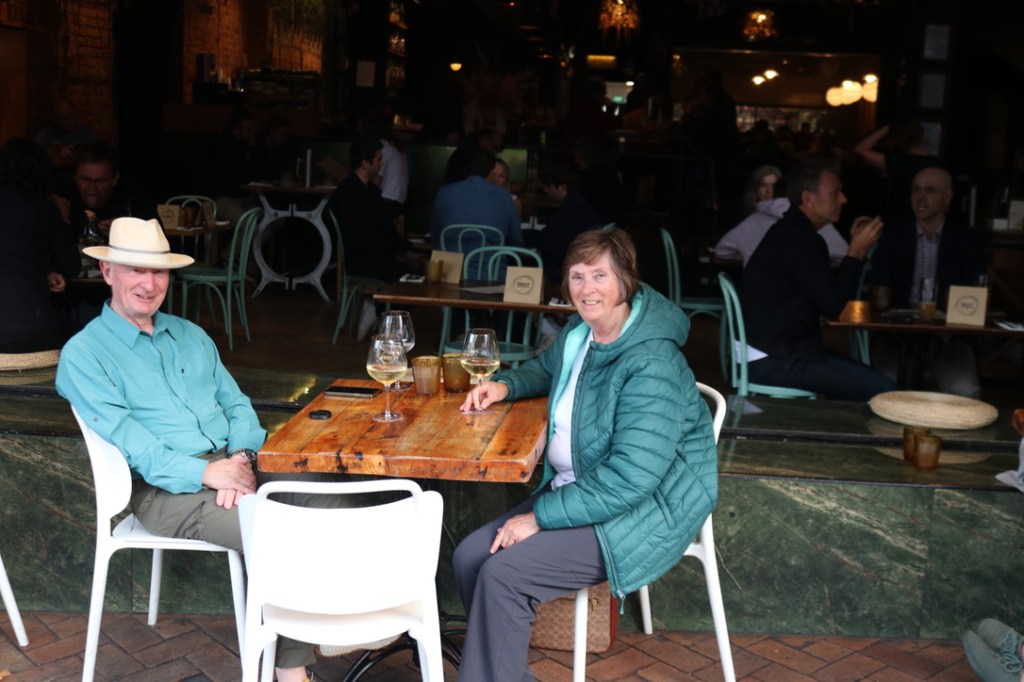
I can see why Dunedin was included but the effort and time to get here was not worth the outcome.
Now for the start of the journey home.
Tuesday 7th March – Dunedin to Christchurch
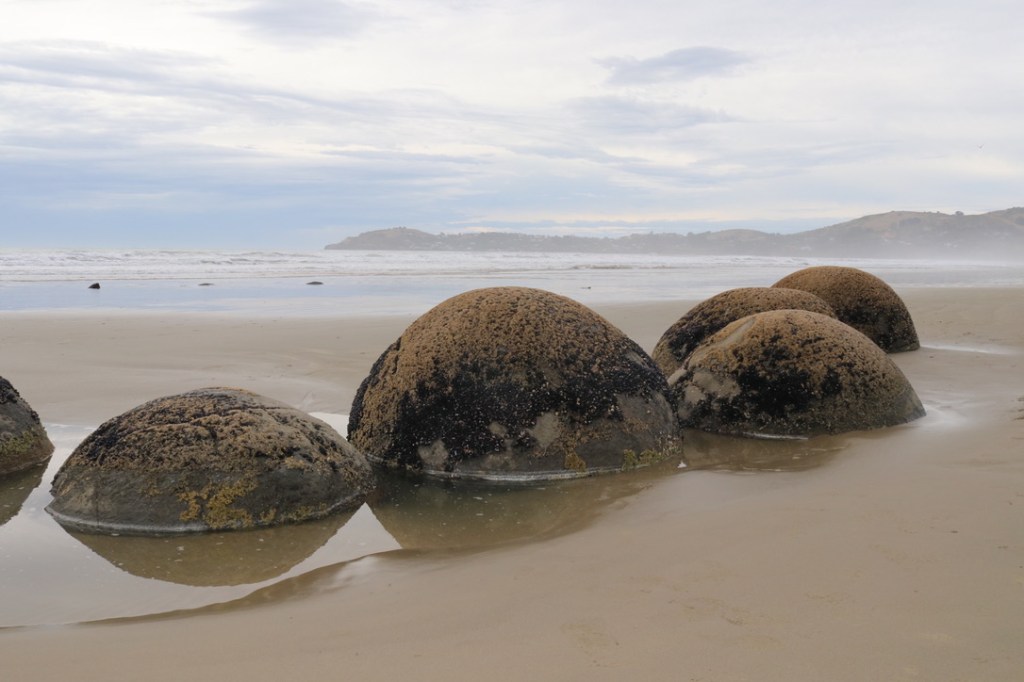
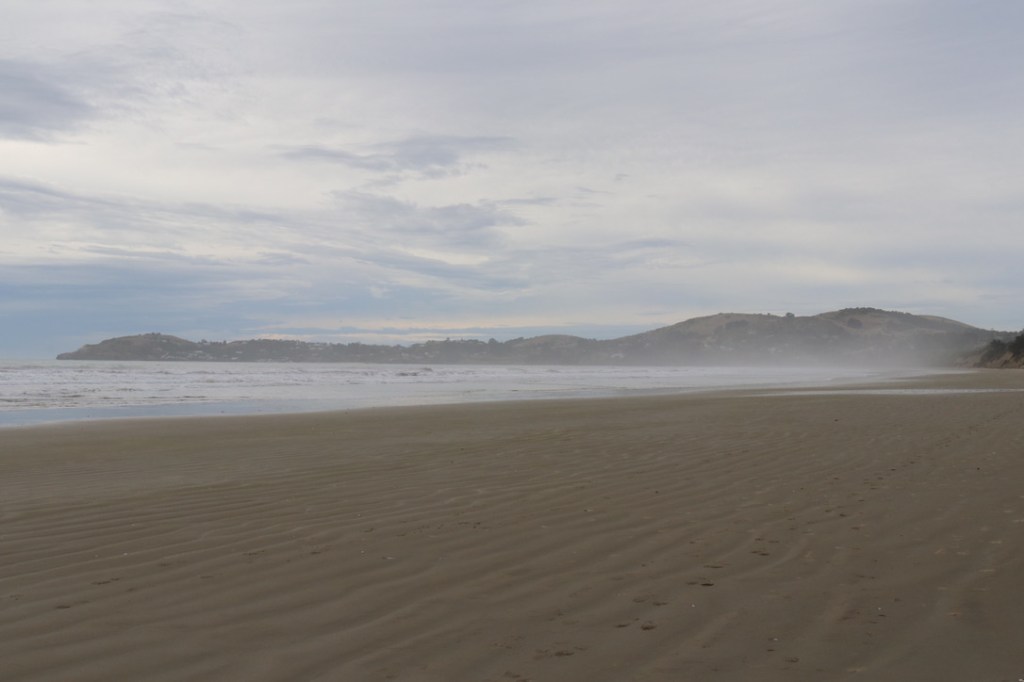
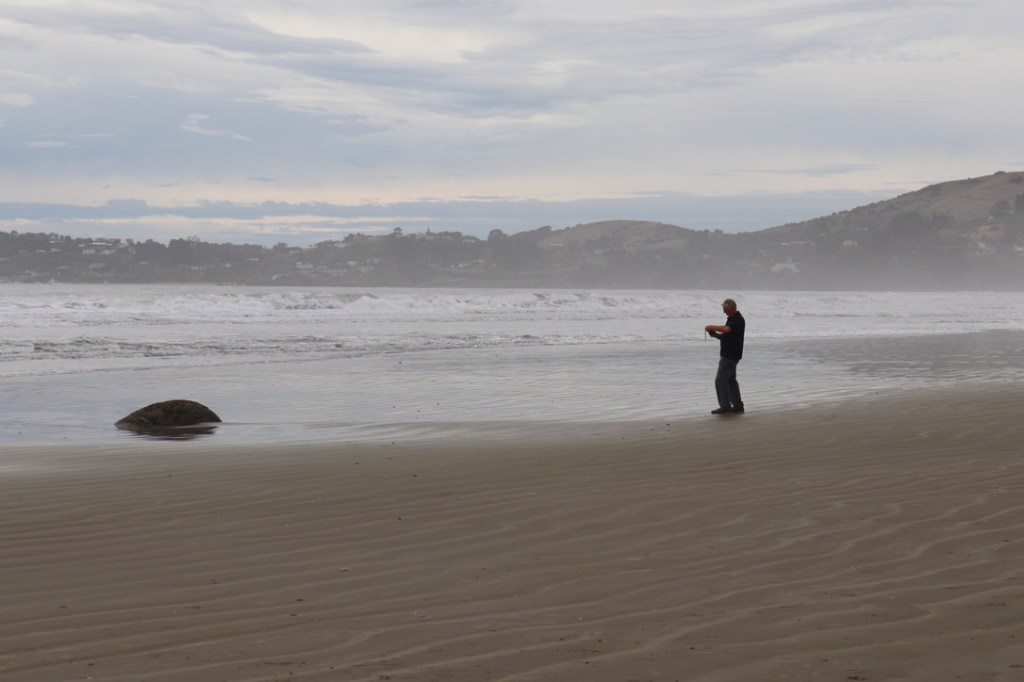
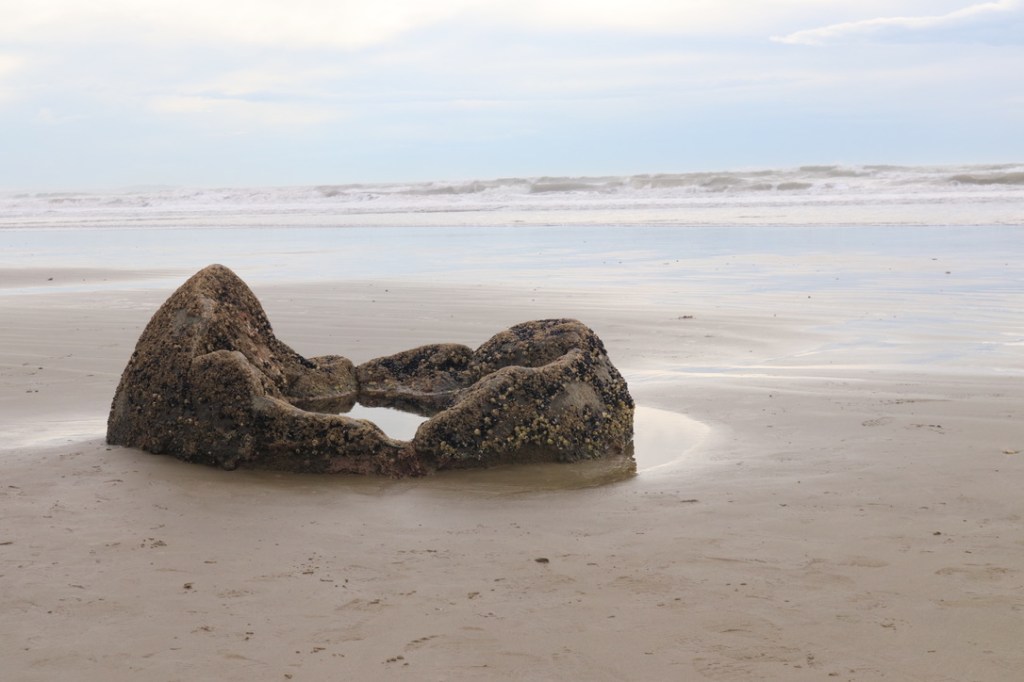
The day started with news from Alice that having seen the consultant she was booked in for a caesarean on 13th April – not far away. We left around 0900 and travelled to the standing stones at Moreaki. These are on the west coast facing the South Pacific Ocean. Beyond the shore there was little before you reached South America. Moeraki is famous for its boulders; mysteriously spherical stones scattered across a beach. Each boulder weighs several tonnes and is up to two metres high. Scientists explain the boulders as calcite concretions formed about 65 million years ago. The shape is not from erosion or the sea but how they were formed with soft mud around them, embedded in the cliffs which over time were exposed as the banks were washed away by the sea. According to Maori legend, the boulders are gourds washed ashore from the great voyaging canoe Araiteuru when it was wrecked upon landfall in New Zealand hundreds of years ago. We were both still half asleep from the day before so while I walked the beach Gillian strolled around the shop. The stones were impressive but more so was looking out onto the South Pacific and thinking of the huge distances to the next point of land.
Back onto the bus and our next stop was Oamaru for a coffee stop. A place of grand buildings, clearly a town with a rich trading history of wool and sheep. The very first shipment of frozen lamb was from Soltau landing organised by William Soltau Davidson in 1882. He had experimented and looked at the economics of freezing meat to send to UK. He converted the Dunedin with a coal powered Bell Coleman freezing plant. Most of the meat came from the Totara Estate. The first shipment of 5,000 carcases left on 15th February and the rest as they say is history!
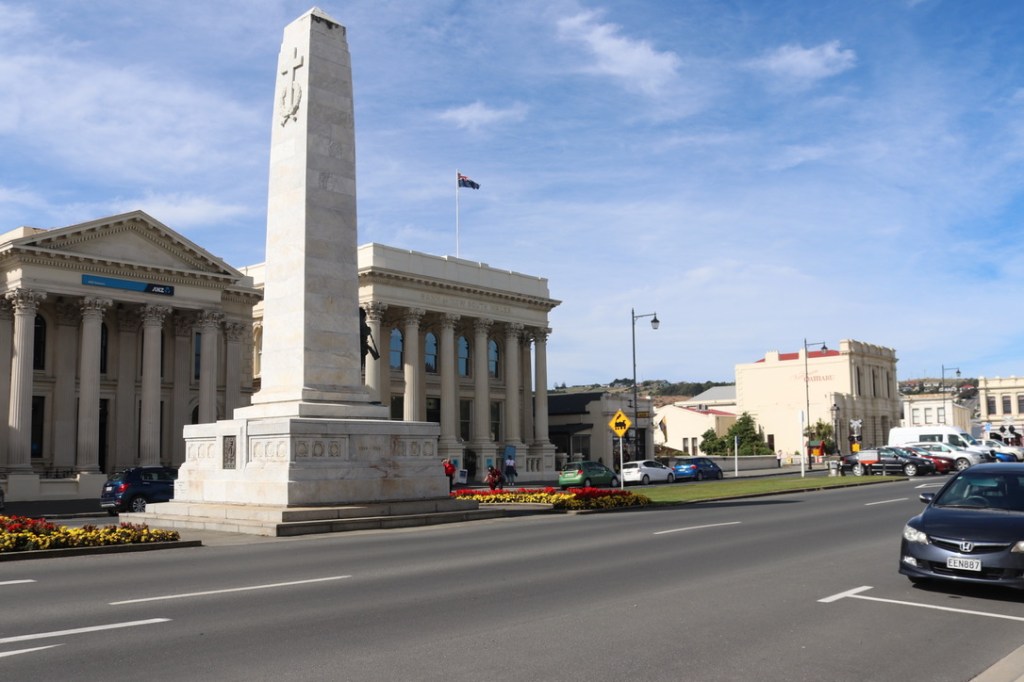
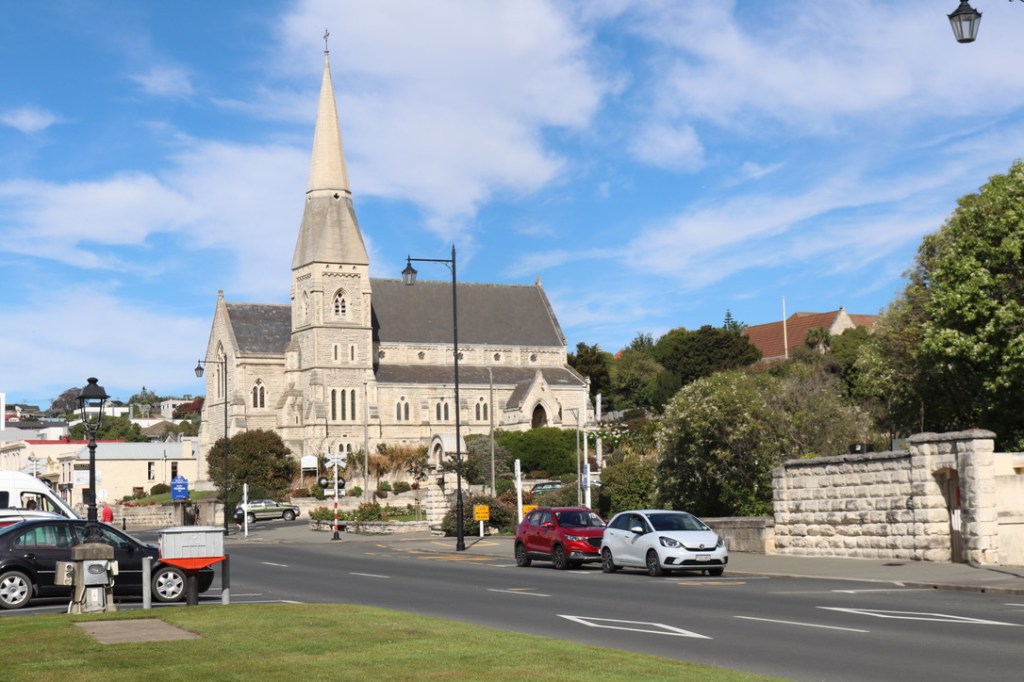
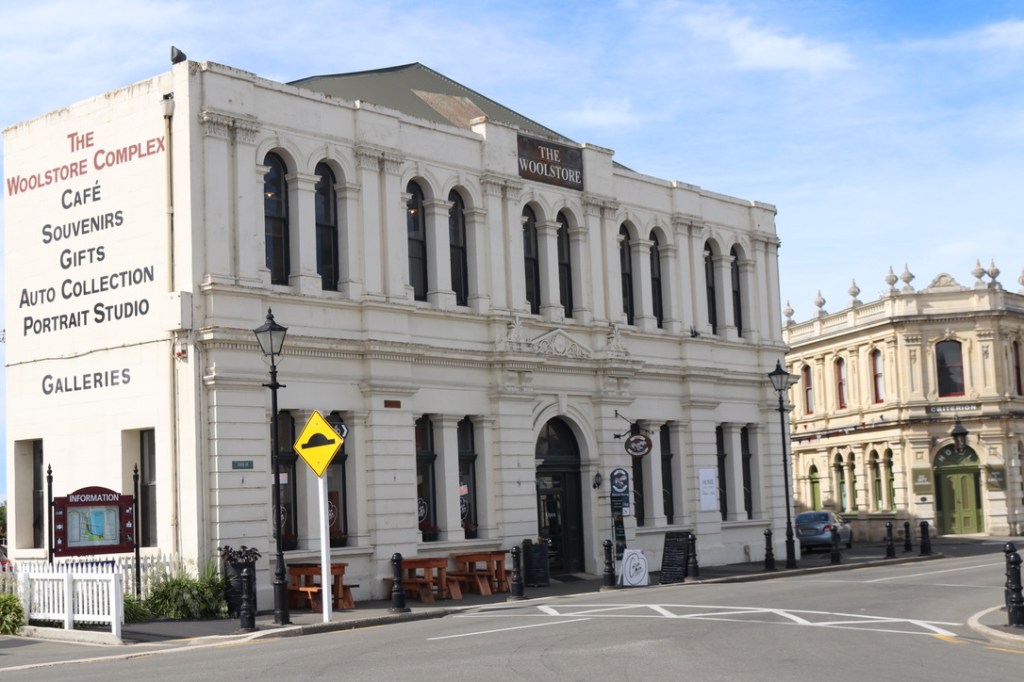
As well as the grand buildings what also struck a cord was the inscription on the war memorial – a verse from Kipling:
From Little towns in a far land we came
To save our honour and a world aflame
By little towns in a far land we sleep
And trust those things we won to you to keep
Lunch was in Timaru. We did not get a chance to look around but had a some street food with Des in a nice pub down by the water. The building is the only known building left standing in the Southern Hemisphere that was build using volcanic blue basalt stone.
Eventually we arrived in Christchurch – all feeling a little weary and sad as this was the end of our journey. We gathered for drinks in the bar for an hour or so before stalling into town for a final meal were we met two other colleagues.
Final ‘sleep’ in NZ before an early rise at 0500.
 Purrfect Tale